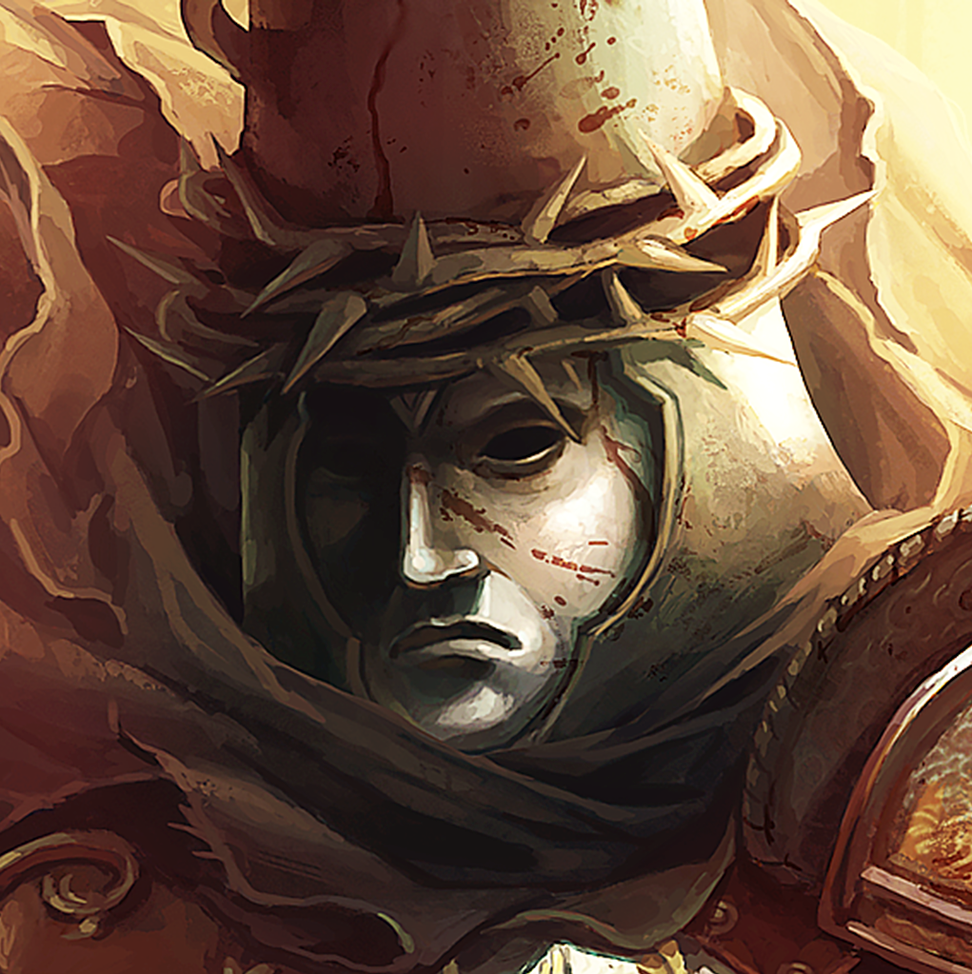
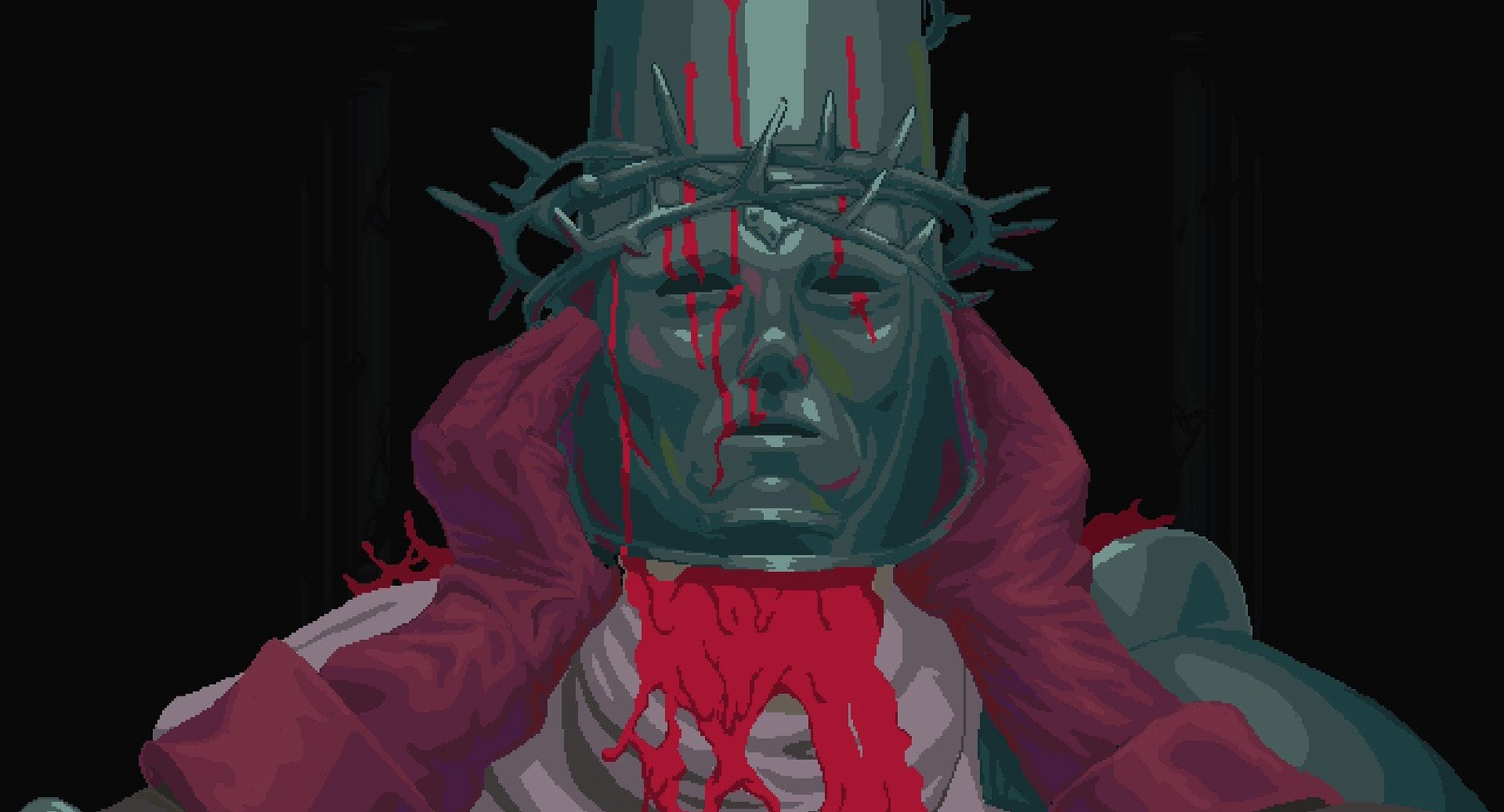
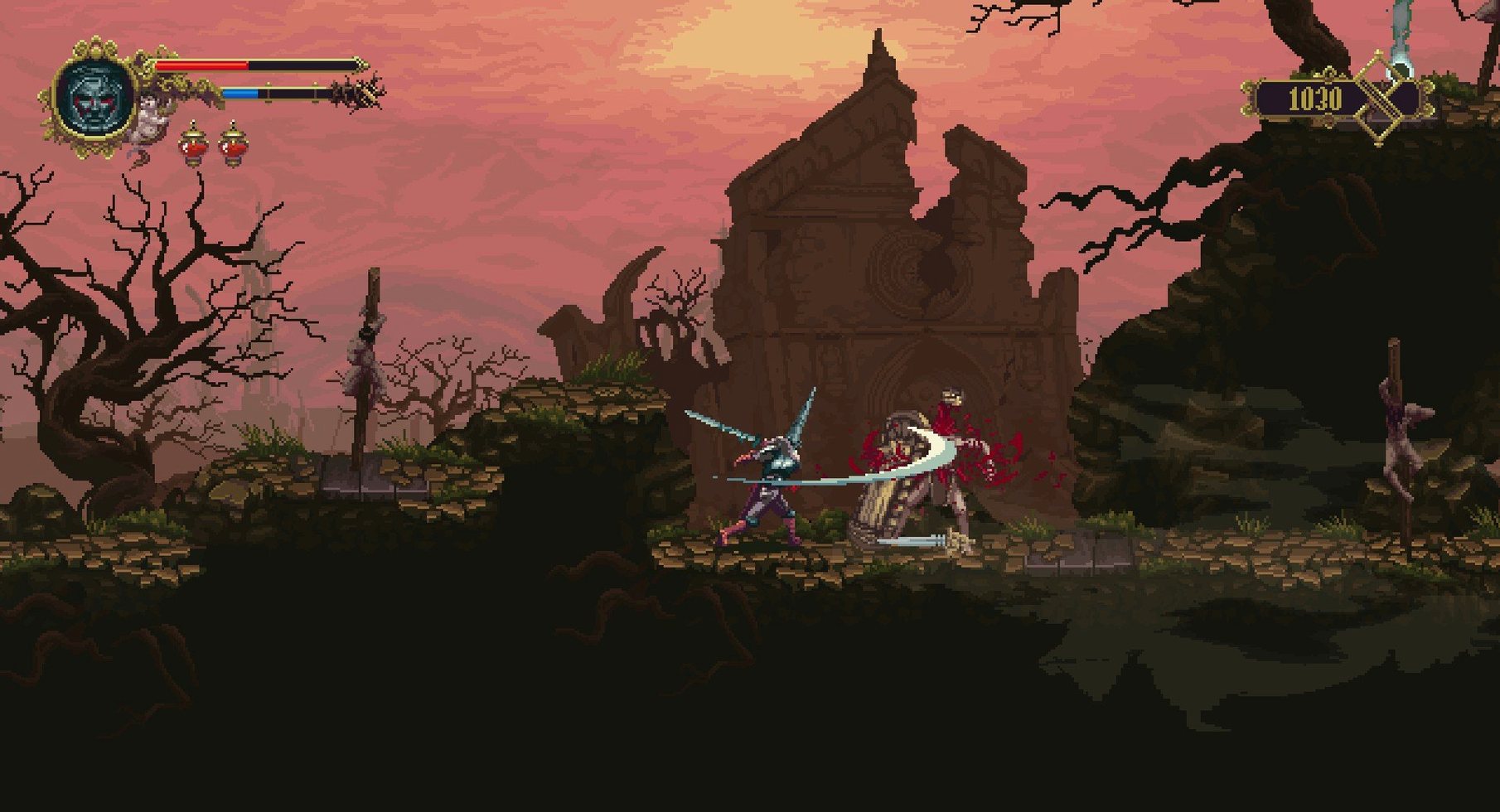
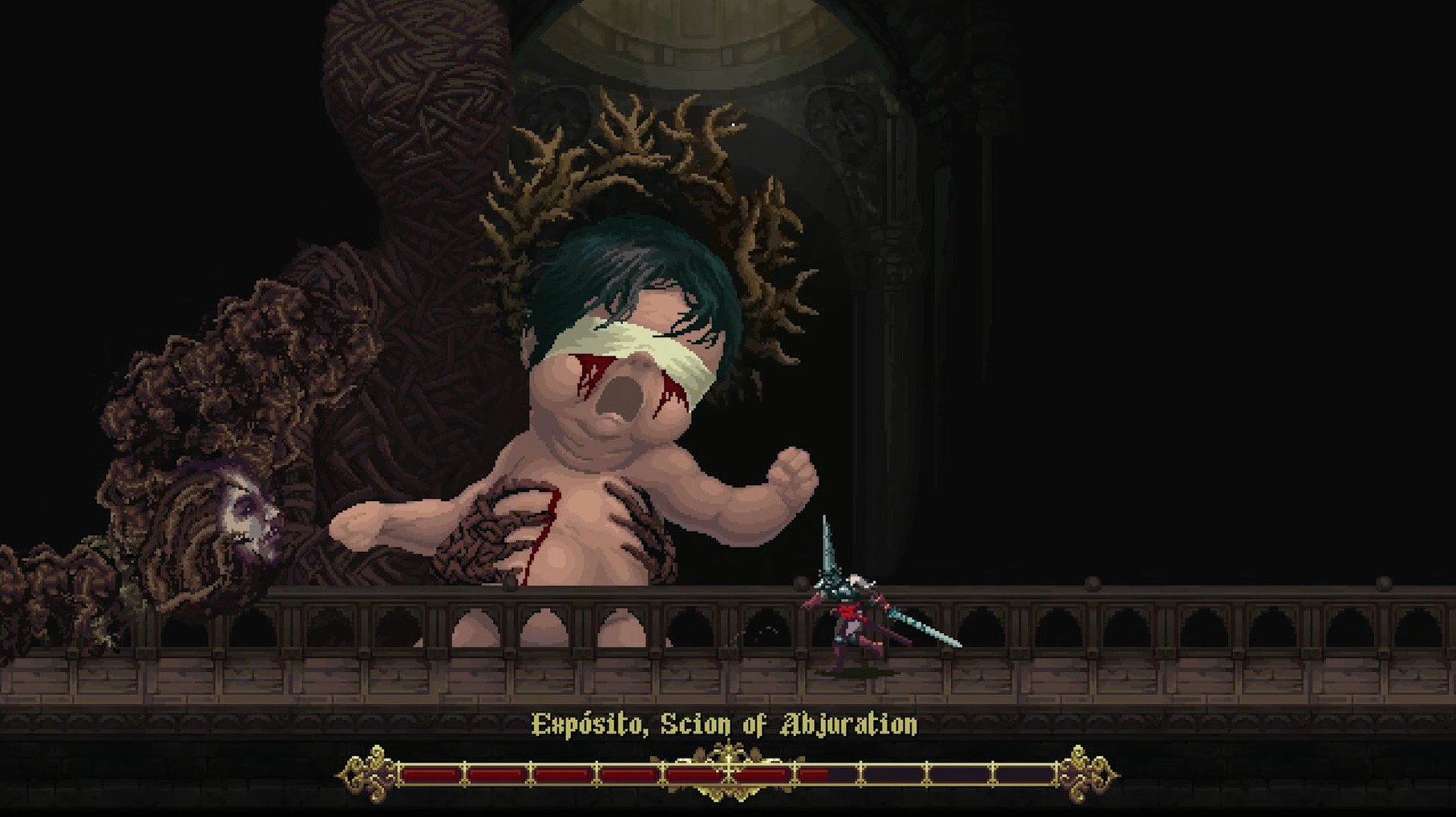
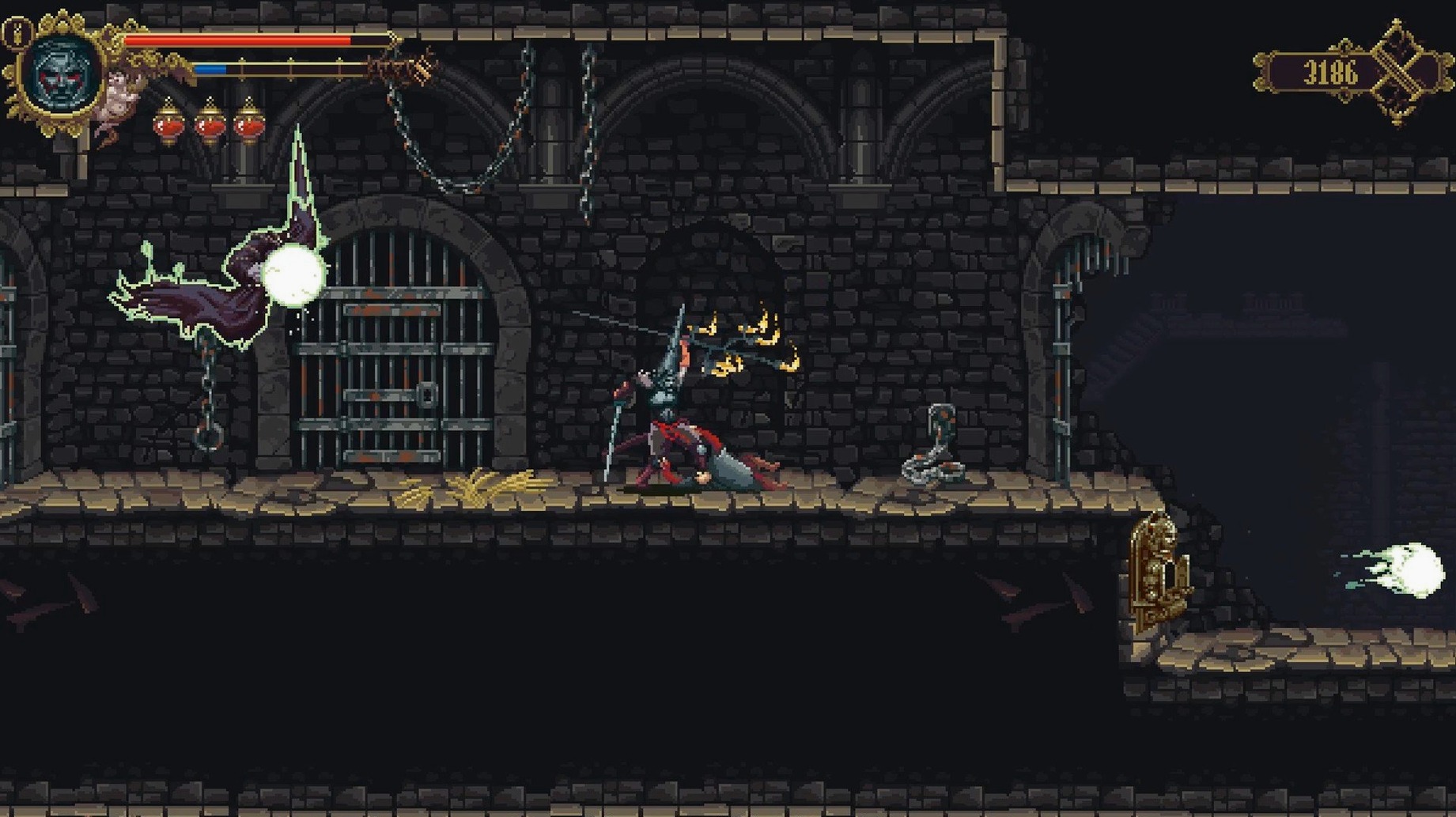
The executions, rendered in starkly beautiful pixel art, are not a flourish. They are a statement of intent. When the Penitent One drives the Mea Culpa sword through a grotesque acolyte, the animation lingers on the brutality—not for cheap shock, but to remind you that in Cvstodia, violence is a form of prayer and every action has a weight you must carry.
This world is a depraved cathedral of ruined stone and twisted faith, a place where Spanish Catholic iconography curdles into nightmare. The pleasure here comes from careful exploration and mastering a combat system that demands precision, not flash. You will die, often, on a misplaced parry or a hastily chosen dodge. If your taste runs to brisk, forgiving platformers, the deliberate, almost solemn rhythm of a penitent's feet on cold flagstones will grate rather than enchant.
The game speaks in many tongues—Russian, Japanese, French, Simplified Chinese among others—which hints at the universality of its sorrowful atmosphere. But the true language is the level design, a knot of interconnected spaces where a newly found relic might shed light on a corner of the map you passed hours ago. It is a game for those who savour mapping the unmapped, who treat a locked door not as an obstacle but as a promise.
On a modern Mac, the somber procession runs with a smoothness that only sharpens its edge, making every stuttering death feel completely and entirely your own.
The Penitent One’s weighty stride versus Hollow Knight’s airborne dance
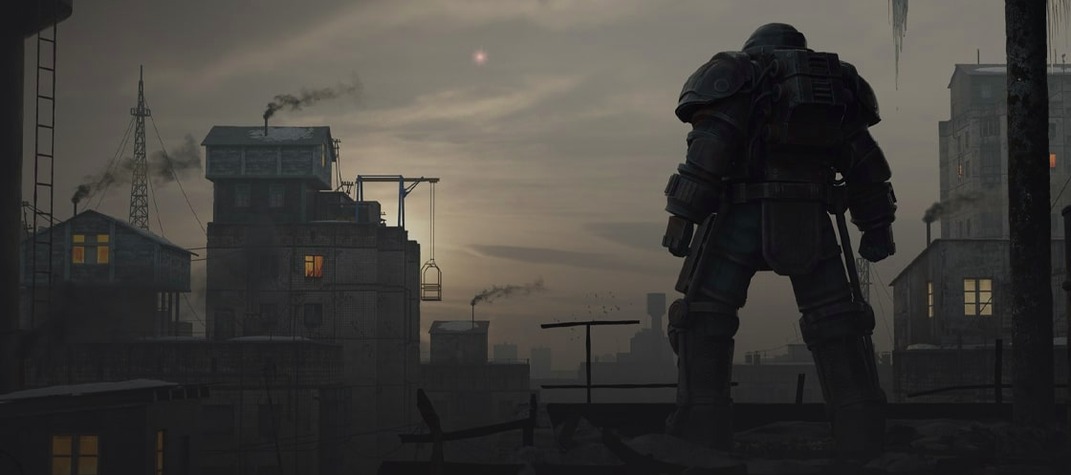
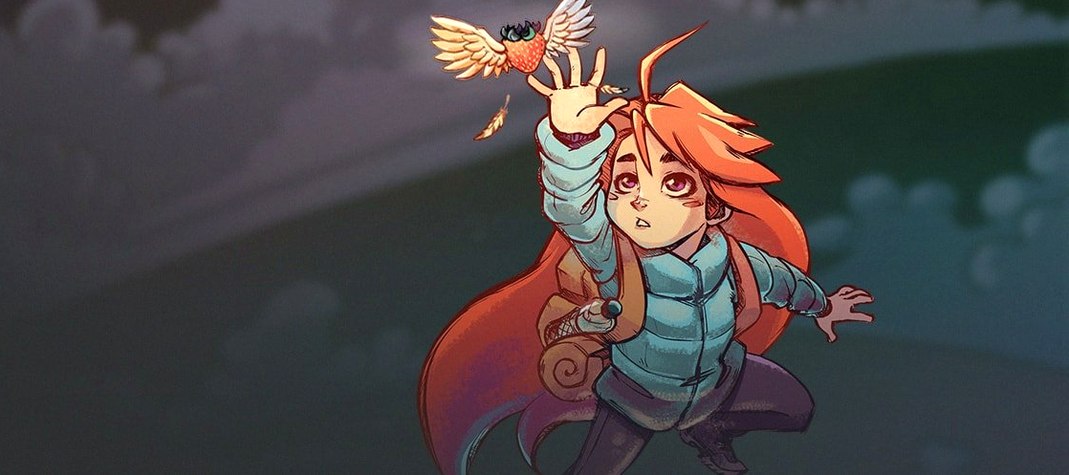
Place Blasphemous beside Hollow Knight and the differences surface immediately. Hallownest’s insectoid melancholy floats on airy, balletic movement—the Knight dashes, pogo-bounces off enemies, and covers ground with liquid speed. The Penitent One, by contrast, moves with a heaviness that borders on ceremonial. Where Hollow Knight rewards twitch reflexes and vertical agility, Blasphemous asks you to commit to each swing and live with the consequences. The map design tells the same story: Hallownest sprawls in every direction at once, while Cvstodia’s interconnected shrines and villages unroll methodically, almost like a sacred text.
Against Dead Cells, the contrast sharpens further. Motion Twin’s rogue-lite thrives on speed, procedural scrambling, and the giddy chaos of stacking mutations. Death resets the run. Blasphemous shares the 2D plane and the fondness for corpse-streaked corridors, but it roots itself in fixed, hand-authored geography. You are not improvising a build from random drops—you are assembling a catechism of relics, rosary beads, and prayers that feel like deliberate tools, not lucky finds. The experience is closer to unearthing a grim gospel than chasing a high-score loop.
A less obvious cousin is Salt and Sanctuary, another Mac-native 2D soulshow. That game grafts stamina management and class-building onto a sketchy, parchment-coloured world. Its combat feels looser, its atmosphere filtered through a fanzine lens. Blasphemous tightens everything—the parry window, the animation commit, the pixel-art precision—and wraps it in an aesthetic so specific (gilt altarpieces, thorned piety, the clang of a censer) that comparisons start to feel beside the point.
Rough edges worth knowing about before you kneel
The most common frustration for newcomers on Mac is the controller recognition hiccup. The game expects a connected gamepad at launch; plugging one in mid-session sometimes leaves inputs unread. The fix is simple: connect your controller before opening the application, then restart if the d-pad stays mute. Bluetooth controllers occasionally need a re-pair after sleep. A wired connection sidesteps the issue entirely.
Another snag surfaces around spike pits and instant-death hazards. Unlike many modern platformers that nudge you back onto safe ground with a health penalty, Blasphemous treats a misstep into thorns or a bottomless drop as final. This can feel punitive until you internalize that environmental caution is part of the game’s spiritual logic—the Miracle does not forgive distraction. When a room chains several platforming challenges between combat encounters, slow down. Map the hazard layout with your eyes before your feet.
Some players report rare frame-pacing stutters during screen transitions on Apple Silicon Macs, particularly when moving between large cathedral areas. Toggling vsync off, then on again, often smooths it. If the problem persists, running the game in a window rather than fullscreen tends to quiet it—the engine seems to handle windowed compositing more gracefully on Metal-backed displays.
Who walks away changed
This is not a game for the player who wants to breeze through a story and feel powerful by the second act. It rewards the architectural explorer—someone who traces every hallway on the map not because a marker told them to, but because the space itself demands understanding. If you are the kind of Mac user who opens a new creative tool and immediately clicks every menu just to see what’s there, Cvstodia will feel like home. The non-linear geography respects your curiosity and seldom punishes it unfairly.
It also suits the lore scavenger. The game delivers its history through item descriptions, environmental clues, and the silent witness of ruined statuary. Players drawn to the oblique storytelling of games like Dark Souls or the fragmented tablets of Hyper Light Drifter will find a similar interpretive pleasure here. You piece together the Miracle’s nature the way you might reconstruct a shattered stained-glass window—slowly, with gaps you learn to live with.
Perhaps unexpectedly, Blasphemous resonates with Mac users who live in audio tools and visual detail. The Spanish voice acting, the low thrum of the organ, the clatter of rosary beads during an execution—these are not background noise but textured composition. If you spend your working hours editing waveforms or grading frames, you will notice the care in every pixel and every reverb tail.
- macOS version information is not specified
- Supports both Intel and Apple Silicon Macs