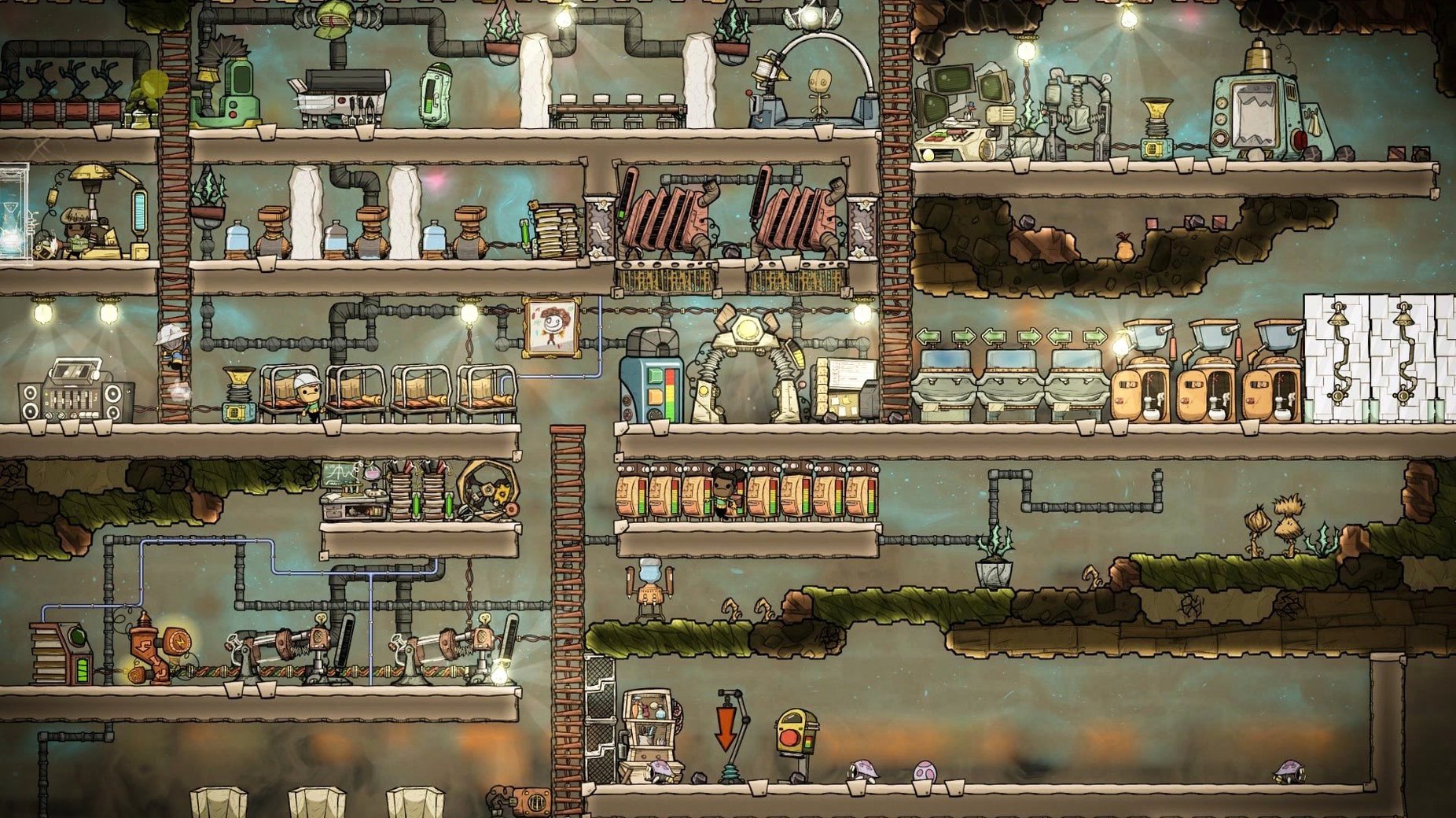
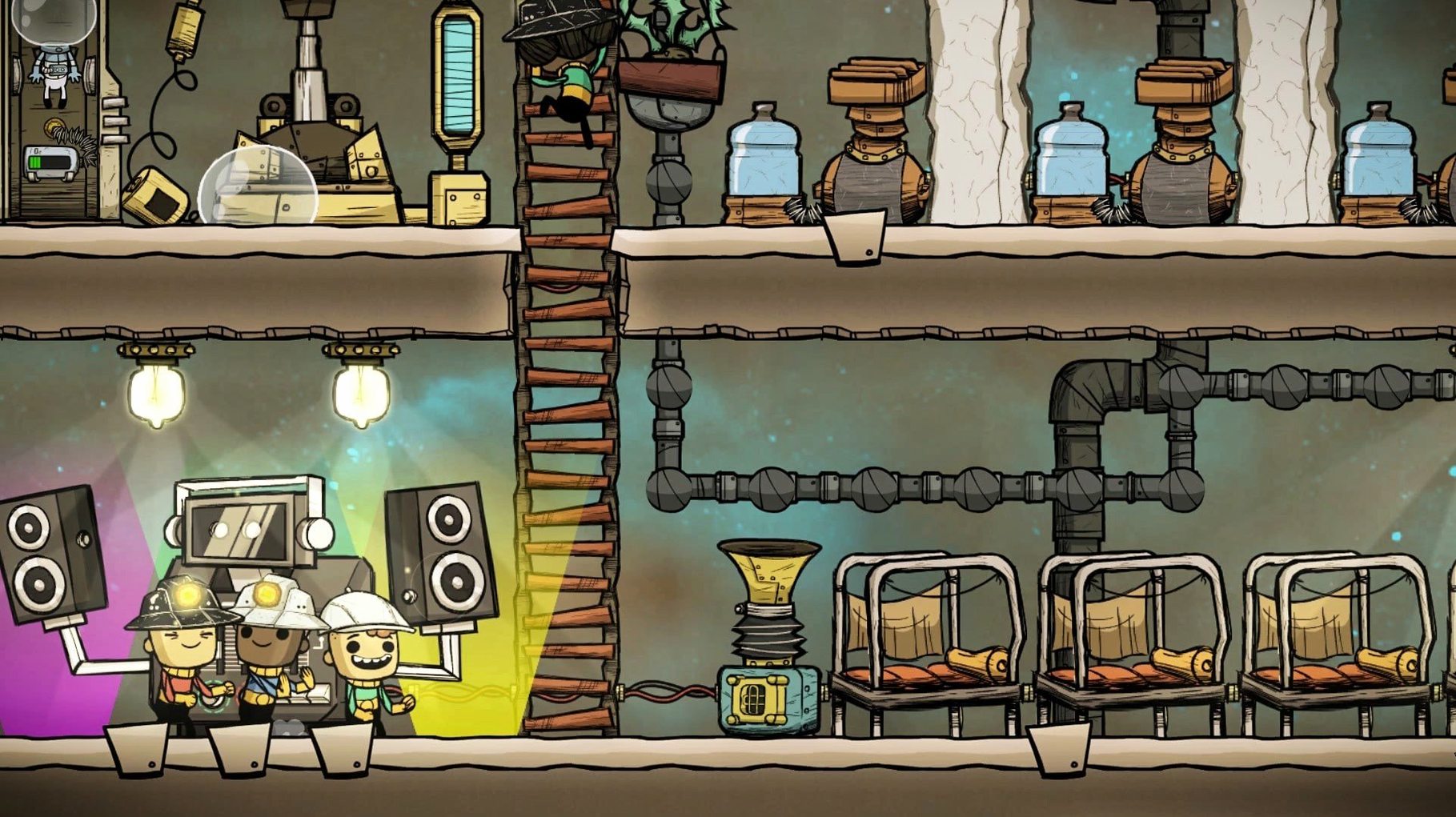
It attracts the kind of player who lays out plumbing with a protractor. You pick an asteroid, print three duplicants, and dig into a simulation where oxygen is a currency, heat is a creeping threat, and your carefully balanced base can asphyxiate itself in minutes because someone forgot to clear a carbon dioxide pocket.
When a stress-eater raids your last ration box
Duplicants arrive with traits that shape the early game—some learn skills fast, others stress-eat your food reserves. You assign digging, research, farming, and cooking priorities while watching breathability overlays like a weather forecast. Once the colony stabilizes, the work shifts outward: mining minerals in ravines and wrangling geysers to keep water and power flowing.
How does personality feed into the survival loop?
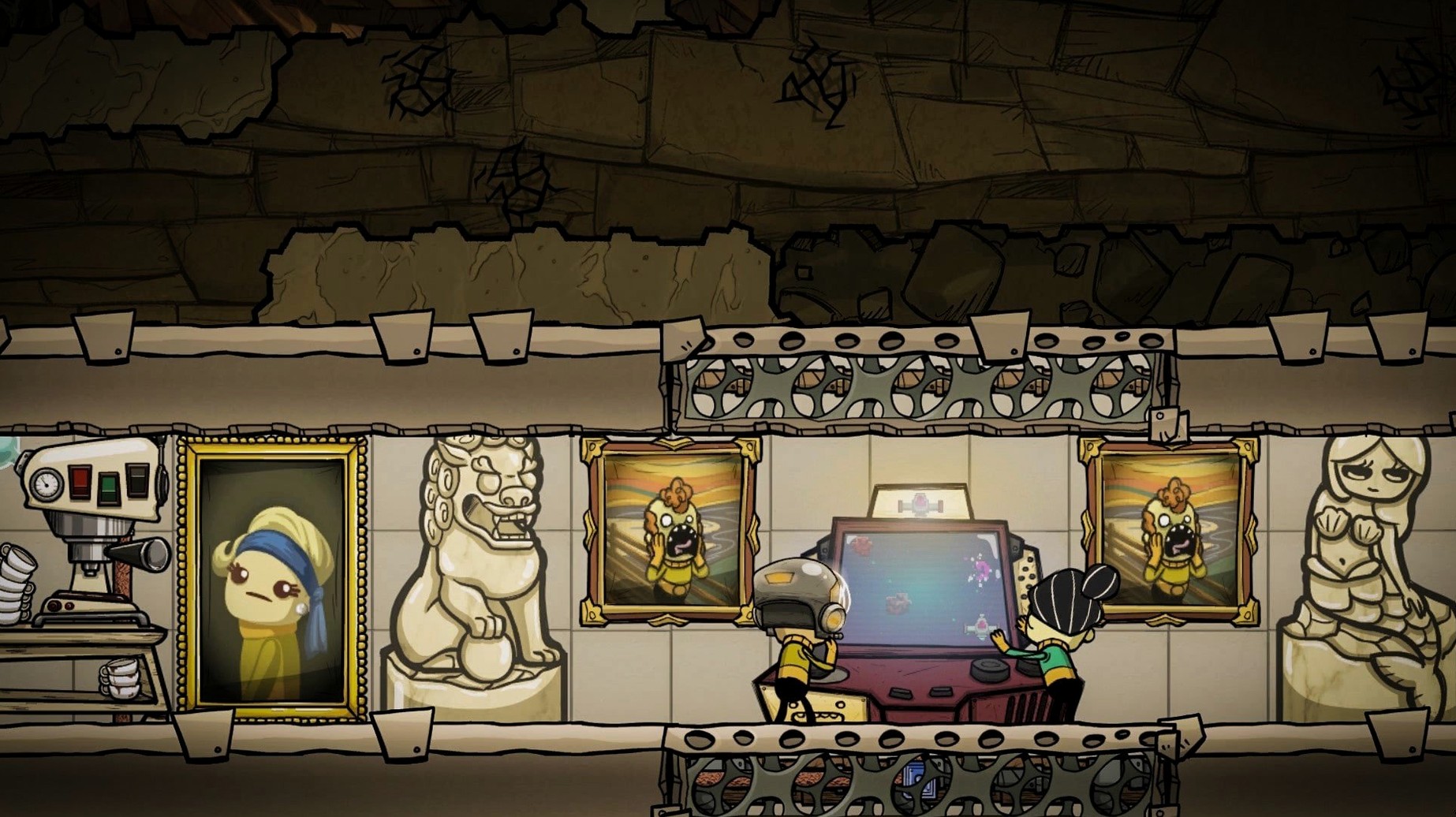
Most colonists carry individual traits that push against pure efficiency. A binge-eater can empty the larder after a rough cycle; someone with a weak bladder ruins your carefully pressurized clean-water tank. Later, morale demands a relaxation machine, so the base grows a room full of massage tables and arcade cabinets just to stop tantrums during a food shortage.
What does the simulation model under the hood?
Gases have mass, temperature, and shame—chlorine settles in low spots, hydrogen rises, and a single hot machine can cook your mealwood farm. The game is described as a hardcore survival simulator inside a strategy framework, where improving the base always means leaving it vulnerable while someone tunnels through a slime biome.
What kind of friction drives the early hours?
Managing a half-dozen people and their waste products is very difficult until you learn the rhythm. The starting asteroid feels manageable for about twenty cycles, then polluted water backs up, oxygen thins, and the printing pod offers a duplicant with flatulence at the worst possible moment.
Your sprawling base stops hitching after cycle 200
Version 744825 tightened a few loose ends that used to show up in longer colonies. The navgrid memory leak fix matters most after cycle 200, when pathfinding across a sprawling base used to make the simulation hitch every few seconds. On a recent run with forty duplicants and three active geysers, the frame pacing stayed even through a chlorine leak and a simultaneous heat spike. Texture optimizations are the kind of change you feel rather than see: the graphics memory footprint drops, and older cards stop choking on liquid overlays. The liquid rendering fix should put an end to those flickering blue rectangles that appeared over polluted water on integrated graphics.
Startup from a cold boot takes a few seconds longer than you expect, but once the asteroid sim is running, background tasks barely register. The game uses both CPU cores on Apple Silicon and Intel machines without pegging the fans, which keeps a Mac mini quiet during the forty-minute stretches this game is known for swallowing whole.
An evening in the colony: the first geyser tap
Picture a player who likes Factorio logistics but wants more personality in the units. Around cycle 60, the colony hits its first real bottleneck: the starting water pool is down to a third, and the bathroom loop is one broken pipe away from contaminating the clean reservoir. This is where the game's pressure valve opens. The player digs upward into a frozen biome, finds a steam vent, and spends the next hour planning a sealed pump room with insulated tiles, an airlock, and a ventilation shaft that drops the water into the treatment tank. Halfway through, a duplicant named Bubbles gets scalded by a single hot tile and crawls to the med-bay, so the whole plan pauses while someone else finishes the ladder. The colony survives, but the water level only stabilizes because the player overbuilt the reservoir by forty tiles. That slack is the actual lesson the game keeps teaching.
Common ways new players sabotage a run
The same mistakes repeat across the first few dozen hours. The earliest one is overprinting: accepting a new duplicant every time the pod opens, then watching the food and oxygen curves collapse because consumption scales faster than production. Another is treating polluted water as garbage instead of a resource. Beginners mop it into a pit, then wonder why clean water runs out—when a simple sieve loop would close the cycle. And almost everyone underestimates heat until the mealwood farm turns yellow. By the time the warning appears, the base needs a cooling loop, not a fan.
Stress falls into the same category. Letting morale dip below zero triggers tantrums that break storage bins and disable outhouses at the worst moment, which cascades into disease and more stress. The correct response is usually boring: schedule downtime earlier, build the massage table before you think you need it, and stop assigning a duplicant with narcolepsy to the manual generator.
Version 744825 is a hotfix that squashes a bizarre teleportation bug where rescued duplicants snapped to the bottom-left corner of the map. It also fixes a gasket deconstruction issue, corrects the Masterworks skill string, resolves a liquid rendering glitch on older graphics cards, and cleans up unused textures while optimizing the liquid texture array.
- macOS ?
- Apple Silicon and Intel Macs
Questions from the booth
Yes, the game runs on both Intel and Apple Silicon Macs.
Version 744825 fixed incapacitated duplicants teleporting to the bottom left of the world after rescue, patched a navgrid memory leak, and optimized several textures to reduce graphics memory usage.