
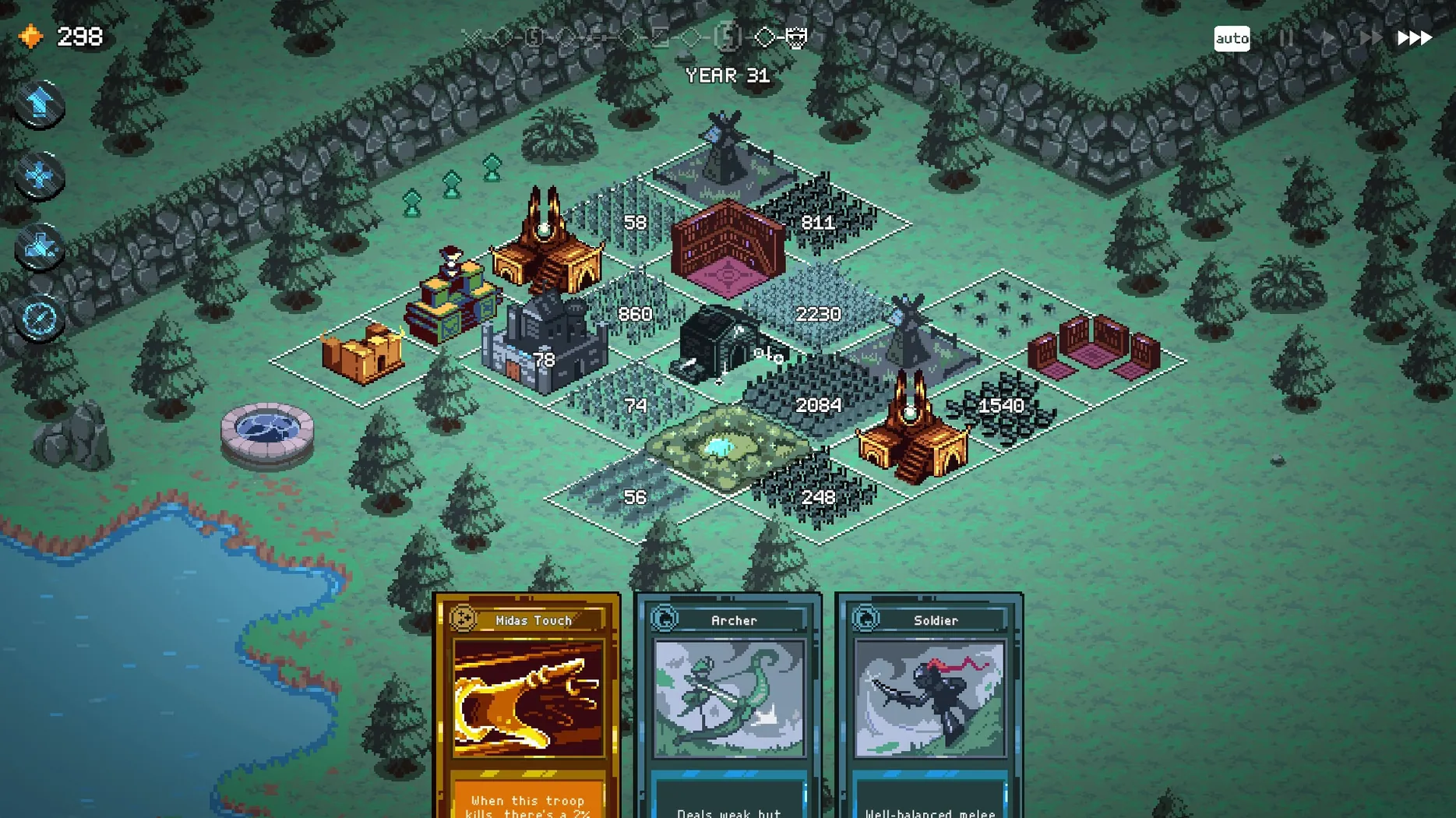
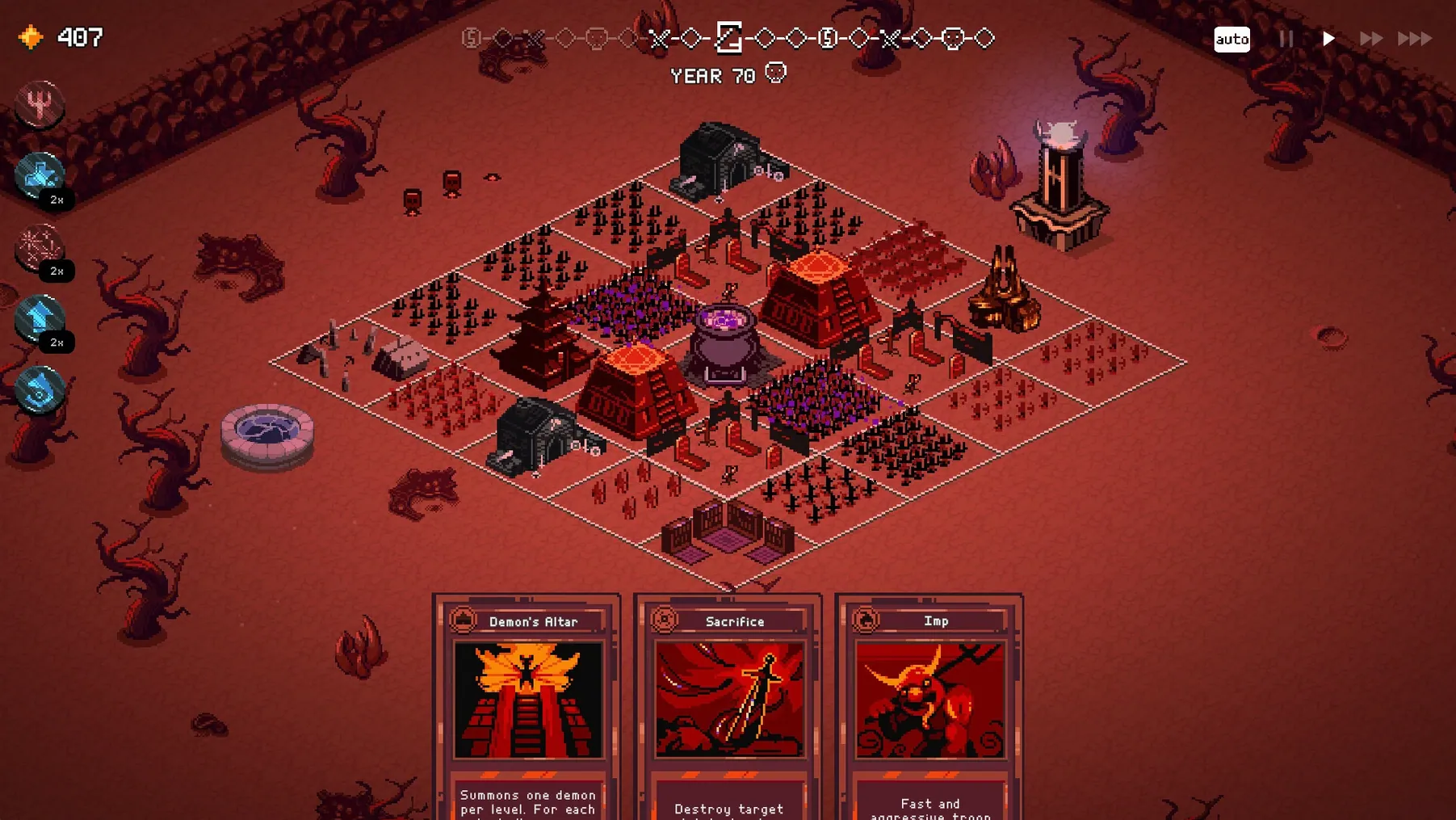
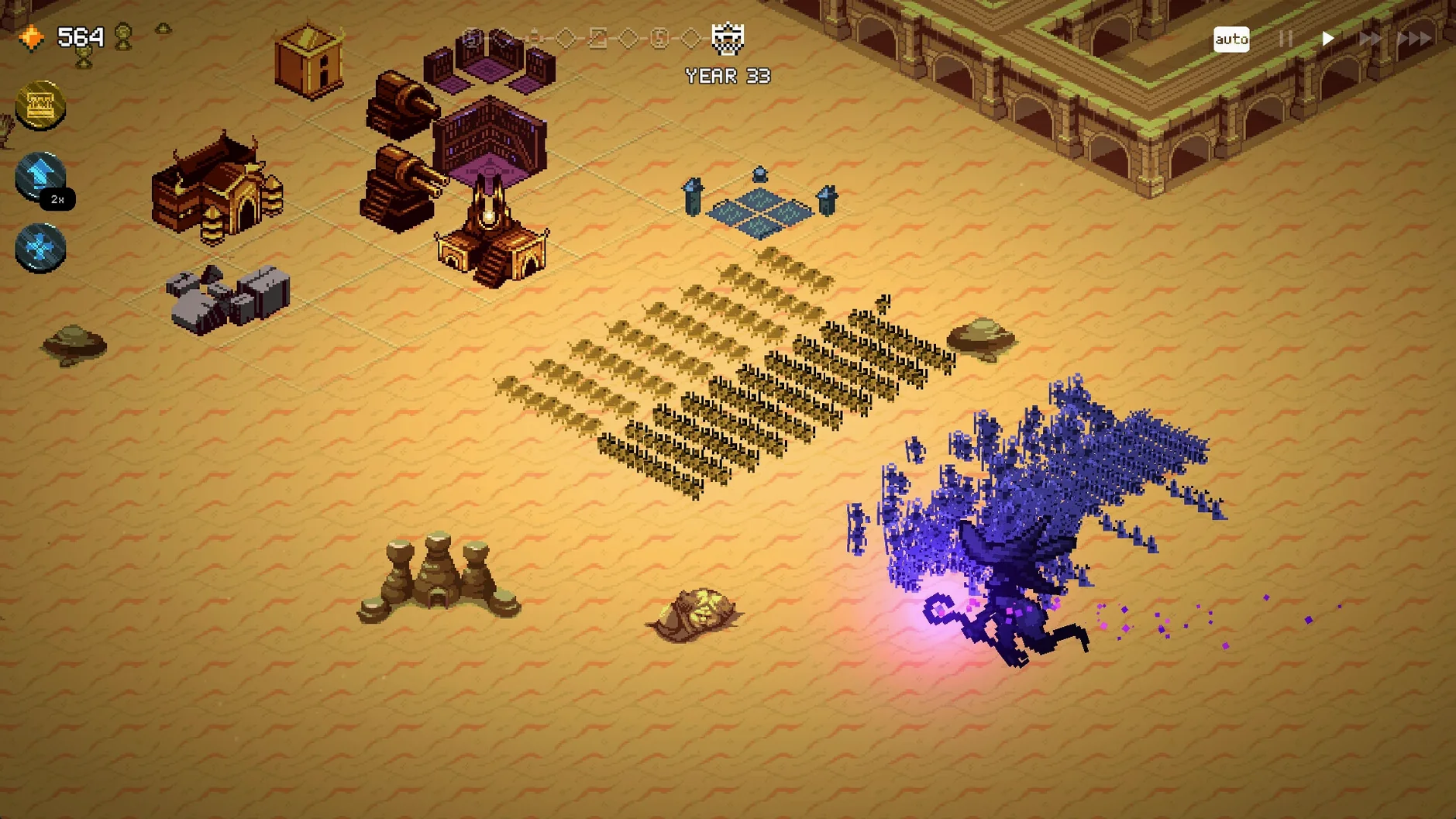
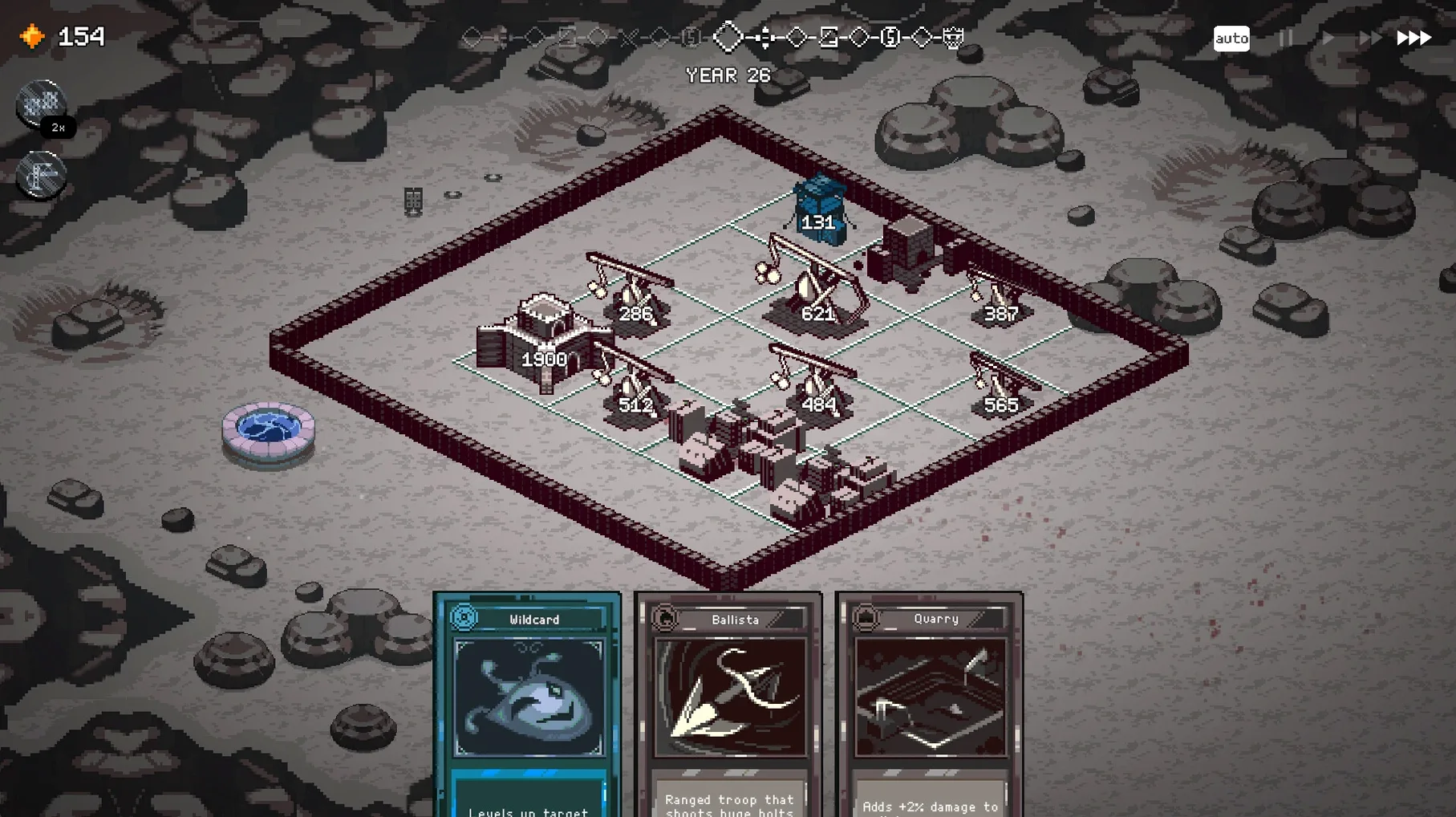
A player who savours finding the crack in a system will feel right at home in 9 Kings. The game hands you a fledgling capital and a deck of possibilities, then steps back as rival rulers grow stronger with every turn. Survival isn't about balanced play — it's about spotting the unexpected synergy that turns a modest village into an engine capable of crushing every other kingdom on the map. If you need a clear, tutorial-led path to victory, this one will frustrate you. If you enjoy prodding at rules until they snap, read on.
- You choose which armies to fight and which kings to befriend, cherry-picking the forces you want to absorb while leaving the rest in peace.
- The capital evolves from a handful of huts into a fortified citadel, training troops and layering on permanent enhancements that reshape what your army can do.
- Cards combine freely — there is no single correct build, and the game rewards players who chase absurd, oversized synergies just to watch the resulting battles unfold.
- Random kingdom events force you to adapt mid-run, so even a dominant strategy needs a contingency or two.
- Runs can end conventionally — overwhelmed by stronger enemies — or conclude when you've dismantled the game's logic so thoroughly that every contender collapses.
Visually, it reads as a sprawling board of shifting territories, with the musical score providing the only voice. I found it works best in longer sessions where a half-formed idea in hour one becomes a world-breaking avalanche by hour three. It won't hold your hand, but it will let you get away with almost anything if you're clever enough to find the right sequence of cards.
A turn-by-turn session from a single decision
I start a run with the Plague Monarch, whose opening deck leans on attrition — poisoned ground, a handful of skeletal conscripts, and a spell that recycles fallen units into gold. The first few turns are quiet. I drop a barracks next to the capital, queue a squad of basic infantry, and watch a neighbouring king — the Iron Duke — declare war on someone else. Good. Let them soften each other up.
By turn twelve I've drawn a card I hadn't planned around: Fungal Bloom, which turns every corpse on the battlefield into a sentient mushroom soldier. It pairs unnervingly well with the Plague Monarch's poison tiles. I pivot hard. I stop recruiting knights and start spending gold on cheap, disposable troops I can throw into contaminated zones, knowing their deaths will seed the next wave. The capital gets a Spore Tower, which buffs mushroom units and spreads corruption to adjacent tiles. Suddenly the kingdom is less a fortress and more a composting operation with an army.
A rival king with a deck full of heavy cavalry attacks around turn thirty. On paper, his charge should flatten my fungal lines. But I've stockpiled a resurrection spell — dark magic that reanimates the last squad to fall — and I trigger it the moment his knights obliterate my front rank. The mushrooms that sprout from the carnage outnumber his survivors three to one. He sues for peace the next turn. I refuse. I want his bombardier card, and I get it when his capital burns two turns later. The run ends with every king absorbed and a battlefield that looks like a botanical nightmare. It took an hour and a half and it started with a single card draw I almost ignored.
Tuning card readability and combat speed after the tutorial
The defaults work, but a few adjustments make the game substantially more readable once you know what you're looking at.
Battle speed. The default pacing gives you time to parse each clash, but after a few runs the animations become information you've already processed. Sliding it to fast — or near-instant — cuts session length without removing the tactical feedback. You can always slow it back down when an unfamiliar deck synergy hits the field and you want to study the chain of effects.
Turn autosave to manual. The game autosaves after every turn, which is generous but can nudge you toward save-scumming when a risky war goes sideways. Some players love that safety net; others will find it erodes the roguelike tension. Switching to a manual save habit — one save per run, no rewinding — restores the weight of declaring war on a king whose deck you're not sure you can beat.
Card tooltip detail. There's a toggle that expands tooltips to show full synergy chains instead of single-card effects. With it off, you're memorizing interactions or testing blind. With it on, Fungal Bloom will explicitly list every condition that triggers a spawn, every unit type that counts as a corpse, and every tower that amplifies the result. It's the difference between guessing and planning, and I'd argue the game feels more like the latter with it switched on.
- macOS version — see developer notes
- Runs on both Intel and Apple Silicon Macs