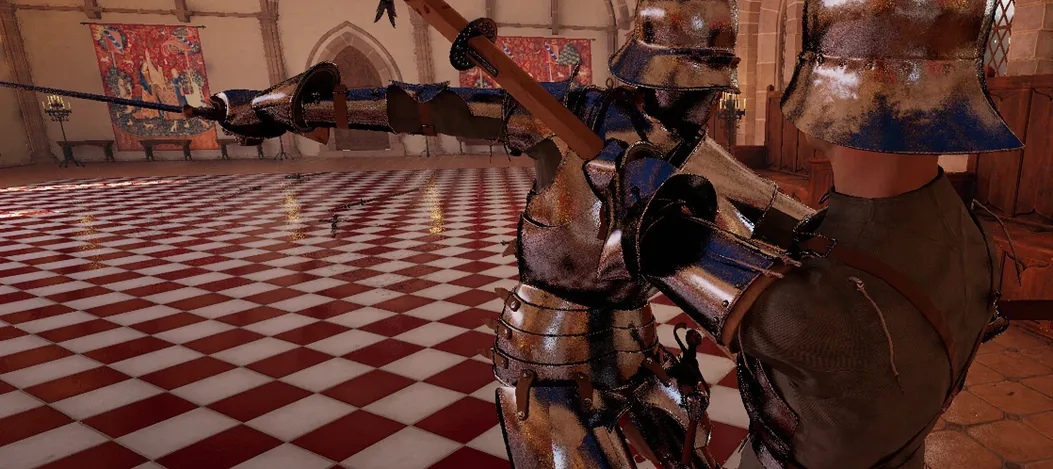
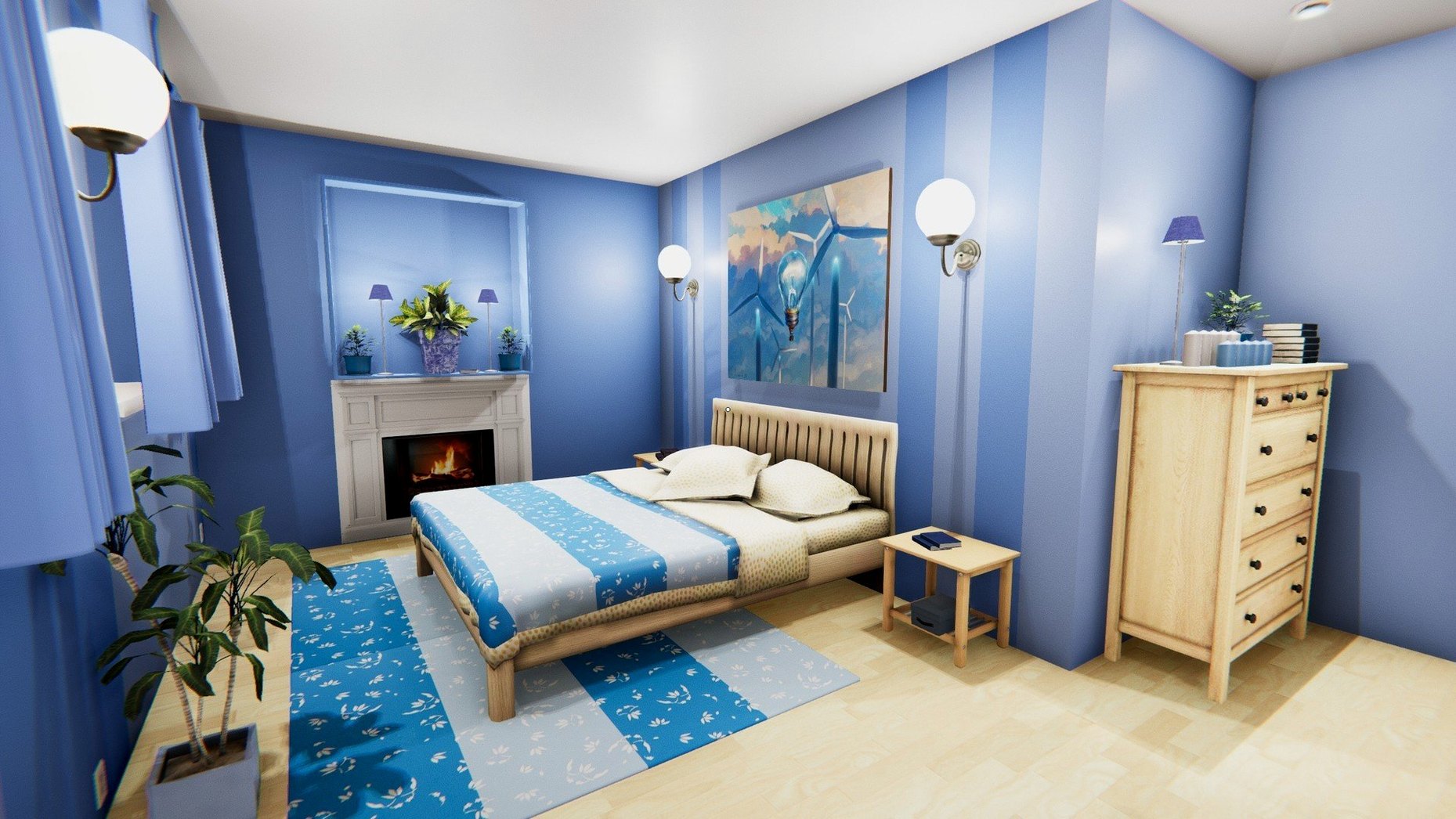
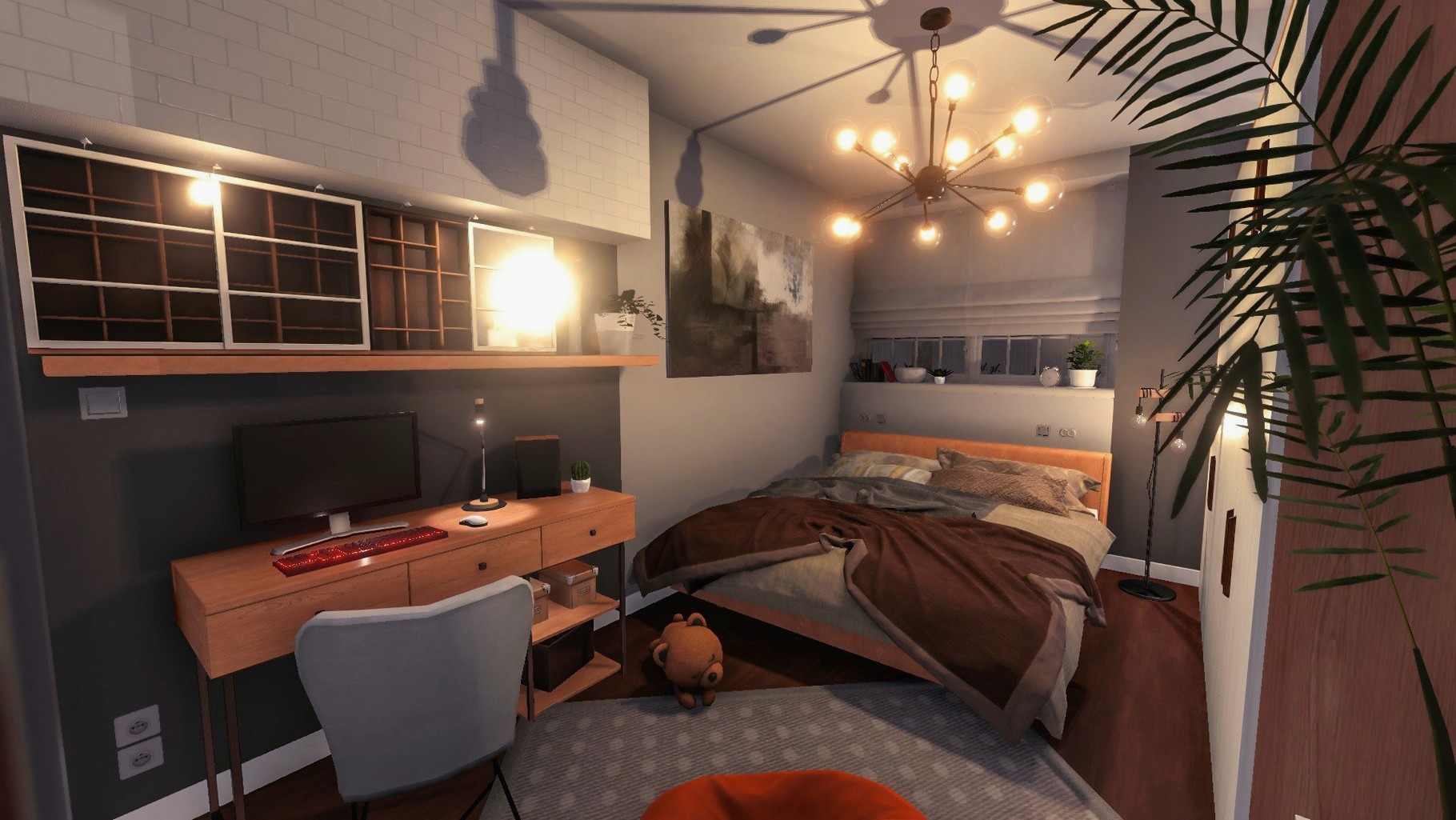
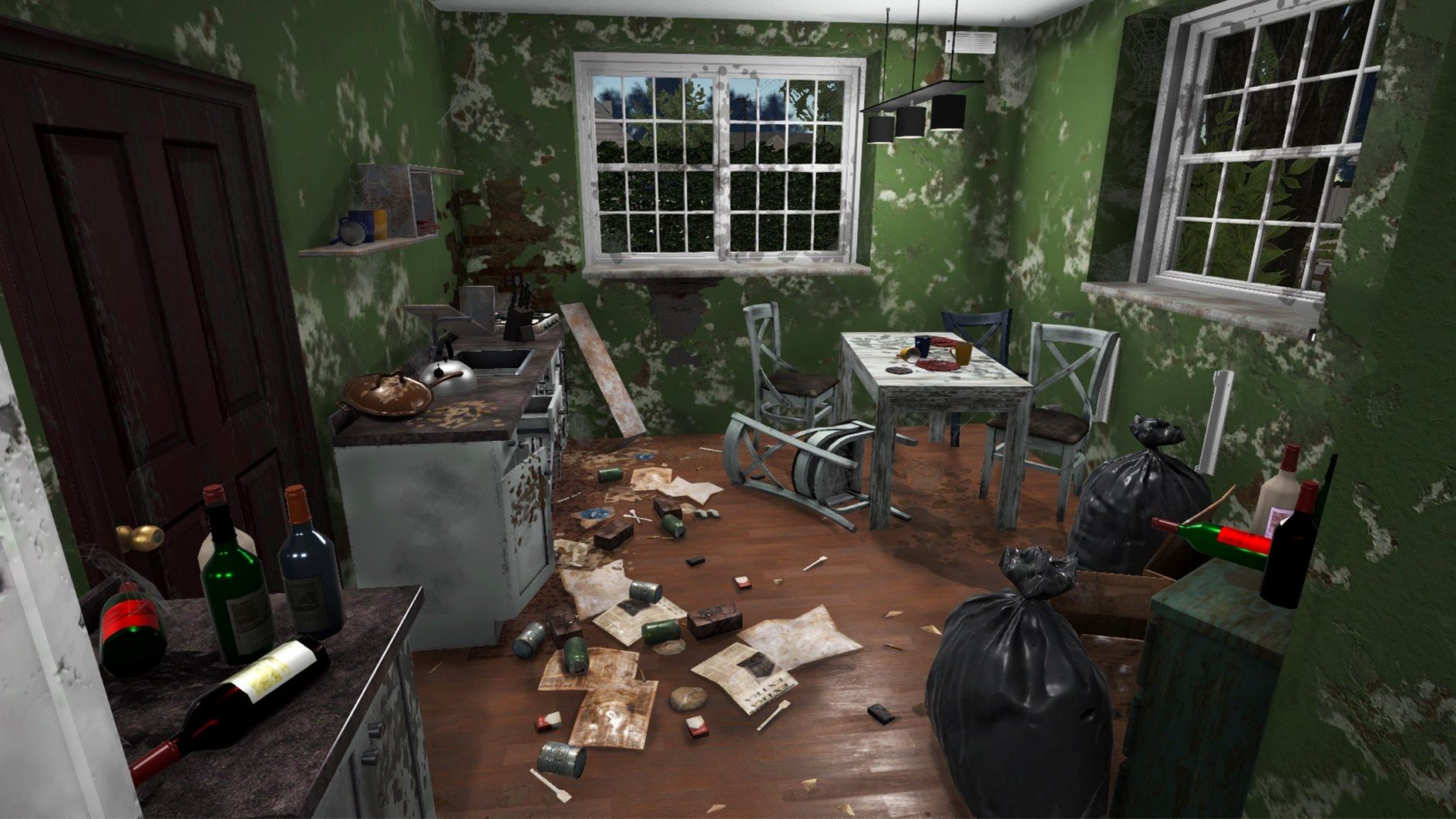
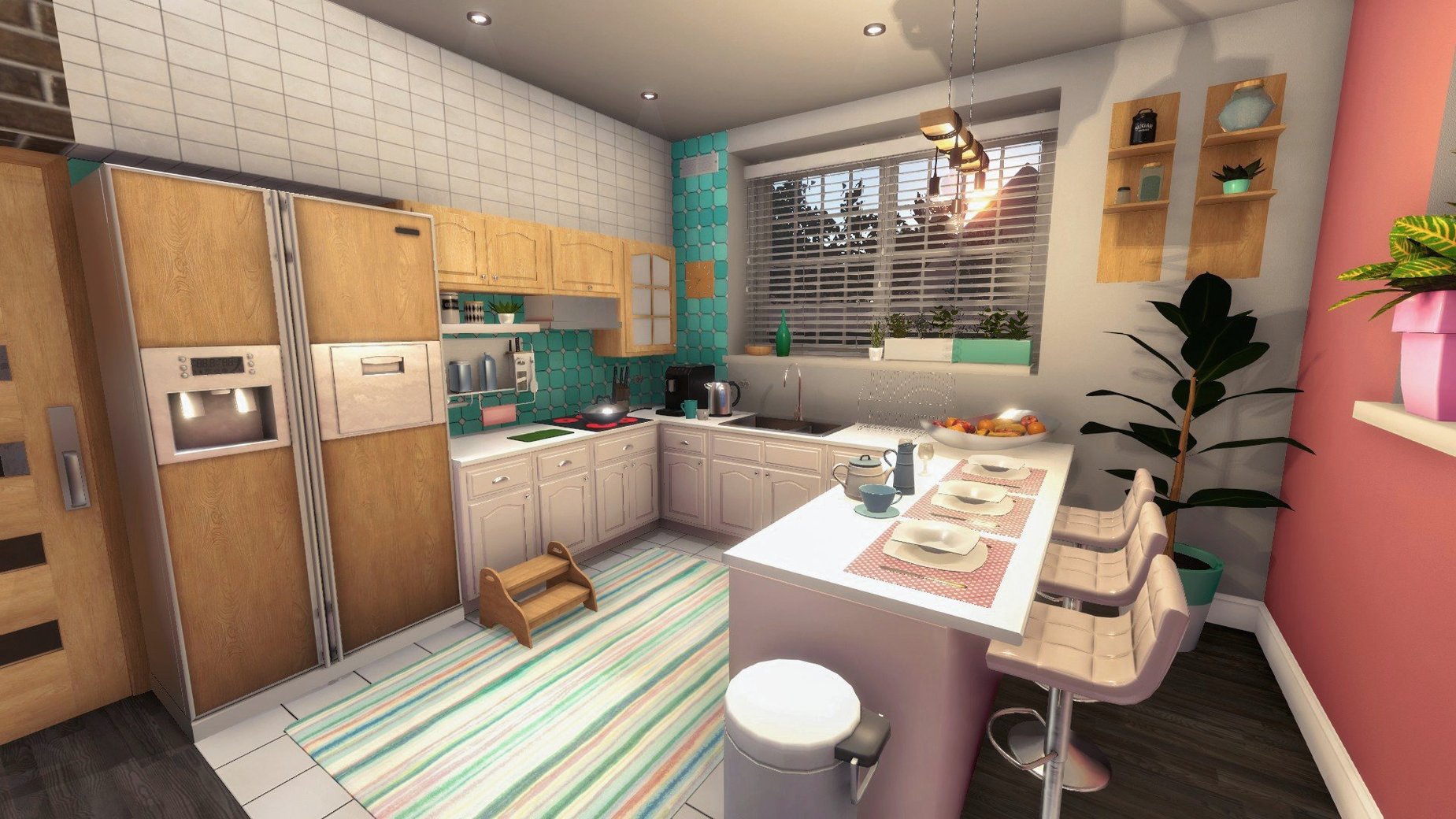
If you are the kind of person who gets a new plug-in and spends the first hour not making music but meticulously auditioning every preset, House Flipper will understand you. Empyrean's 2017 simulation strips renovation down to a quiet, methodical loop: take a job cleaning and repairing someone else's grimy property, earn the cash, then buy a wreck of your own and start swinging a sledgehammer. The satisfaction is not in the payday, it is in watching a room slowly transform under your hands.
The player who thrives here
A job might begin with a mop and a trash bag, graduate to replacing radiators, and eventually let you knock down a wall with a satisfying crunch. Every action feeds an experience system that unlocks better cleaning speed, wider painting strokes, and faster tiling. It is a game about the dignity of small tasks, where the reward is a clear floor and a freshly plastered wall. The player who gets lost in it is someone who finds a deep calm in process — the kind of person who organizes sample libraries for fun and finds demolition just as absorbing as decoration.
Where the rhythm loses its grip
The flipside is that the game asks you to find that rhythm entirely on your own. There is no story, no character arc, and the pressure is self-imposed. If you need a game to hand you a crisis or a narrative hook, the silence of an empty apartment waiting for paint will feel less meditative and more like a void. Furnishing an entire house from a catalogue is a creative act, but the game treats it as a private one — you are building a home for your own gaze, not for a parade of grateful NPCs. When that clicks, hours dissolve. When it does not, you are just clicking on dirt.
Why your first payday comes from scrubbing floors, not swinging hammers
Start small. The instinct after installing is to grab the first house on the market and start swinging a hammer at a load-bearing wall, but the economy nudges you toward a more patient rhythm. Spend your first two or three sessions doing nothing but contract jobs — the ones where a client hands you a specific list of grievances and a budget. These teach you the tool set without the financial pressure of a mortgage breathing down your neck. A bathroom covered in grime and broken glass is a low-stakes classroom. You learn that the window cleaner works faster if you spray the whole pane before wiping, that the mop leaves streaks if you do not pick up the loose trash first, and that a radiator installed crooked still counts as installed, even if it will haunt you every time you walk past it.
Put your first experience points into cleaning speed. It sounds dull, but a faster mop cuts the drudgery of the early game in half, and you will be mopping a lot — every job seems to involve a flood of soda cans and muddy footprints the previous owner left behind. Painting range is the second priority. The default paint roller covers a stingy patch of wall, and watching your character inch along a nine-foot ceiling is the kind of slow-burn frustration that makes people quit before the game gets good.
Check the tablet between jobs. The map screen does not just list available contracts, it shows you what the house looks like before you commit, and a quick glance at the photos tells you whether you are in for forty minutes of bagging trash or something more satisfying. Avoid jobs that ask only for cleaning once you have enough saved for a small property — they pay, but they do not teach you the renovation tools, and you can get stuck in a loop of tidying other people's messes without ever learning how to tile a floor or hang a shower cabin.
The audio engineer who remodels kitchens to quiet the inner critic
Imagine someone who spends their day in a recording studio, shaping other people's songs, making hundreds of tiny decisions about reverb tails and compression thresholds. At night they open House Flipper not for challenge but for decompression — a world where the only thing asked of them is to knock out a partition wall and choose between oak and birch flooring. They buy a crumbling bungalow with a kitchen that looks like a health-code violation and a living room painted in a shade of green that should not exist in nature. There is no client, no brief, no deadline. Just a hammer, a paint roller, and the slow pleasure of watching the rot disappear.
They start with demolition. The sledgehammer swings in a wide arc, and a wall comes down in chunks of plaster and dust. It is physical in a way that clicking faders is not, a tactile satisfaction that has nothing to do with precision and everything to do with impact. Once the debris is bagged and the floors are swept, they install a new radiator, run a bead of plaster along the seam where the wall used to be, and paint the room a warm grey that looks nothing like the before photo. The tablet dings with a notification — the house value has crept up a notch. They do not check it. They are too busy deciding where the sofa goes.
That plastering trowel is lying to you about the right angle
The most common frustration in the first week is the trowel. Plastering looks straightforward — you pick up a dollop of compound and smooth it onto a wall — but the game is finicky about angle and distance. If you stand too close, the trowel skips the surface. Too far, and nothing happens. The sweet spot is about a character-length back from the wall, with the crosshair centred on the crack or hole. Move slowly, and do not try to plaster an entire wall in one motion; the game rewards short, overlapping strokes. If the plaster will not stick at all, check whether you have already cleaned the debris from that section — an invisible pile of dust can block the tool entirely.
Wall demolition looks like chaos but follows rules. You cannot knock down every wall. Structural walls — the ones that hold up the ceiling — will not budge no matter how hard you swing, and the only way to tell is to hit it and watch for damage. If the wall crumbles, it was non-structural. If it stays pristine, move on. People sometimes waste twenty minutes hammering a load-bearing column before they catch on.
The game also saves your progress in an unusual way. It keeps a single save slot per profile, and it autosaves when you exit a property. That means if you leave a job half-finished and come back later, you start from the moment you arrived — all your cleaning, painting, and furniture placement is gone. Finish what you start before walking out the door, or accept that you will be doing it twice. On the flip side, this is a relief if you buy a house and immediately regret the layout. Exit, reload, and the walls are standing again.
A smaller but persistent issue on Mac: the game sometimes launches to a black screen on first run. This is not a crash or a missing dependency, it is a window focus quirk. Switching to another desktop with a three-finger swipe and then back to the game forces the display to refresh. Toggling fullscreen mode with Cmd-F also shakes it loose. If you are grabbing the house flipper download mac build, expect to see it once and never again after the initial hiccup.
When your Mac Mini M4 stays silent through a roomful of real-time shadows
On Apple Silicon the game is calm and unobtrusive. It does not spin up the fans on a Mac Mini M4, even during extended sessions with a dozen lights placed and a room full of furniture casting real-time shadows. The Unity engine underneath shows its age in the way reflections sometimes lag half a second behind a moving lamp, but the tradeoff is a steady frame rate that never stutters when you swing the hammer into a wall of cabinets. Loading a property takes about four seconds from the map screen; exiting back to the office is nearly instant. The memory footprint sits around a modest 1.2 GB, which leaves plenty of room for a browser with a renovation reference photo open in the background.
On older Intel Macs the story is different. The game runs, but the frame rate dips below thirty when you rotate the camera quickly in a fully furnished room, and the loading times stretch toward eight or nine seconds. It is playable, just not as fluid. If you are working from a House Flipper torrent build on an aging machine, close other applications first — the game does not like sharing RAM with a dozen Chrome tabs.
Stability is solid across the board. Crashes are rare enough to be memorable: I have seen the game close itself exactly once in a month of daily play, and that was while rapidly cycling through paint colours on a wall that had already been plastered, painted, demolished, plastered again, and painted again in the space of ten minutes. The game seemed less broken and more politely exasperated. Autosave meant I lost nothing.
- Architecture: Apple Silicon and Intel (64-bit)
Questions from the booth
Yes, the game supports both ARM and 64-bit x86 architecture, and it ran smoothly on a Mac mini 2024 M4 during testing.
You start by taking renovation jobs to earn money, which involves cleaning, repairing, and demolishing, then you buy your own property and furnish the entire space to your taste.