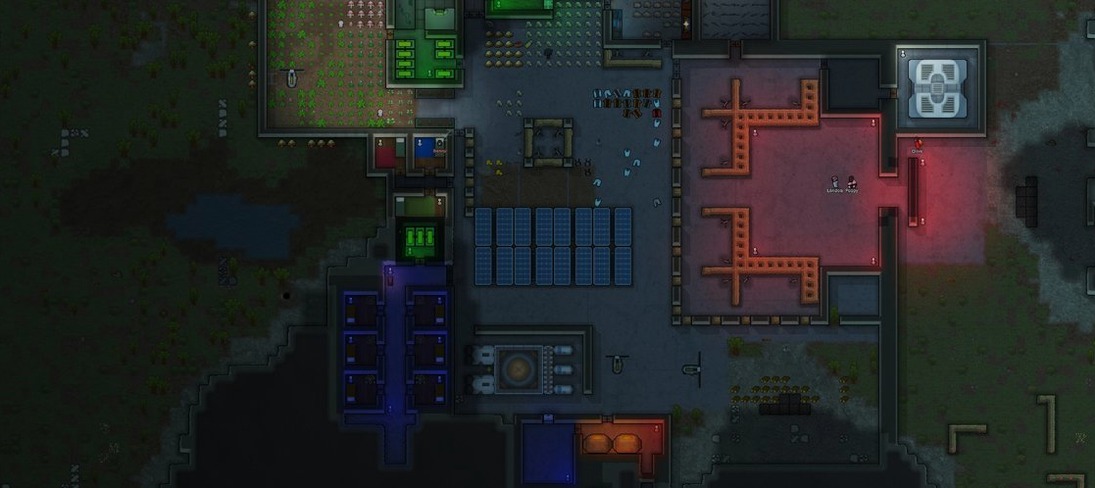
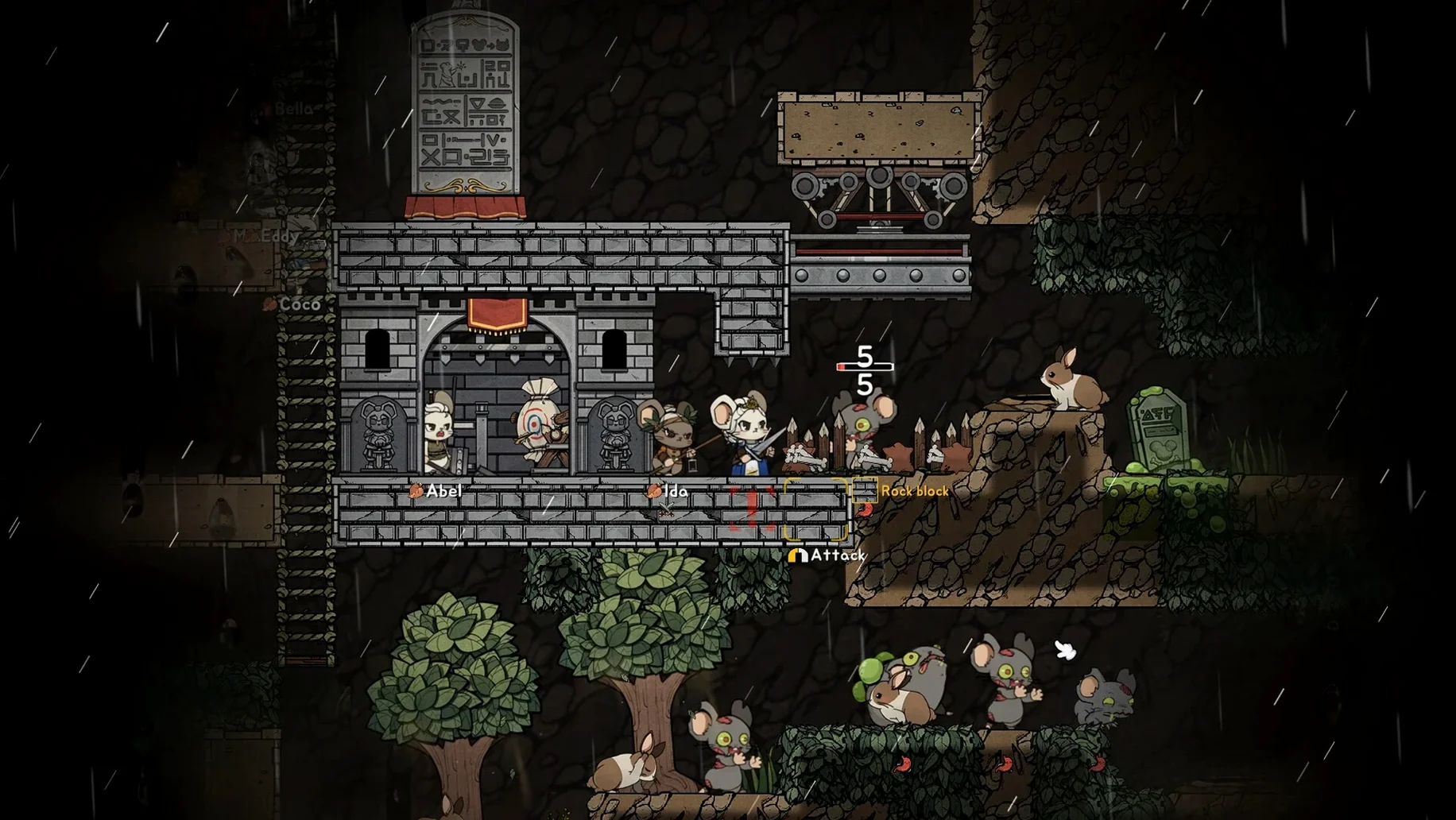
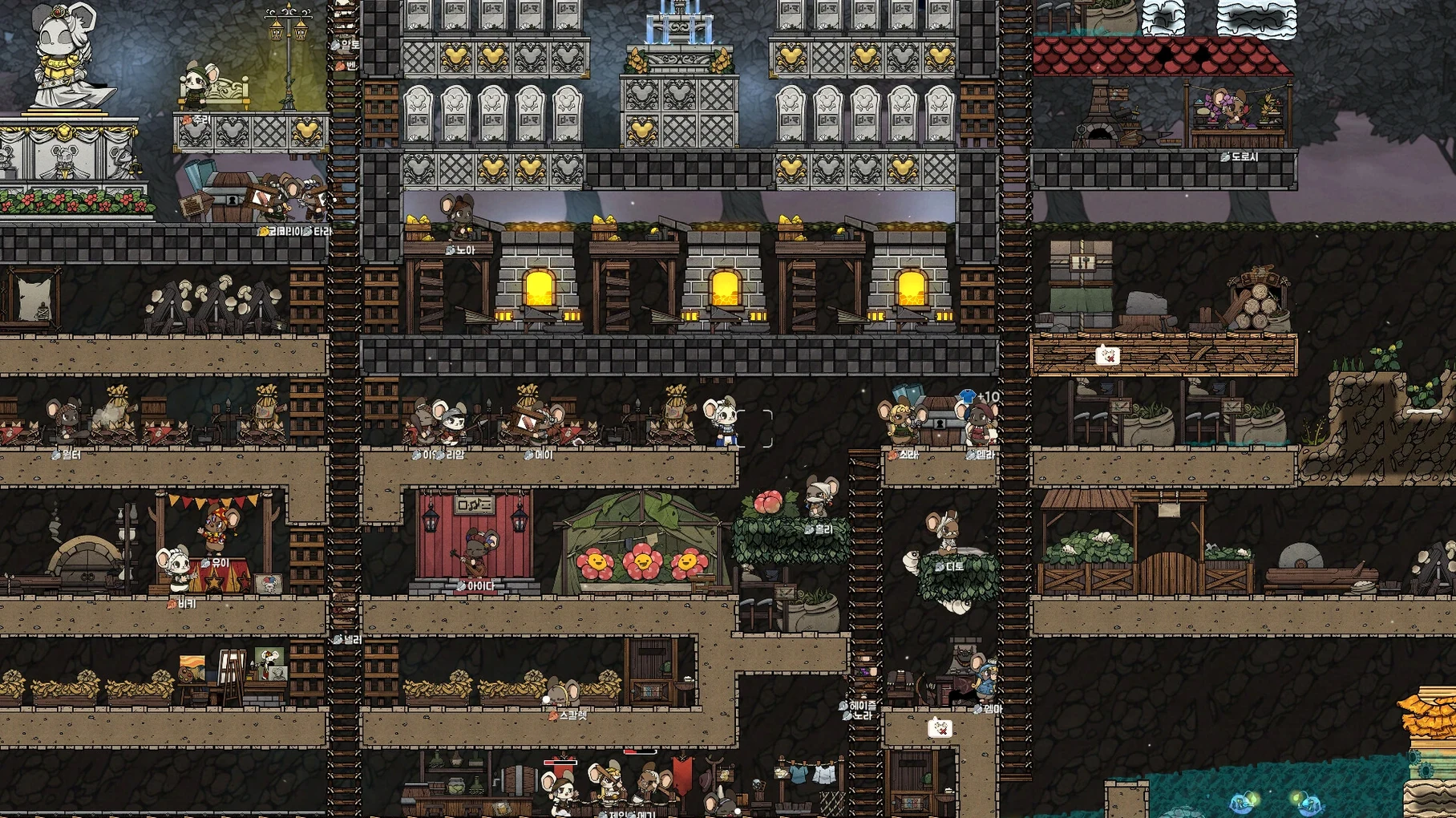
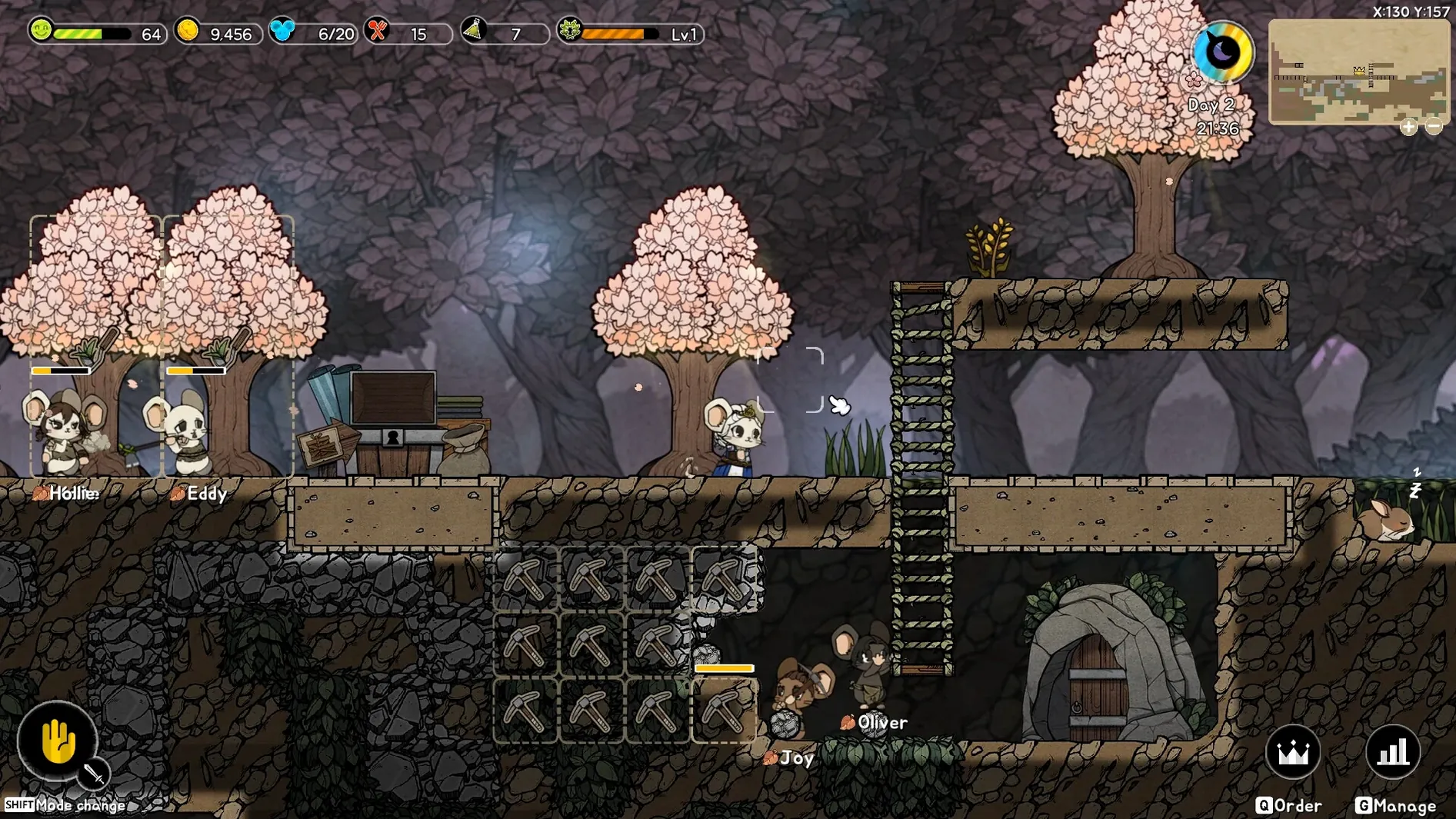
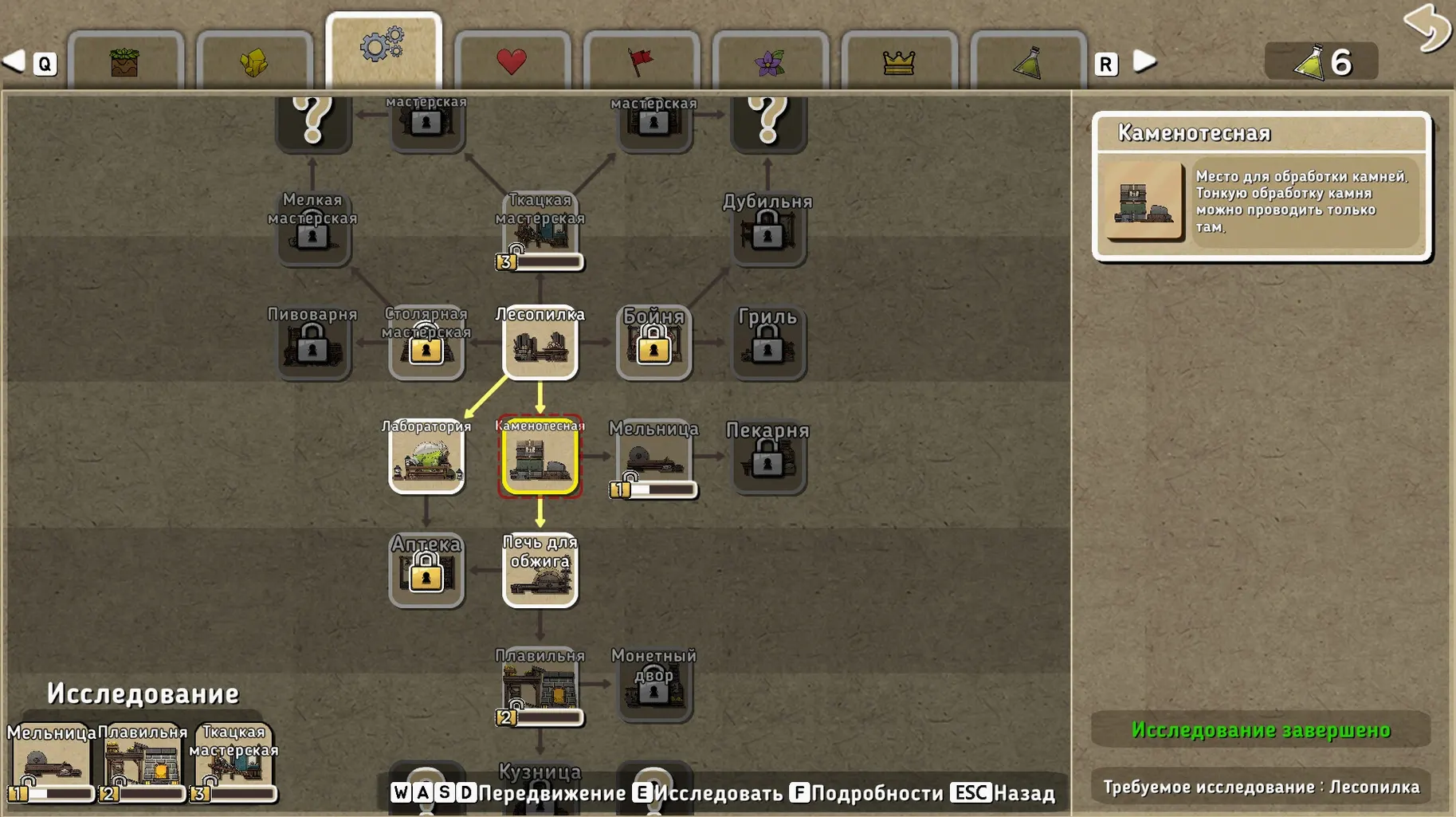
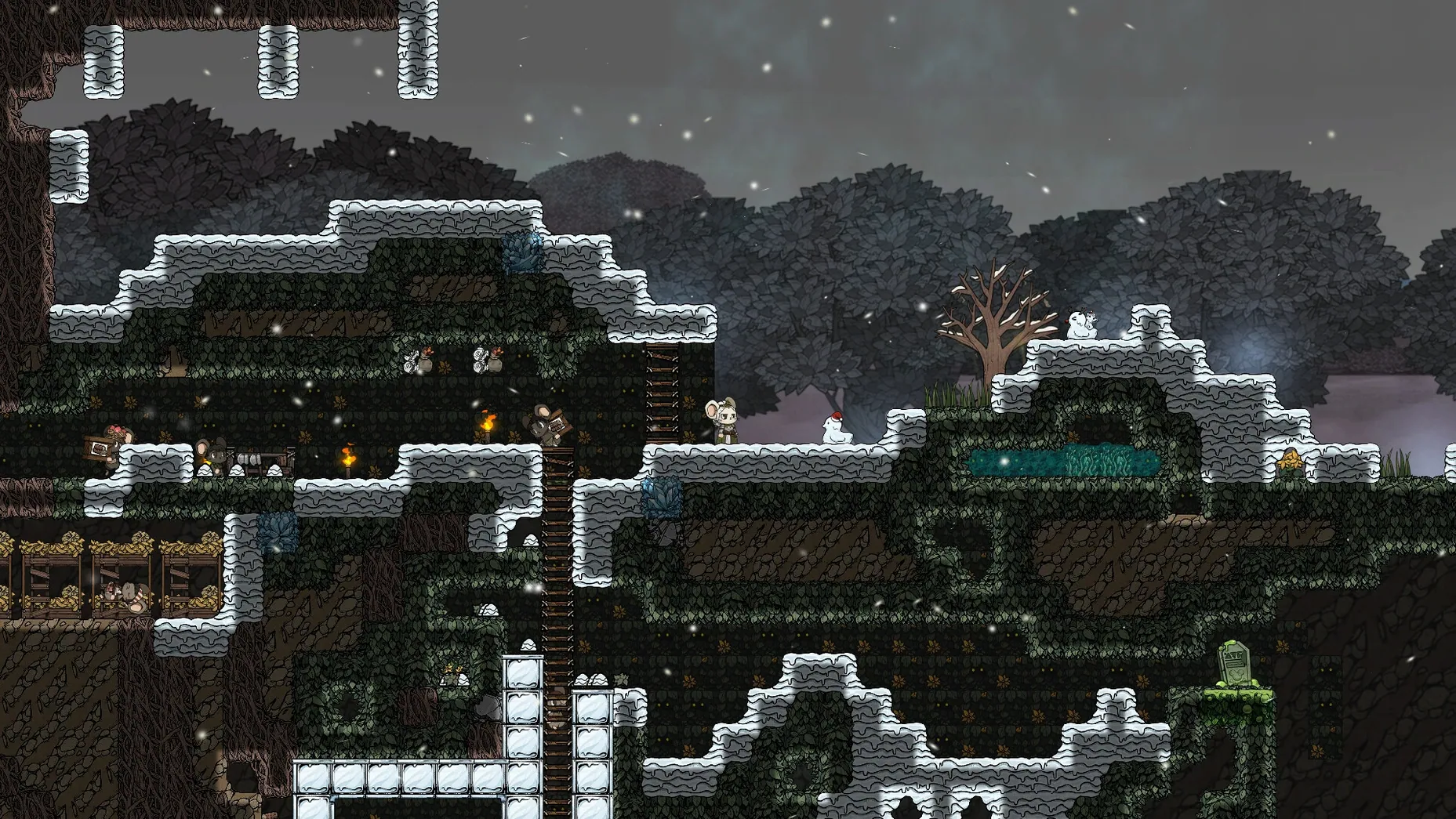
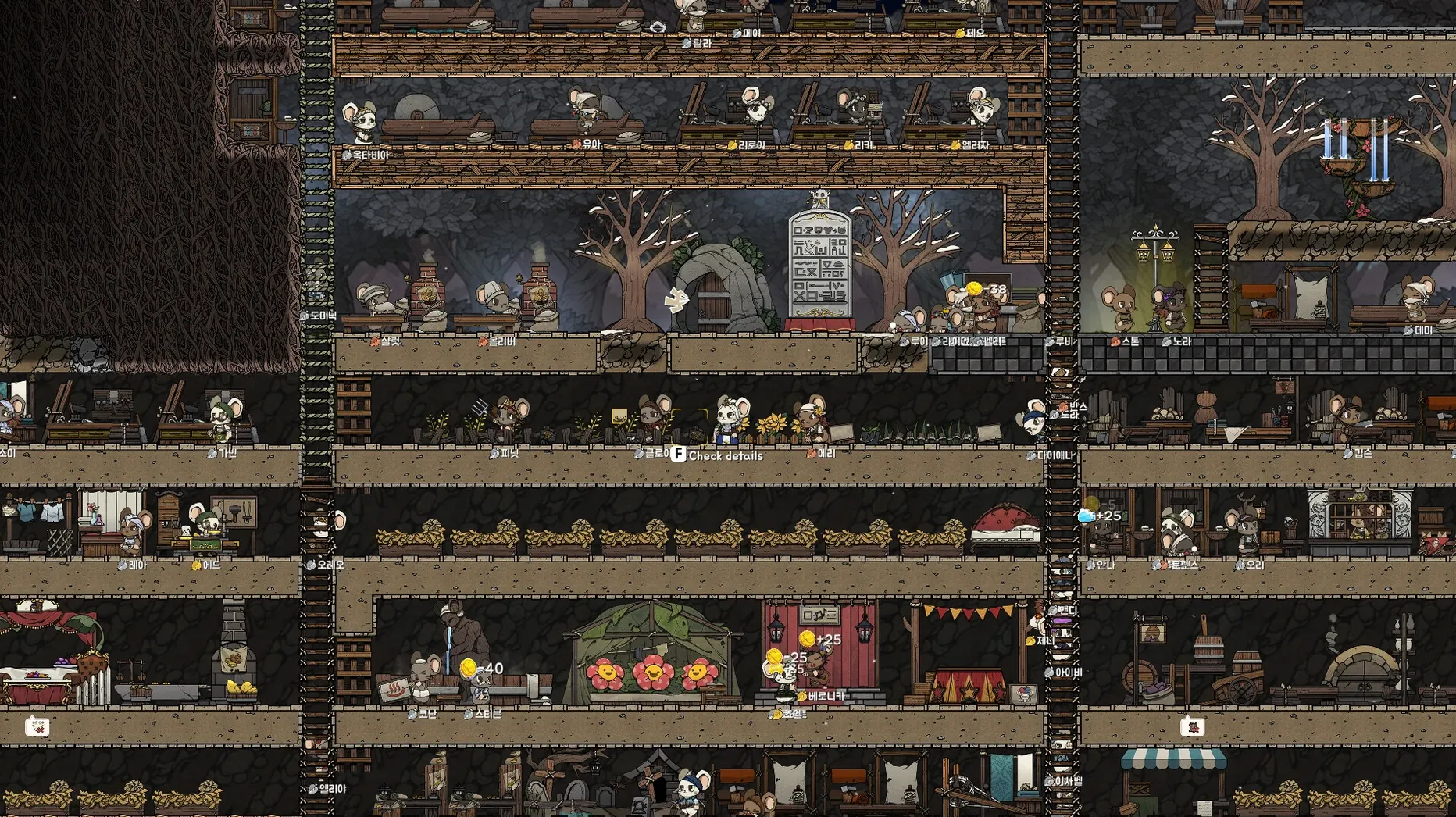
Rights Management. It is not the most glamorous tab you will open, but it tells you plenty about the kind of ruler Cassel Games expects you to be. Here, you set tax rates, define succession laws, and decide whether your citizens own their beds or merely rent them. The game does not treat its rats as interchangeable drones — each one arrives with personal stats, property, and a distinct economic footprint that feeds directly into the colony’s survival.
Who settles into Ratopia best
- Systems tinkerers who lose themselves in production chains, automated workshops, and fine-tuning trade routes. The economic simulation is granular enough to reward obsessive spreadsheet thinking without demanding it.
- Narrative-minded builders who want their citizens to feel like individuals rather than population counters. Events, expeditions, and the quirks of each resident’s traits give the colony a lived-in texture.
- Players comfortable with friction. Starvation, unrest, and poorly insulated underground chambers will kill your settlement. This is a survival game first, a sandbox second.
Where the patience runs thin
If you need a relaxed, consequence-free sandbox where colonies run themselves after the first hour, Ratopia will push back. The early game demands constant attention to oxygen, food, and morale, and the underground expeditions — while rewarding — introduce threats that can cascade back to the surface. Similarly, anyone expecting a purely creative sandbox with unlimited resources will chafe against the survival constraints. The game gives you an economic canvas, but it never lets you forget that the canvas breathes, starves, and occasionally stages a coup.
Underground survival without the gas physics lab
Set Ratopia beside Oxygen Not Included and the differences surface quickly. Klei’s game leans hard into fluid dynamics, gas pressure, and thermal simulation — physics systems that feel like lab experiments. Ratopia shares the underground setting and the survival pressure, but shifts the emphasis from physics puzzles to economic architecture. You are less concerned with whether carbon dioxide pools in the lower chambers and more concerned with whether your rat-blacksmith earns enough to afford the bread the rat-farmers grew. Both games punish neglect, but Ratopia’s punishments tend to arrive through policy gaps and inequality spirals rather than atmospheric mismanagement.
Beside RimWorld, the comparison grows more interesting. RimWorld generates stories from character interactions, mental breaks, and random raids. Ratopia generates stories from the systems you build — tax brackets, inheritance laws, the slow drift of a colony from communal pantry to stratified marketplace. Where RimWorld asks how you respond to chaos, Ratopia asks whether the order you designed is stable enough to survive its own internal logic. The mood is less chaotic, more quietly tense. If you have ever wished RimWorld’s economy tab had its own game, Ratopia is that wish made playable.
Timberborn shares the city-building bones and the focus on resource management, but its beavers are simpler creatures. They work, they drink, they build dams. Ratopia’s rats, by contrast, own property, pay taxes, and occasionally hoard wealth in ways that distort your carefully planned supply chains. Timberborn is about engineering a landscape; Ratopia is about engineering a society, one ledger entry at a time.
Granaries are full but rats still starve
“My rats are starving but there is food in the granary.” Check your distribution policies. Rats with empty wallets cannot buy from the market, even if the stalls are overflowing. Lowering food taxes temporarily or setting up a free communal pantry can bridge the gap while you get wages sorted. Also verify that your haulers have enough stamina — an exhausted workforce leaves crates sitting where they were harvested.
“An expedition collapsed and now the whole colony is spiraling.” Underground adventures tie back to the surface economy more tightly than they first appear. Losing a key fighter-turned-breadwinner can trigger a cascade: less income, less tax revenue, less funding for the next expedition’s torches and bandages. Keep a small reserve fund in the treasury and avoid sending your only skilled digger into uncharted caverns without a backup trained up.
“The interface feels sluggish on my Mac.” On Apple Silicon machines the game runs smoothly, but Intel Macs with integrated graphics can stutter once the colony grows past forty or fifty rats. Reducing the draw distance in the settings and capping the simulation speed at 2× rather than 3× helps considerably. The colony still runs, you just see fewer off-screen cave details being rendered.
Planting ratgrass before the first winter hits
Start by assessing your seed biome. If you landed near surface soil patches, prioritize a farm plot of ratgrass — it grows fast and feeds the colony through the first winter. Assign two rats with the Farmer trait to it and set their working hours to match daylight. They produce more when they are not stumbling around in the dark.
Dig a small cold-storage chamber one level below the farm, lined with insulating stone. Food spoils slower here, and having a buffer means one bad harvest does not empty every stomach. Connect it to the surface with a short vertical shaft and a ladder; haulers move goods faster when the path is straight.
Next, open the tax panel and create a food exemption bracket for rats earning below a modest income threshold. This ensures your farmers, who tend to earn less than craftsmen, can still eat what they grow. The economic simulation rewards this kind of thinking — a well-fed farmer produces surplus, the surplus becomes market stock, the market generates tax revenue, and the treasury funds the next expansion. The loop closes cleanly when you tune the percentages right, and watching it tick over without intervention is one of the quiet satisfactions Ratopia offers.
Version 1.0.0600 marks the game’s official launch on Steam, arriving on 30 April 2025 after a stretch in early access. Cassel Games has delivered the full 1.0 release with the complete strategic survival, sandbox, and city-building simulation intact.
- macOS ?
- Supports both Intel and Apple Silicon Macs
Questions from the booth
It is a hybrid. You build a city with deep economic systems, but survival mechanics like resource scarcity, oxygen, and citizen morale mean your settlement can collapse if you mismanage it.
Yes. Each resident has their own property, stats, and characteristics, so they function as distinct economic actors rather than anonymous population units.