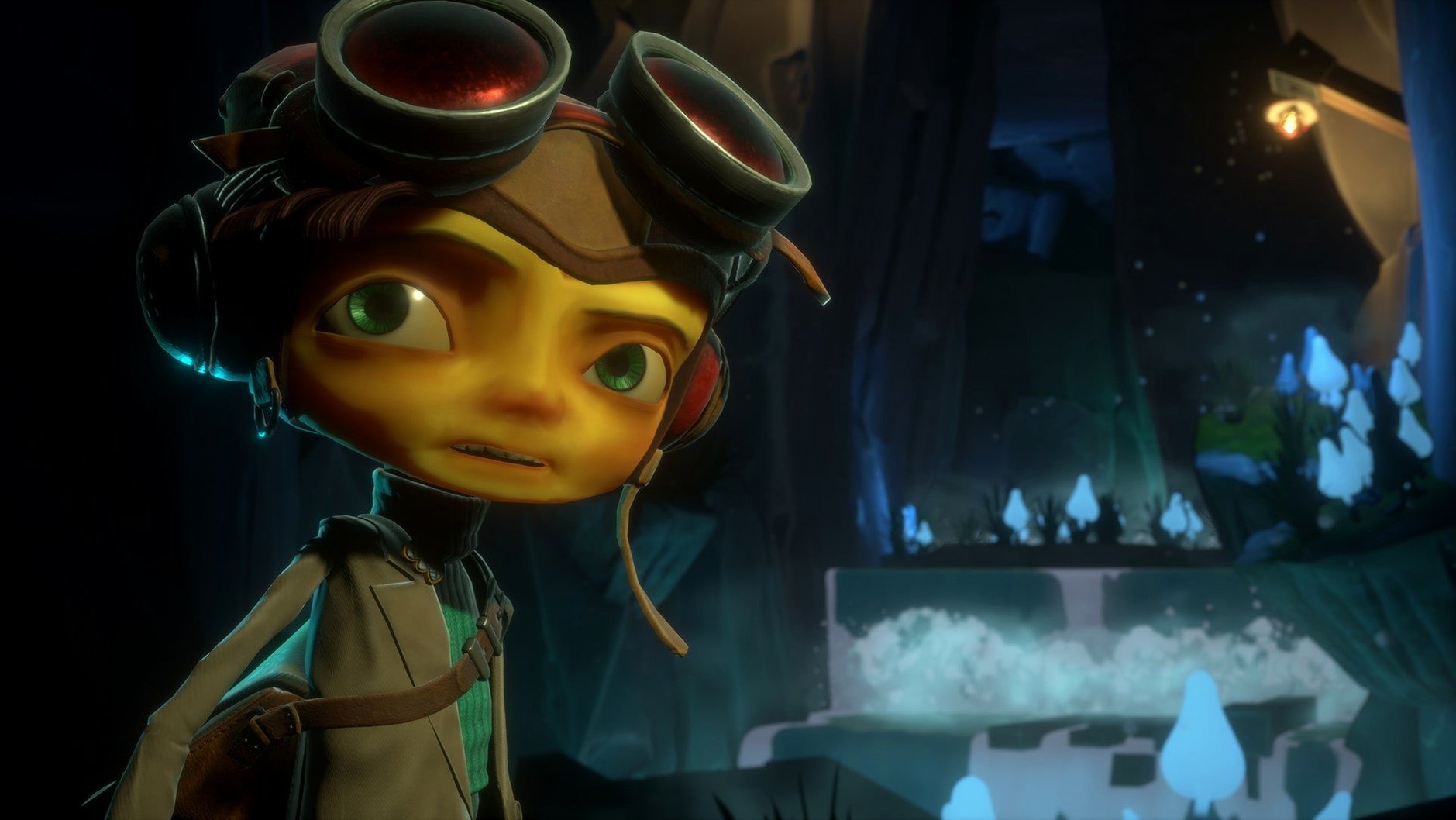
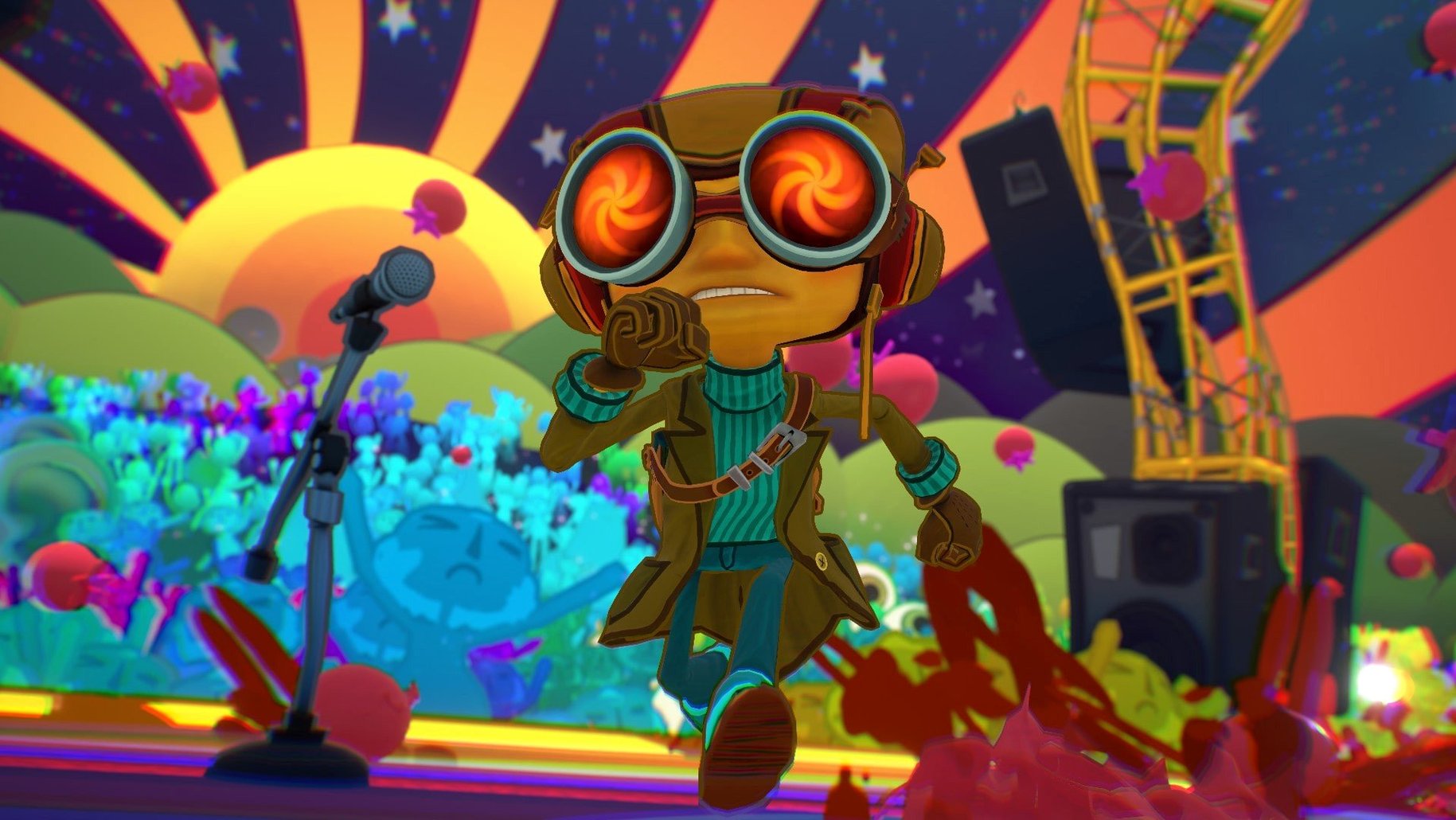
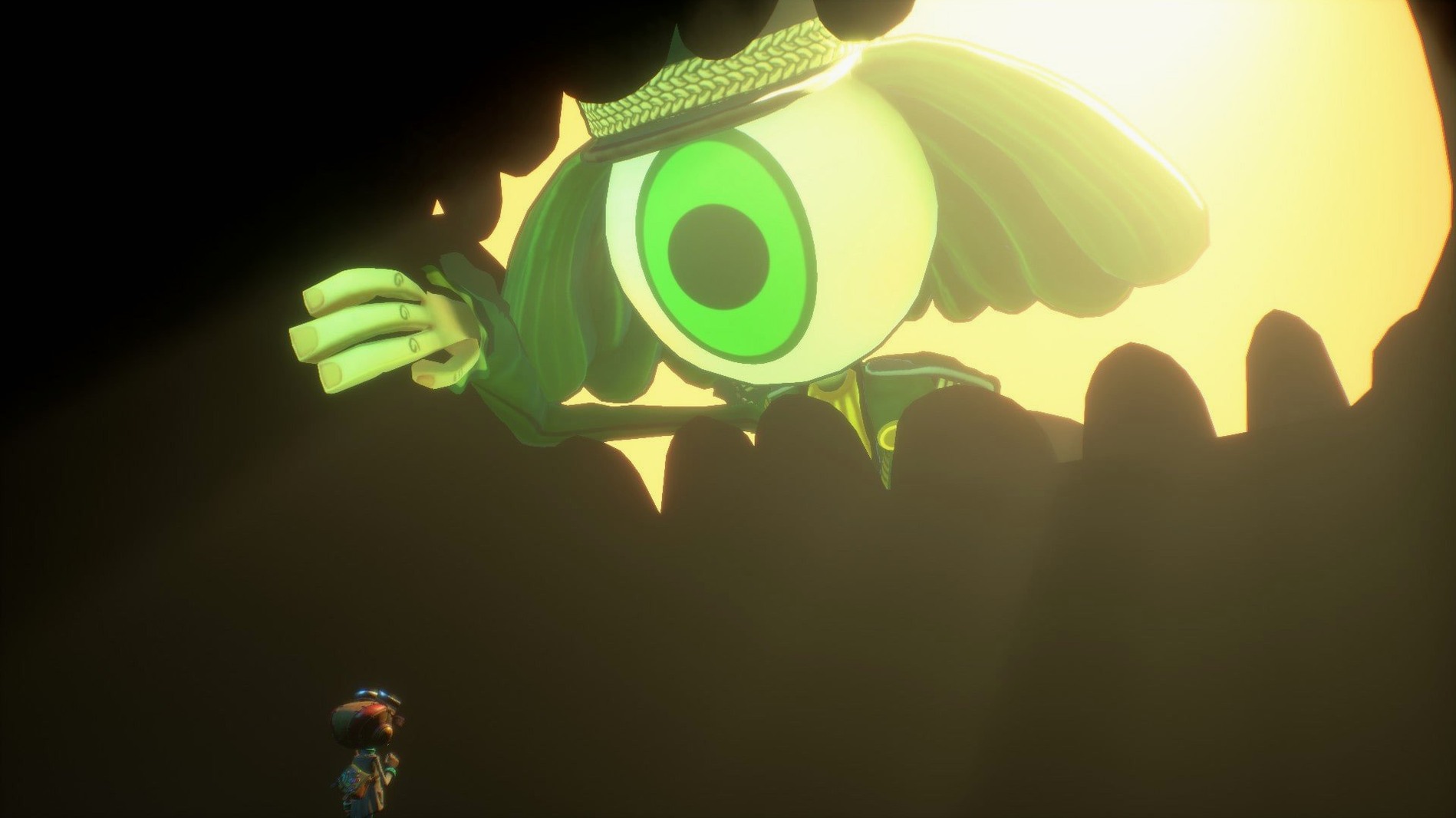
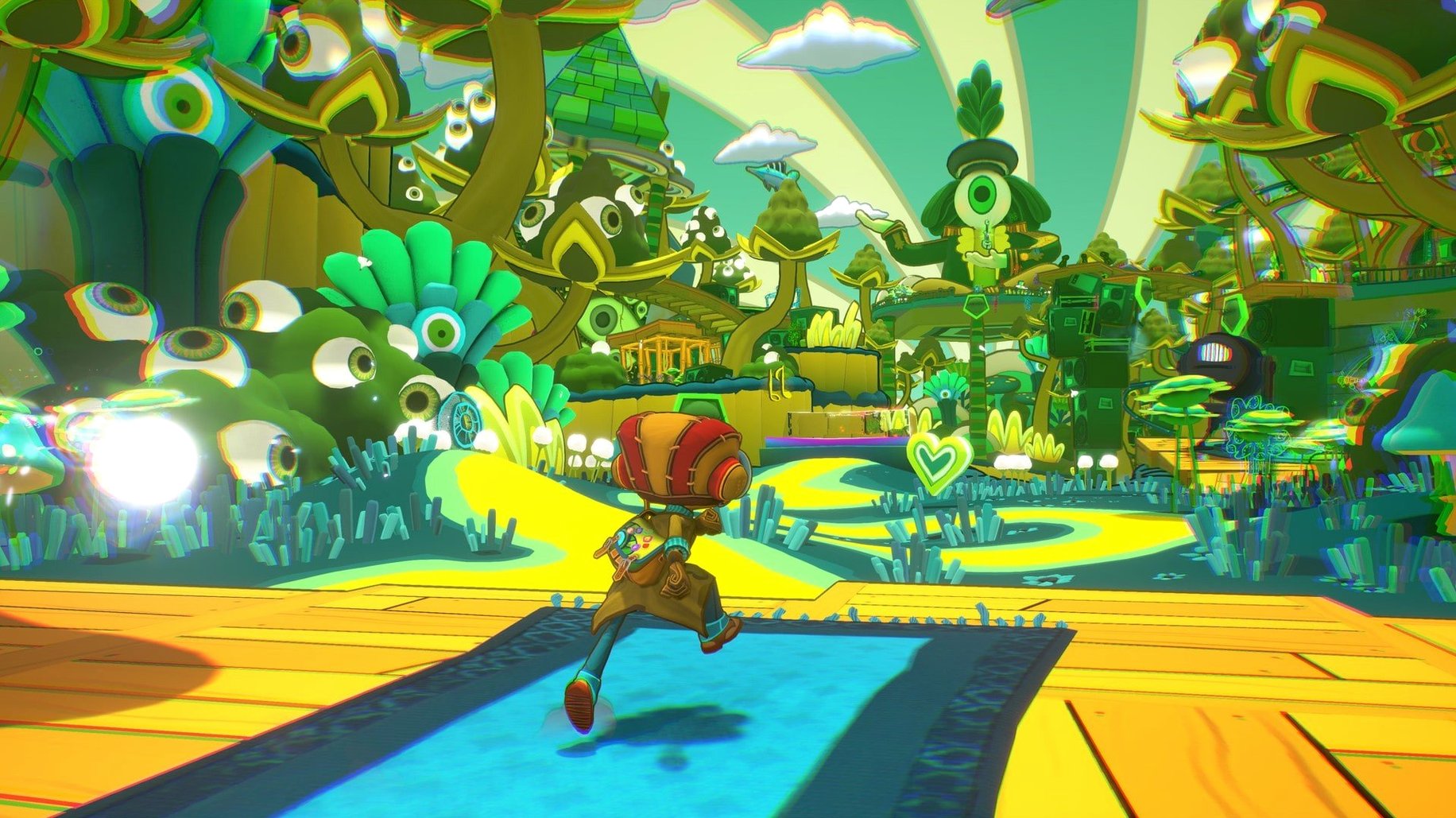
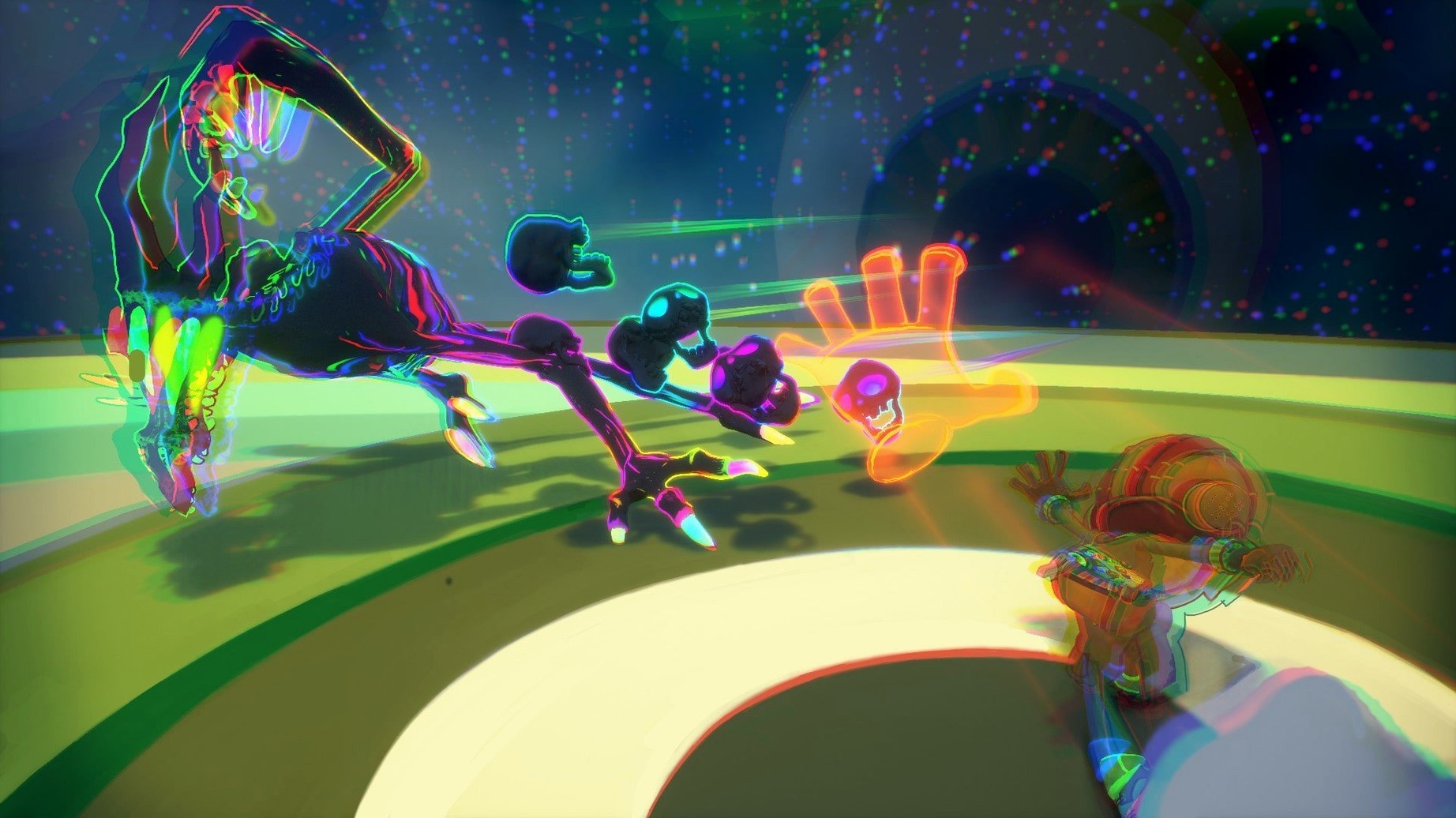
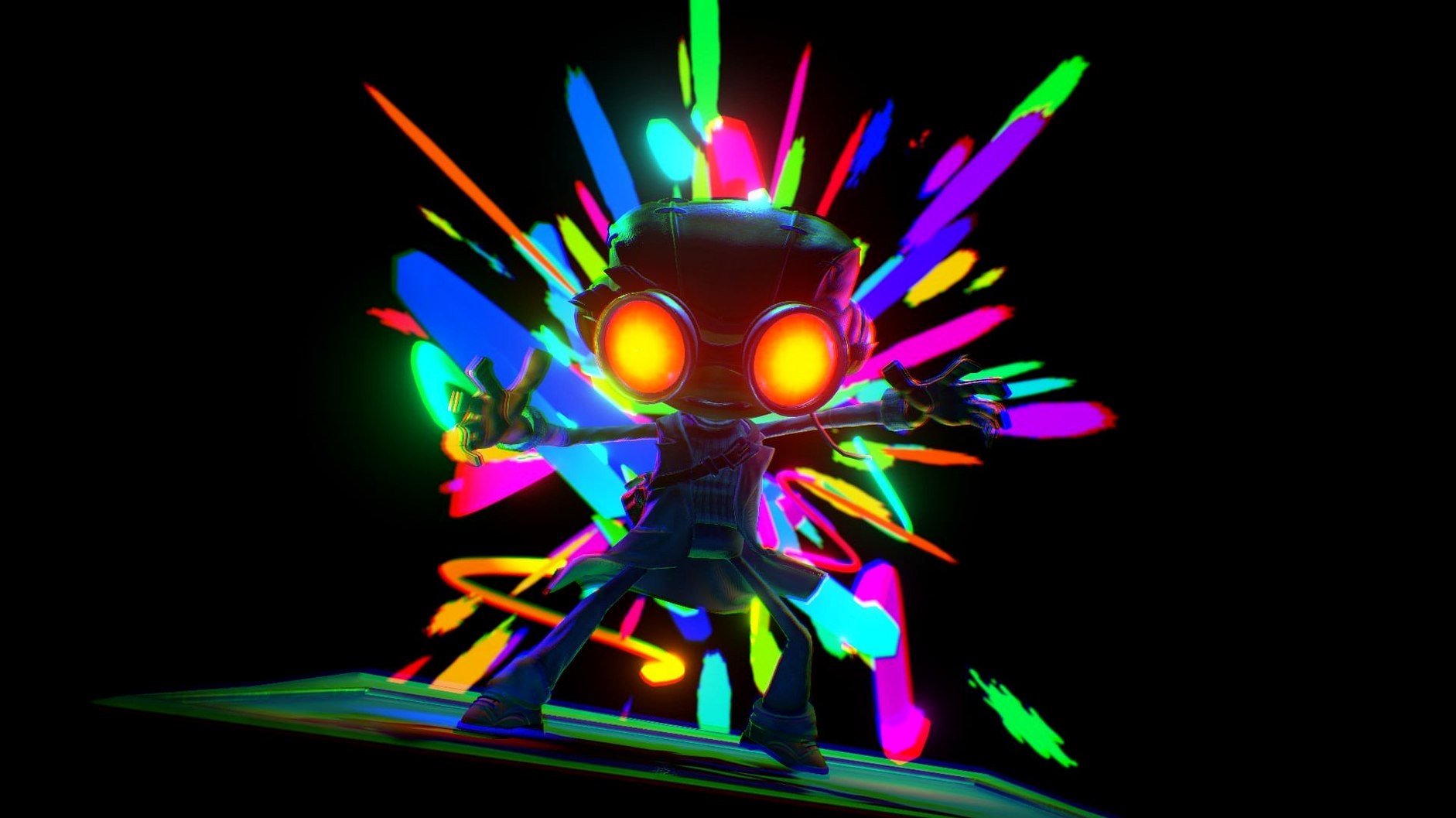
If you've ever used a non-linear editor and wished its timeline felt more like a story than a spreadsheet, you'll understand Double Fine's approach to platforming. Psychonauts 2 treats every level as a mental landscape to be explored, not just traversed.
Acrobatic traversal — Razputin Aquato moves like a trained circus performer across physical and psychic worlds. Running, double-jumping, swinging on trapeze bars, and grinding rails feel fluid and expressive rather than rigidly tile-based.
Psychic powers as your toolkit — You collect and assign abilities like Telekinesis, Pyrokinesis, and Mental Connection. Each power maps to a trigger or button, and you swap them mid-moment depending on whether you're solving a puzzle, fighting a mental projection, or reaching a hidden collectible. No fixed loadout.
Mind as level design — Every stage is the interior of a character's psyche. A hospital level warps into a casino-bot surgery nightmare; a librarian's mind becomes a literal paper-craft diorama. The environment shifts mechanics and tone to match the person whose brain you're inside.
Cinematic conspiracy — Between platforming stretches, the game unfolds through directed cutscenes and hub conversations that push a story about psychic espionage, family secrets, and institutional history. It's a single-player adventure that plays like a long-form animated film you occasionally steer.
A journal tracker silently counts your remaining figments
Raz's journal fills with more than just mission reminders. The collectible tracker tucked into its pages shows exactly how many figments, emotional baggage tags, and memory vaults remain in each mind you've visited. It updates silently as you play, and most people don't open it until the post-game cleanup.
Holding down the levitation button while airborne slows your descent — not just for platforming precision, but for steering onto narrow trapeze bars you'd otherwise overshoot. The game never tutorializes this. Similarly, Mental Connection works on enemy projectiles, letting you yank a Censor's thrown stamp out of the air and hurl it back. The icons appear for barely a frame.
Pull the camera back to see the full combat arena
Two adjustments sharpen the experience considerably. Camera distance defaults to a middle ground that cramps the periphery during combat. Pulling it back by two notches reveals the full arena without sacrificing the tightness of Raz's acrobatic feel. The game's art direction holds up at any distance.
Damage numbers are on by default, floating colourful digits off every enemy hit. They suit an RPG but clash with the cinematic presentation here. Switching them off in the interface tab strips away the number-crunching layer and leaves only the animation feedback and sound cues to communicate impact — closer to how the cutscenes feel.
The patch that stopped dialogue from vanishing on Intel Macs
The build labelled 1098152 (57382) fix addresses a long-standing audio dropout that would silence dialogue during extended sessions on Intel Macs. Prior to this, conversations in the Motherlobe hub would occasionally lose voice lines after an hour of play, forcing a restart. The fix keeps the full English voice track intact across the entire runtime.
Loading transitions between mental worlds also received a quiet improvement. Earlier builds on macOS 10.14 would hitch for several seconds when entering a new mind; the current version pre-caches those transitions more aggressively, so the shift from the physical campgrounds into a psychic level now lands closer to the console timing Double Fine originally tuned. It's the kind of change you stop noticing after the first hour — which is precisely the point.
- macOS 10.14 or later
- Intel-based Mac