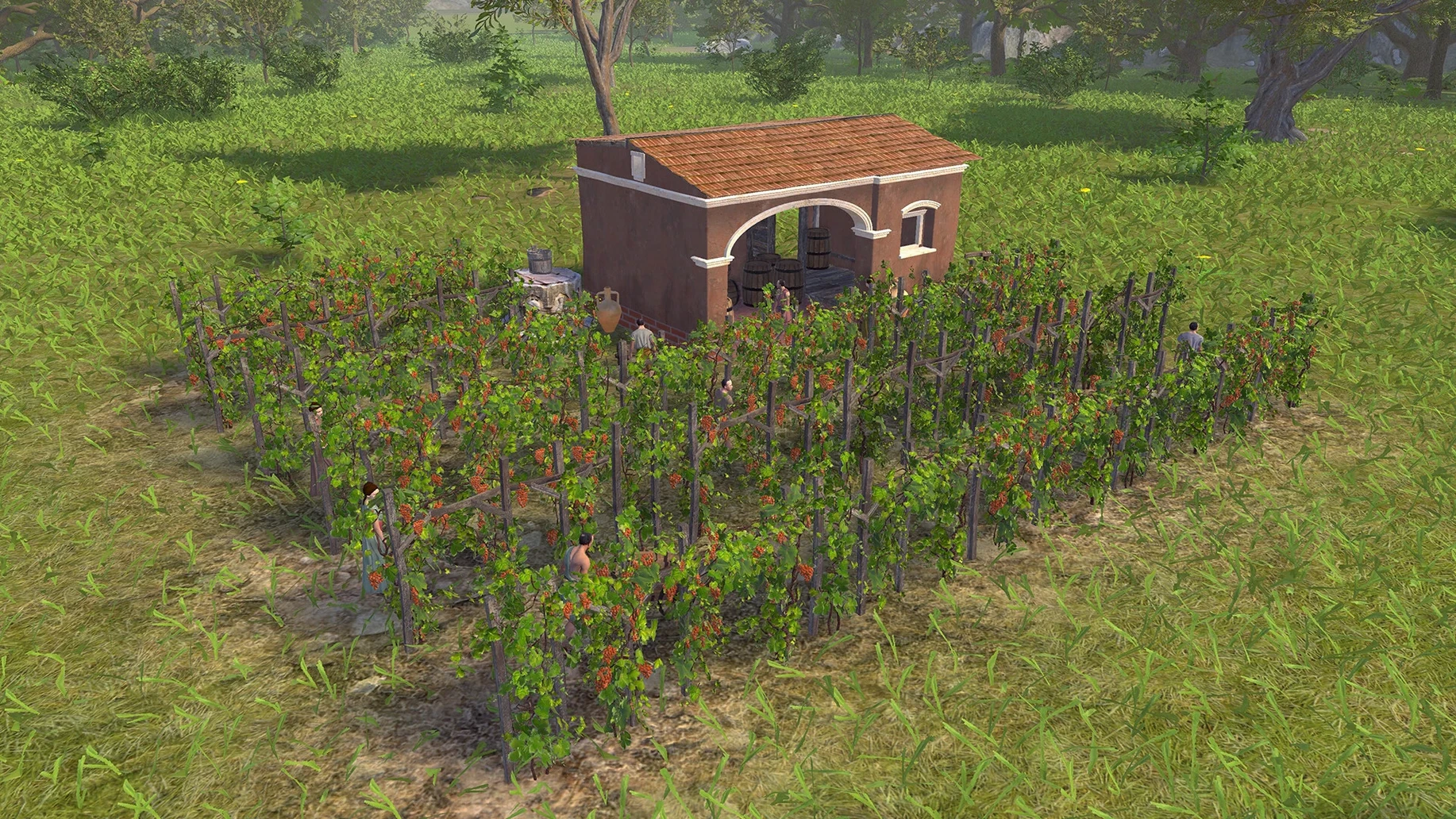
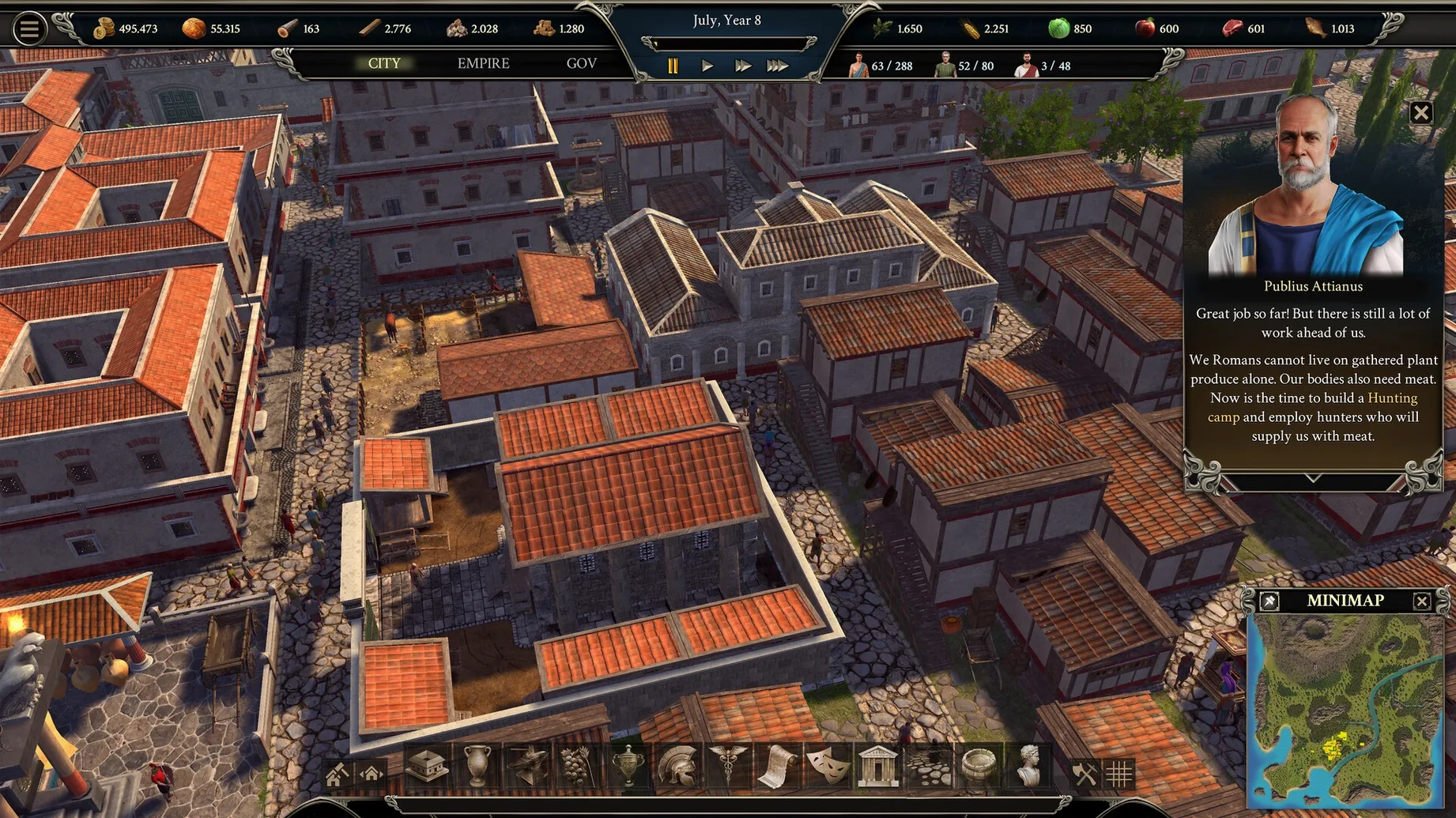
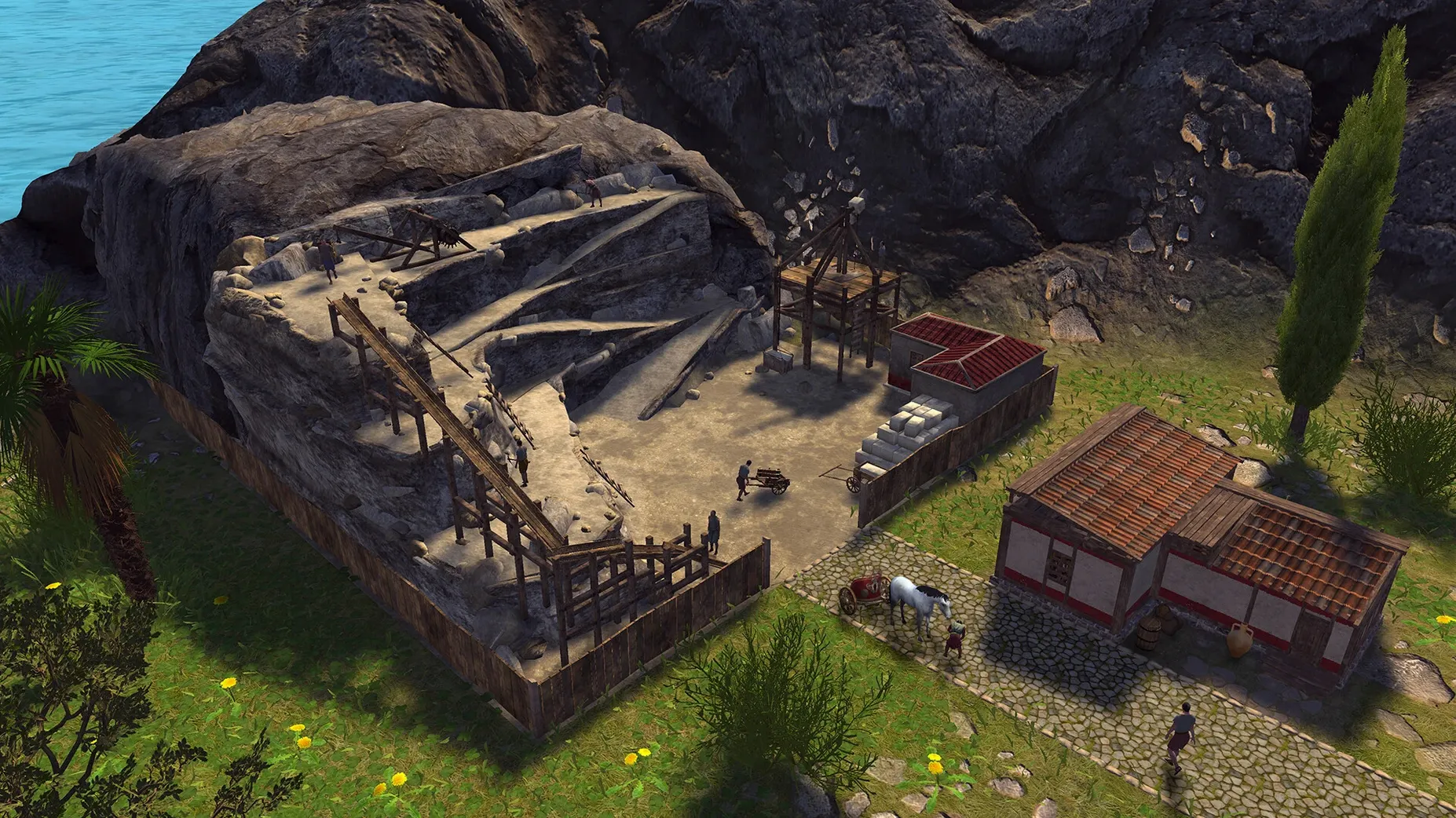
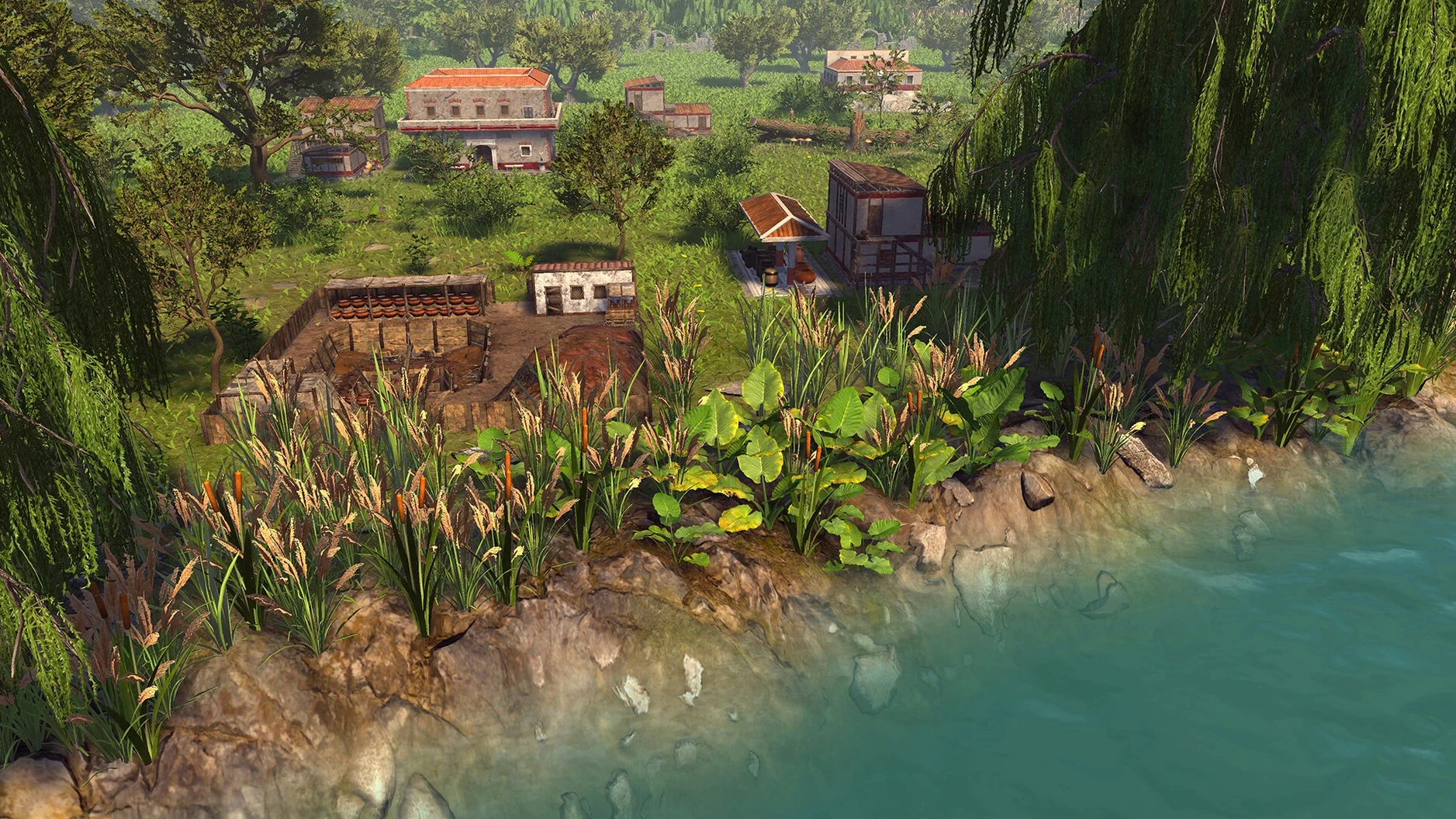
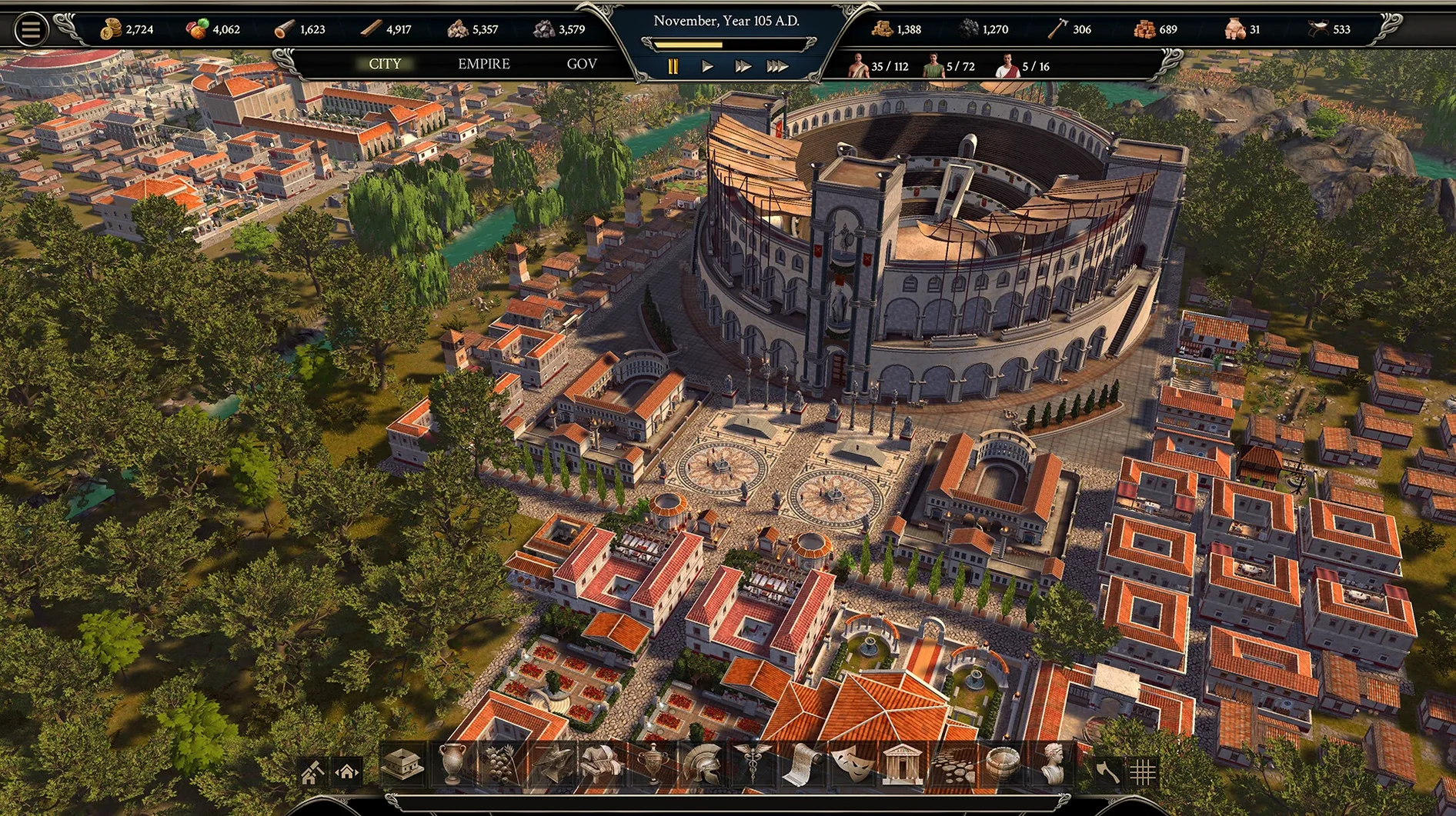
It shares a lineage with classic city-builders where you lay out roads and watch carts roll, but Pompeii: The Legacy anchors its systems in a specific historical wound: the campaign opens 20 years after the eruption of 79 CE, and you are tasked with restoring the city across a 200-year arc.
Campaign scale — a single narrative spanning two centuries, where events and city-management decisions compound over generations.
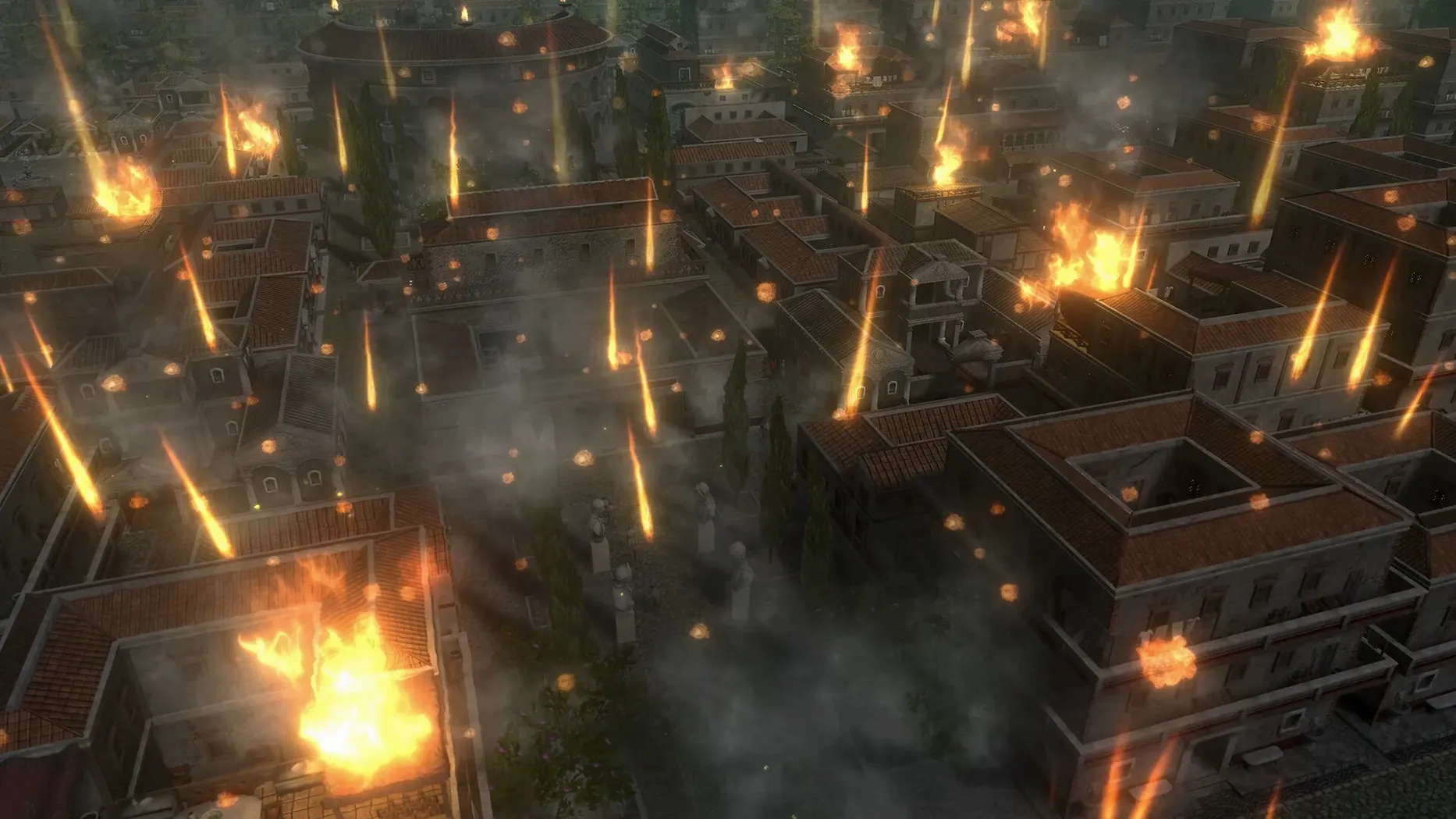
Disasters — eruptions, earthquakes, fires, locust swarms, and disease outbreaks test your infrastructure and supply lines rather than acting as simple reset buttons.
Trade and economy — establish trade routes, negotiate agreements, and balance market management to keep resources flowing into a growing city.
Philosophy branch — a dedicated research path that unlocks city-management tools and decision-making options, letting you shape governance as much as architecture.
Apple Silicon build — delivered as a native ARM binary through Wineskin, tested on macOS Tahoe with an M4 chip so performance stays steady even as your city spreads across the hillside.
A historical city-builder where aqueducts beat speed
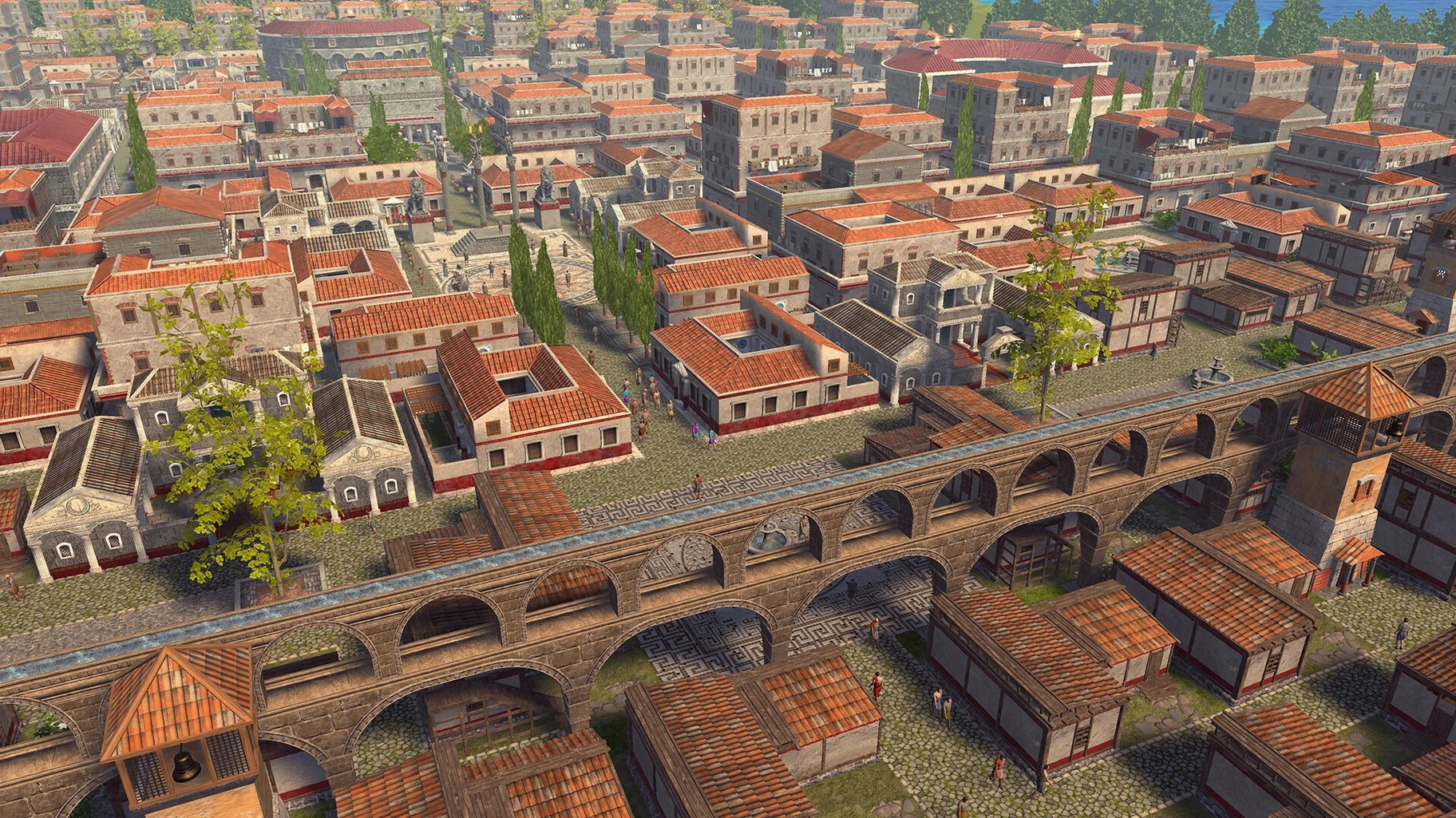
City-builder fans who drift toward historical setups rather than futuristic grids will find the most to hold onto. The game rewards patience with infrastructure more than it rewards speed — roads, aqueducts, and market placement matter as much as the buildings they connect. If you have spent evenings in Pharaoh or the older Caesar titles, the rhythm will feel familiar within minutes, though the generational framing gives it a weight those earlier games never quite reached.
Players who enjoy narrative running underneath the simulation layer also get more out of it. The 200-year span means you are not just optimizing a city for its own sake; you are steering a family through imperial politics, philosophical shifts, and the occasional catastrophe that reshapes the map. It suits solo, long-session play on a quiet Mac — the kind of evening where you look up and realize three hours have passed and the aqueduct still needs a second branch to the bathhouse district.
A praetor’s afternoon
Imagine a player who teaches Roman history at a university and uses city-builders to unwind after grading papers. She opens Pompeii: The Legacy on a MacBook Pro, mid-semester, with a glass of wine nearby. Her current city is in the third generation — the founder’s grandson now oversees a growing network of trade agreements with Neapolis. A fire breaks out in the insulae near the forum, spreading fast because she neglected to upgrade the water supply last season. She diverts workers from the marble quarry to repair the damage, then opens the philosophy tree to research a civic ordinance that reduces fire risk permanently. The decision costs her imperial favour, which delays a trade privilege she had been hoping to secure, but the city holds. She mutters something about the historical accuracy of underfunded infrastructure and saves the game before bed.
Native M-series support arrived through a Wineskin-wrapped ARM build
Version 1.000.6 landed as a Wineskin-wrapped ARM build, which means the game runs without Rosetta overhead on M-series chips — a quiet but noticeable shift if you played earlier builds on Intel Macs. On an M4 Mac mini, the simulation churns through population growth and trade-route calculations without the stutter that sometimes accompanied the disaster triggers in previous releases.
The campaign’s balance received attention too. Fires and locust swarms now arrive with a slightly longer warning period, giving you time to reposition workers rather than simply reacting after the damage is done. Trade agreements feel less punitive in the early game; the AI partners are more willing to negotiate reasonable terms before your city’s reputation is fully established. Small quality-of-life additions, like clearer overlays for water pressure and road connectivity, make the mid-game expansion phase less about guessing and more about planning. None of these changes alter the core tension — Pompeii remains a place where the ground can shake at any moment — but they make the management layer feel more like a dialogue and less like a series of lectures.
- Architecture: Apple Silicon (ARM)
- Tested on macOS Tahoe with a 2024 Mac mini (M4 chip)
Questions from the booth
The campaign begins 20 years after the eruption of Mount Vesuvius in 79 CE, giving the landscape time to settle before you start rebuilding.
Eruptions, earthquakes, fires, locusts, and disease can all strike, each demanding a different response from your infrastructure and supply chains.