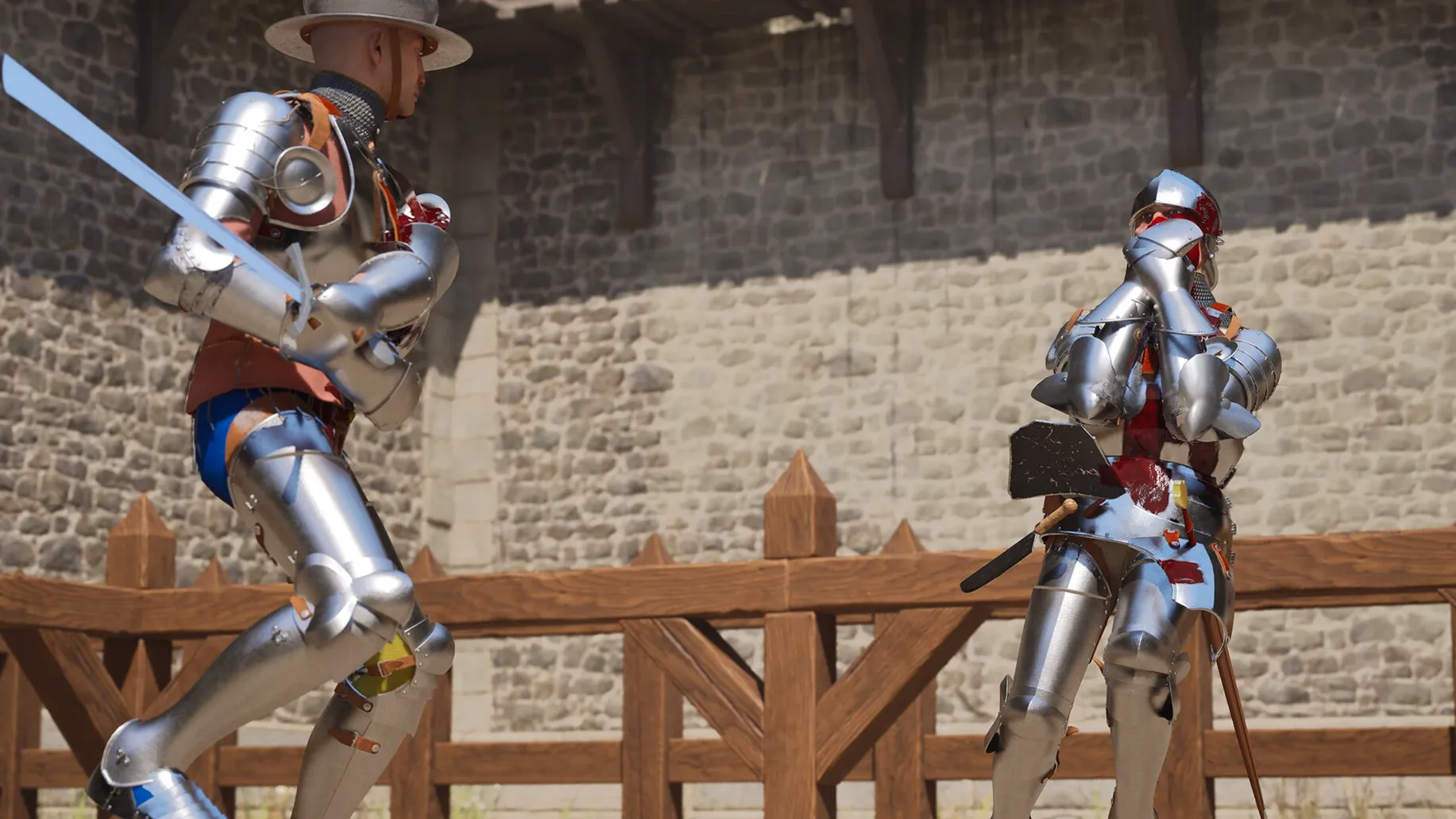
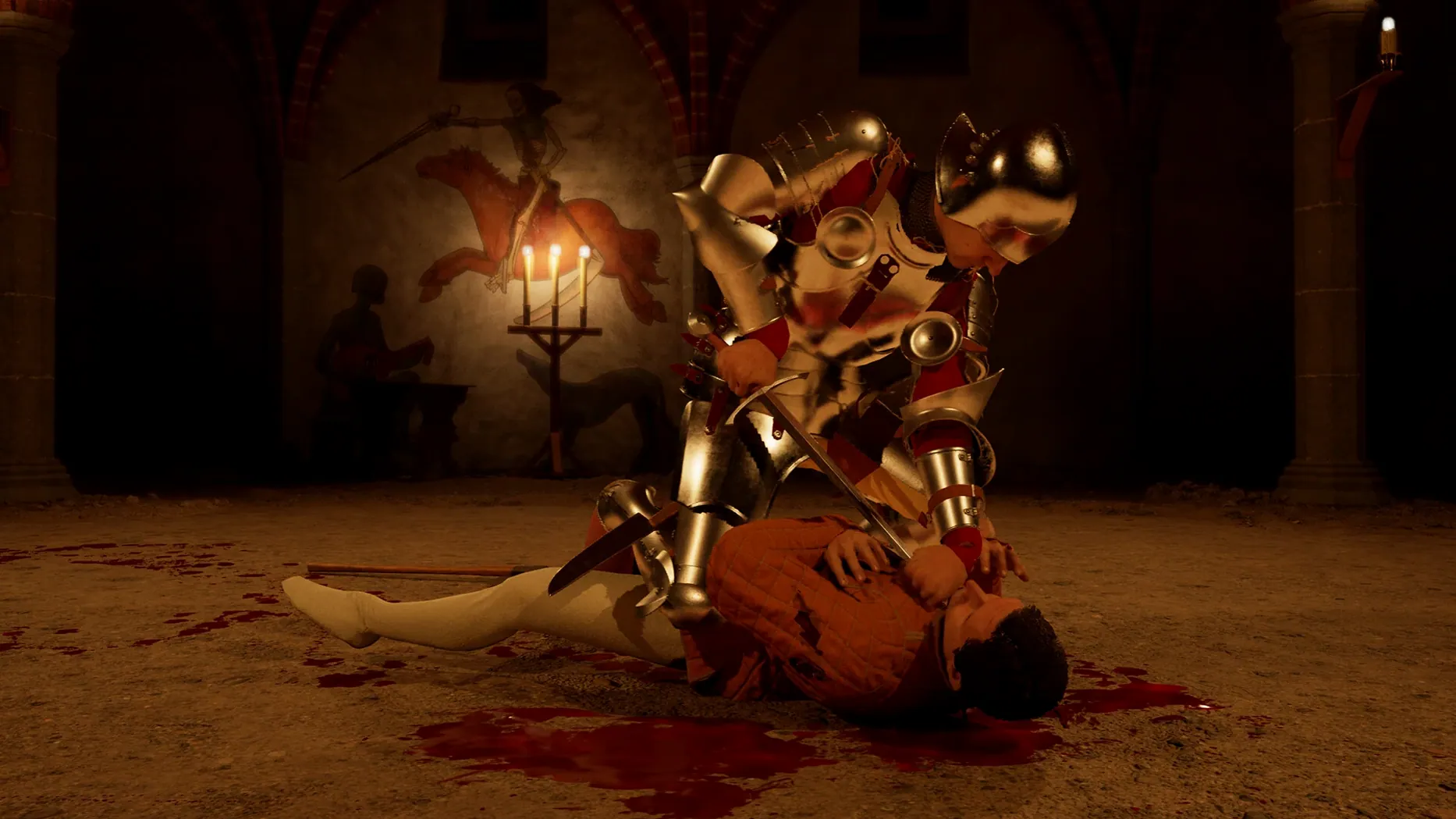
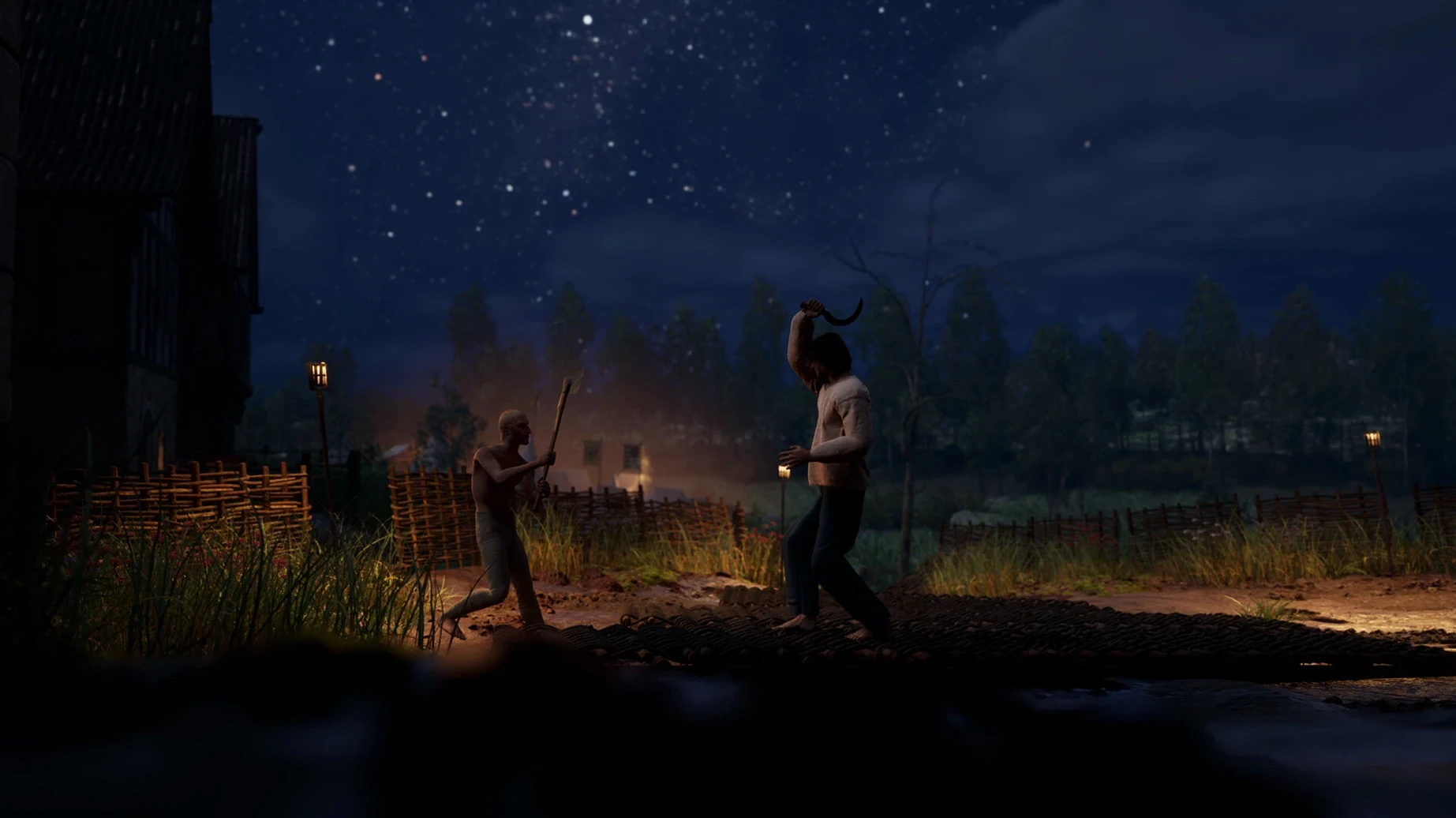
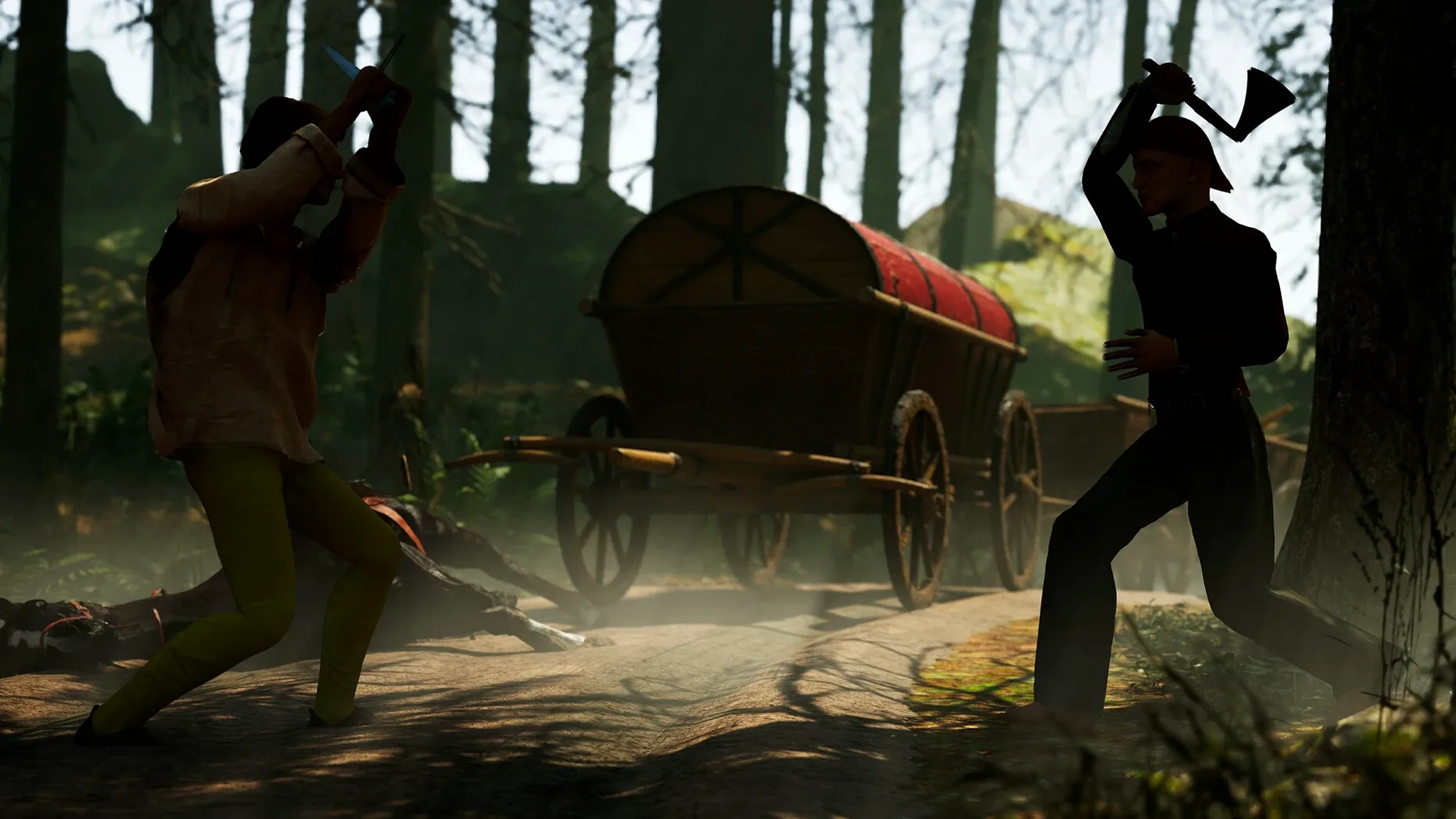
Most medieval games hand you a hero with a preordained destiny and a moveset ripped from a choreographer. That clean arc never survives first contact with a real opponent’s blade. Half Sword chooses mess over myth. It drops you in as a peasant with a weapon that feels as dangerous to you as it does to the person you are swinging it at. The problem it solves is the one where combat feels like button-mashing instead of a desperate, physical argument where you can lose a limb on the next beat.
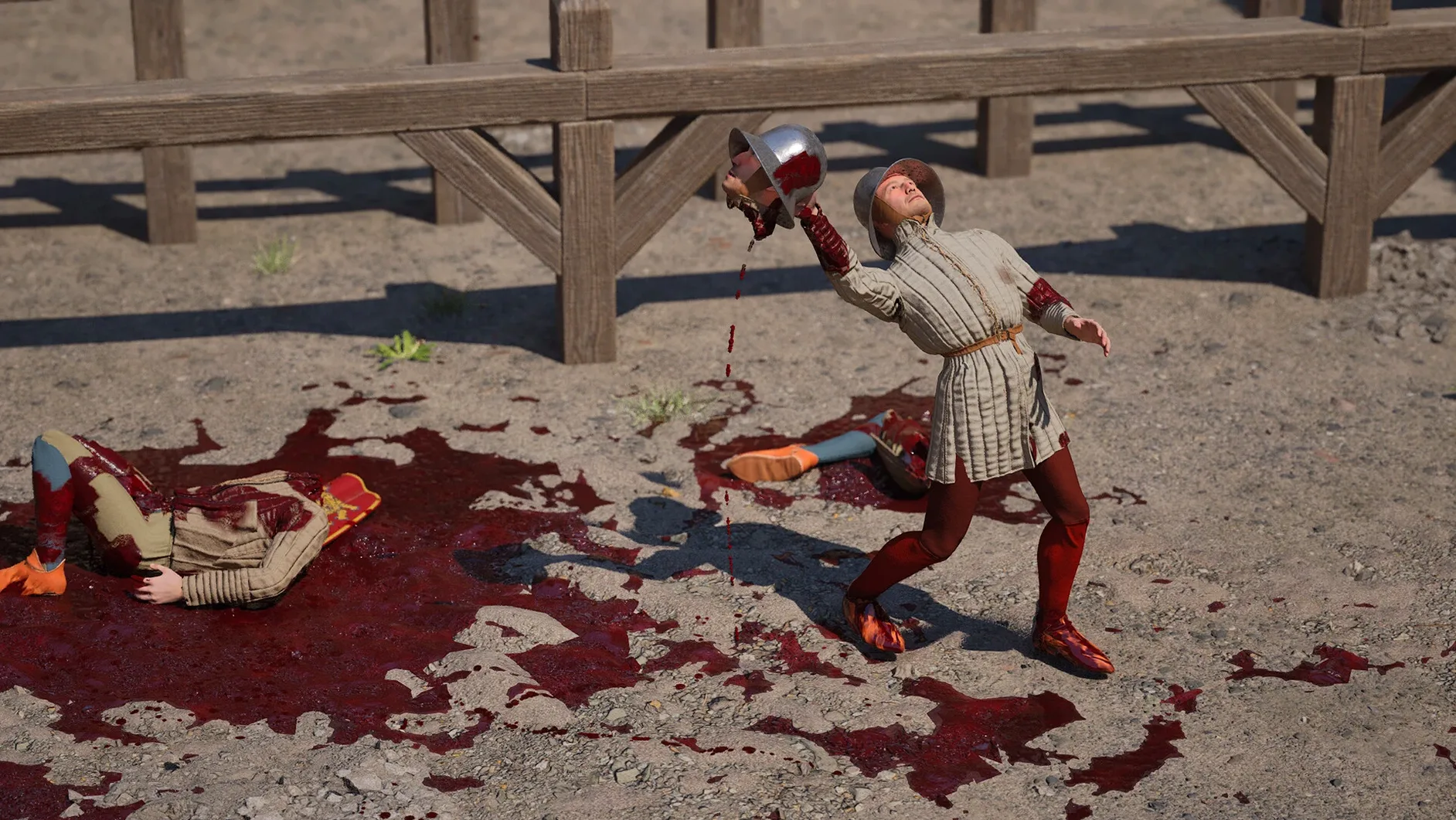
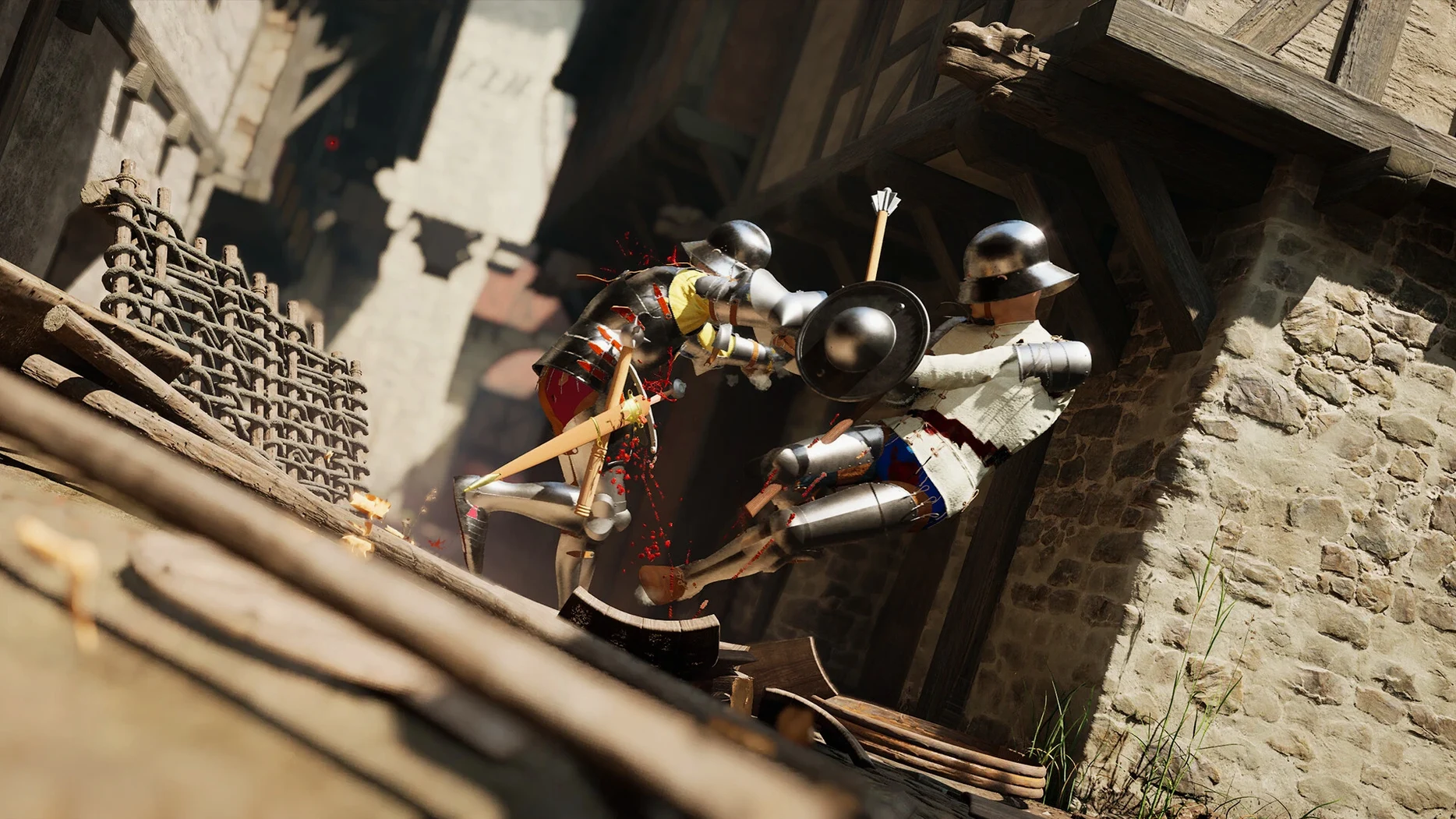
Minute to minute, you are not executing combos. You are reading posture. A duel starts and you circle, watching how your opponent holds their sword—high guard, low, too wide. The physics engine turns every clash into a tangle of momentum and blade angles. You throw a cut, they parry, and the two weapons bind. You push into it, try to redirect the point, maybe manage a pommel strike to the face. It is slow until it is suddenly catastrophic. One misread distance and a longsword tip opens a throat. The XV-century arms and armour are grounded, but the gore is theatrical: dismemberment, exposed anatomy, blood pooling under bodies that do not despawn quickly.
Between fights you are just a commoner working toward knighthood, picking up whatever blade or blunt instrument you can afford. The build is Apple Silicon native, wrapped for now, and the interface speaks Russian, English, German, Spanish, or French—switched in the settings after launch. Save files sit quietly inside the app bundle under Half Sword.app/Contents/SharedSupport/prefix/drive_c/users/Sikarugir/AppData/Local/HalfswordUE5/Saved/SaveGames.
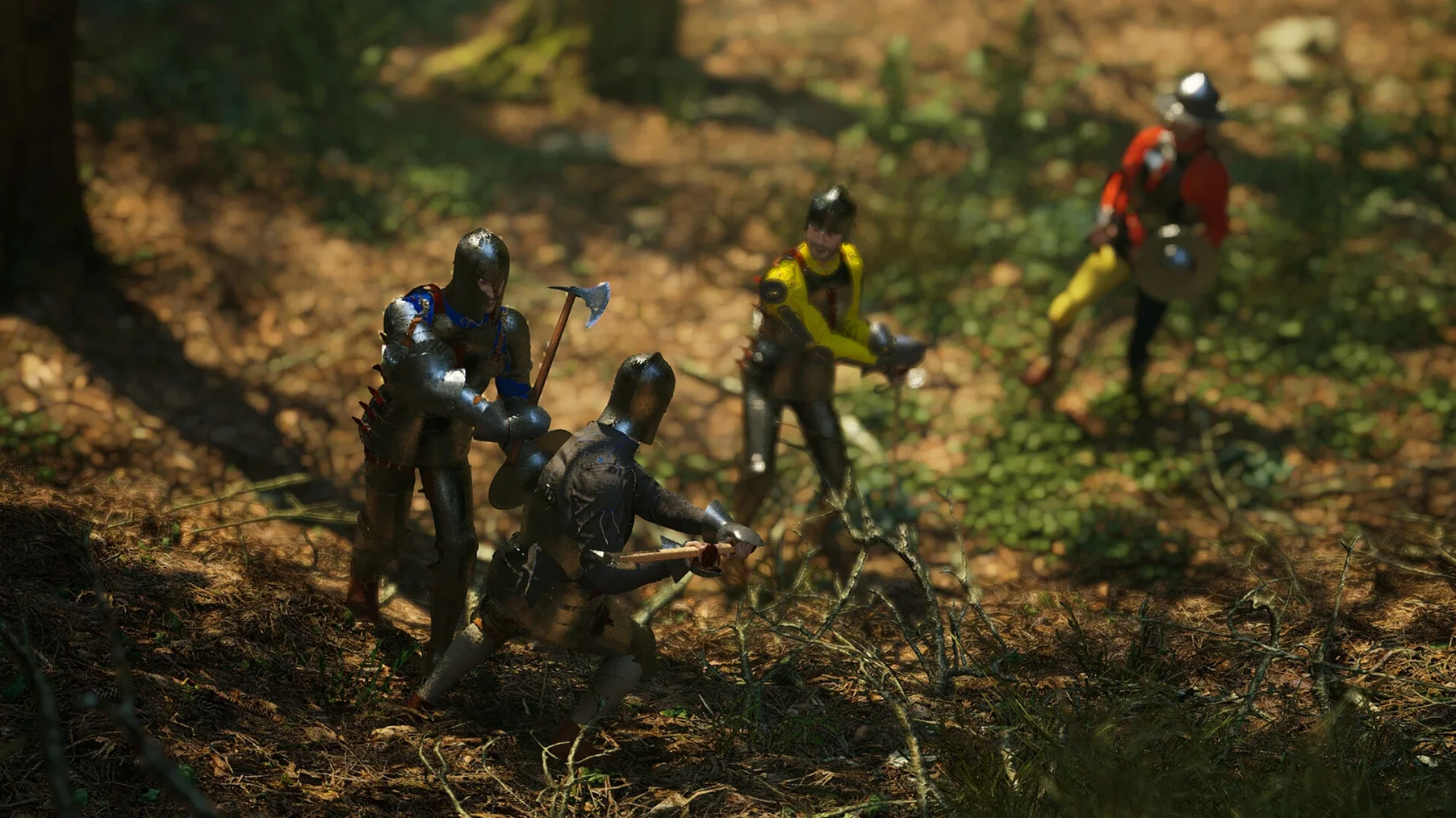
The spaces where you fight are plain, almost theatrical stages. They give you nothing to hide behind. Just you, the other body, and the weapon physics that make every hit feel like a narrow escape from a coroner’s report.
A few settings worth changing first
The default camera can feel a little floaty—switch it to the alternate lock-on mode and pull the field-of-view slider down to around 85. It tightens the frame around your opponent and makes blade distance easier to read. While you are in the settings panel, disable the tutorial prompts once you have survived a handful of rounds. They overlay text in the middle of a duel and that is exactly where you need to see an incoming thrust.
Graphics-wise, the Wineskin build sometimes defaults to a resolution your Mac monitor does not love. Set it to your native panel dimensions before you do anything else, then cap the frame rate at 60. The physics calculations tie to the frame rate in odd ways, and leaving it uncapped can occasionally make weapons phase through a parry that should have saved your ribs.
A duel from first breath to last
Here is a concrete sequence I return to—a longsword bout against a single armoured opponent. Start on the tournament ground, no shield. The weapon feels heavy in both hands.
Hold the blade in a low guard and walk forward until you are just outside measure. Watch for the tell: if the opponent raises into a high right-side guard, they are probably fishing for a diagonal cut to your left shoulder. Wait for the weight shift. As they commit the cut, step slightly left and bring your own blade up into a hanging parry—point down, cross your hands so the flat catches their edge. The physics will bind the two weapons for a half-second. In that window, push forward with a short thrust using the right-hand grip only. You are aiming for the gap under the helmet. If the point connects, you will see the body slacken before the blood pools. Miss, and you are now close enough to smell the leather and very likely about to eat a pommel strike. The whole exchange lasts maybe three seconds.
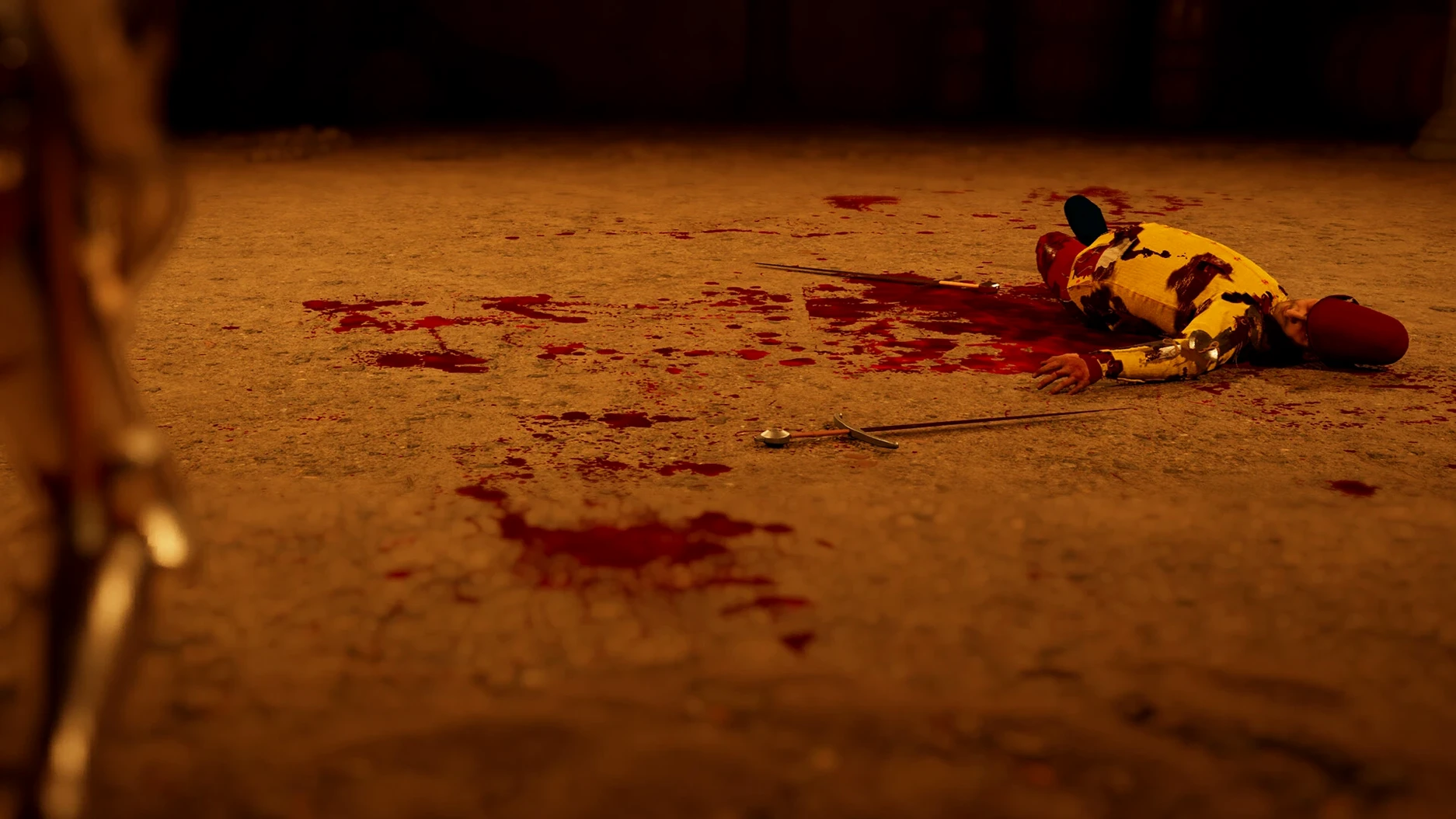
After the kill, resist the urge to immediately move. The body falls according to the physics, and a collapsing opponent can still knock a low-held blade into your own legs. Let them hit the dirt first, then step back and reset your stance. That pause is the difference between walking away and limping into the next round with a half-severed foot.
- macOS (Apple Silicon)
Questions from the booth
You can switch between Russian, English, German, Spanish, and French from the in-game settings menu.
Yes, the current version uses ARM architecture and is wrapped for compatibility on Apple Silicon Macs.