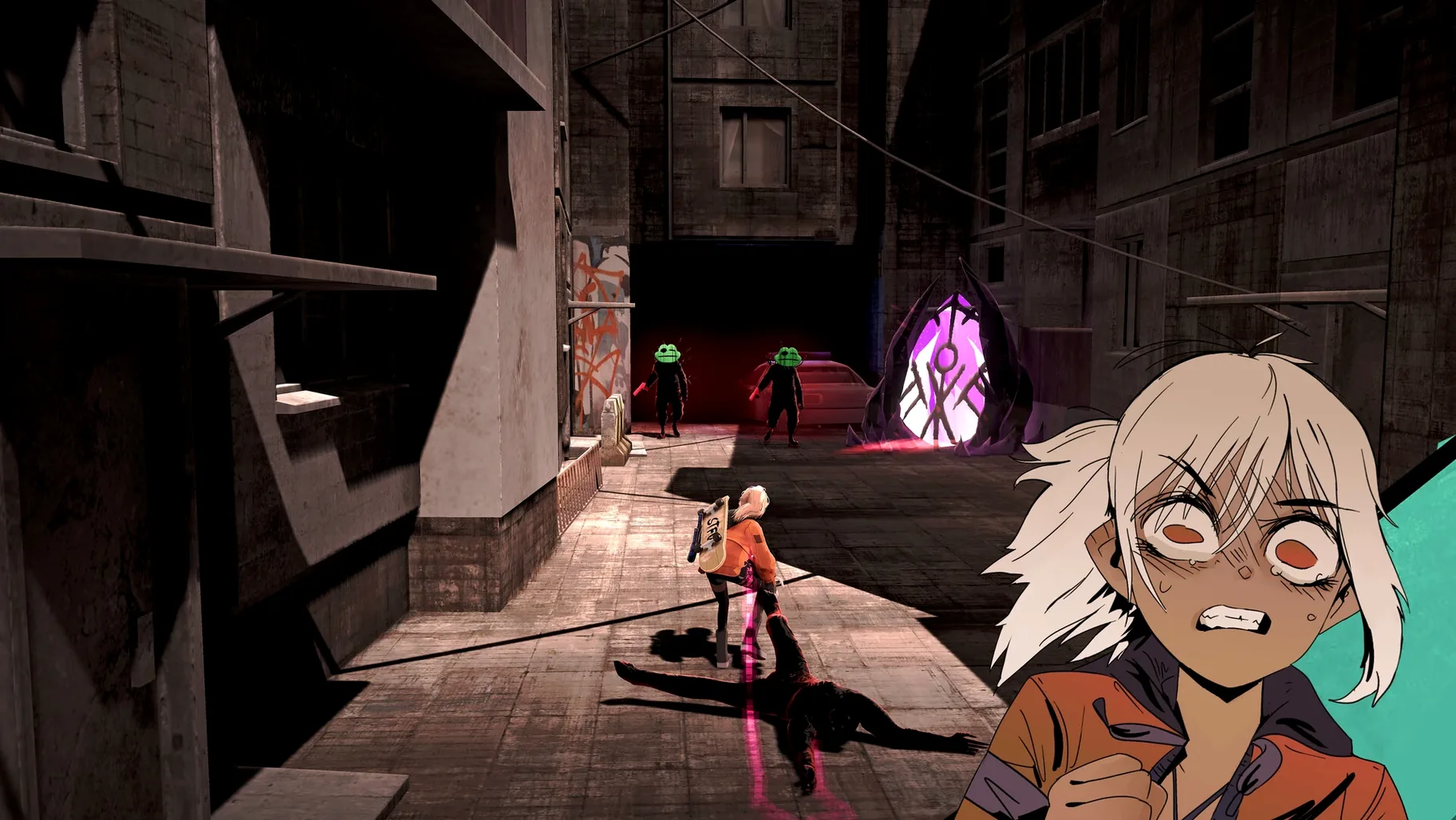
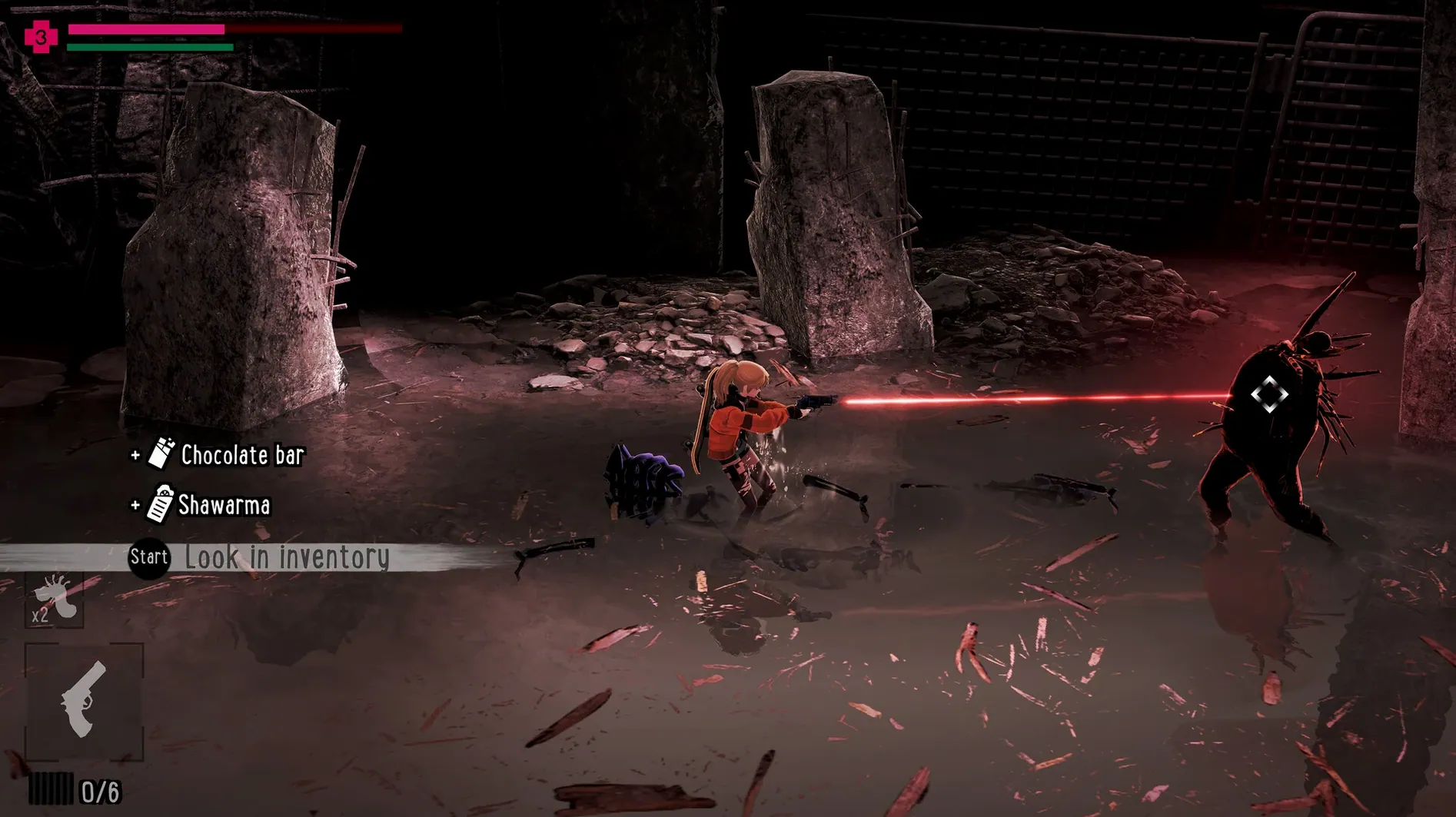
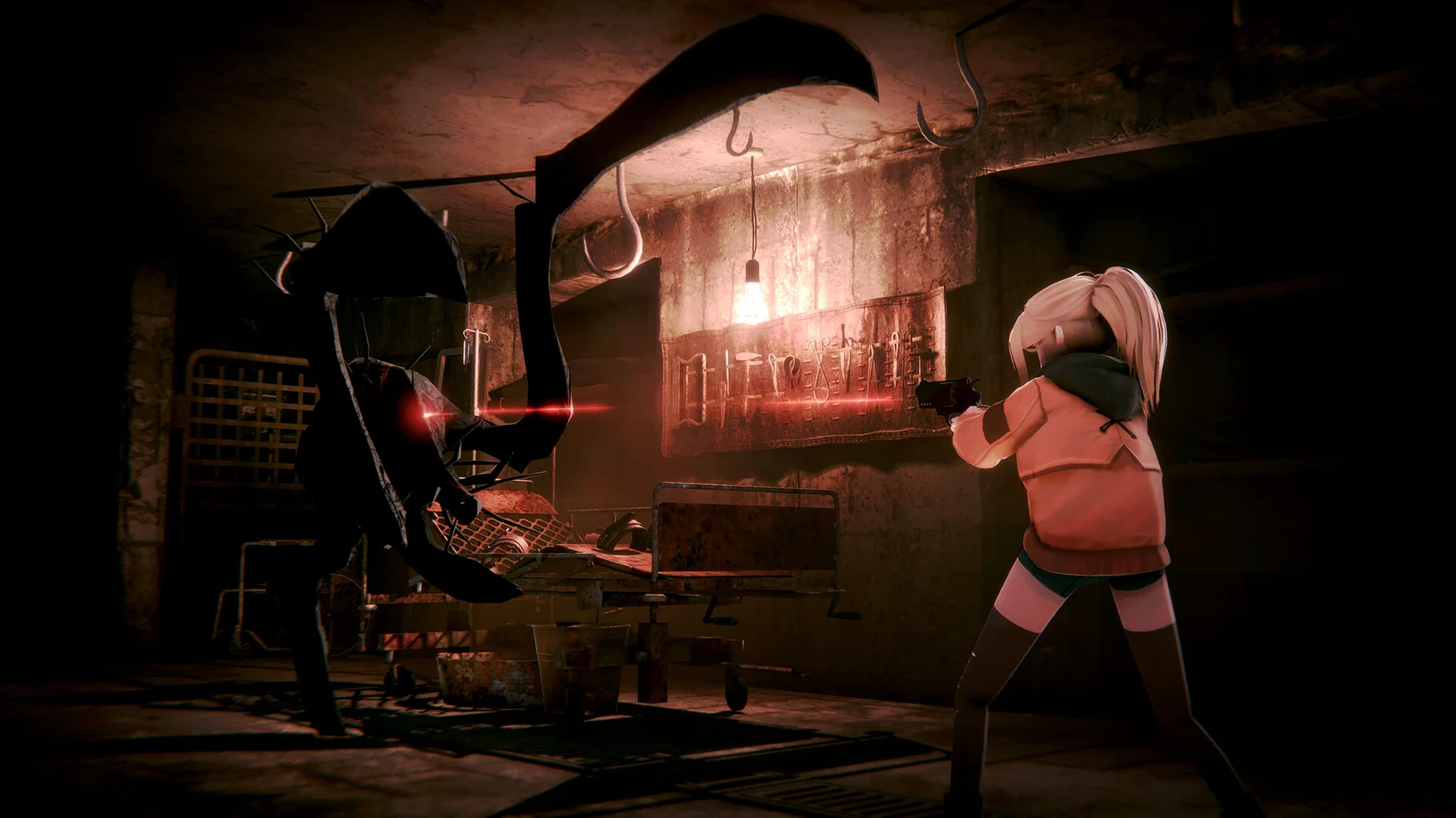
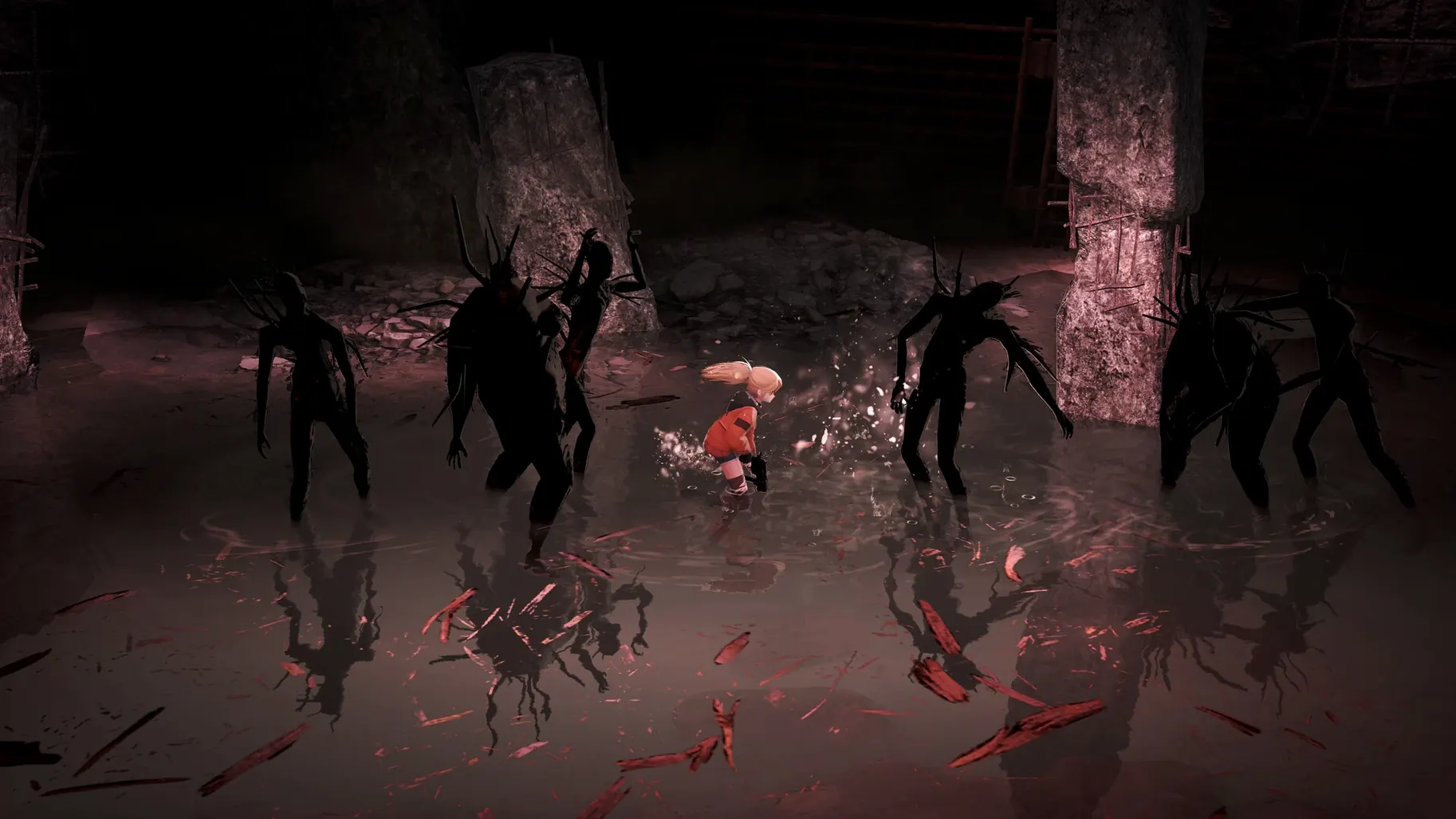
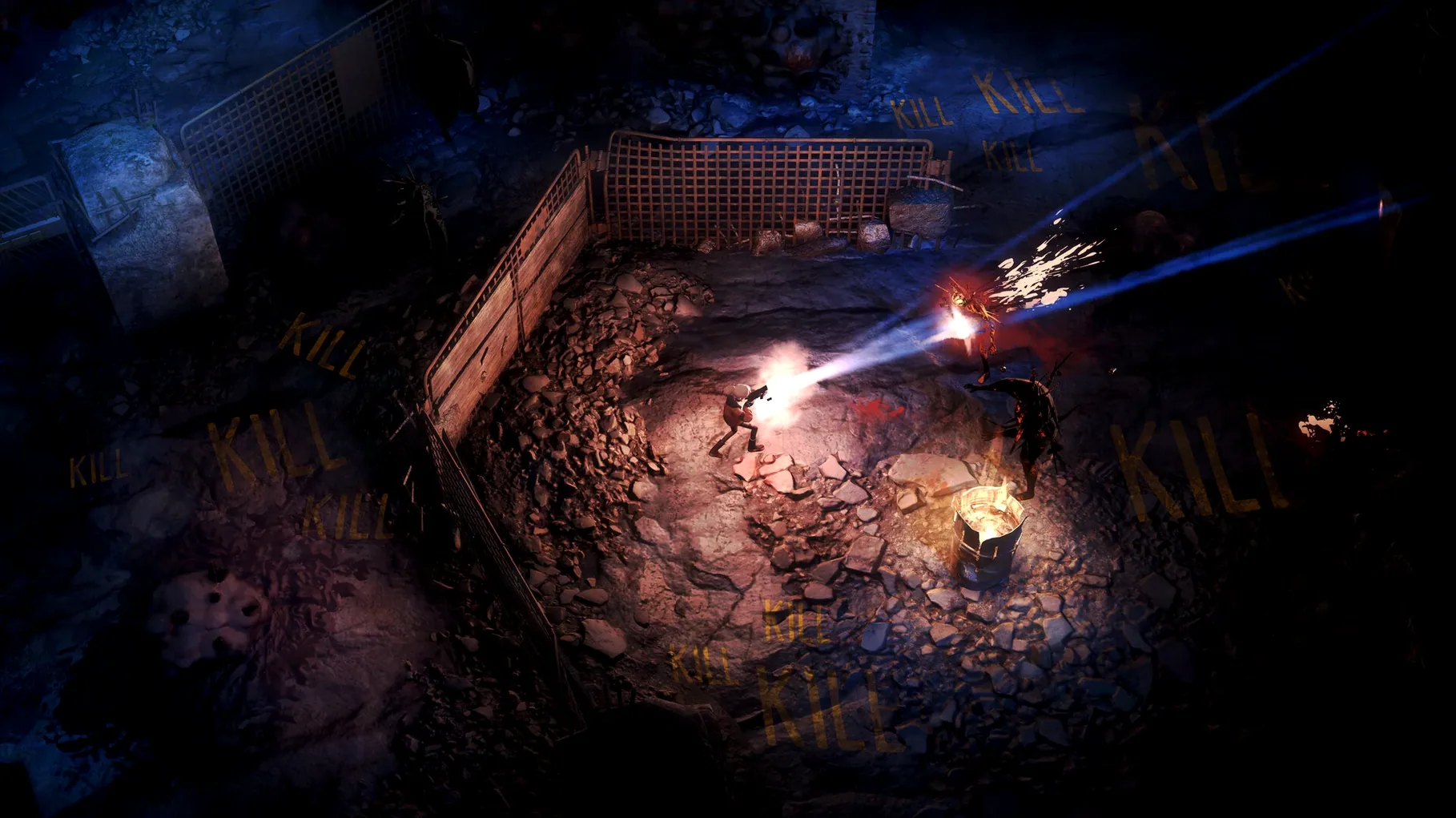
You step through a crumbling archway as the camera lifts from a side-view corridor into a top-down square, the edges of the frame eaten by fog. A figure shuffles toward you—not hostile, but the game has already taught you that trust is a resource you cannot afford to spend. You thumb the spell wheel, choose fire, and wait. This is the rhythm of Silly Polly Beast: tense pauses between bursts of magic and gunfire, exploration that rewards caution over courage.
A city that whispers its history through dead fog
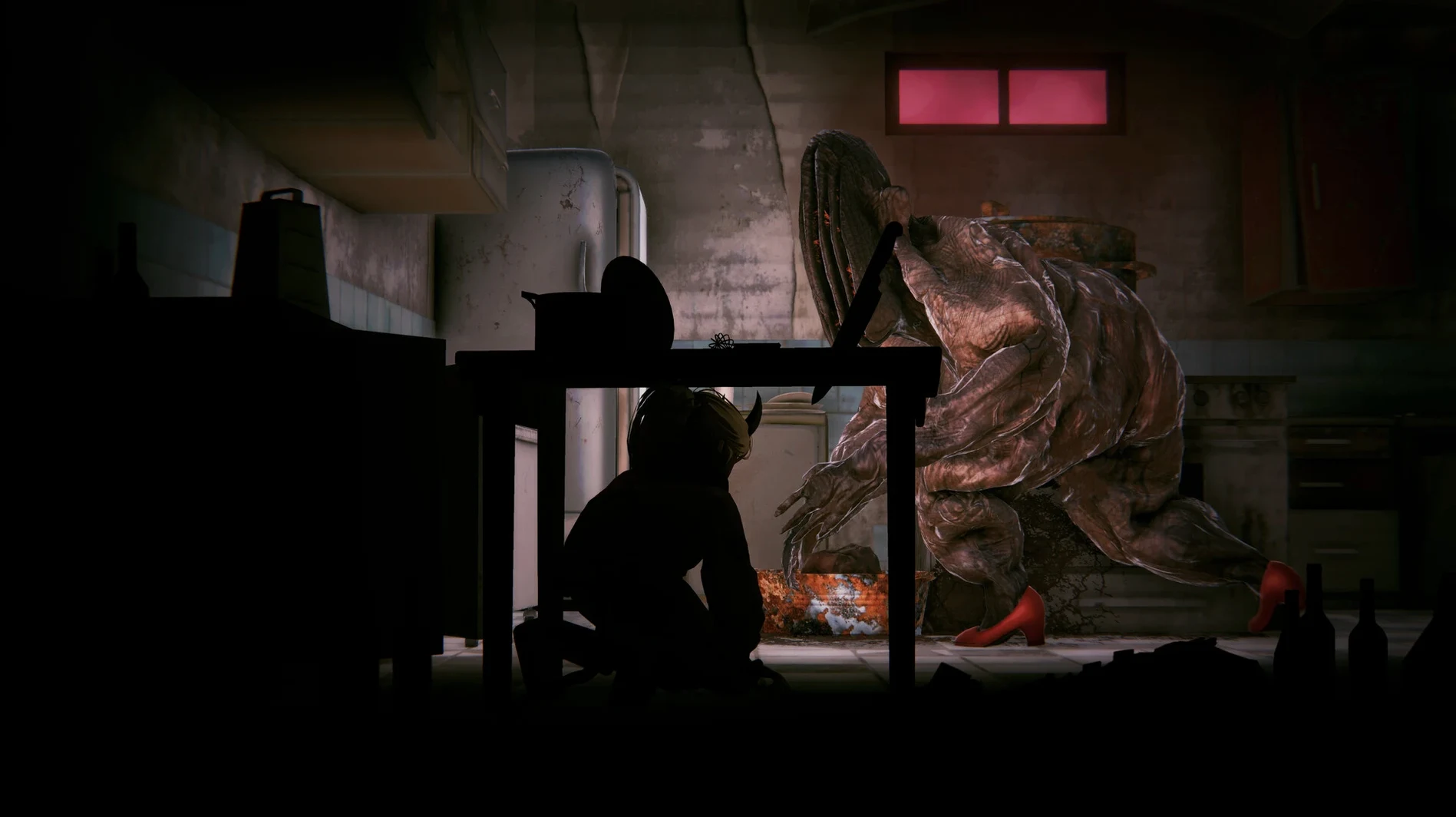
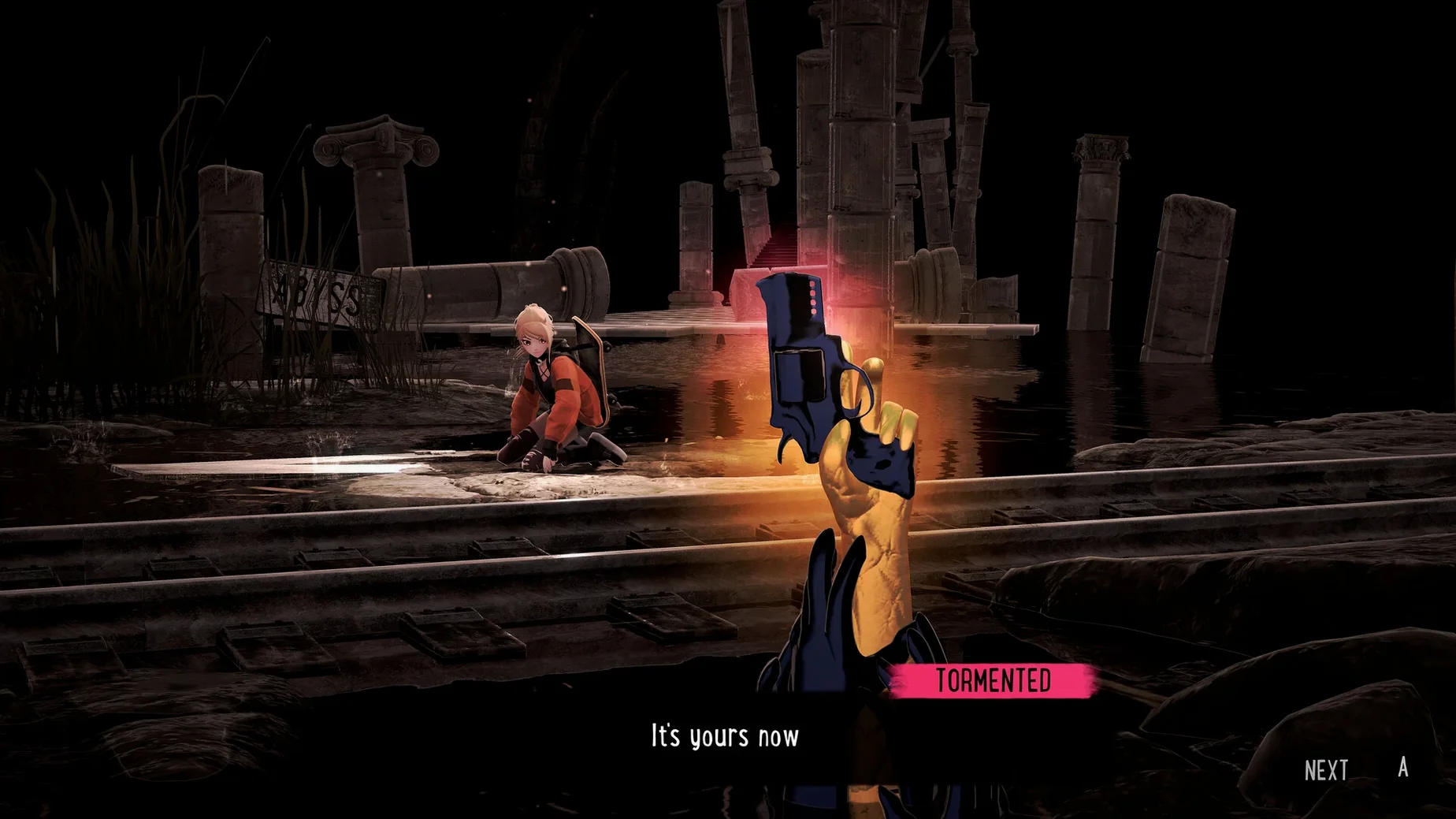
The city is a character as much as Polly is—its dead fog and half-lit streets tell a story without handing you a journal full of exposition. You piece together what happened from the ancient knowledge Polly uncovers, and that slow reveal suits anyone who prefers mystery to mission briefings.
A restless camera that turns combat into a conversation
The view switches between top-down and side-on as you move through the world, which keeps encounters from settling into a single rhythm. If you find fixed-camera action games too predictable, this structural restlessness will feel like a conversation rather than a monologue.
Sitting with discomfort instead of chasing markers
If you need clear quest markers, a bestiary that labels friend from foe, or companions who lighten the mood, Silly Polly Beast will probably exhaust you before it intrigues you. This is a game that asks you to sit with unease and read silhouettes in the dark—and not every player wants that from their evening.
Pausing the fog to plan your next spell
The spell wheel pauses the action without pulling up a separate menu, which means you can plan your next move while the fog sits still around you. Holding down the bracelet-check button highlights the fog boundary in a faint shimmer even through walls, a detail the game never announces in a tutorial pop-up. If you tap the interact key while sprinting, Polly will auto-collect nearby lore fragments without breaking stride—something I only discovered after three hours of stopping dead at every readable surface.
The inventory sorts itself by recent use rather than category, which feels odd until you realize the game assumes you want the thing you just reached for, not a taxonomic list. And the bracelet vibrates in a distinct pattern when a neutral NPC is about to enter the frame, a haptic whisper that gives you a half-second to decide whether to draw a weapon or simply wait in the dark.
How a horror documentarian might play it
Imagine someone who shoots vérité-style horror shorts—someone who spends their days thinking about what you show, what you hide, and how long you hold a frame before the audience starts to squirm. That person would gravitate toward the fog itself as the main character. They would notice how the bracelet flicker rate increases logarithmically, not linearly, as you approach the boundary, and how the sound design drops into near-silence a beat before an encounter starts. They would treat every area transition as a cut, timing their exploration so the perspective switch lands like an edit. And they would probably spend an entire evening mapping the neutral inhabitants' patrol routes just to understand the city's unspoken rhythms, never firing a shot unless cornered.
Claustrophobic gloom instead of sun-bleached vistas
Next to something like Hyper Light Drifter, Silly Polly Beast shares the wordless storytelling and the top-down combat cadence, but it trades that game's sun-bleached vistas for claustrophobic gloom and a much slower narrative burn. The perspective shifts set it apart too—Hyper Light Drifter commits to its overhead view, while Polly keeps repositioning the camera like a restless cinematographer.
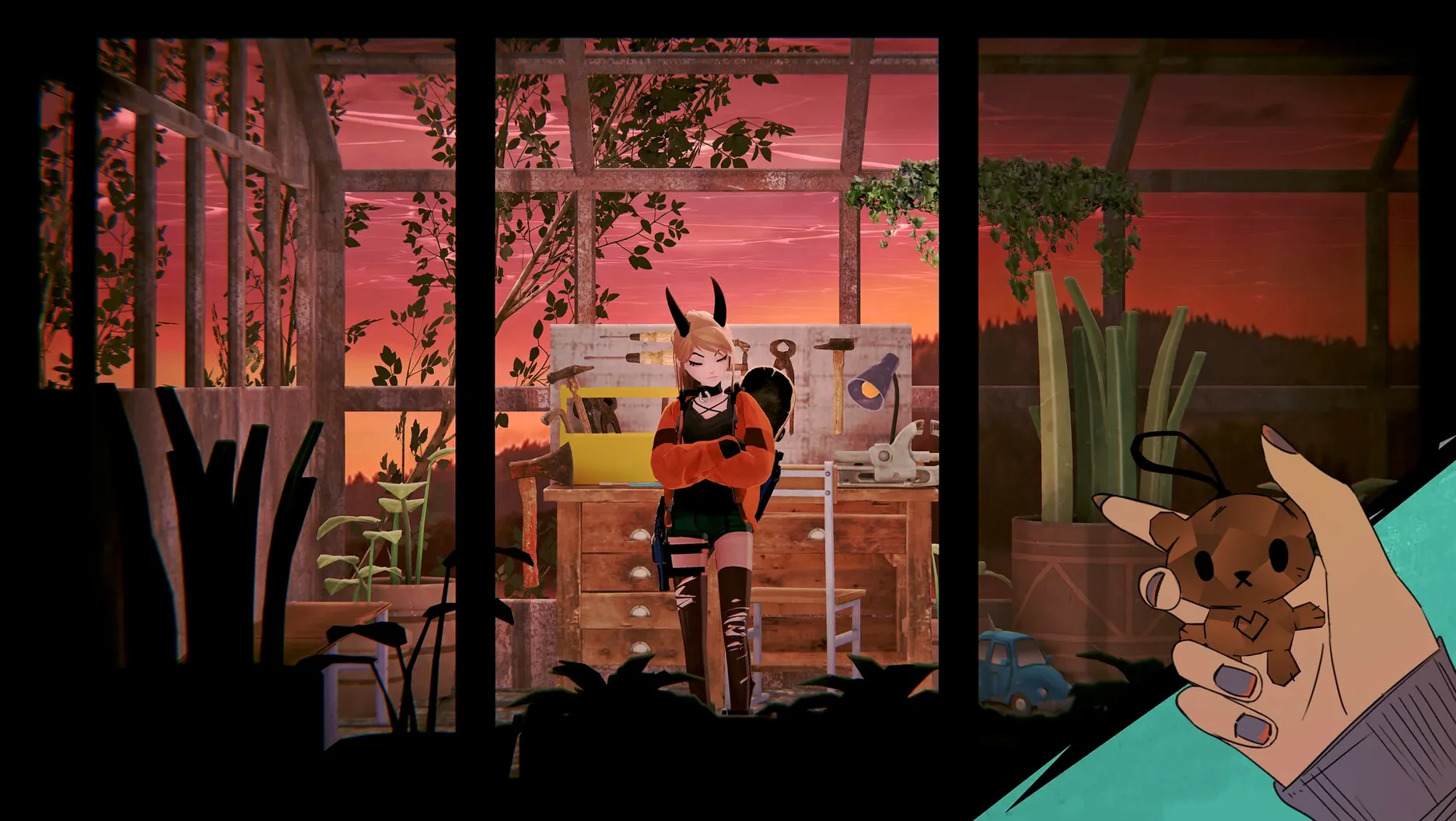
Beside Death's Door, the tonal overlap is closer: both give you a small, determined protagonist navigating a world where most things want you dead and the few that don't are still unnerving. But Death's Door wraps its melancholy in wry humour and a clear mission structure, whereas Silly Polly Beast offers almost no comic relief and leaves its lore scattered in fragments you might walk past entirely. It is the more withholding of the two, and for some players that is precisely the draw.
Compared to a Wineskin-wrapped indie like Silly Polly Beast for Mac cracked, the conversation gets muddier—Wineskin ports vary in stability depending on the wrapper version and the engine underneath, so a game that runs smoothly on Apple Silicon under one configuration might chug under another. This build, tested on a 2024 M4 Mac mini with macOS Tahoe, handled the fog effects and perspective transitions without stuttering, which is not always a given with Wineskin titles running real-time lighting in densely layered scenes.
- macOS Tahoe
- Apple Silicon Mac