

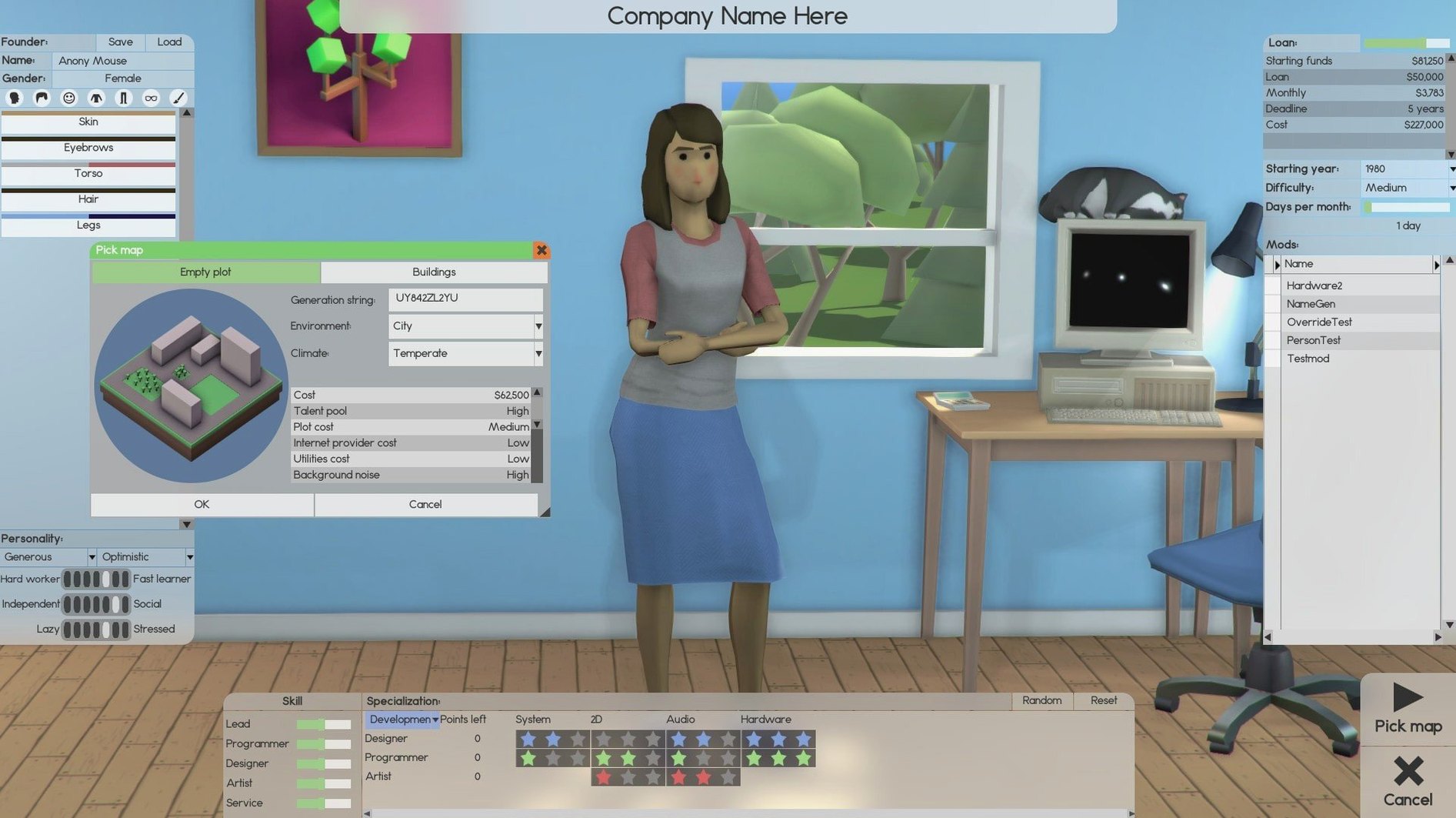
Indie developers, hobbyist managers, and anyone who has ever wondered what happens behind a startup's sliding glass doors will find a long evening dissolving into Software Inc. It is a simulation about people as much as about products — a slow burn of floor plans and feature roadmaps.
Setting up shop on macOS
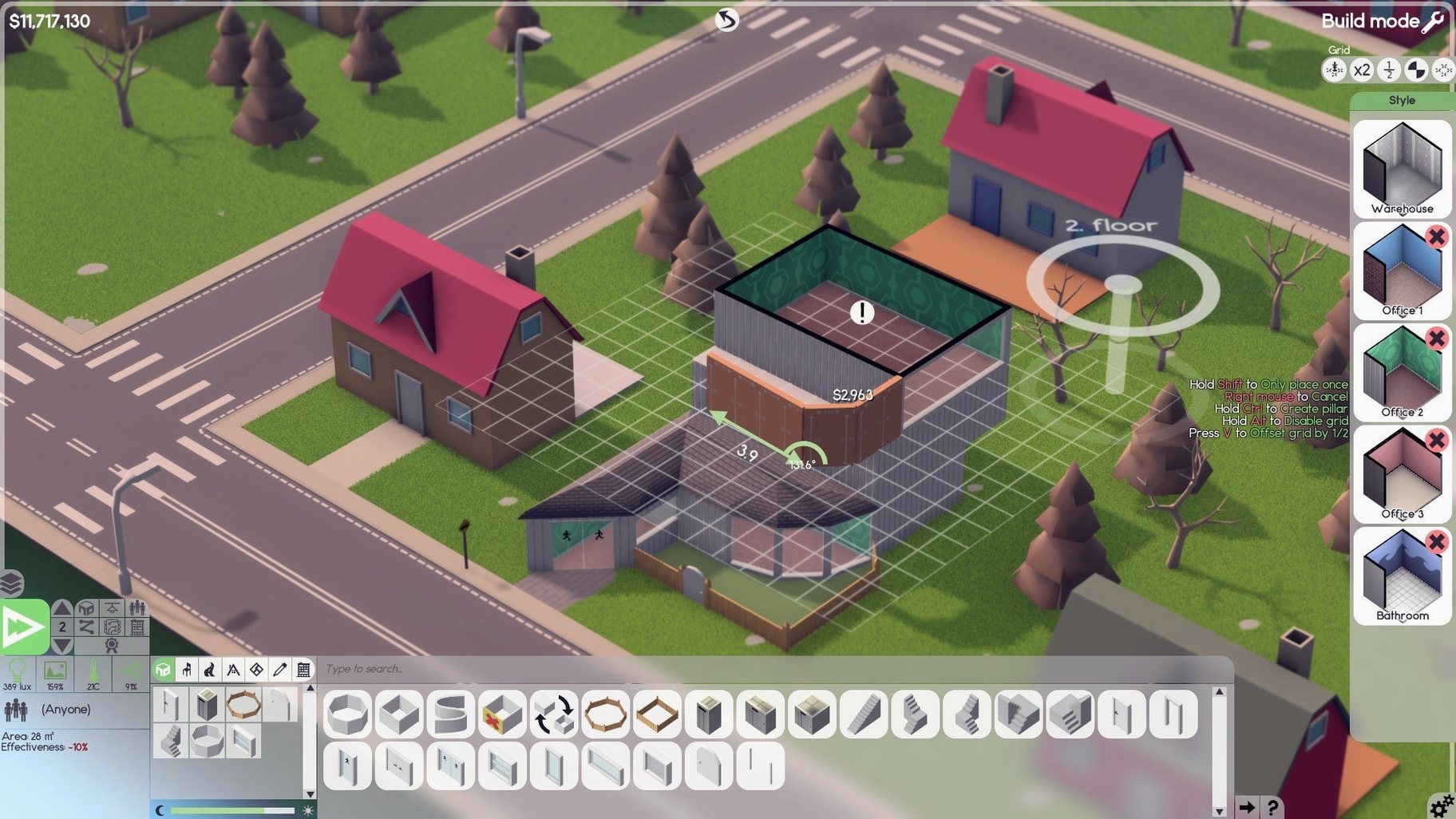
I ran the game on a Mac mini M4 under macOS Tahoe, and it hummed along without a stutter. The interface scales cleanly to high-resolution displays, and both Apple Silicon and Intel builds are included, so you get the native binary for your machine. Keyboard and mouse controls feel direct; the camera pans with edge-scrolling or the middle mouse button, and the radial menus for furniture and room zoning become muscle memory after a short tutorial.
Performance expectations are modest. Even when the simulation clock hits triple speed and a hundred employees shuffle through a ten-storey office, the frame rate holds steady. The real bottleneck is your own decision-making, not the hardware.
Progression follows a natural arc: start in a rented corner with a single founder, sketch a program's feature set, assign a designer and a programmer, then watch reviews trickle in. From there, the game opens outward — servers to maintain, franchises to license, employee relationships that affect productivity, and the quiet satisfaction of seeing your digital storefront generate its first organic sale.
I keep a second monitor reserved for reference material, and Software Inc sits comfortably alongside that habit. The game does not pause when you Alt-Tab to a notes app or a spreadsheet — perfect for sketching out a product roadmap in something like Tot or a plain text file while the simulation ticks forward. Drag a windowed build to one side and you can track your team's progress while reading patch notes in a browser. On macOS, the game respects Spaces as well, so you can dedicate a full desktop to your software empire and swipe back to your actual desktop when real work calls.
QuickTime screen recording picks up the game without fuss if you want to capture a timelapse of an office growing from a single rented room into a multi-floor campus. And because the soundtrack is an instrumental ambient loop, it layers surprisingly well under your own music — I have queued up the Disco Elysium score in Music.app more than once while zoning a new support wing.
Swapping stat-watching loops for physical office design
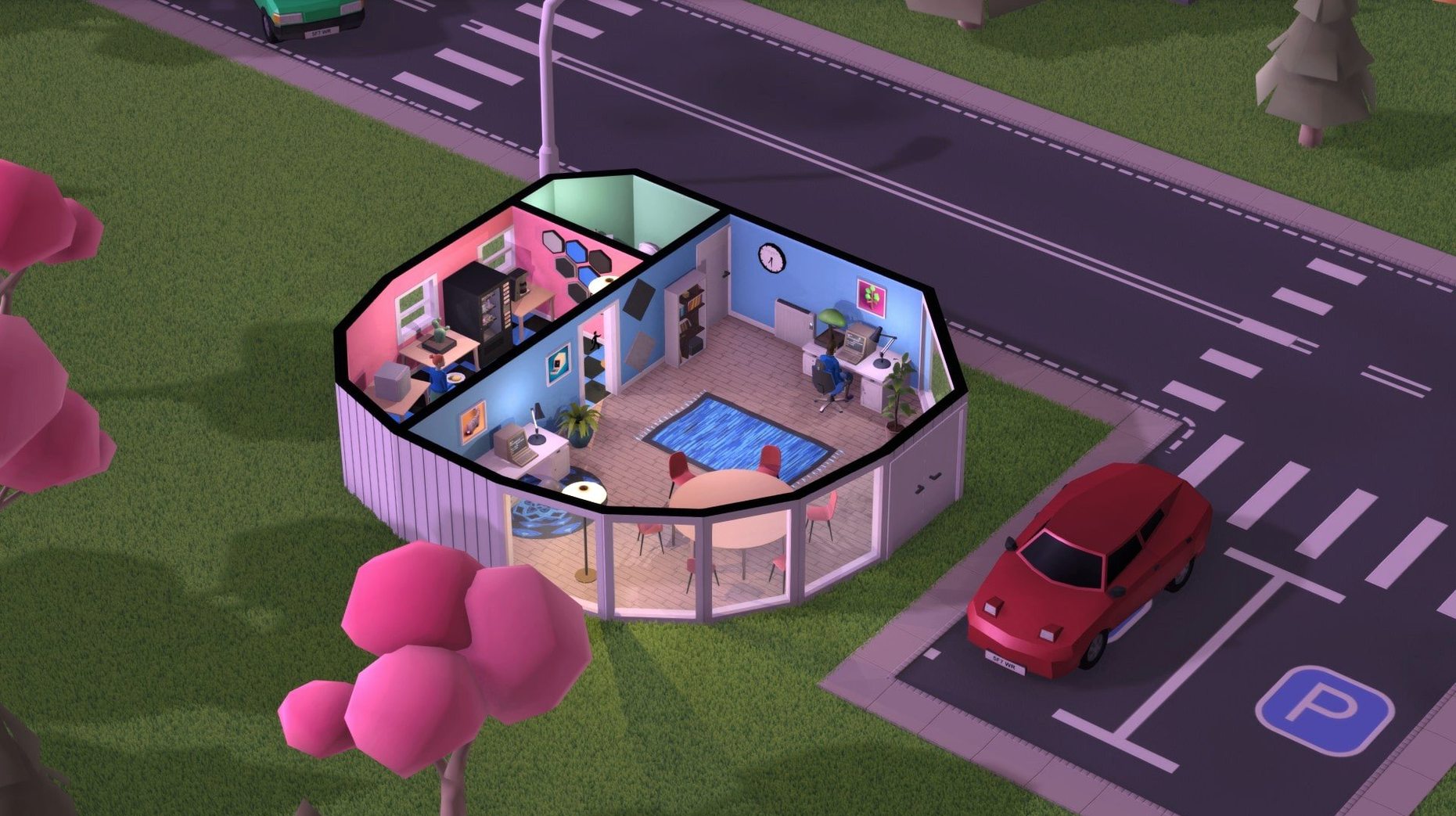
Set Software Inc beside Game Dev Tycoon and the difference is immediate: the latter is a tightly scoped loop of choosing genres, watching stats climb, and reading fictional review snippets. Software Inc trades that breezy pace for physical space. You are not just clicking through menus; you are deciding where the break room goes, whether the lead designer needs a private office, and how close the server racks should sit to the dev pit. The scope tilts toward architectural and human logistics more than toward a scripted history of computing.
Project Highrise shares the vertical construction DNA but stays in the property-management lane — tenants, rent, utilities. Software Inc borrows the floor-planning muscle and adds a layer of creative production: a software project has a feature backlog, a quality slider, a marketing push, and a post-launch support tail. Where Project Highrise asks you to keep the lights on, Software Inc asks you to ship something people want while keeping your staff from burning out.
Mad Games Tycoon 2 comes closest in spirit, with its detailed room ratings and team schedules, but it fixes itself to the games industry. Software Inc lets you pivot — an operating system one decade, a productivity suite the next, then a quiet pivot into contract work when a competitor undercuts your flagship. That breadth, combined with the game's early-access state, means edges are still being sanded, but the simulation already feels larger than the sum of its inspirations.
What Beta 1.8.41 changed in practice
The patch tuned the simulation's quieter corners. Employee pathfinding, which once caused pixel-sized traffic jams near elevator banks, now resolves with less shuffling, so a hundred-person office no longer develops a mysterious bottleneck by the photocopier. Furniture wear-and-tear rates shifted subtly — maintenance crews feel less frantic, and you can schedule repairs around lulls in development rather than dropping everything to replace a chair.
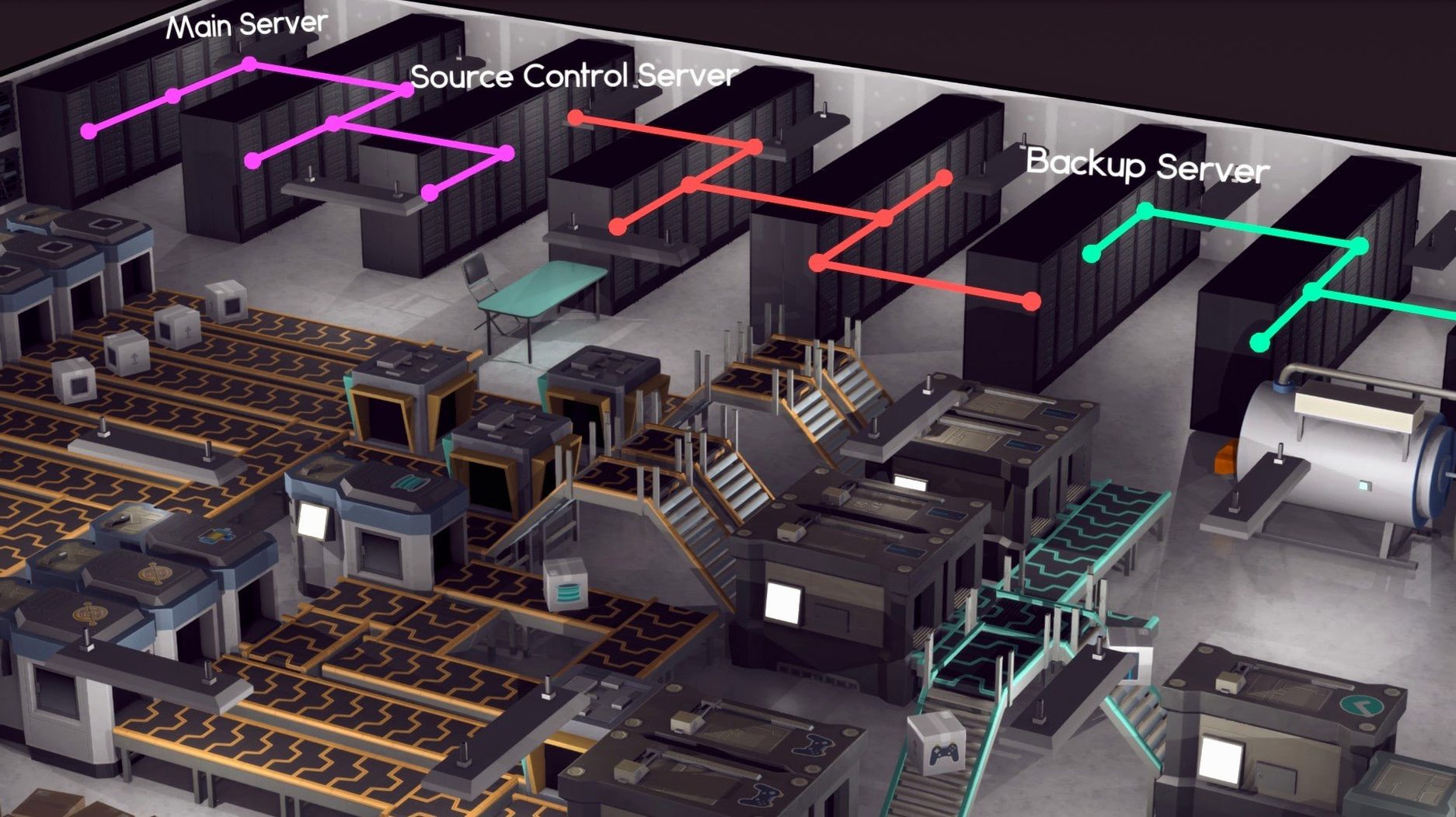
Server management got a small but welcome nudge: the online store module became slightly less aggressive in its bandwidth demands at lower player counts, meaning a modest server setup can now sustain a fledgling digital storefront without redlining the budget. For anyone who previously ignored the online-sales path because the infrastructure costs arrived too early, the change lowers the barrier just enough to make it a viable early-game experiment. The build also tightened a handful of UI response issues on macOS, particularly when resizing windows or toggling between fullscreen and windowed mode on Retina displays.
Systems deep enough for hundreds of hours despite active early access
Is the game finished? No — it is in active early access, which means systems evolve between patches and some mechanics arrive with placeholder interfaces. What is here, however, is already deep enough that players log hundreds of hours across a single save.
Does it require an internet connection or an account? Not for single-player. The Mac build runs offline once installed, with no activation prompts or launcher logins. Multiplayer is not part of the current design, so you are free to play on a train or in a cabin with no signal.
Will it run on an older Mac? The ARM and x86 binaries cover a wide spread of hardware, and the game's visual style — clean, low-poly geometry with soft lighting — does not punish integrated graphics. If your machine handles modern macOS smoothly, it should have no trouble with Software Inc at normal simulation speeds. Triple-speed mode with a populous office will tax any CPU eventually, but the simulation clock is yours to dial back.
People searching for a software inc download or a software inc macos build often wonder if the experience holds up without mods. The base game already supports custom furniture, player-created logos, and editable building blueprints, so the community content layer feels like a natural extension rather than a patch for missing features. Those looking for a software inc download free should know the game receives regular updates that reshape core loops, and each patch tends to bring at least one reason to restart a save and try a different company structure.
- macOS — universal binary for Apple Silicon and Intel
- Tested on macOS Tahoe with a Mac mini 2024 M4
Questions from the booth
Yes, the game ships with native ARM support alongside an x86 build, so it runs well on both M-series and Intel Macs.