What a mercenary carries
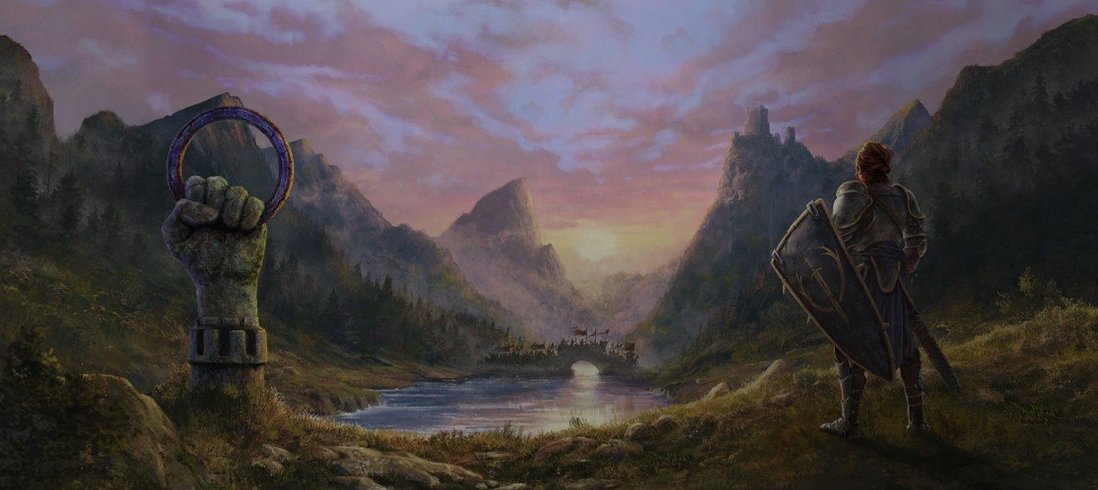
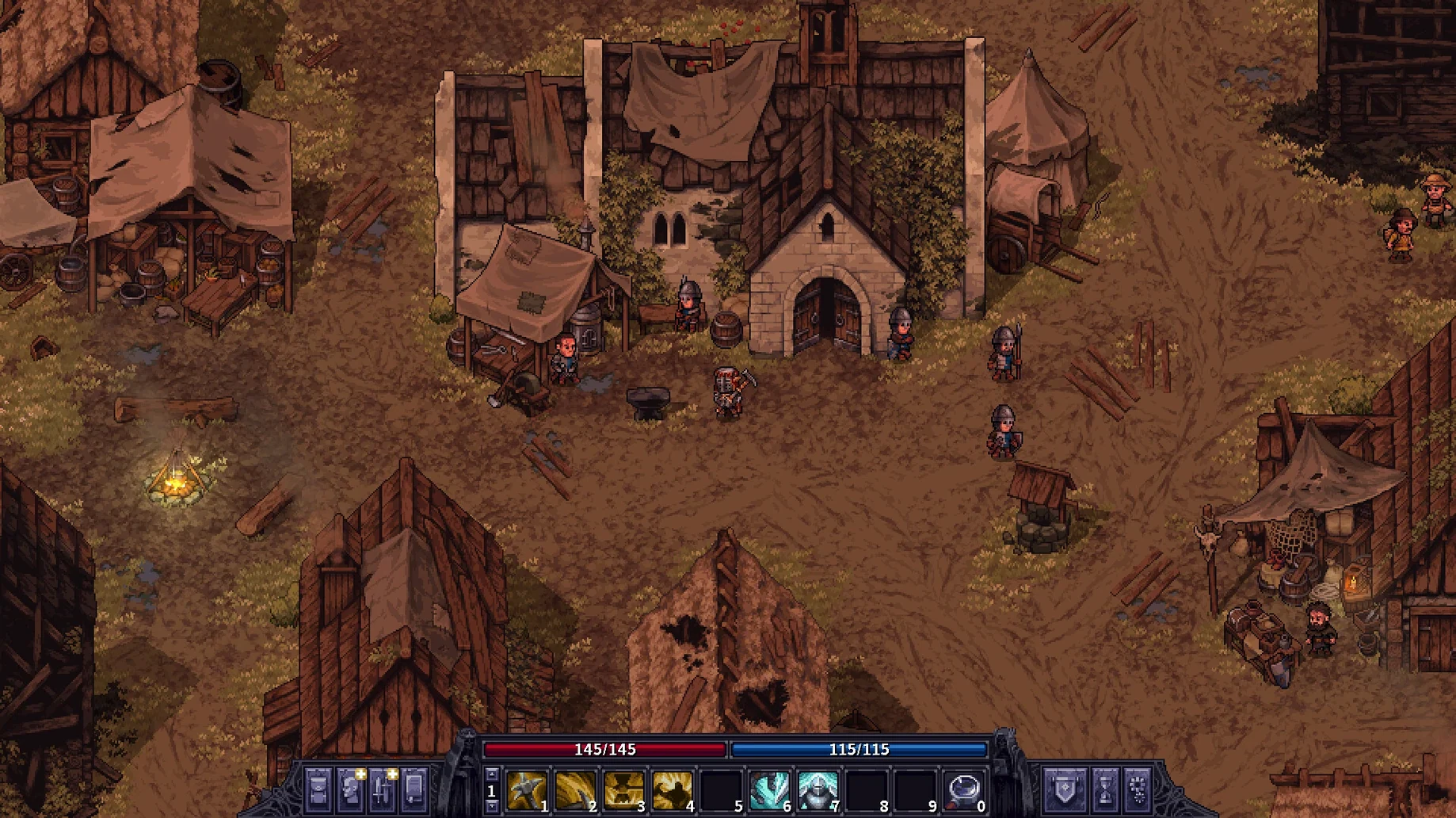
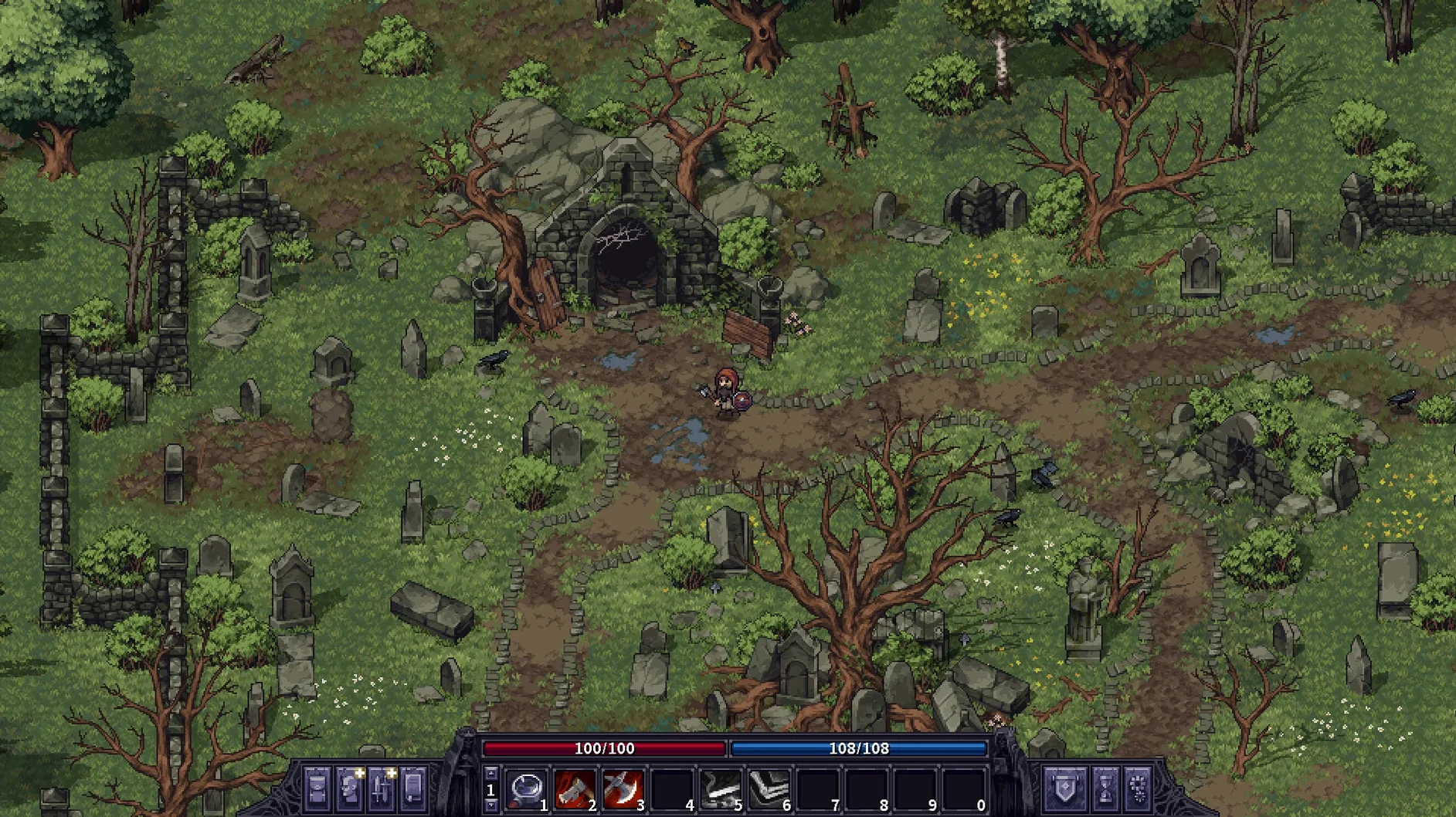
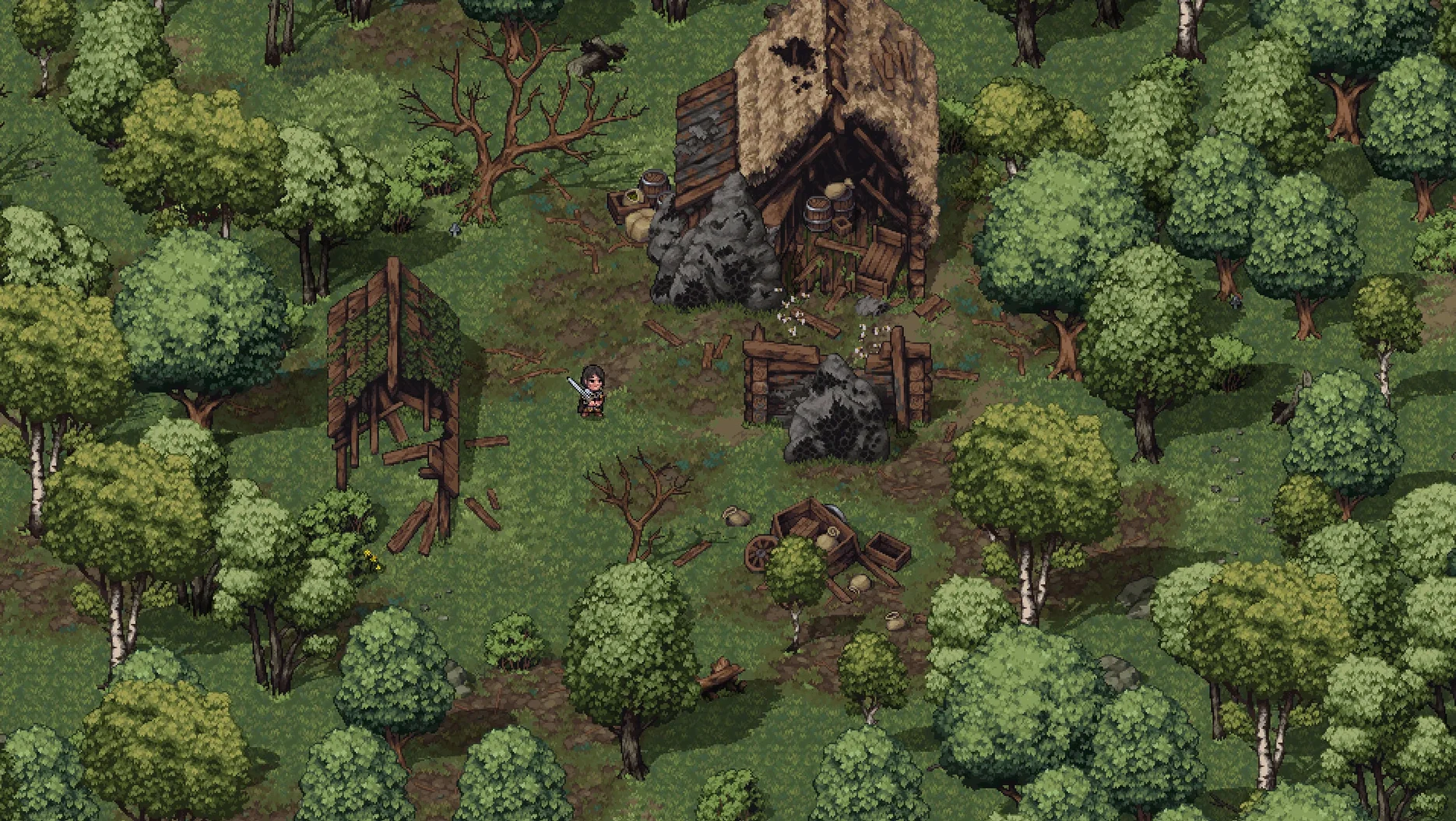
You play as a sword for hire scraping through a brutal medieval world, and Stoneshard wastes no time making that clear. The map stretches from ruined villages to monster-filled dungeons, stitched together by abandoned roads where trouble rarely announces itself. It is a turn-based open-world RPG that treats survival not as a background thread but as a constant calculation.
Contracts, treasure, and the trading caravan
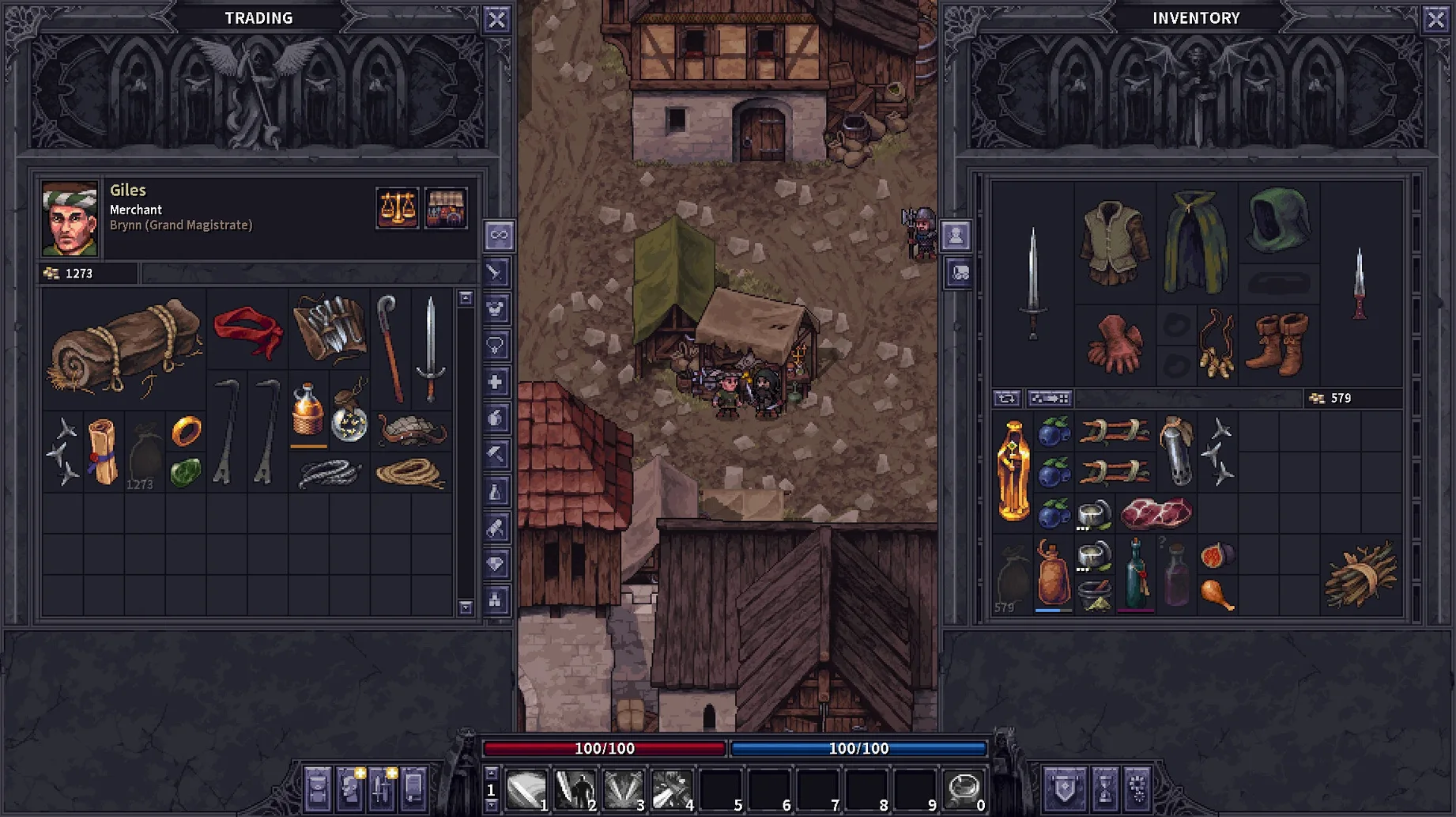
The work loop pulls you in three directions. Contracts send you into crypts and bandit camps for guaranteed coin. Treasure hunting teases you off the marked paths, where a half-buried chest might hold a relic or a pack of ghouls. Trading fills the gaps, letting you buy low in one settlement and sell high in another, if the roads stay quiet enough.
A body that remembers damage
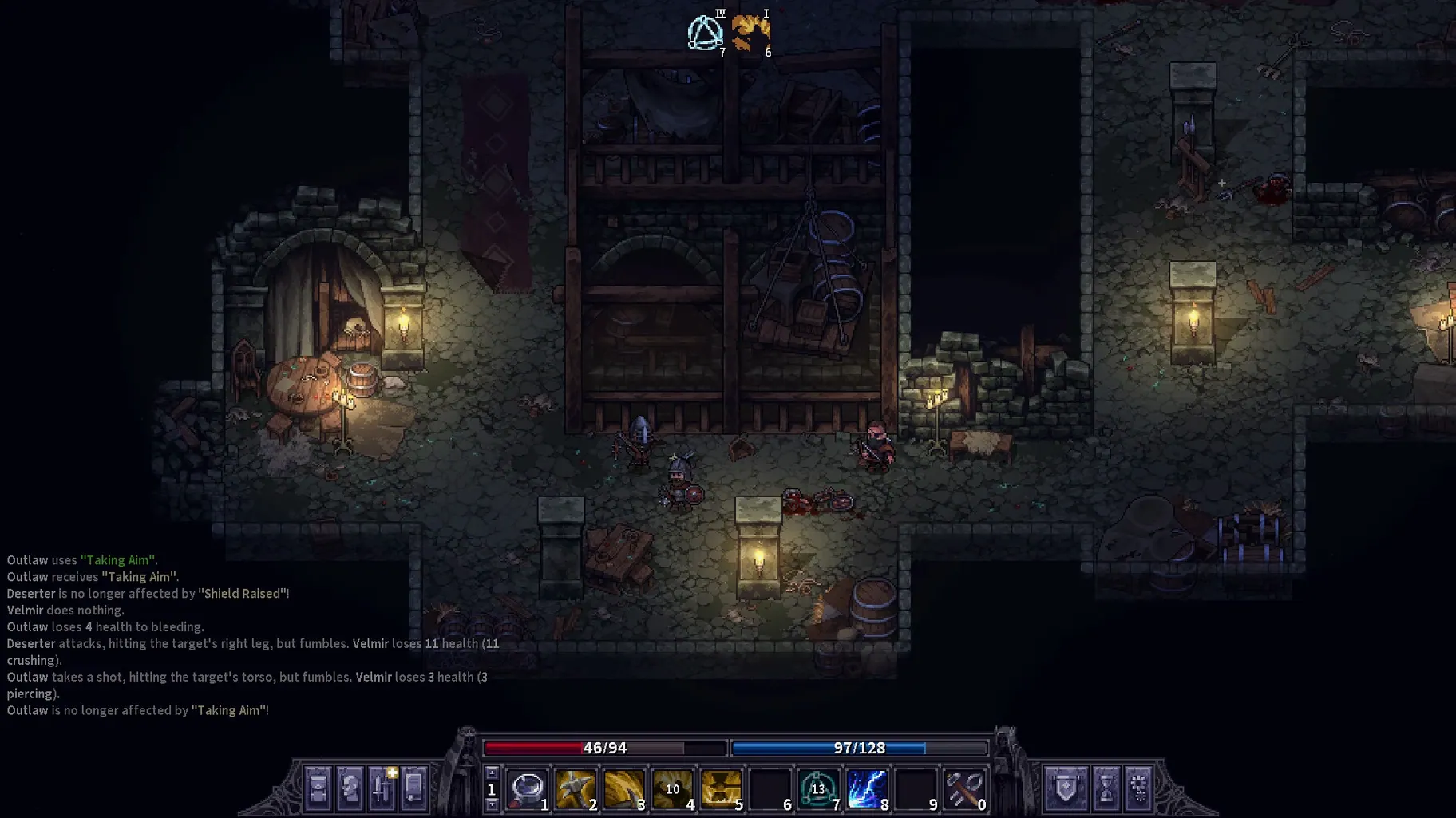
Combat is tactical and punishing. Positioning matters, abilities chain together, and a single misread can leave you bleeding out before you reach your pack. The health system does not abstract injury away with a red bar. You manage bleeding wounds, splint fractures, apply remedies, and watch pain sap your stats. Mental state runs on its own track. Morale dips after a near miss. Panic creeps in when a fight turns. Paranoia can make your character see threats that are not there, which affects every decision you make afterward.
Building something from splinters
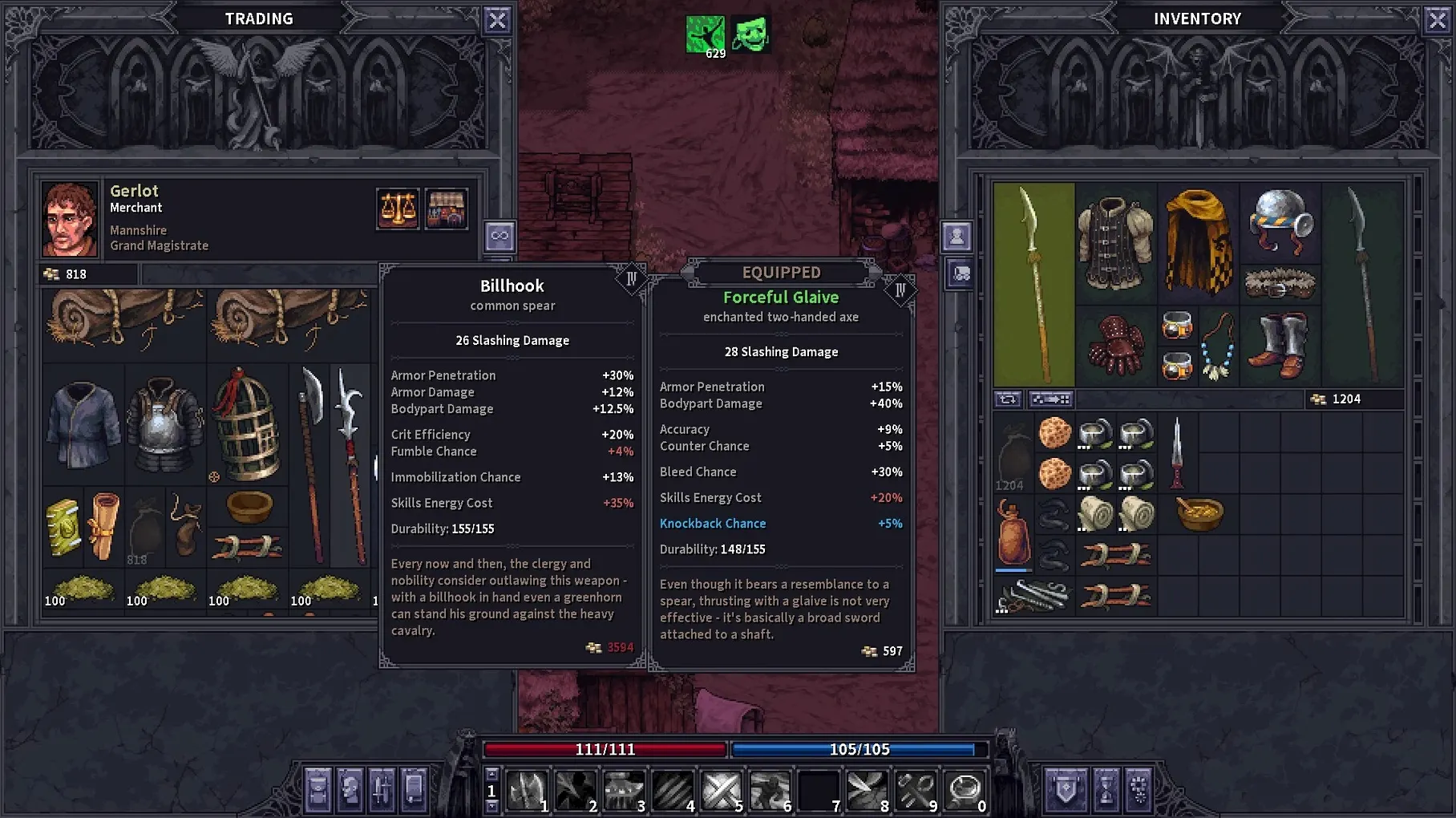
Character development opens into more than 200 abilities spread across skill trees, with over 400 equipment items to adapt your build. No two mercenaries wear the same scars. A two-handed axe fighter with a trader's instinct plays nothing like a dagger-wielding alchemist who treats her own wounds between swings.
Where Stoneshard fits in a Mac workflow
Stoneshard sits comfortably alongside other turn-based tactical games on macOS, but it also plays well with the system itself. It runs in a window or fullscreen, and on an Apple Silicon machine it coexists without fuss with whatever else is open. I often keep a note-taking app off to the side for tracking which settlement sells poultices cheaply and which dungeon still has a locked door I could not open — the game does not hand you a quest log that remembers everything, so external notes become an organic extension of play.
Dragging the window to a second display works as expected, and pausing mid-contract is straightforward because turns wait indefinitely. That makes it a natural fit for interrupted sessions: a few moves in the morning, a dungeon floor cleared over lunch. The save system, which only commits at certain points, means you plan your exits carefully, but the app itself never punishes you for stepping away.
macOS features like Mission Control and Spaces handle Stoneshard gracefully. Switching desktops mid-session does not cause the rendering glitches some Wineskin-wrapped titles suffer from, and the game holds its audio state correctly when backgrounded. Screen recording tools and streaming apps also capture it without tinkering, which matters if you are documenting a particularly cruel death for a video essay.
A caravan guard's afternoon
Imagine a player who treats Stoneshard less as a power fantasy and more as a logistics puzzle. This person — call her a systems-minded RPG veteran — spends a session escorting a trade caravan from Osbrook to Mannshire. She has already mapped the road on a previous run and knows that the burnt mill at the crossroads often spawns brigands. She packs two splints, a stack of leeches, and a wineskin to steady morale, then sets out at dawn because daylight reduces the range at which undead aggro.
Halfway along, a wolf pack forces her off the path into a copse where a necromancer is raising skeletons. She is not built for this fight, but she has read the terrain: the copse funnels enemies, so she drags the wolves into the skeletons and lets them occupy each other while she skirts the tree line. The caravan makes it through, and she pockets the contract reward plus a ruby she swiped from a corpse before the necromancer noticed. Stoneshard rewards exactly this kind of thinking: planning, improvisation, and knowing when to run.
World generation finishes before you can grab your phone
On an M1 MacBook Air the game loads areas briskly, with initial world generation taking a few seconds and transitions between map zones remaining short enough that you never reach for your phone. The fanless design stays cool even during extended sessions, though the Wineskin layer does nudge CPU usage higher than a native port would. In practice that means the battery drains faster than during lighter tasks, but not alarmingly so — you can expect roughly three to four hours untethered, which covers a decent mercenary career.
Stability holds up well in version 0.9.4.24. Crashes are rare and tend to cluster around very specific triggers, like rapidly opening and closing the inventory while the game autosaves. Turning off unnecessary background processes helps, as does running the bundled Fix script if the app refuses to launch after a macOS update. The community around the Stoneshard crack for Mac build has documented workarounds for most quirks, and the Wineskin wrapper feels polished enough that you forget it is there until the title screen renders slightly faster than expected and gives the illusion away.
The Early Access build runs on Apple Silicon Macs, including the M1 MacBook Air, and supports twelve languages.
- macOS Sequoia
- Apple Silicon
- Tested on MacBook Air (M1, 2020)
Questions from the booth
It is a turn-based open-world RPG about a medieval mercenary, built around tactical combat, survival mechanics, and a persistent character.
The game models individual injuries like bleeding wounds and fractures, and requires remedies, splints, and bloodletting to manage your physical state.
Yes, your mercenary's morale, panic, and paranoia fluctuate and directly influence combat performance and perception of danger.