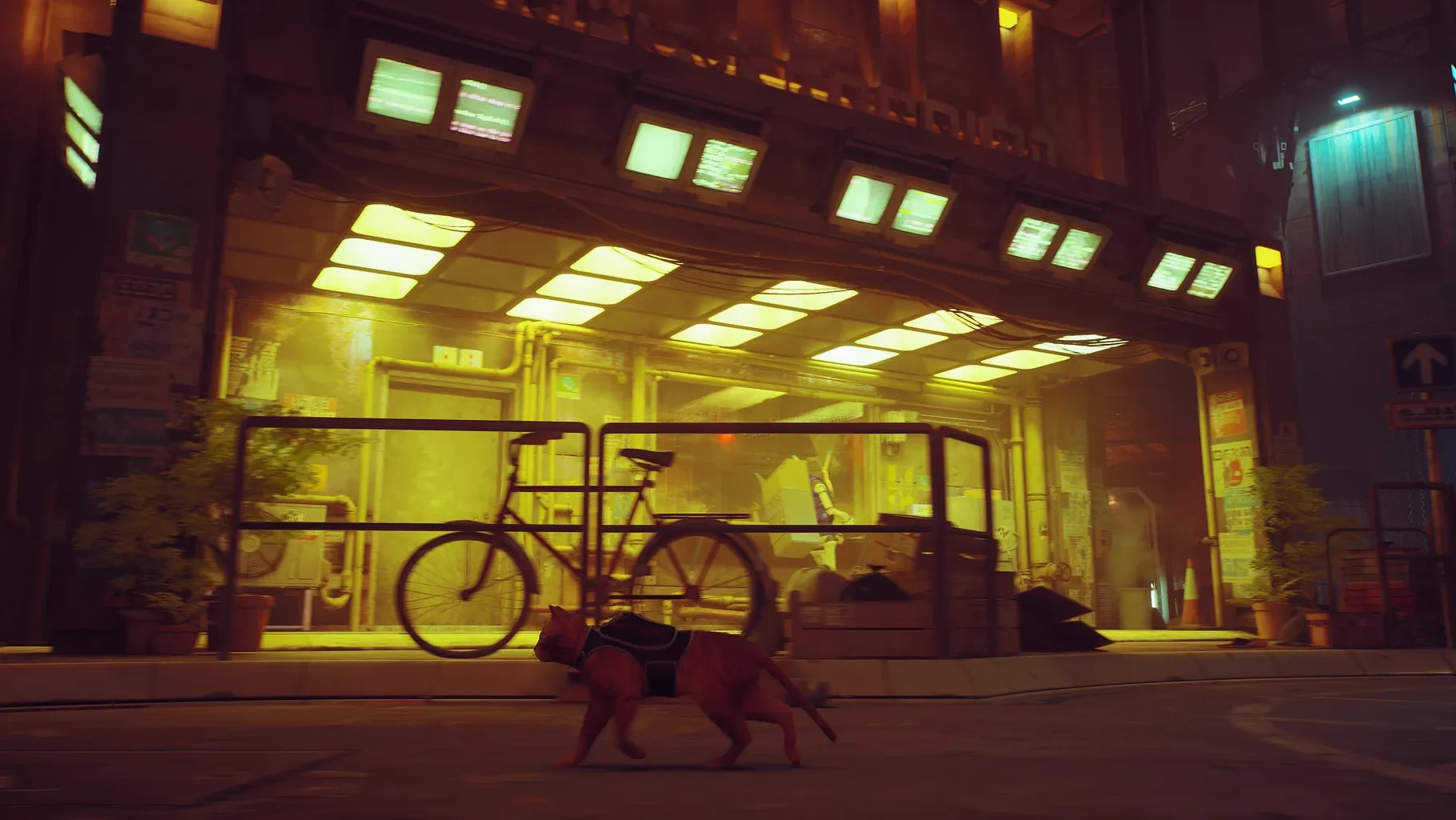
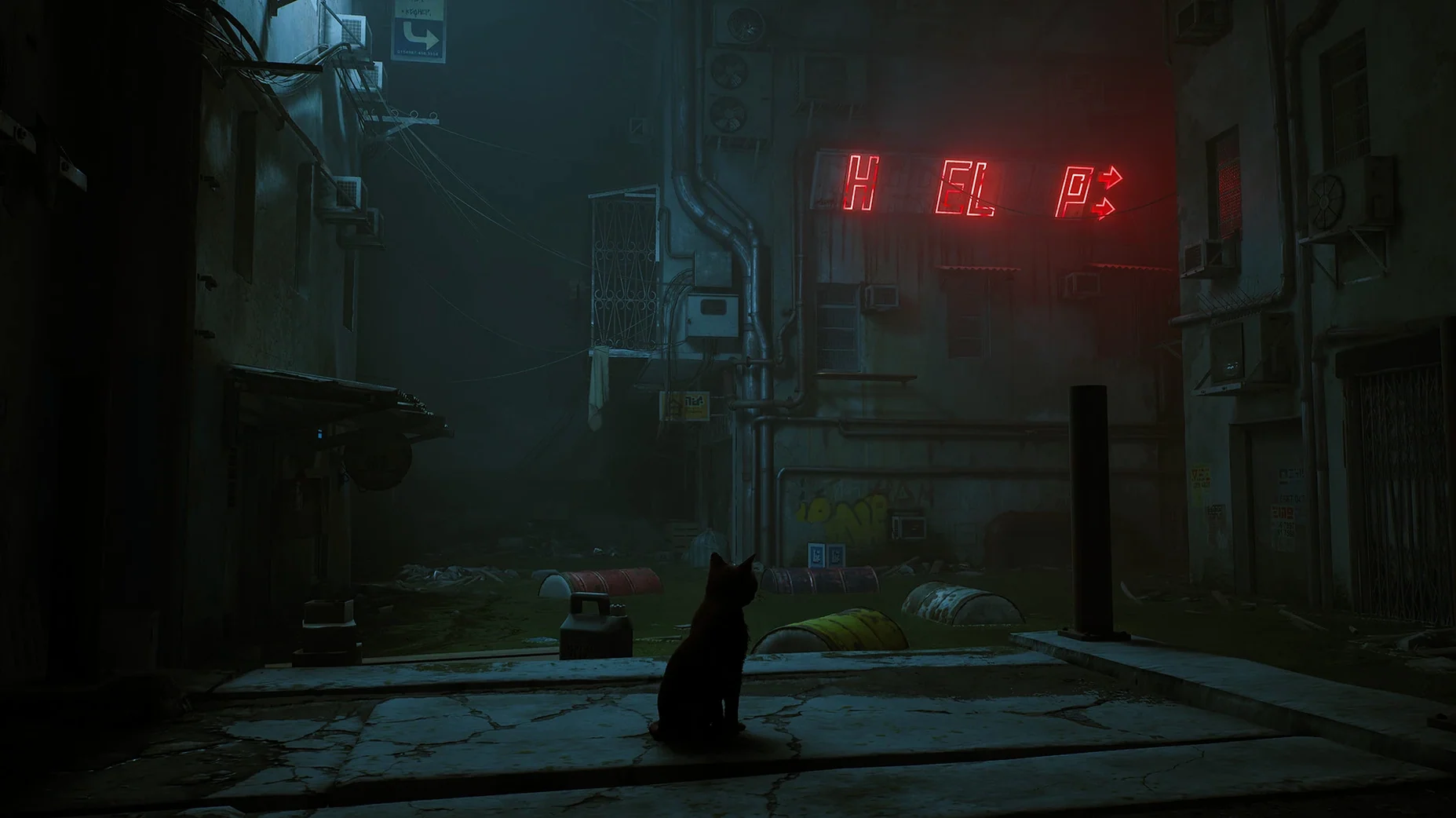
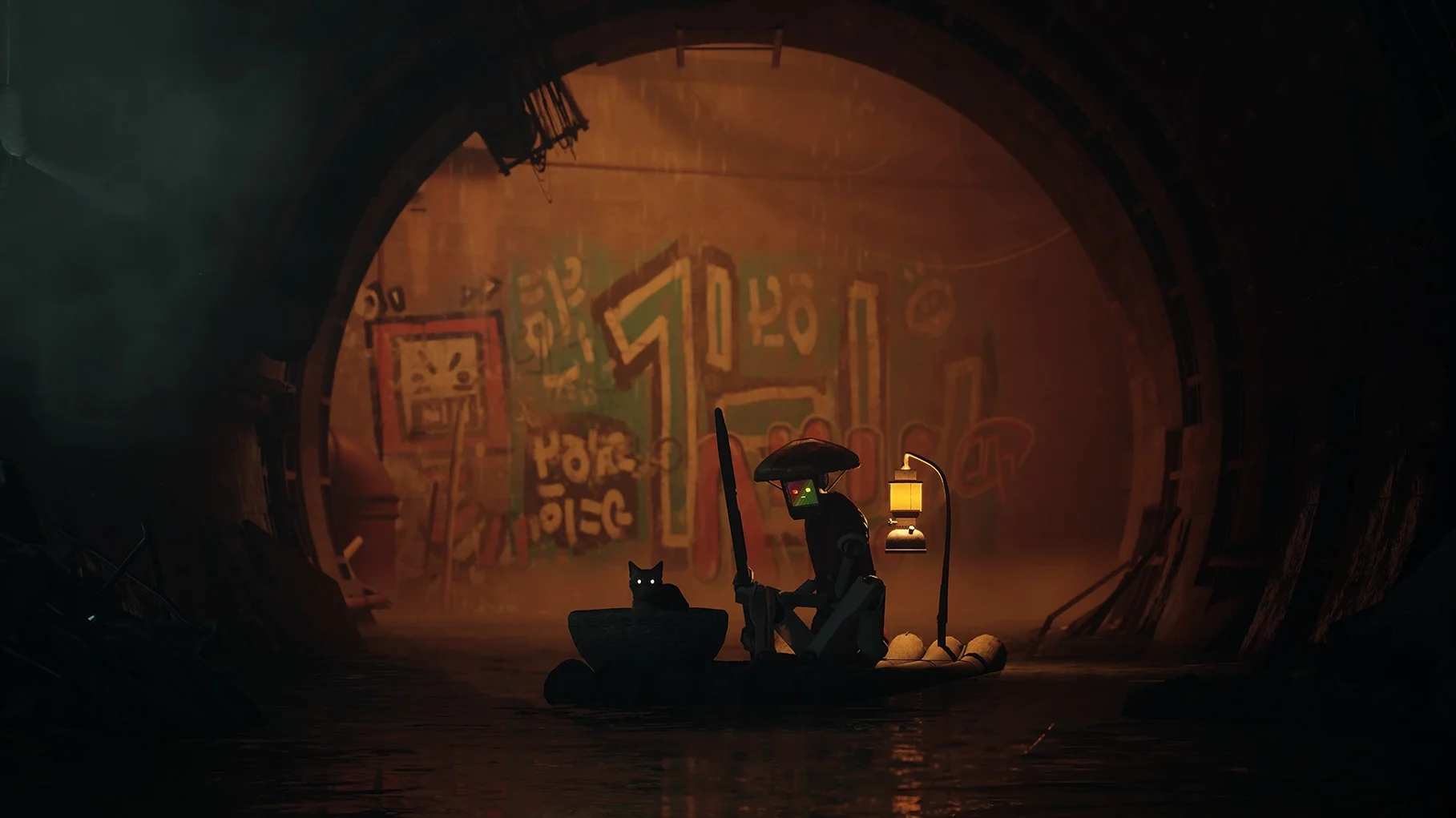
Most games hand you a weapon or a skill tree the moment you arrive. Stray gives you paws and a meow button, then drops you into a walled cybercity where the only thing smaller than you is your understanding of what went wrong. There is no hero here — just a lost cat, a drone companion, and streets that hum with a sadness the neon can't quite hide.
A city that remembers you're a cat
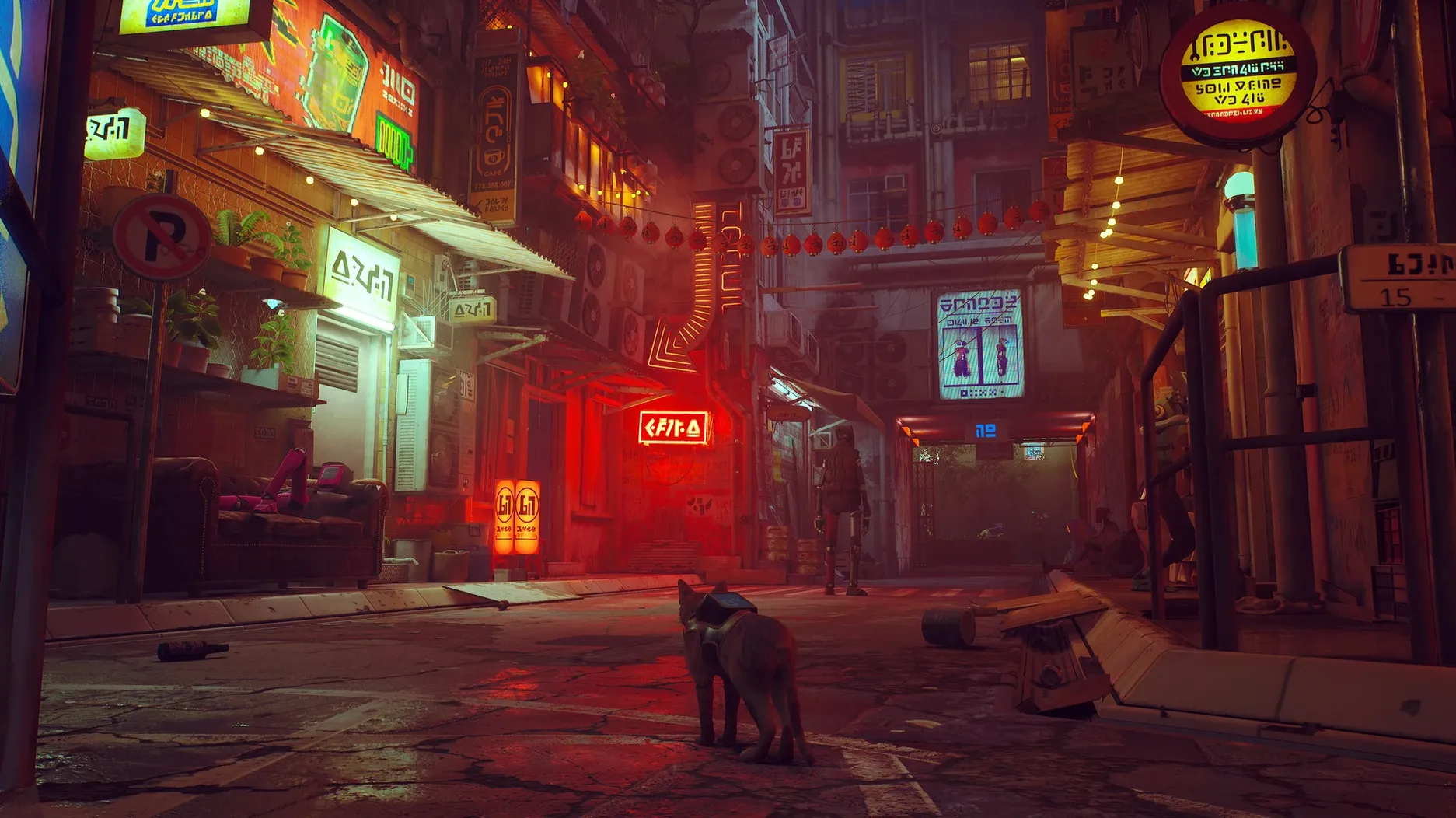
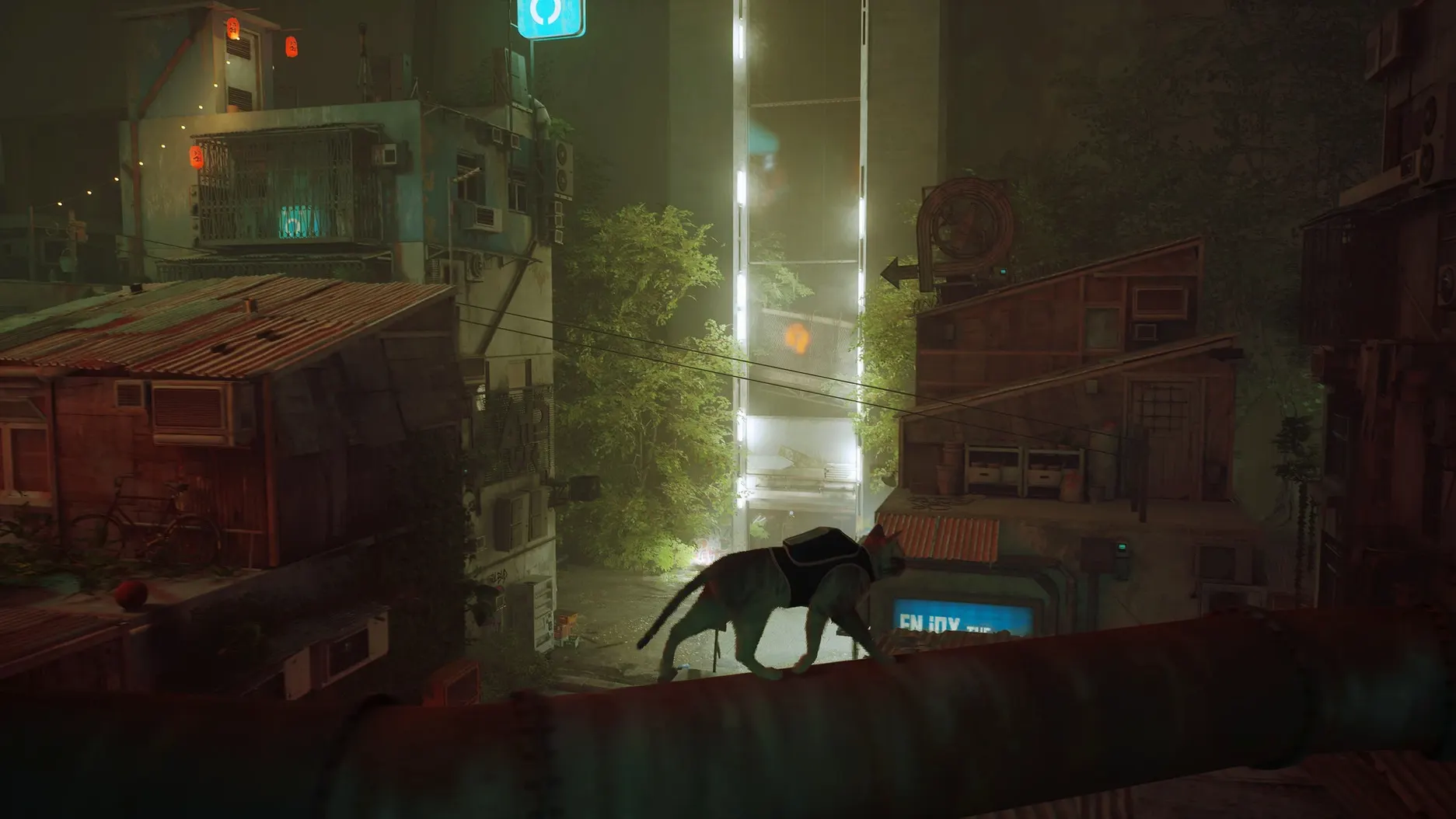
BlueTwelve Studio, a small team from the south of France, built a world that bends around an animal's perspective. You don't climb ladders — you hop onto air conditioners and shimmy up drainpipes. Basements become caverns of junk to weave through; rooftops turn into highways of corrugated metal and satellite dishes. The camera stays low and close, and every surface is something to scratch, knock over, or curl up on. These aren't menu options — they're just what a cat does, and the game never forgets it.
Puzzles, threats, and the quiet in between
The neon-lit alleys hold more than atmosphere. Zurks — skittering creatures that swarm in waves — turn quiet corridors into frantic dashes where you learn to zigzag through gaps too small for anything but a cat. Puzzles ask you to read environments the way an animal might: nudging objects off ledges, squeezing through barred windows, meowing to draw attention. Between these moments, the game lets you simply exist in its dying city, padding across sun-bleached concrete while your drone companion tries to piece together what happened here.
What I keep coming back to is how a single task — slipping through the Slums unnoticed — shows you everything the game cares about. You arrive in this tiered shantytown with a faint objective marker and no clear path. The droids don't attack, but they notice you. The Zurks are somewhere below, pulsing in the dark. The first thing a cat would do is go high, and that instinct turns out to be right. I jumped from a stack of crates to a corrugated awning, then along a pipe to a balcony strung with laundry. From there you can see the whole district: ledges that zigzag upward, a bucket someone left balanced on a plank, a barred window with a sliver of orange light behind it. B-12 chimed in with a half-remembered fragment about the area, but the real clue was the bucket. A paw swipe sent it clattering down, and a droid below shuffled over to investigate — clearing the doorway I needed. That is the loop in miniature: read the vertical space, use your smallness and curiosity, and let the city's objects do the rest. The game never tells you to knock things over for distraction; it just puts the bucket there and trusts you'll try.
The M1-native build finally lets the cat's animations breathe without stutter
The current build, version 1.6, is the one that landed on Apple Silicon Macs with full support for macOS 12.0 and later. On my M1 MacBook Air, the difference from earlier Windows builds I'd watched friends play was mostly about stability during the Zurk chase sequences — those moments where the frame rate used to dip now hold steady, which matters when you're threading a cat through a collapsing tunnel. The patch also tightened the cat's landing detection on certain uneven geometry in the Rooftops chapter. Before, you could leap toward a pipe and slide off an invisible seam; now the game reads those surfaces as continuous. A minor fix on paper, but it means fewer deaths that feel like the game's fault. The suspended-object physics — paint cans, glass bottles on ledges — also got a small tweak. They fall with a fraction more weight, and the sound they make hitting concrete travels further, which subtly rewards the kind of environmental messing-around that the whole Slums section is built on.
That jump button only lights up where the game wants you to land
The most common mistake I see is playing Stray like a platformer where every surface is meant to be reached. The cat's jump is contextual — it only triggers when you're facing something the game considers a valid landing spot. New players will mash the jump button at a wall and feel betrayed when nothing happens. The fix is to slow down and watch for the small visual tells: a ledge will catch the light differently, or B-12 will tilt toward it. Another early stumble is hoarding the meow. In the opening hour, meowing feels like a cosmetic flourish, but it is actually a lure and a sonar. Droids turn their heads; Zurks briefly pause. Using it deliberately — one meow to draw a sentry left, then silence — turns what looks like a stealth section into something closer to a puzzle. Finally, people sprint through the quieter stretches and miss the memory fragments B-12 needs to unlock the story. Some of those fragments are tucked inside apartments you can only reach by knocking a plank loose or squeezing through a gap no human would spot. If the city feels empty, you are probably moving too fast to notice where it is letting you in.
- macOS 12.0 or later
- Apple Silicon Mac