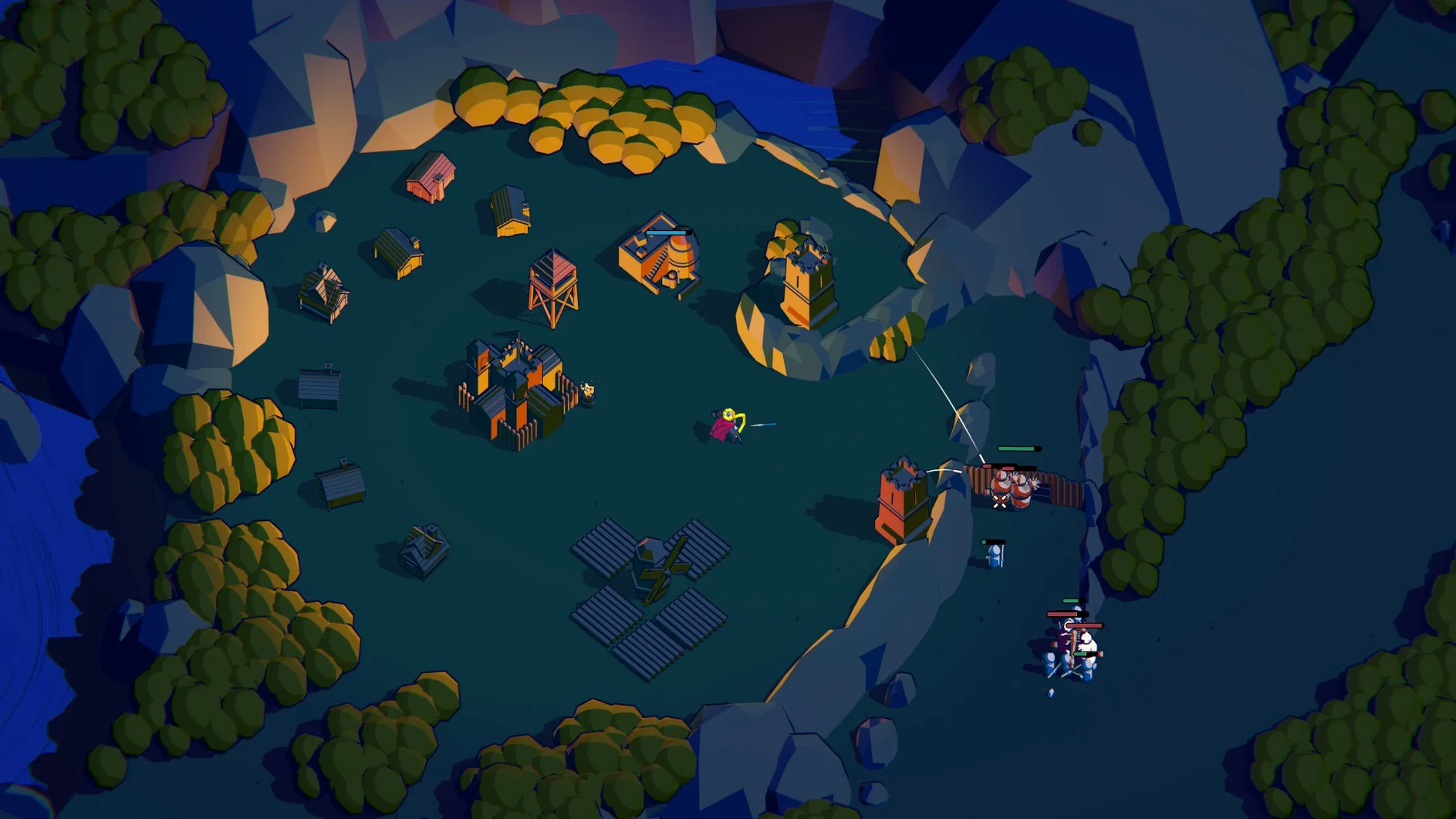
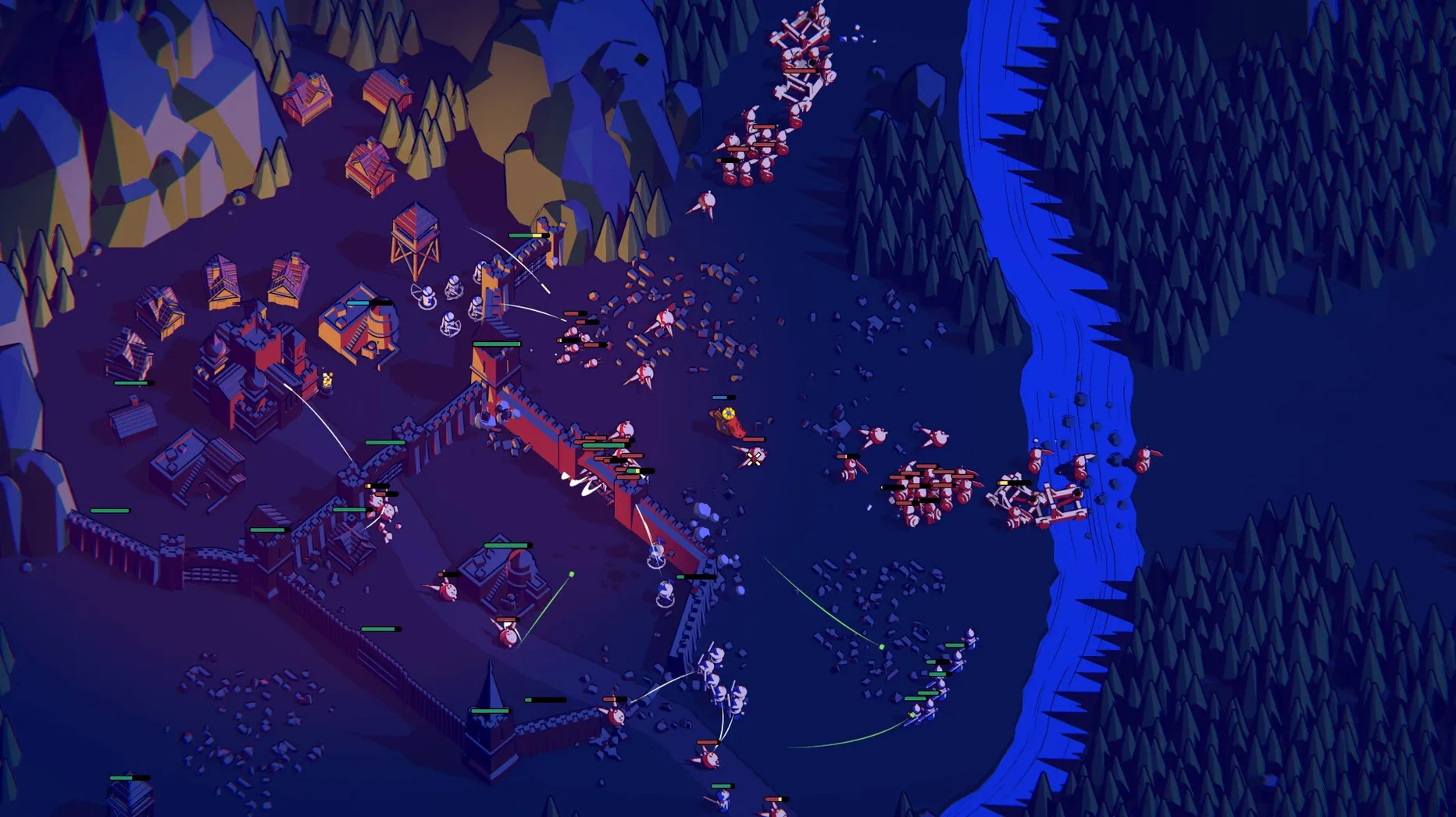
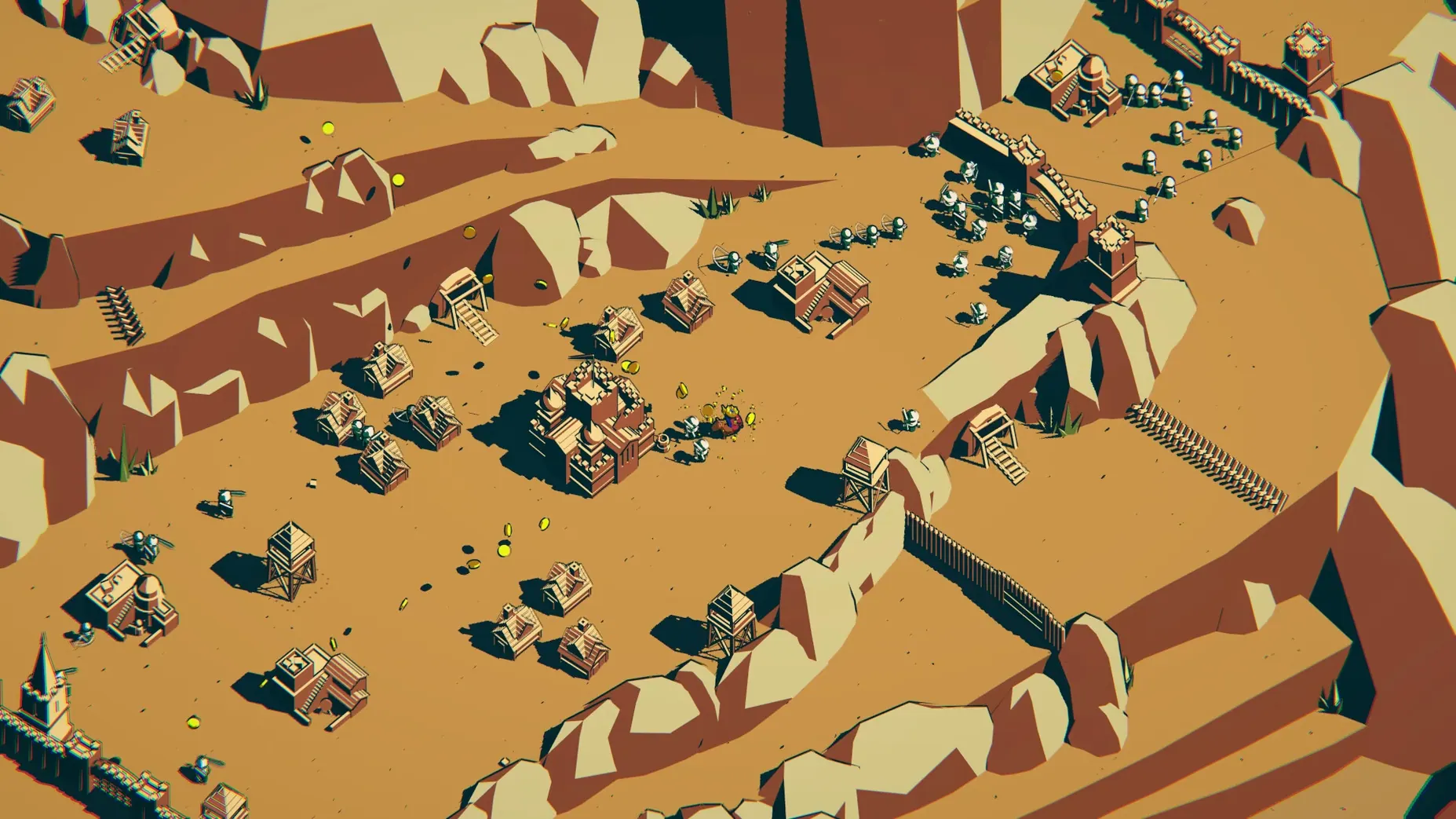
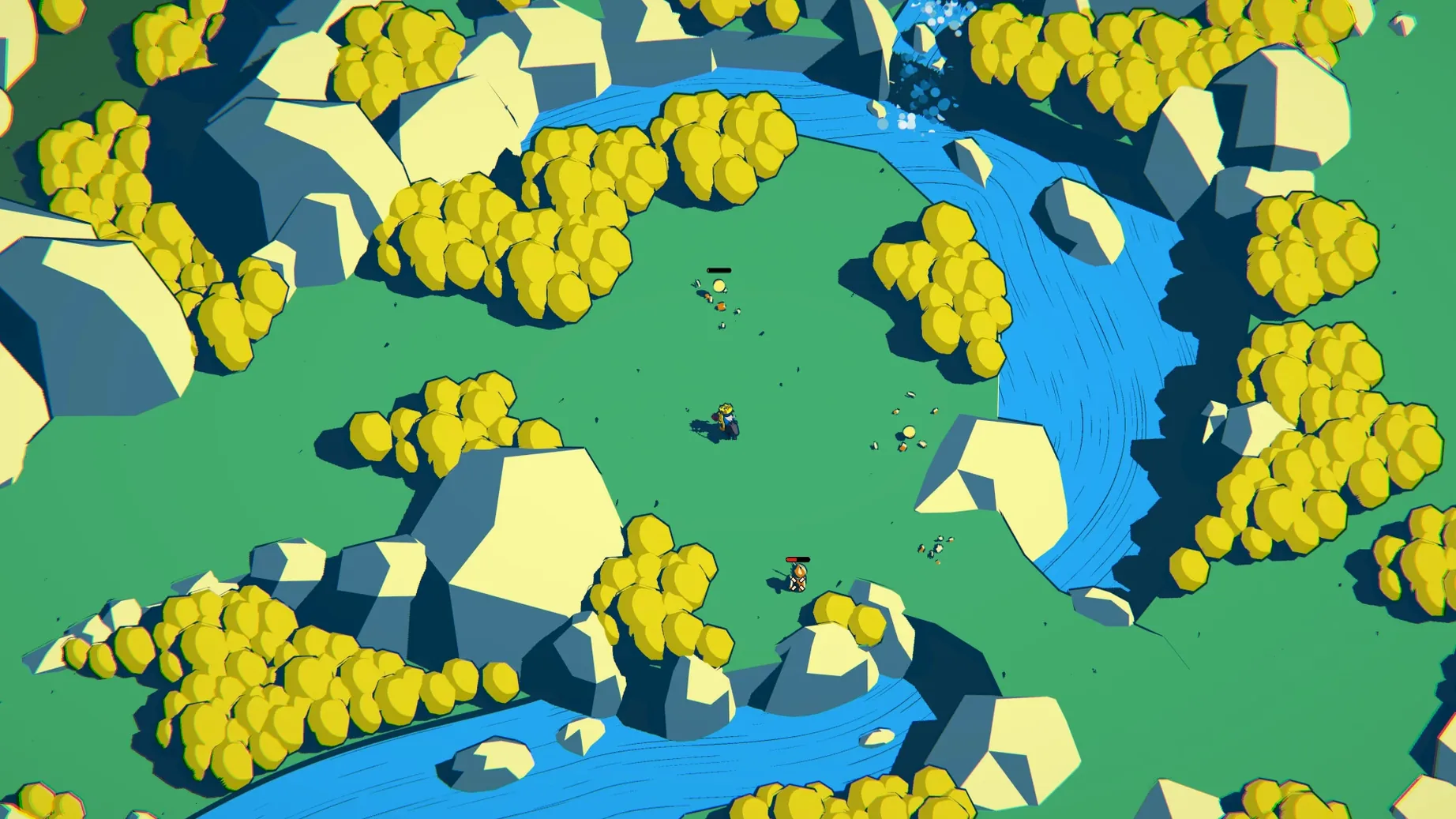
Every cycle in Thronefall gives you one day. Sunlight means building — placing fields, mills, archer towers and the castle walls that will keep your tiny kingdom standing. When dusk falls, the game flips. Enemies stream in from the edges of the map, and you ride out on horseback to meet them, longbow in hand, cutting into their ranks yourself while your defensive placements do their work. The whole loop has been carved down from the sprawl of a classic strategy game into something immediate and legible, but the decisions still carry weight.
- Day-night structure: build and expand your economy during the day; survive waves of attackers at night.
- Direct combat: fight from horseback with melee strikes and a longbow — the ruler is also the strongest piece on the board.
- Base building: place mills, houses, barracks and castle walls, each with clear, readable effects on your settlement.
- Unit roster: deploy archers, foot soldiers and other defensive troops that hold the line while you charge in.
- Official community wiki: GrizzlyGames maintains a wiki that documents every building, unit and strategy.
- Soundtrack: a dedicated music accompaniment that shifts tone between the calm of daytime planning and the tension of night assaults.
Stripping away tech trees and sprawling menus doesn't make the game soft — it just removes the busywork. A single mill placed in the wrong spot or a wall segment left open will cost you the run, and the small scale means every loss traces back to a choice you made hours or minutes earlier.
Thronefall keeps its own volume sensible across macOS. The game respects whatever output device you have set in System Settings and doesn't try to override your selected sound interface, so it plays nicely if you're routing audio through an external interface or using a utility like SoundSource to split app volumes. On a multi-monitor setup it opens on the display where the cursor sits, and you can drag the window freely between screens without the viewport losing its mind — small things that make the difference when you're squeezing in a run between editing sessions.
One interaction worth knowing: you can hold the Option key while placing a building to see its exact coverage radius before committing. The game never surfaces this, but it changes how you position archer towers and barracks during the first few daylight minutes, especially on the tighter maps where a single misplaced tile leaves the mill exposed. Right-clicking a unit card during the build phase sets a rally point that persists across nights, so your freshly recruited archers walk to the eastern wall automatically instead of bunching up at the barracks. That alone shaved half a lost run off my early attempts on the forest stronghold.
If you're hunting for a Mac copy of the latest build, a Thronefall torrent Mac search turns up community uploads that often include the current 2.14 package with both architectures bundled. The native Apple Silicon binary runs cool on M-series hardware — the fan on my M4 Mac mini never spun up across three-hour sessions — and the Intel slice keeps older machines in the game without any Rosetta penalty.
A quick settings pass before your first run
The defaults are sensible, but a couple of tweaks make the game read better on a Mac display. First, open the graphics tab and switch the anti-aliasing mode to SMAA — the default FXAA blurs the clean lines of castle walls and unit silhouettes, and on a Retina screen the difference in legibility during night combat is immediate. Drop the camera shake slider to about thirty percent: the full setting rattles the frame on every longbow kill, which reads as visual noise when you're trying to track enemy pathing through the treeline. Camera zoom speed can go up a notch from default too, because the daytime building phase rewards a pulled-back view that the stock sensitivity makes sluggish to reach.
Under audio, the music ducking option is off by default. Turning it on drops the soundtrack by a few decibels whenever a combat alert fires, which helps you hear the audio cue that signals a wall breach before you see the health bar drop. The sound design is lean but deliberate — every enemy type has a distinct approach sound, and ducking preserves that clarity without muting the score entirely.
- macOS (Intel 64-bit and Apple Silicon supported)
Questions from the booth
Yes — the player character fights with a longbow from horseback, and archers are available as a defensive unit for your base.