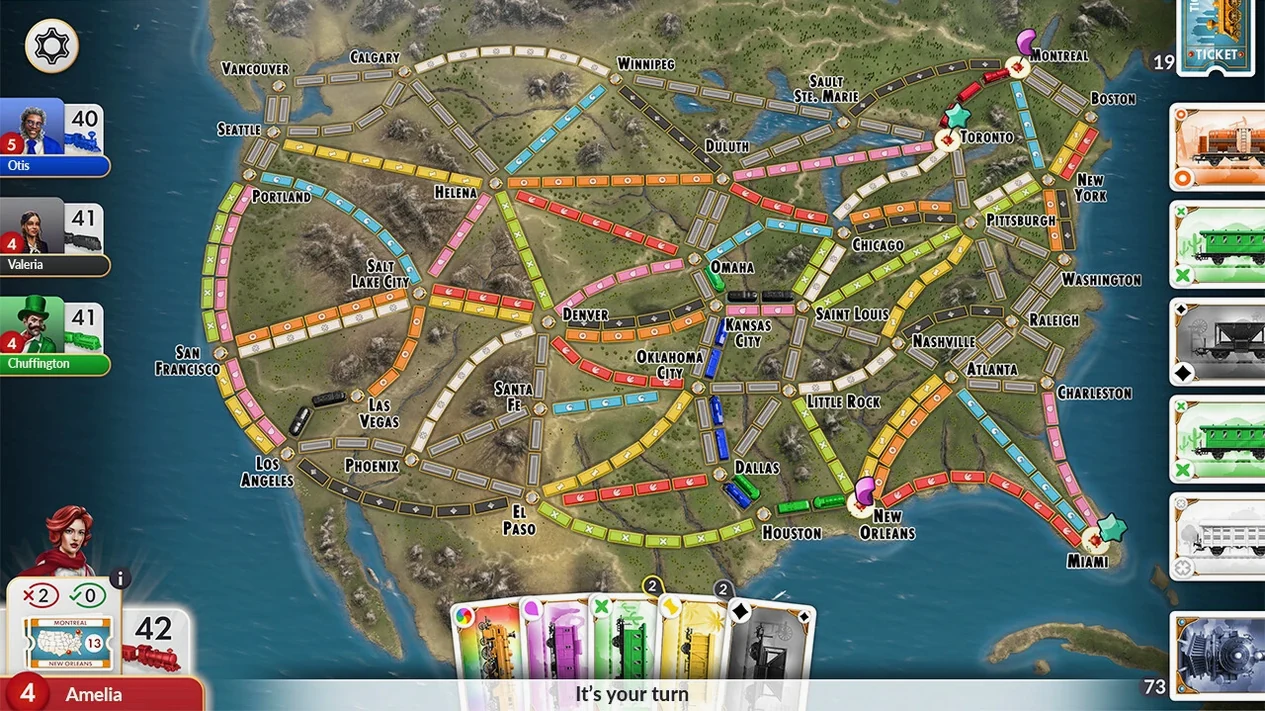
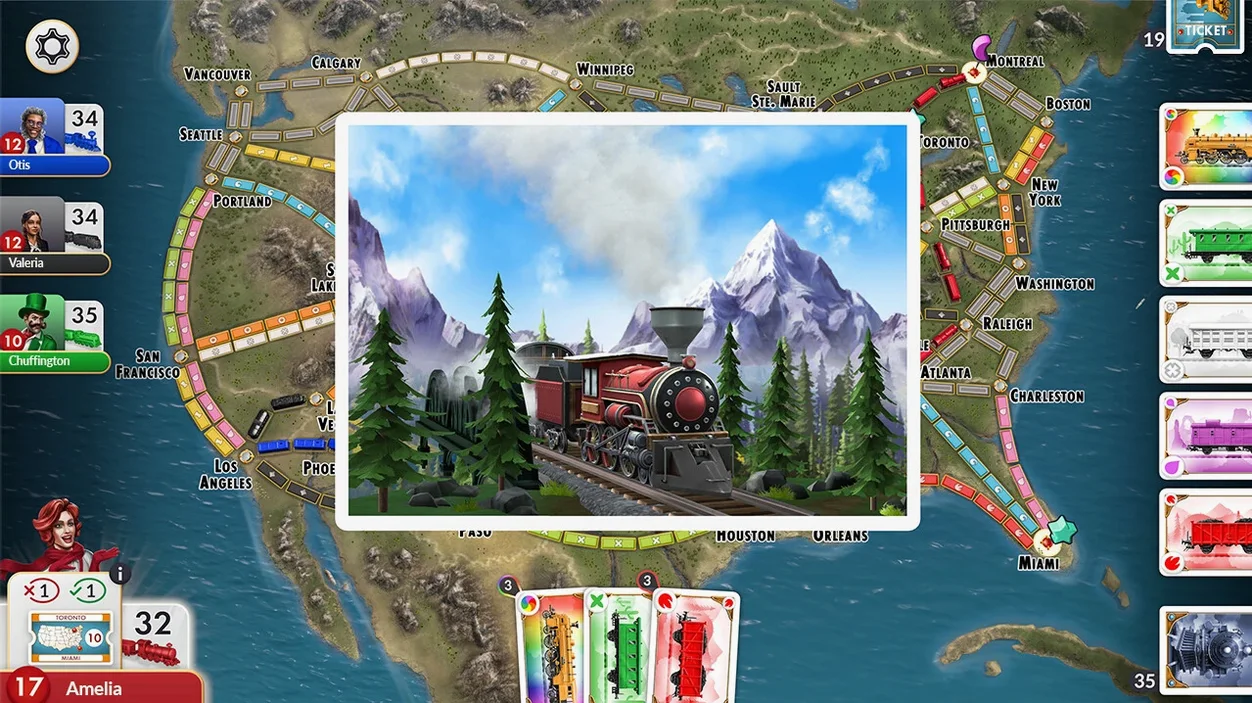
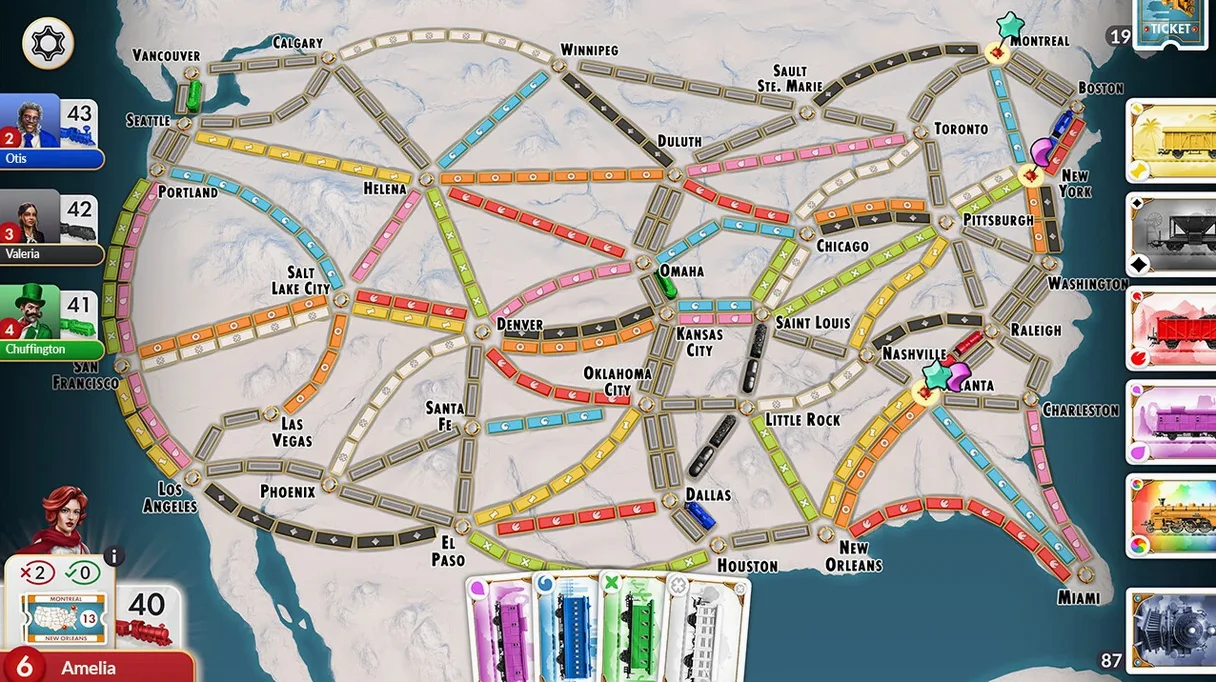
It tends to be the person who loves the click of a train car piece but never has enough table space, or the one who wants a full cross-country session after the board game group has gone home. The digital adaptation carries the same quiet tension of looking at your cards and realizing someone just took the line out of Seattle.
Pick your tickets
Before the first turn, each player draws route cards and decides which ones to hold close. You must keep at least two, and any you return go back to the box. The ones you keep become promises you will either honour or regret by the final score tally.
Claim the lines
Train cards build the routes, and every placed line inches you toward completing those destination promises. Colour matters here — a grey route will take any set, but the mountain passes ask for specific hues, and you will curse every rainbow locomotive you do not draw.
Finish what you started
When the final scores are counted, incomplete routes deduct points, unused stations add a small comfort, and the player with the longest continuous line takes the Express bonus. The music, a warm and unhurried accompaniment, carries through every drawn card and every placed carriage.
When you first launch the game, resist the urge to jump straight into a full European match against the AI on hard. Spend a session or two on the tutorial maps with the card tray visible and the turn timer switched off. Let your eyes learn where the grey doubles sit between Budapest and Bucharest, or how the eight-car tunnel into Stockholm feels different when you are holding three locomotives instead of two. The interface rewards a slower first week — tap around the route cards before confirming your initial three, and get comfortable with the station placement menu because it only appears once per city and you will miss it if you blink.
Alongside other digital board games on the Mac
Put it next to Wingspan and the difference is immediate. Both are warm, bird-and-train cosy on the surface, but where Wingspan gives you a private engine-building puzzle with occasional side-glances at others, Ticket to Ride makes every other player’s move a potential land grab. You draw a blue card and someone in Lyon just narrowed your options — that kind of second-to-second friction does not exist in the meadow.
Against Carcassonne, the comparison is closer because both live on a shared map. Carcassonne builds outward tile by tile and the meeple placement feels more reactive; Ticket to Ride asks you to commit to long corridors early and then spend the mid-game hoping nobody reads your intentions. The digital versions share a similar clean presentation, though Marmalade’s adaptation leans harder into atmosphere with the score settling into a gentle strings-and-piano bed that Carcassonne’s snappier turns do not attempt.
Compared to a heavier strategy title like Through the Ages, the gap opens wide. Through the Ages punishes poor planning across three ages and an hour, while Ticket to Ride keeps its consequences on a single map with a finish line you can see coming. That makes it the one I reach for when the evening needs a story in forty minutes, not a civilization.
European maps and stations finally feel native
Version 1.11.0 brought the European map into sharper focus for Mac players who had been waiting for tunnels and stations to feel native rather than ported. In everyday play, the station mechanic now flows more naturally — the game nudges you with a clearer highlight when a city can accept a station, which matters when you are three tickets deep and the obvious route through the Alps just closed. Mountain tunnels also received a quiet tightening: the AI’s willingness to gamble on a blind draw feels less random, more like an opponent with a personality, which shifts how you approach the long colourless stretches near the map’s edges.
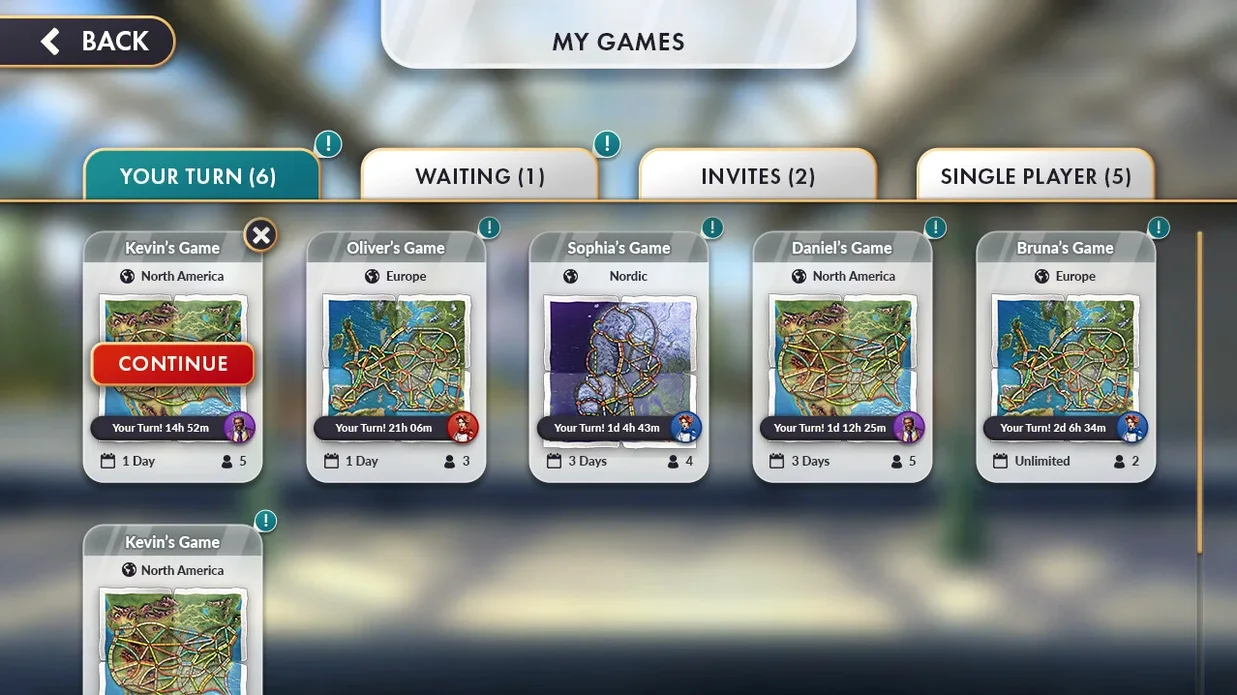
Earlier updates smoothed the multiplayer lobby experience, but the 1.11 release is where the single-player rhythm settled into something that does not make you wait through artificial pauses. Card draws resolve with a click, route claims land with a short animation you can tap through, and the whole tempo now suits a lunch-break game or a late-night session where patience is thin but the craving for one more completed destination is not.
- macOS 12.0 or later
- Apple M1 chip or later
Questions from the booth
Marmalade Game Studio lists macOS 12.0 and an Apple M1 chip or later as the requirements, so Intel Macs are not supported.