
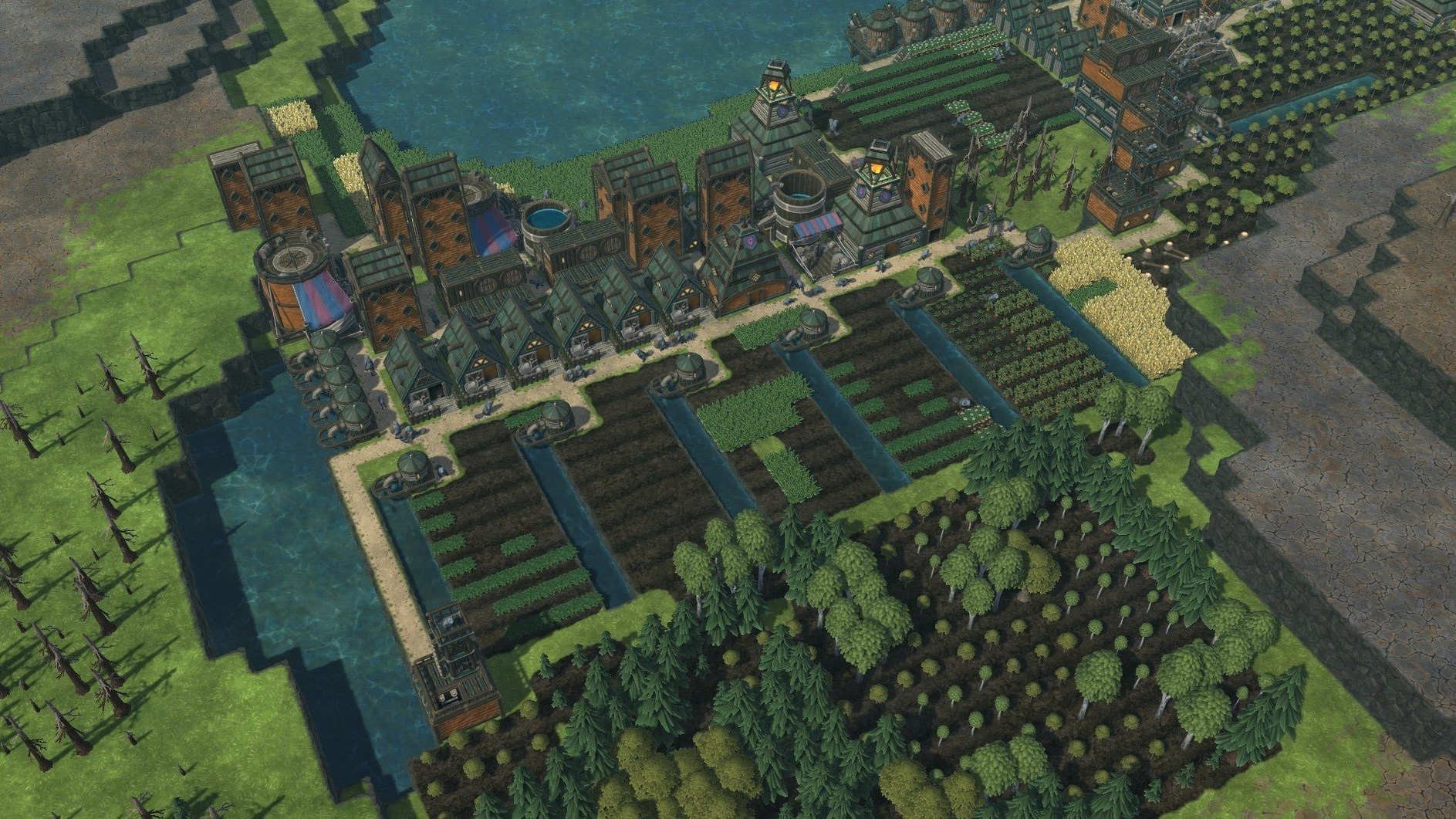
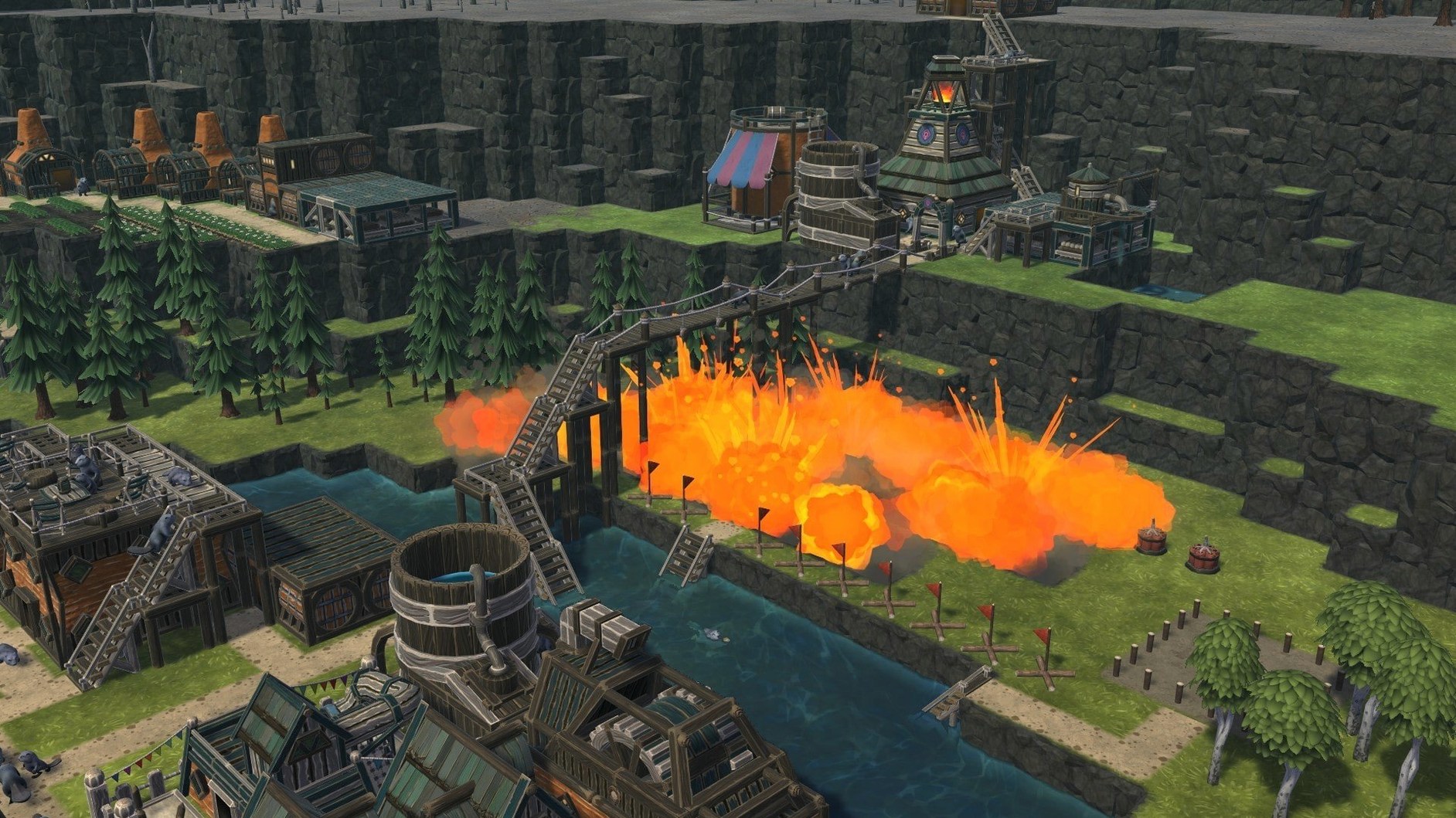
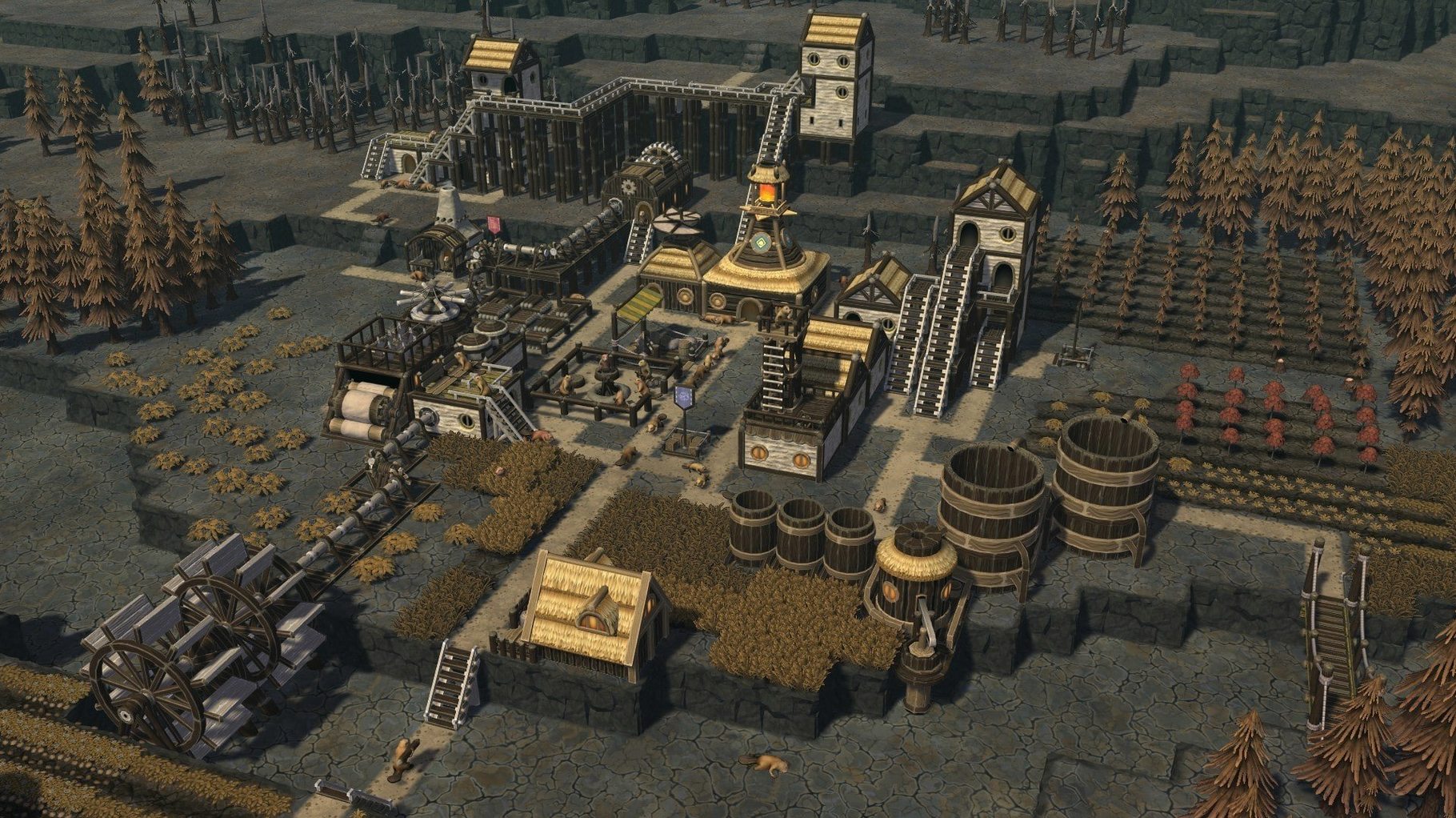
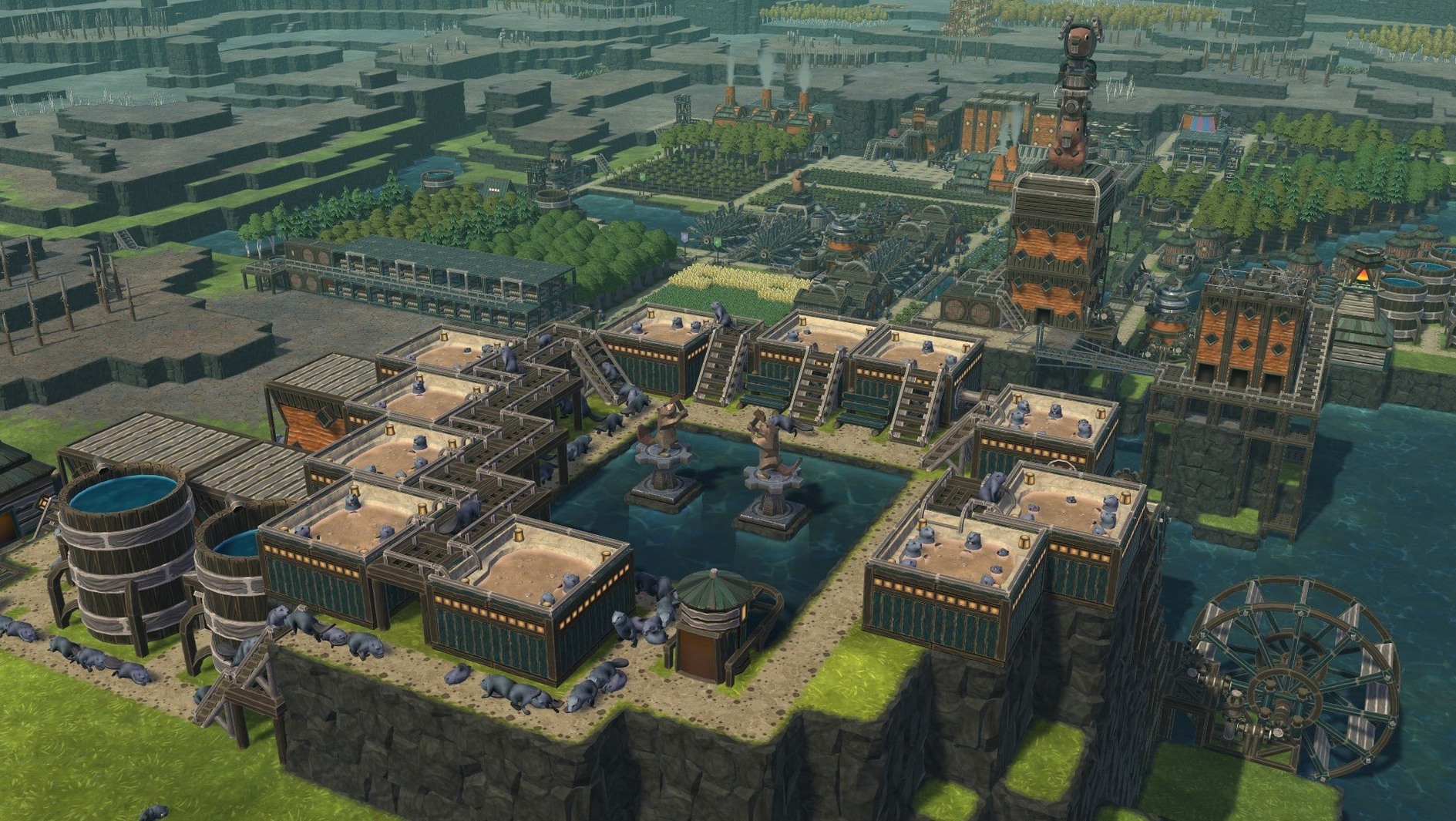
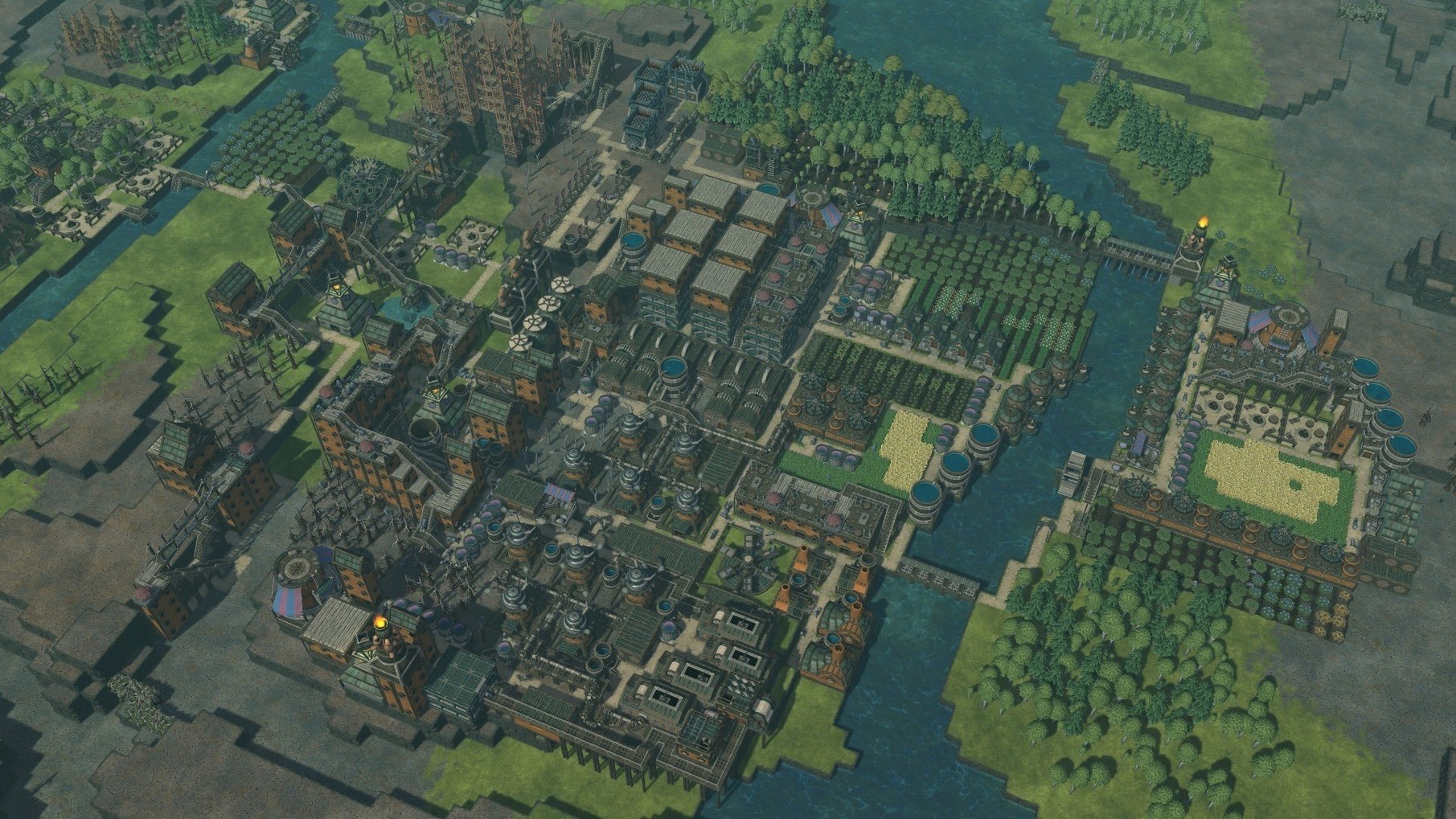
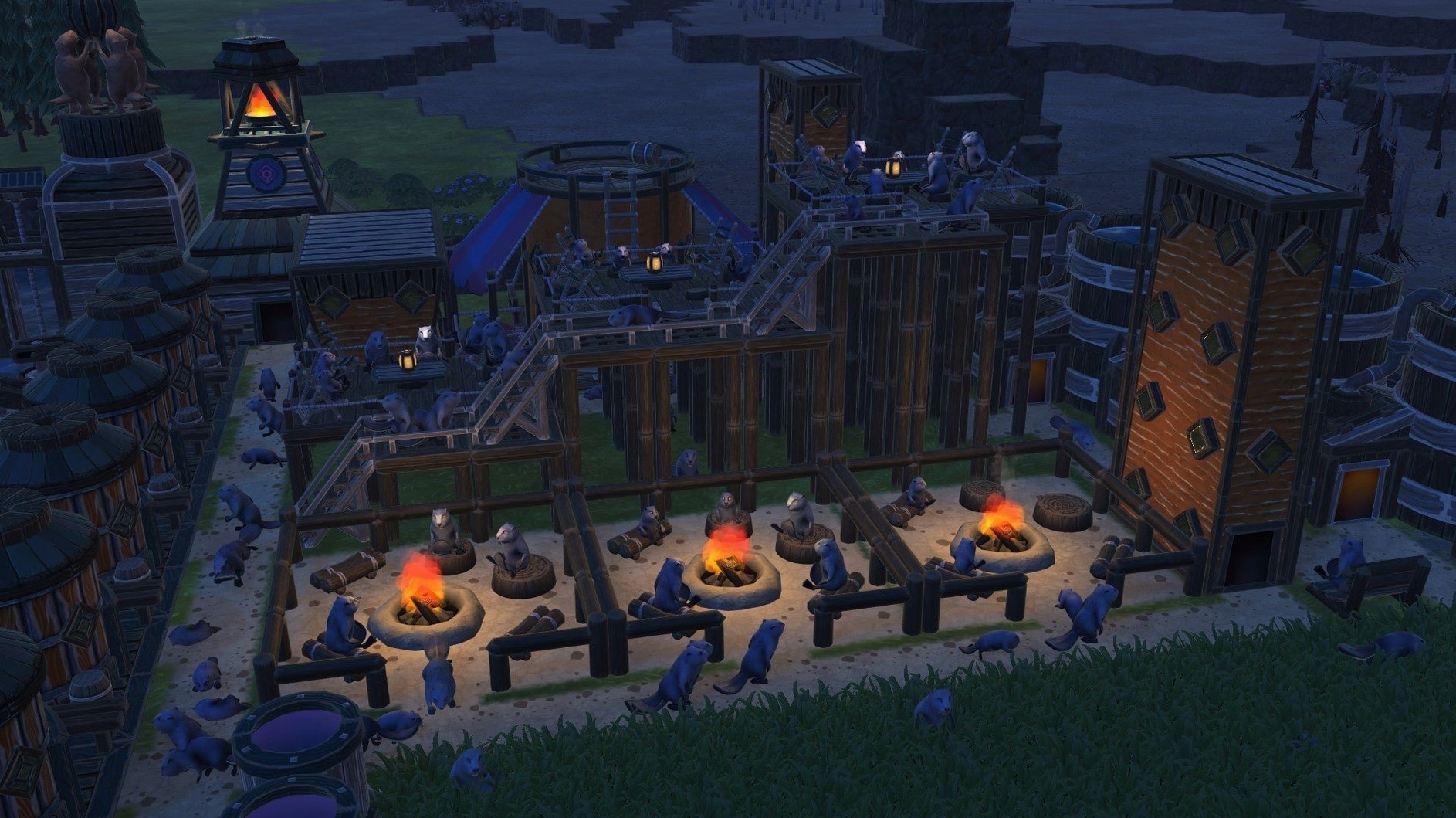
Most city builders ask you to place roads, zone some housing, and wait. They don't usually ask you to dam a river before the drought hits, or to reckon with the fact that your entire population depends on a reservoir you built three seasons ago. That's the problem Timberborn hands you, and it's one of the most absorbing management loops on the Mac right now.
Two factions, one dry season
You choose between the Folktails, who favour agriculture and community, and the Iron Teeth, who lean into industry and efficiency. The difference shapes how you build, but the core challenge is the same: store water, manage vertical space, and keep the wheels turning. The 1.1 release deepened this with new maps and statistics tools that let you track exactly where your resources are going—useful when a bad harvest cascades into a labour shortage and you need to trace the cause.
Frame rates stay steady until your dam network sprawls
Timberborn's build supports both Apple Silicon and 64-bit Intel Macs natively. On an M-series machine, large settlements with hundreds of beavers and complex water simulations hold their frame rate well, though late-game dams and district logistics will eventually make the fans audible. Mouse and keyboard controls are precise for placing levees and floodgates, and the custom-map editor works identically to the Windows version—community maps load without friction. If you've been looking for a management sim that trades road networks for aqueducts and vertical wooden towers, this one earns its place.
Floodgates got less likely to drown your colony by surprise
Version 1.1 didn't just add maps and statistics—it rebalanced the way water behaves across elevation changes, which sounds technical until you lose a settlement to a badly timed floodgate. The fluid simulation now propagates more evenly through narrow channels, so a single-tile levee breach doesn't drain an entire reservoir in seconds. You still need to respect gradients, but the punishment for imperfect engineering feels fairer than it did in early access.
The statistics overlay, meanwhile, turned out to be the feature that changes how you plan. Before 1.1, you could sense that your carrot supply was low, but you couldn't see the trend line over five cycles. Now you can pull up production graphs per district and spot the exact day your waterwheels stopped turning during the last drought. That data doesn't solve the problem for you—you still have to build the extra pumps—but it removes the guesswork that used to send beginners into a death spiral they couldn't diagnose.
Map variety expanded too. The new terrain layouts include floodplains with narrower buildable bands and steeper canyon walls, which push vertical architecture harder than the original plains maps. If you've been playing since the early builds, these shifts make the late-game colony feel less like a solved puzzle and more like a fresh negotiation with the terrain.
No Rosetta, no wrapper—the Mac build is native ARM and x86
People browsing a timberborn mac download page usually want to know one thing first: is this running through a translation layer or is it native? The build is compiled for ARM and x86 directly. No Rosetta, no wrapper, no performance caveat you need to plan around. Install it, launch it, and the engine talks to the Metal graphics stack without a middleman.
The second question is about the learning curve. Timberborn doesn't have a gentle tutorial that walks you through every menu. It drops you onto a riverbank with a handful of beavers and a countdown to the first drought. The tooltips are decent, but the real teacher is failure. Expect to lose your first colony. That's not a flaw—it's how the game communicates the stakes of water storage, and the community around timberborn for mac is full of players who'll tell you the same thing happened to them.
Language support also comes up. The interface ships in twelve languages including Japanese, Korean, and Ukrainian. The voice work is instrumental only—there's no spoken dialogue to localise—so nothing gets lost in translation.
Each new beaver drains your food and water before they work
The most common beginner mistake is treating Timberborn like a conventional city builder where population growth is always good. Here, every new beaver drinks water and eats food before they contribute labour. If you expand housing during a wet season without first expanding your reservoir capacity, you're building toward a crisis. The drought clock doesn't care about your good intentions.
Another early misstep is ignoring verticality. The game lets you stack lodges, warehouses, and workshops on platforms, but new players often sprawl horizontally until they run out of fertile ground. By the time they realise they can build upward, they've already paved over the green space their farms need. The Iron Teeth faction punishes this especially hard because their industrial buildings have larger footprints and deeper supply chains.
District management is the third pitfall. You unlock districts to reach distant resources, but each new district splits your population and requires its own food, water, and hauling infrastructure. Setting one up without a stocked warehouse at the border gate means the new settlement starves before the first migration wave arrives.
When things go wrong and how to recover
A stalled waterwheel is the most frequent snag. If your power grid dies mid-drought, check whether the river has dropped below the wheel's intake level. The fix is usually to build a dam downstream to raise the water level, but that takes time you don't have during a dry spell. The short-term rescue is to slap down a few hamster wheels—inefficient, but they keep the lumber mills turning until the rains return.
Food chain collapses are harder. When your carrot supply vanishes, look past the farms and check the storage. Often the issue isn't production; it's that your haulers are overwhelmed and the harvest is rotting in the field. Building small warehouses near your agricultural districts, rather than one central granary, solves more famines than planting extra crops ever will.
If you find yourself searching for a Timberborn Mac torrent because a corrupted install left the game crashing on launch, a practical route is to verify your files or re-download the package directly. The DRM-free build doesn't tether itself to an online service, so a clean install resolves most launch problems without additional steps. On Apple Silicon machines, the game occasionally hangs on first launch while Metal compiles shaders—give it a minute before you force-quit, because that pause is a one-time process.
Version 1.1 introduced fresh maps to test your water-management instincts and a statistics panel that reveals how your colony actually spends its days—handy when a district starts starving and you can't figure out why.
- macOS (Apple Silicon and Intel 64-bit supported)
Questions from the booth
Yes, the current version runs on both Apple Silicon and 64-bit x86 Intel Macs.