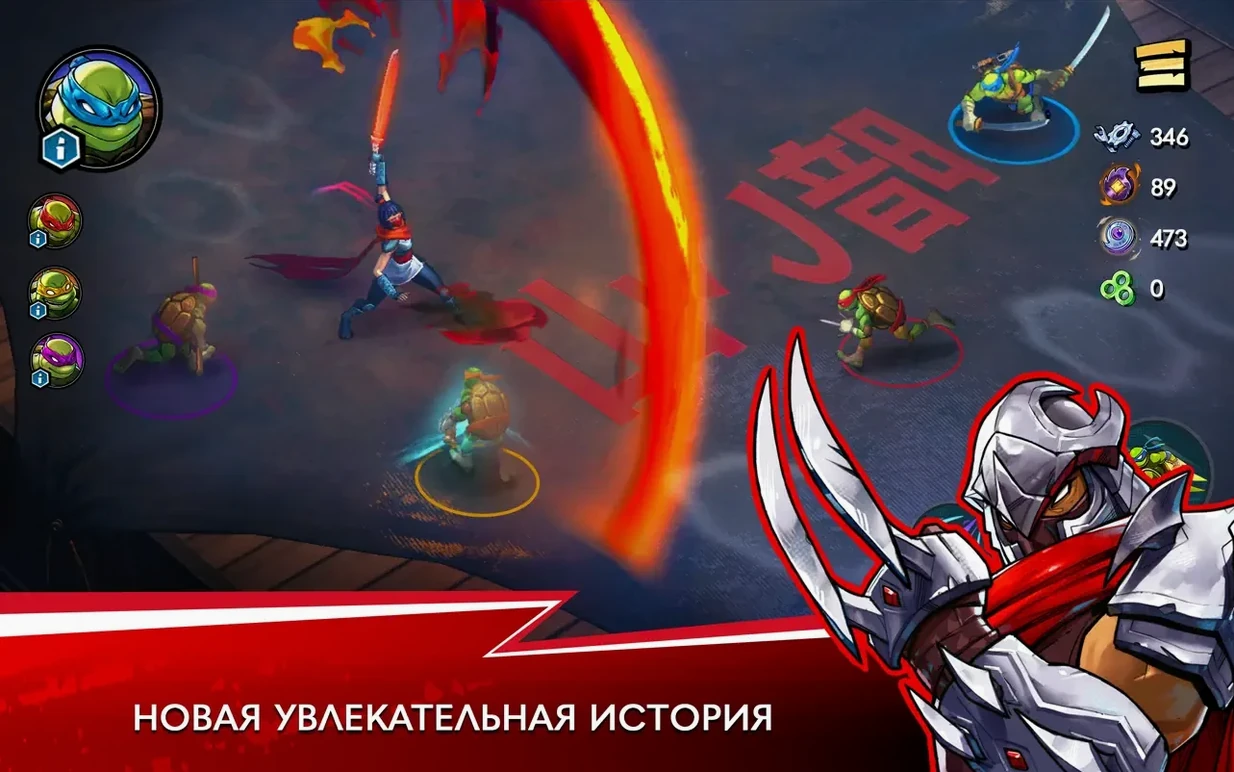
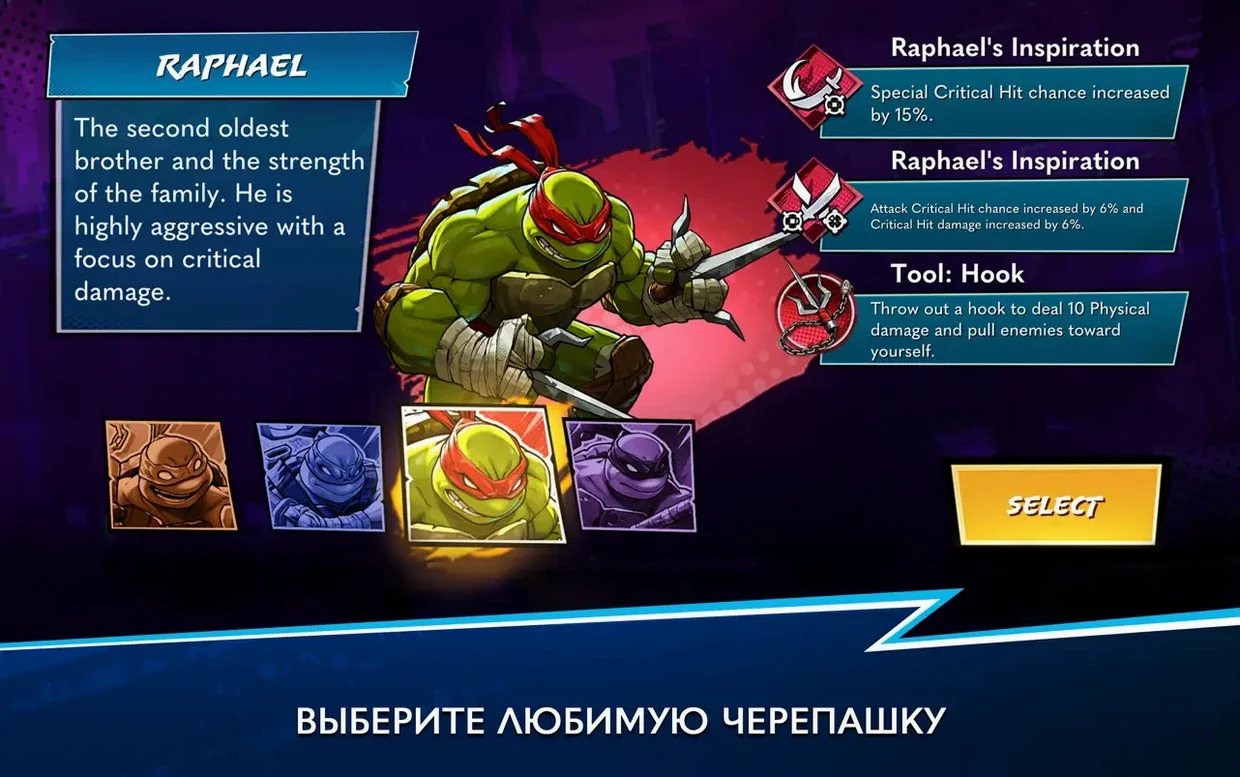
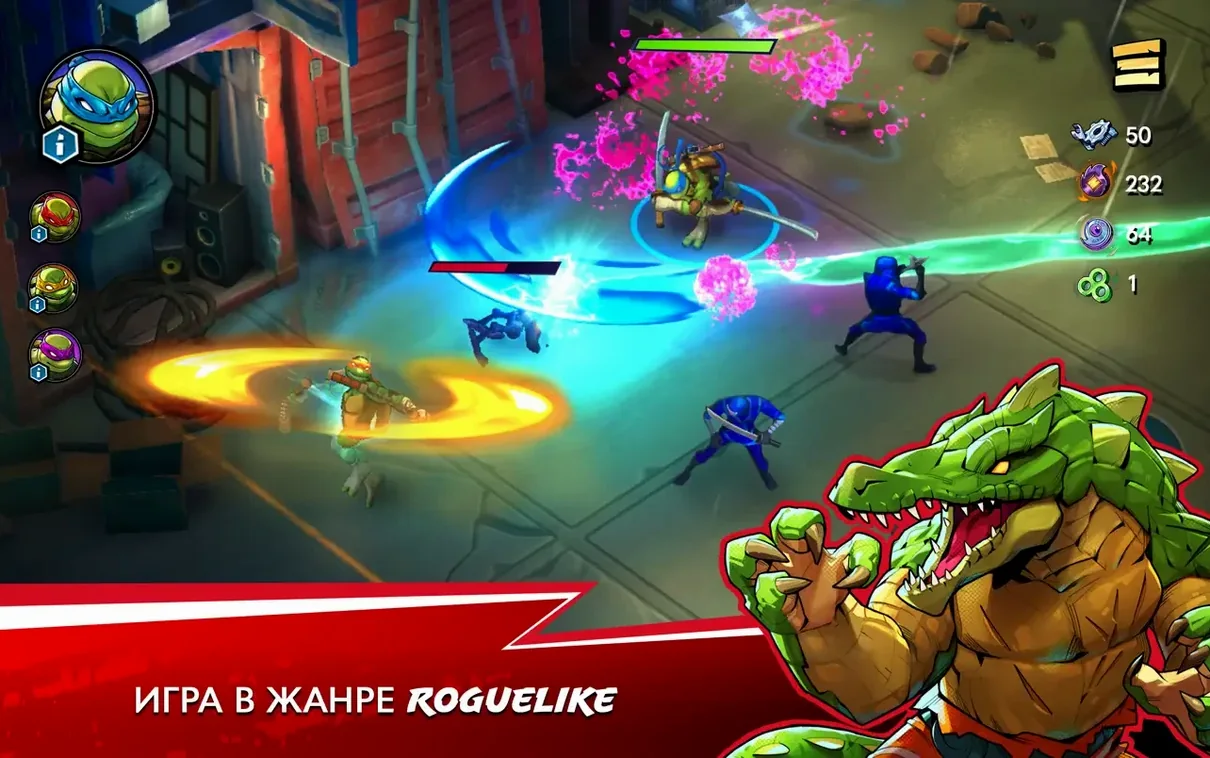
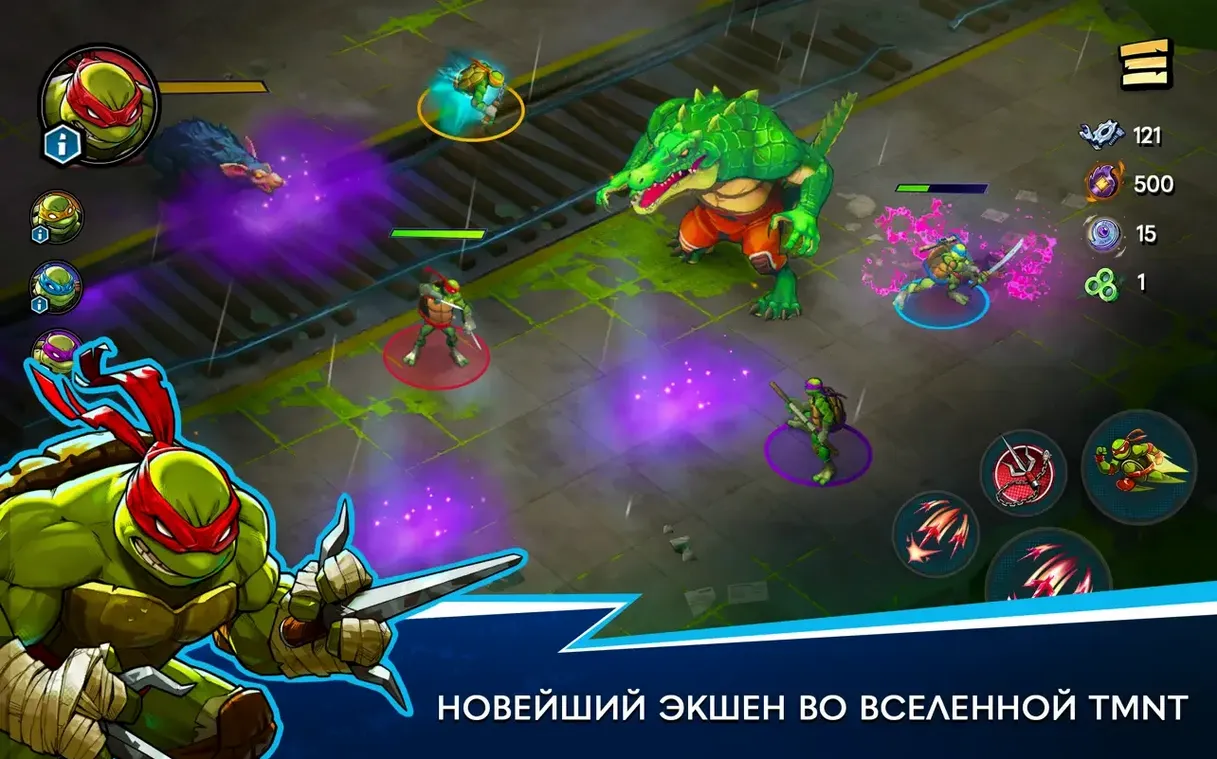
There are 13 supported languages, but the shared one across every run is chaos. Portals have torn through New York, Shredder has Splinter, and the Foot Clan floods the streets. You pick a turtle and carve through procedurally strung-together rooms, where boss modifiers shuffle each time you face them. April and Metalhead piece together clues from recovered artifacts back at base, building a breadcrumb trail toward the rescue.
This is the rhythm you settle into:
- Drop into a portal and clear the room of Foot ninjas, Mousers, or other TMNT mainstays.
- Choose a power-up at the exit — stacking abilities that shift your turtle's feel from brawler to something more volatile.
- Reach a boss whose modifier rolls are different from last time, forcing you to read patterns on the fly.
- Fall, return to the lair, spend what you gathered on permanent upgrades, and run it again.
A player who enjoys this is someone who likes the loop of incremental growth more than the story driving it. The narrative is a backdrop — Splinter stays kidnapped while you chip away at the difficulty through repetition. If you find satisfaction in a run that lasts twenty minutes and ends in failure that still buys you a slight edge for the next attempt, the structure fits. Someone looking for a tight, authored campaign with set-piece pacing will feel the drag of the reset. This is a game about adapting to small surprises — the randomized modifiers, the shifting room layouts — rather than mastering a fixed sequence. You either make peace with the grind or you don't.
One thing people ask before dragging the app into Applications is whether the game runs offline. It does, and in fact disconnecting from the internet is the fix if the loading screen freezes — a quirk that appears on some Apple Silicon machines. The other question is about controller support, and the answer shapes how the action feels. DualSense and Xbox Wireless Controller both map naturally; the analogue stick gives the rooftop chases a fluidity that keyboard arrows never quite reach. On a Mac mini M4 with macOS Tahoe, the build stays locked at 60 frames even during four-player couch sessions with particle-heavy boss arenas.
What daily play actually feels like
Launch times hover around four seconds from an NVMe drive, and the game sips memory — rarely crossing 1.8 GB even after back-to-back runs. I have left it idle in the lair for over an hour while answering emails and it never ballooned or stuttered when I tabbed back. The fan on the Mac mini stayed silent across a dozen runs, which matters when you are on a call and squeezing in a quick sewer loop between meetings. The one stability note worth mentioning is the aforementioned loading freeze: it happened twice on first launch before I pulled the Ethernet cable, and never again after that. If you grab a TMNT Splintered Fate for Mac cracked build, players in various threads confirm the same workaround applies, so the issue is not unique to any particular version.
Resource use is modest enough that I kept Safari, Mail, and a Lightroom export running in the background without the game dropping a frame. That is not a promise of flawless multitasking — just an observation that the engine is not greedy. If you are the type who likes a quick roguelike session tucked between heavier tasks, the footprint will not punish you for leaving other apps open.
- macOS 11.0 or later
- Apple Silicon or Intel
Questions from the booth
Yes, the build supports ARM and 64-bit x86 architectures, and it was tested on a Mac mini M4 running macOS Tahoe.