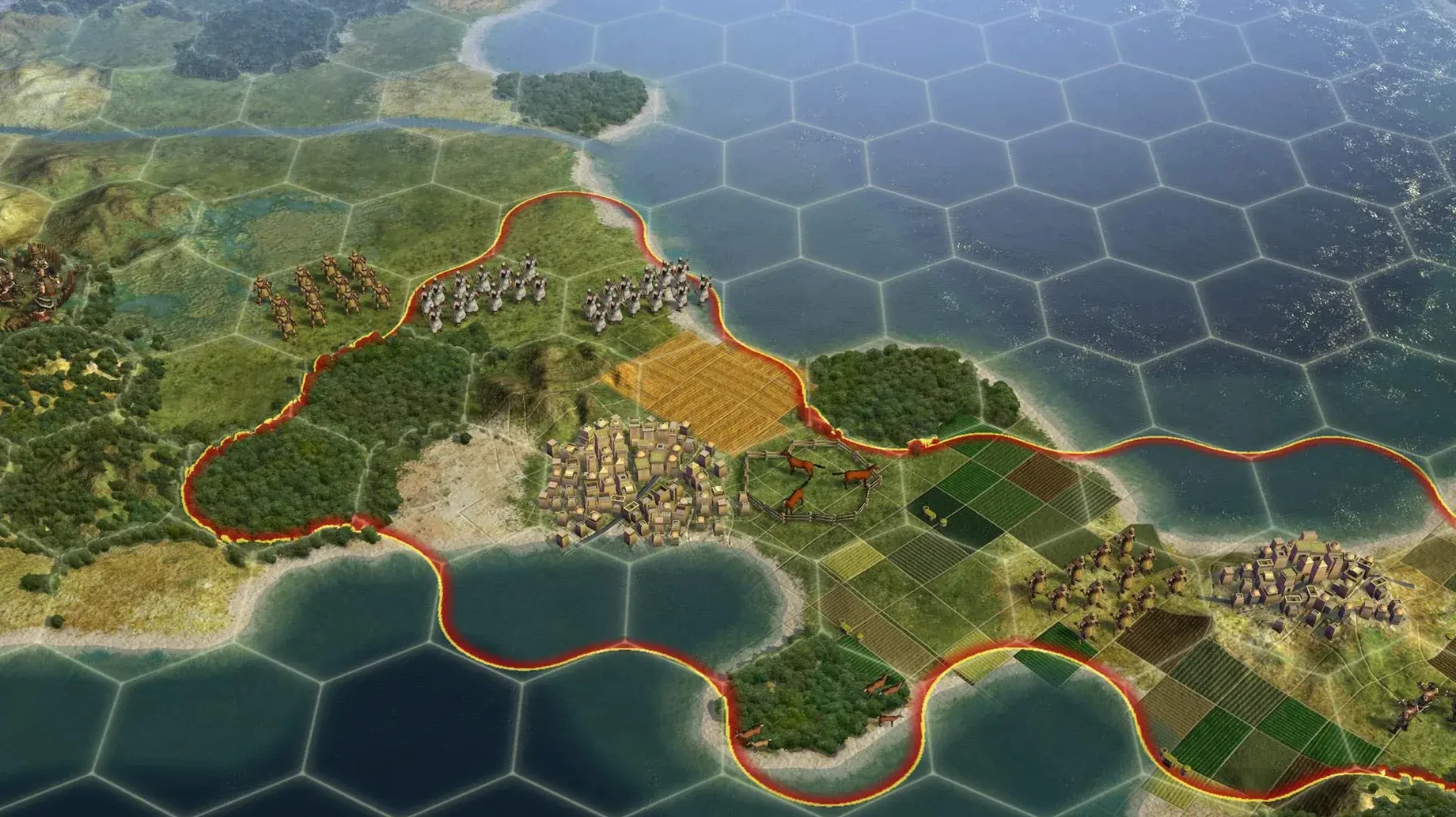
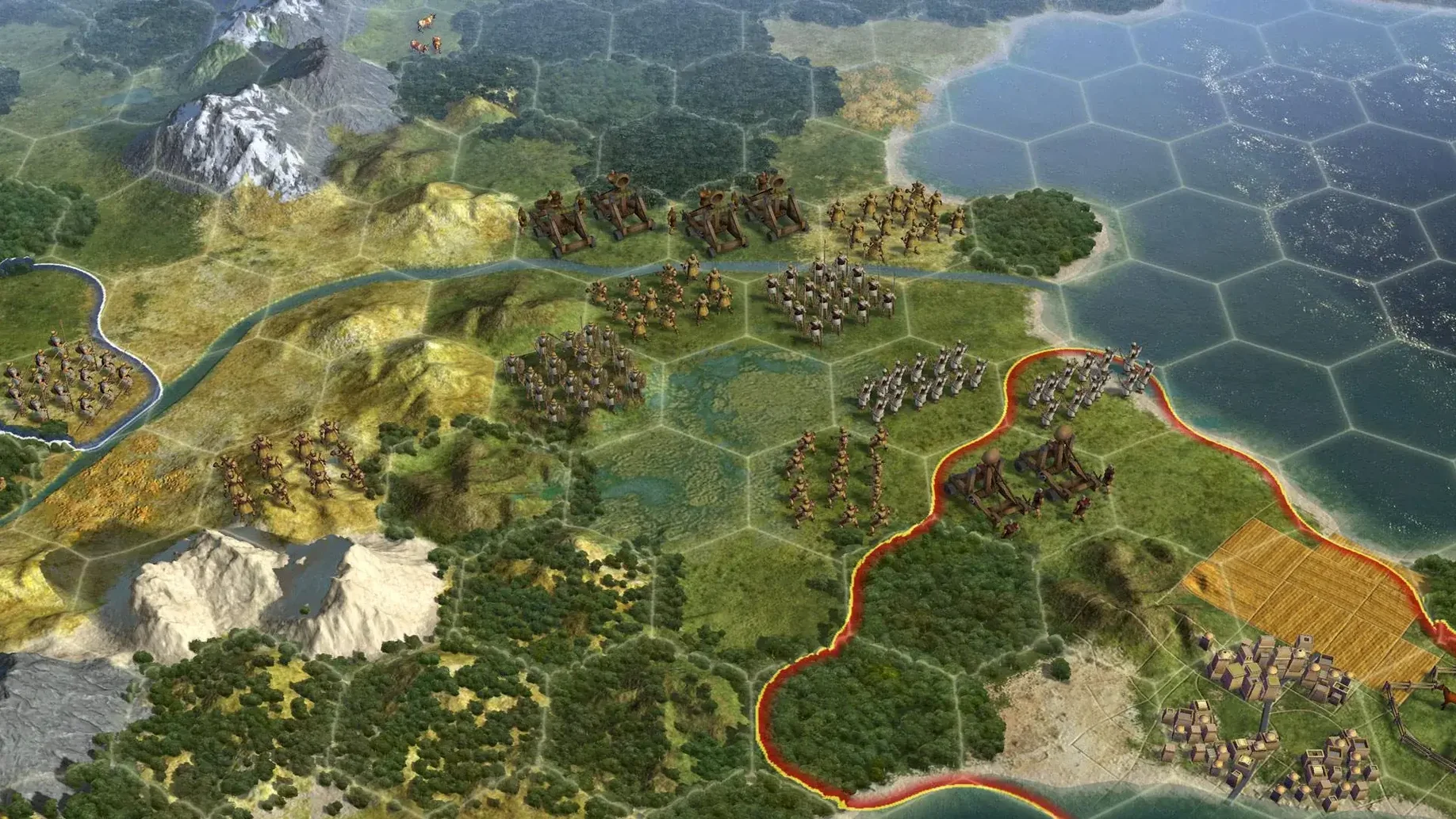

Ten air units. That is how many planes, bombers, or jet fighters a single city can house at its upper limit, parked alongside one combat unit on the ground, one civilian, and one naval vessel in port. The stacking rules in Civilization V changed the shape of every war, pulling armies out of doom stacks and into formations that spread across hexes, and the Mac build carries that same tactical grid onto Apple Silicon with Aspyr's 64-bit port.
What a city can become
Every settlement you capture opens a branching choice, and the decision ripples for the rest of the game. Annex a city and it joins your empire directly, contributing production and units under your full control. Raze it and the metropolis burns down turn by turn—unless you founded it yourself earlier, because player-founded cities resist the torch unless an enemy captured them first and you are taking them back. Puppet states offer a middle path: they pay taxes to your capital and follow your diplomatic umbrella, but you never touch their build queues or unit orders. Liberate a conquered civilization's city and that player returns to the match with their previous level of development intact, a move that can rewrite alliances late in a campaign.
The arc from antiquity to the near future
You steer a single civilization across millennia, shepherding it through the wheel, gunpowder, flight, and eventually the cusp of the space age. Cities can strike enemy units at range, softening invaders before your melee forces close in. Diplomacy, research trees, and cultural influence all run alongside the warfare, and the Mac version supports both single-player campaigns and multiplayer matches against human opponents. The current build ships with English, German, French, and Russian interface text, landing natively on Intel Macs running Sonoma.
Running an empire across six millennia instead of one medieval century
Put Civilization V next to Crusader Kings III and the contrast is immediate. Paradox's grand strategy sim lives inside a single medieval millennium, where every count and bishop has a stress level and a claim on your title. Civilization V spans six thousand years instead, and the emotional weight comes from the map—border friction, a city-state alliance about to flip, the naval bottleneck you fortified three eras ago. CK3 builds stories about characters; Civ V builds stories about geography.
Against Old World, the Soren Johnson-designed 4X that grafts Crusader Kings' character system onto classical antiquity, Civ V feels looser and more forgiving. Old World binds your actions to a finite pool of orders per turn, so every scout move costs you a builder's quarry. Civilization V lets you reposition at your own pace, and the difference shapes the afternoon: one is a puzzle box, the other a sprawling canvas. Both share the hex grid and one-unit-per-tile philosophy Johnson championed during Civ V's original development, but Old World tightens the screws while Civ V spreads out.
Then there is Civilization VI, the sequel that unstacked cities into districts and turned builders into consumable charges. The Mac build of Civ VI runs well on Apple Silicon, and the card-based policy system gives each government more granularity. Yet Civ V's puppet-state economy and the simplicity of its cultural border expansion—one tile at a time, bought with gold or grown organically—still suit players who want their empire to feel like a single organism rather than a jigsaw of specialty districts. Where Civ VI asks you to plan adjacency bonuses three eras ahead, Civ V lets you paint the map and then defend it.
Cyrillic interface and voices arrived, while gameplay remained untouched
Aspyr's 1.4.2 update for Mac labelled itself the Russian-language build, and that is the headline change: full Cyrillic interface and voice-over support joined the existing English, German, and French localizations. For anyone playing in those original three languages, the practical difference is quieter. The update folded in a round of stability work that matters most during late-game turns on large maps, where the engine tracks hundreds of units and city-states simultaneously. On an M1 MacBook Air running Sonoma, the turn-processing churn that could stall the camera in earlier builds has settled into a steady rhythm, even when twelve civilizations are trading and posturing across a huge continents map.
The multiplayer side also benefited. Hot Seat mode—where two or more players share a single machine, passing it back and forth—remained intact across the App Store and Steam versions, and the 1.4.2 build kept LAN play functional for local network matches. These modes had a habit of drifting out of sync on older Mac ports of the game; the Russian-language release solidified them at a time when few developers were still patching 64-bit Intel strategy ports for the Mac.
A session, turn by turn
You launch the game on a quiet evening, pick Elizabeth of England, and load a standard continents map. The first twenty turns are muscle memory: found London on a coastal river, send a warrior scouting north through forested hills, and queue a monument to start the culture ticking. By turn forty you have met two city-states—one maritime, one militaristic—and you spend a lump of saved gold to buy the tile that holds a cluster of silver just beyond London's natural border growth.
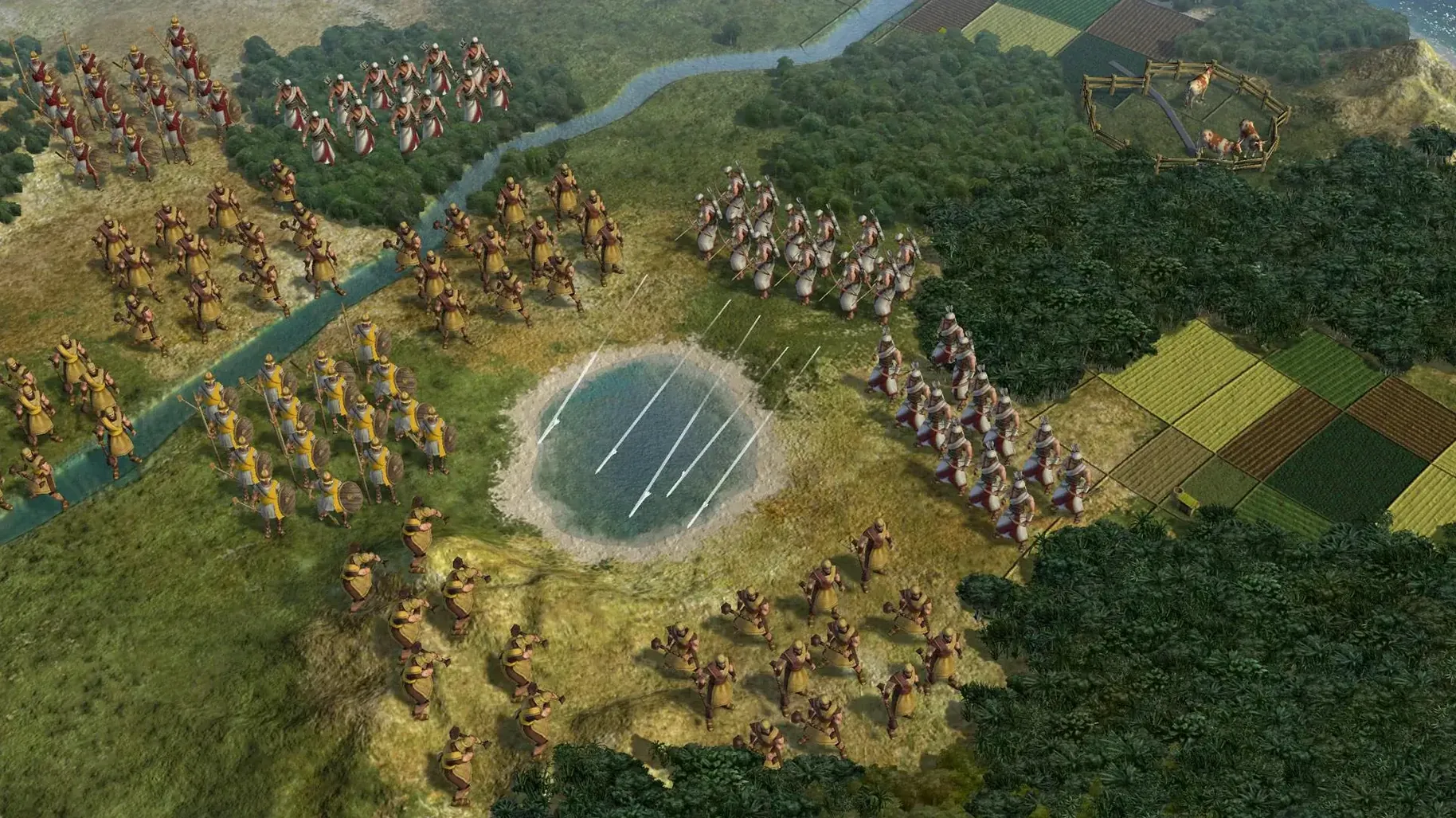
Turn ninety brings the first war. Montezuma has settled too close, and his jaguar warriors are probing your southern frontier. You pull your archers into the city, where they fire two hexes across a marsh, and you position a spearman on a forested hill to block the approach. The city bombardment and ranged volleys destroy three Aztec units before a peace deal arrives, gifting you a minor border city. You puppet it, pocket the gold tribute, and redirect your production toward the Great Library.
By the Industrial era the map has settled into three power blocs. Your caravels have met four other civilizations on the far continent, and a liberated Greek civilization—brought back from extinction after you captured Athens from the Ottomans—now votes with you in the World Congress. The session ends around midnight with a space-race factory going up in Manchester while a fleet of battleships escorts an embarked settler toward an uninhabited archipelago. You save, quit, and the Mac build closes cleanly, ready to resume tomorrow.
One player, one campaign
A lecturer in comparative literature keeps a running game of Civilization V on her MacBook Air for the weeks between semesters. She plays as Russia, pushing the cultural victory path, and she treats the map like a long-form novel she returns to in chapters. The puppet-state mechanic appeals because it lets conquered cities remain thematically distinct—they keep their original architectural style and unit names—while still feeding gold and luxury resources into St. Petersburg. She liberates a conquered Siam late in the game after reading a paper on nineteenth-century diplomacy, and the restored Ramkhamhaeng immediately offers a research agreement that shaves four turns off her push toward the Internet technology. The story lands not because the game scripted it, but because the liberation rule made it possible on turn three hundred and eight, long after most strategy games would have closed the book on a fallen civilization.
The current build adds Russian-language support and arrives as a multilingual version that includes English, German, and French alongside it.
- macOS Sonoma
- Intel
- 64-bit
Questions from the booth
Yes—if you capture and then liberate one of its former cities, that civilization returns at the development level it had before being conquered.