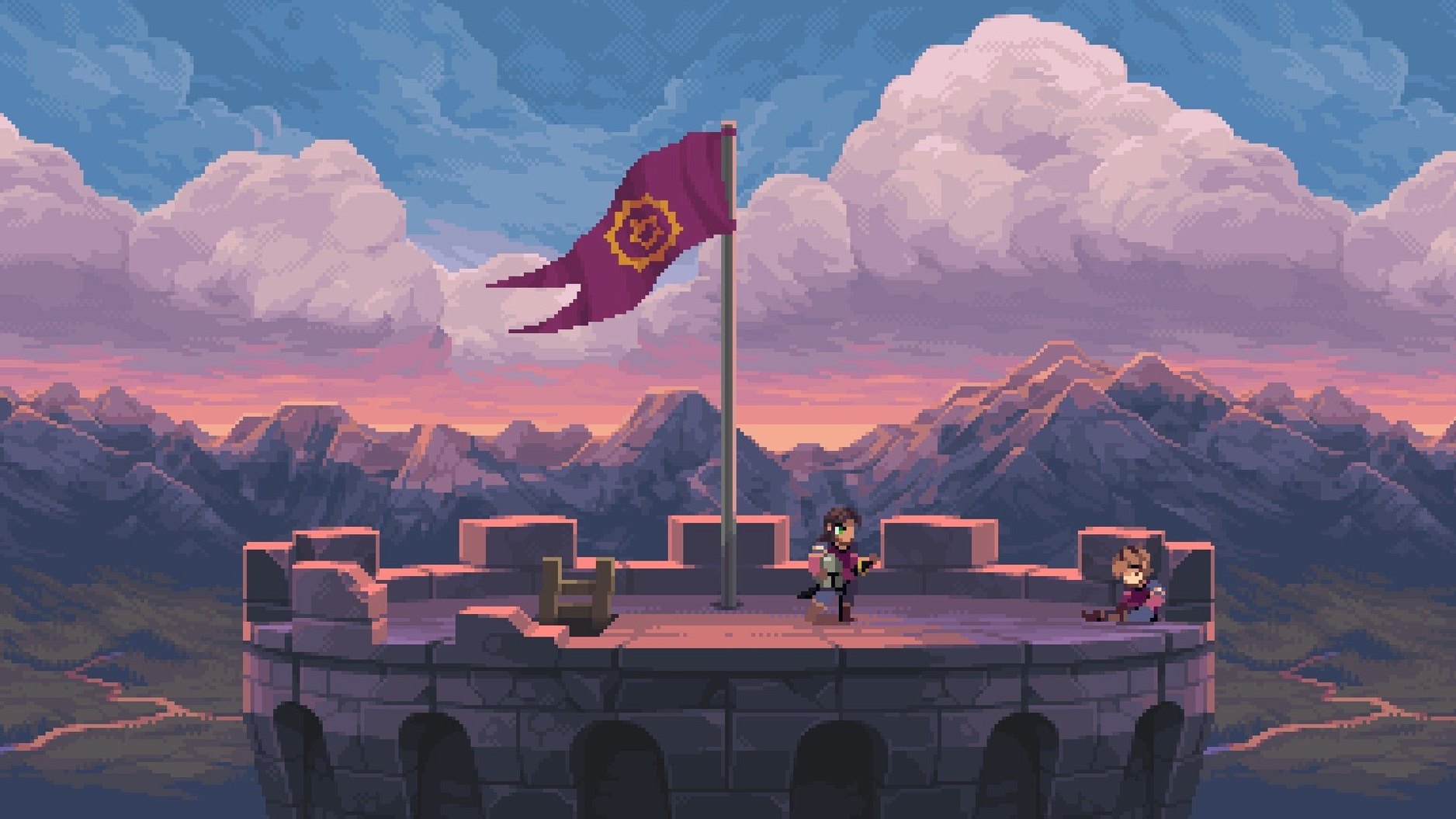
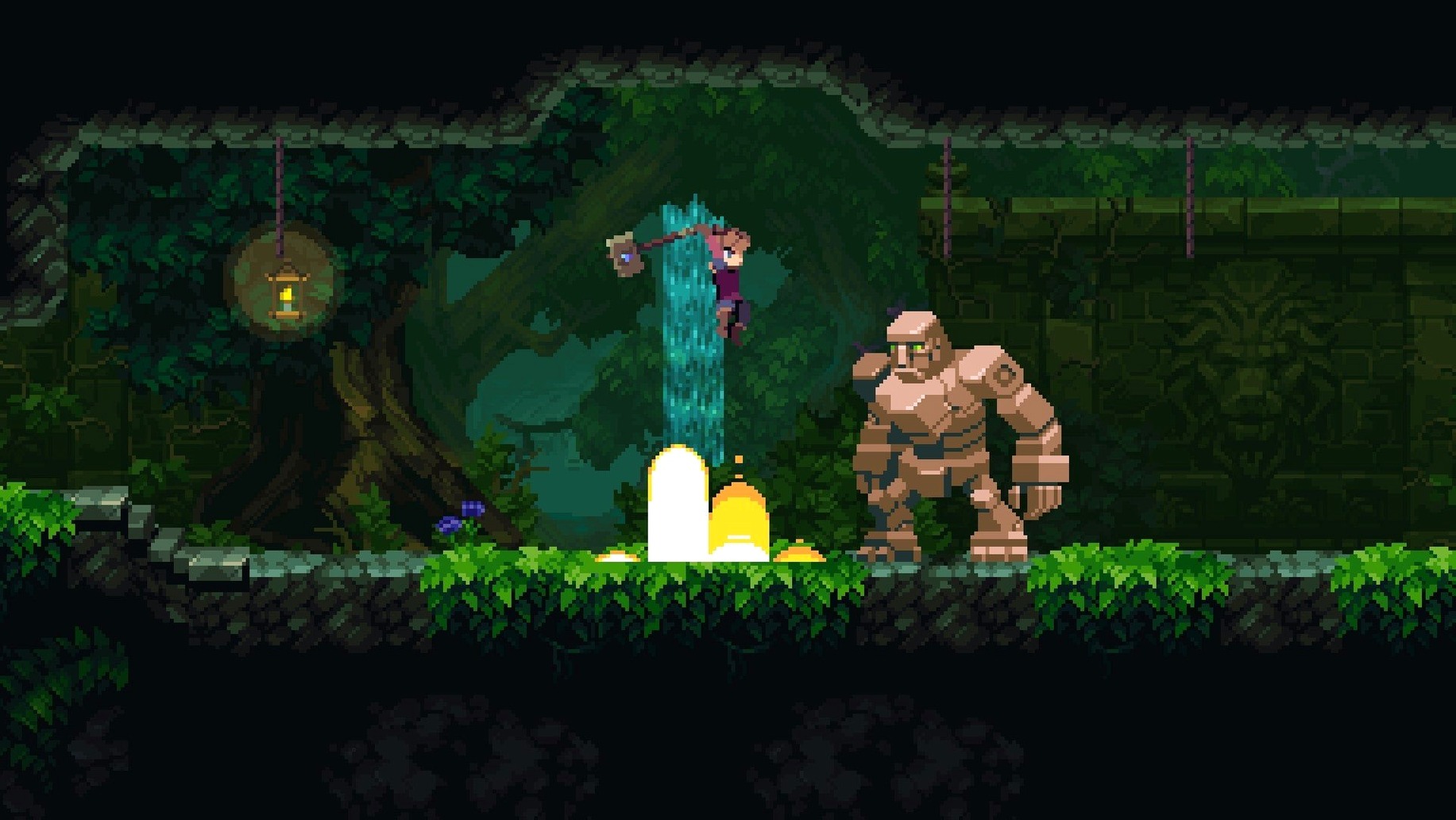
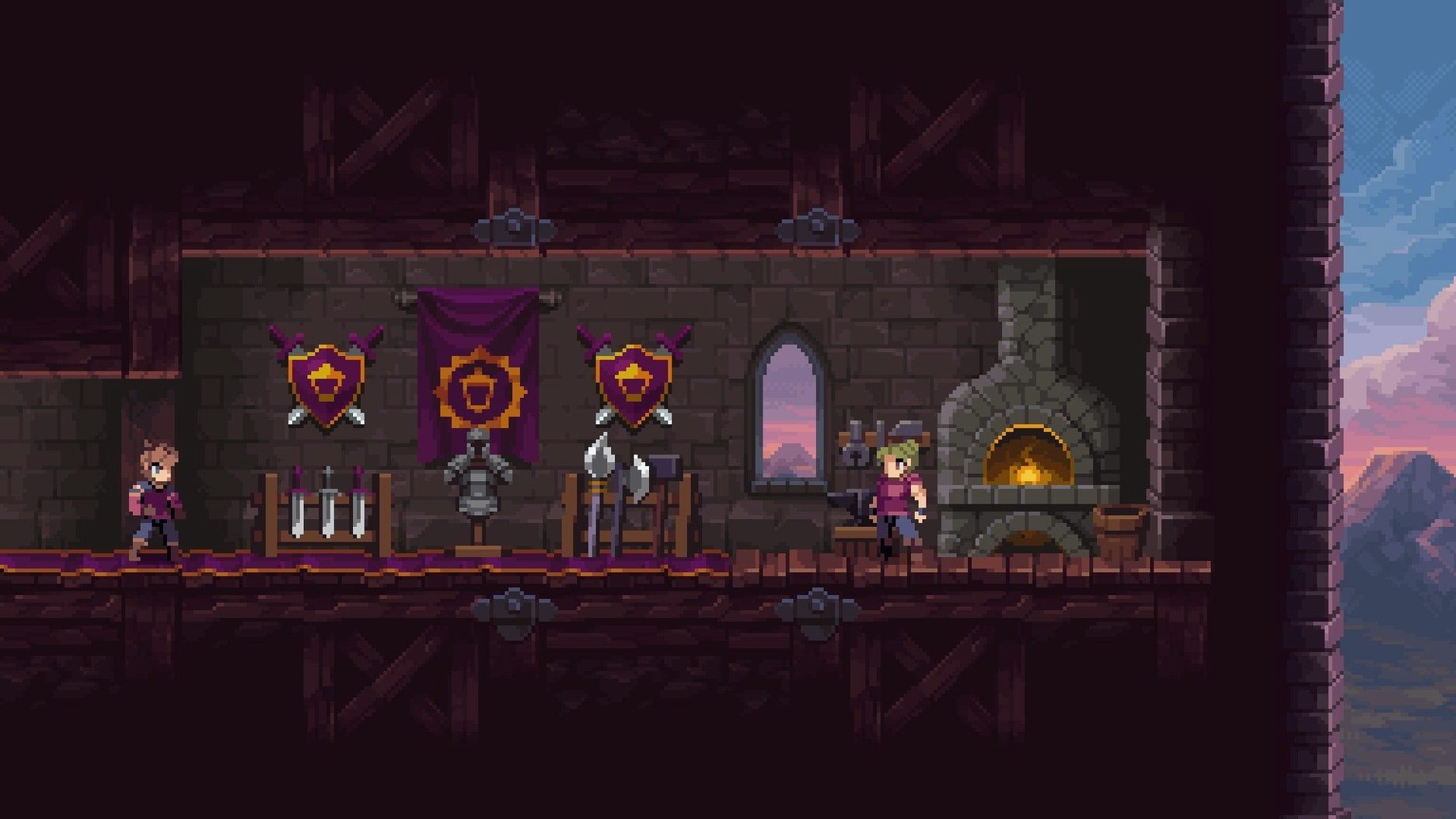
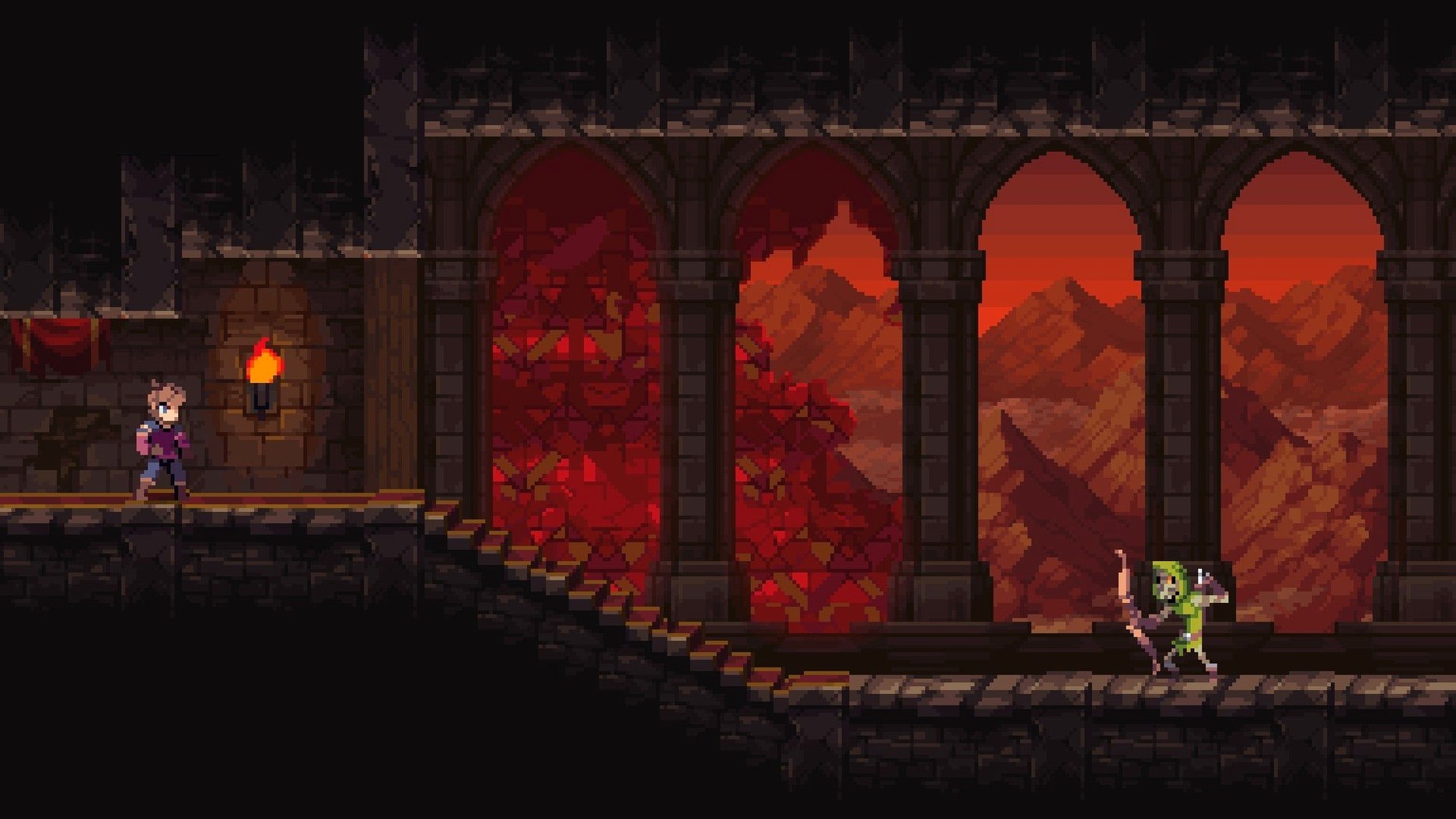
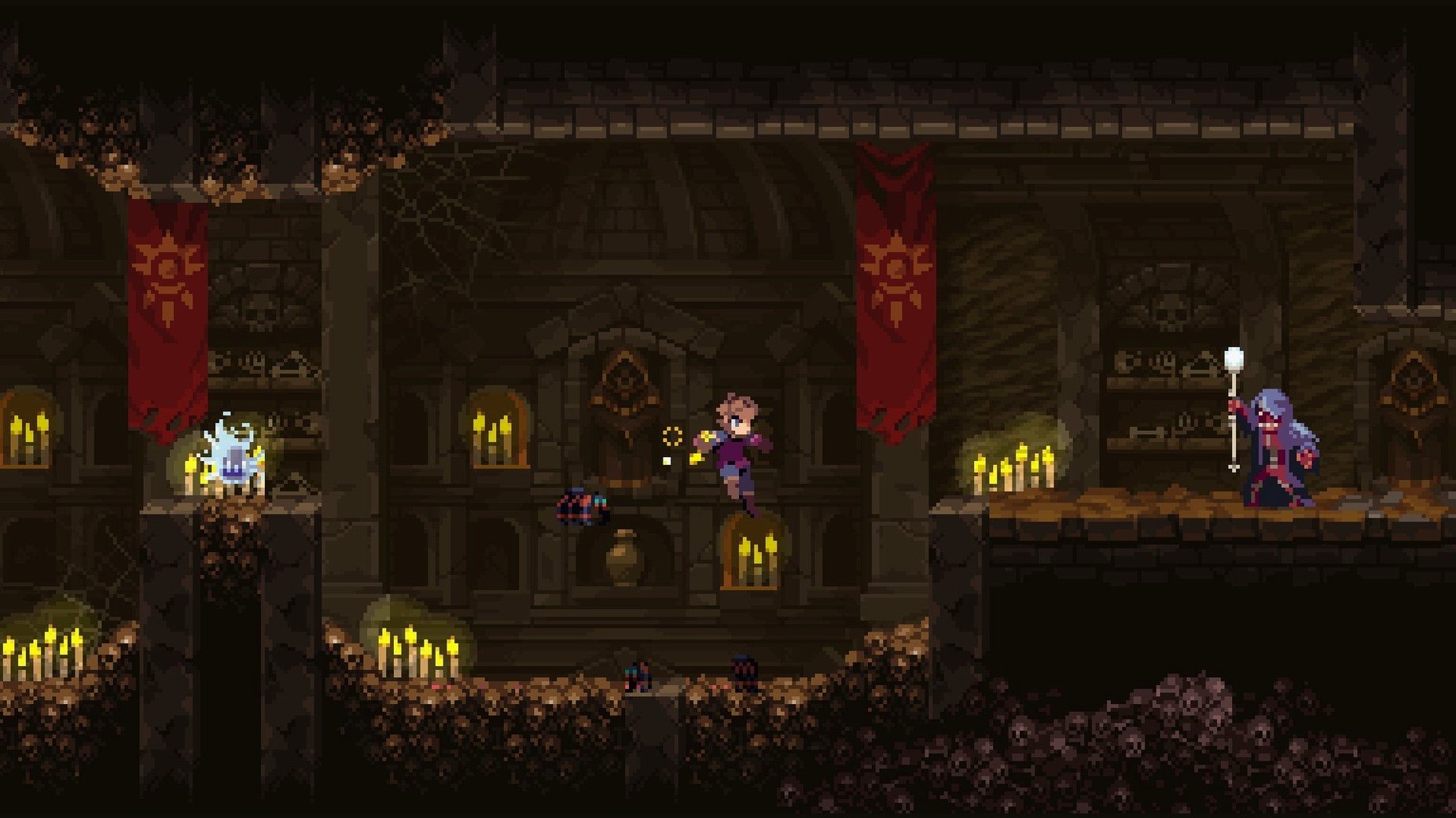
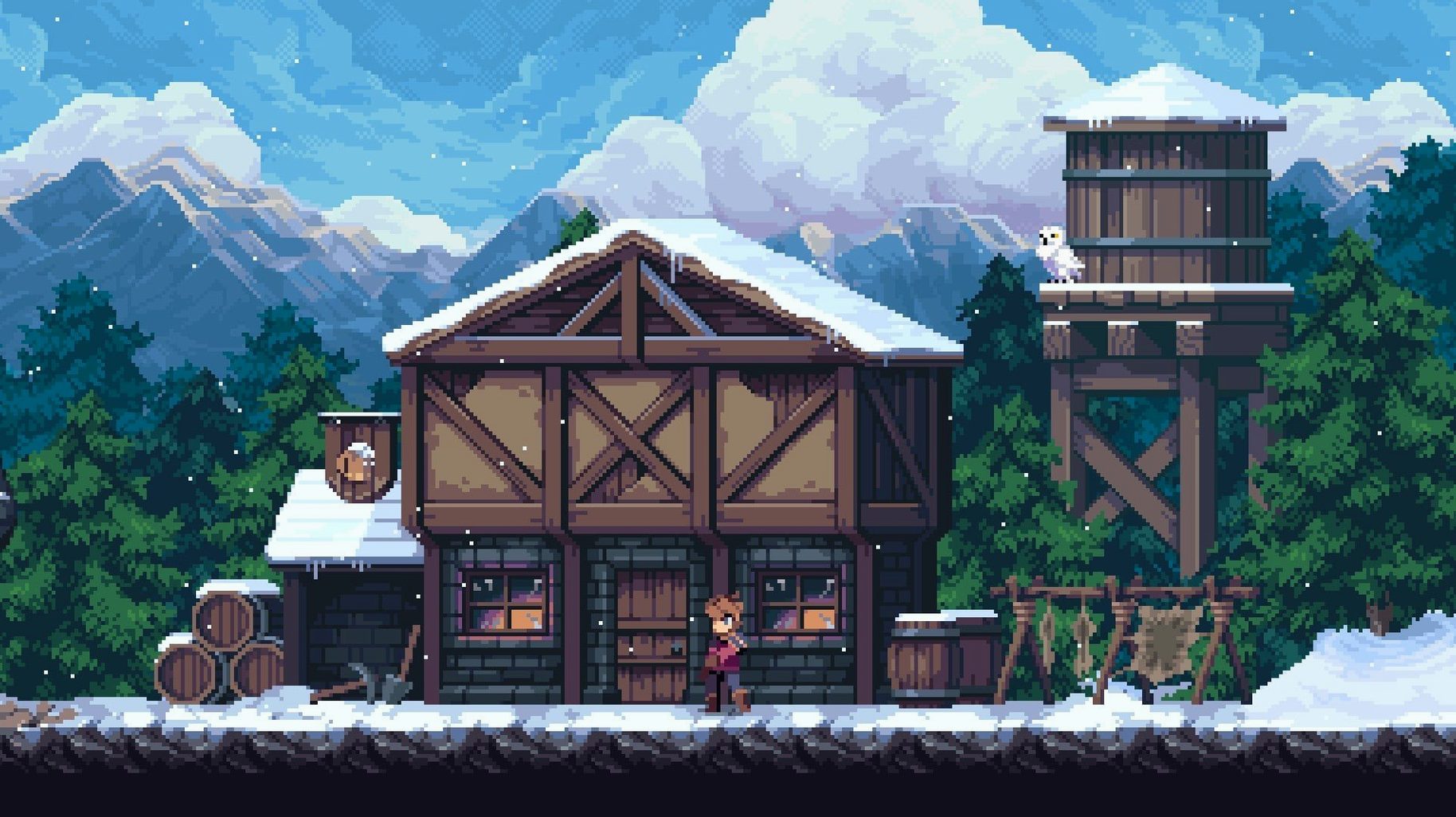
Chasm runs on Intel-based Macs and performs without issue on Apple Silicon through Rosetta 2 — a Mac mini M4 on macOS Tahoe handled the full adventure smoothly. This is a procedurally generated action-platformer told in sharp retro pixel art, where no two mine dives assemble the same rooms, enemy placements, or loot caches.
- Six distinct areas with hand-crafted room chunks stitched together by a seed-based generator
- Dalton gains new traversal abilities — wall jump, slide, double jump — that double as keys to earlier passageways
- Controller-native feel; the tight platforming and combat read a DualSense or Xbox pad immediately
- Equipment and stat progression reward exploration, not grinding
- In-game text localized in English, German, Hungarian, Spanish, Italian, Portuguese, and French
The setup that follows a missing miners thread through a shuttered royal mine gives the exploration a grounded investigative pull. Performance held steady at 60 fps throughout, even when the generator stacked particle-heavy lantern rooms with half a dozen slimes. A game that understands its Castlevania lineage without getting trapped inside it.
Mapping a full mine descent, step by step
A single run through the Karthas mines shows how the procedural stitching shapes your choices. Boot up, start a new game, and watch the seed assemble — the layout of the first shafts, the placement of the initial lantern save point, and which enemy varieties patrol the early corridors all get decided in those seconds. Grab the basic blade from the guardhouse and head left. The generator often places the wall-jump ability deeper than you expect, so the first twenty minutes become a lesson in reading room geometry: a ledge just out of reach, a locked door with a telltale keyhole, a cracked floor tile that signals a breakable passage below. Mark those mentally. You will revisit them.
Once the slide ability unlocks around the mid-point of the mines, the pace shifts. Backtracking through earlier shafts with new movement opens shortcuts the seed hid in plain sight — a narrow gap that was previously a dead end now leads to a treasure chamber, or a vertical shaft that bypasses three enemy-dense rooms entirely. The map screen becomes your script supervisor. Check it often, note the unexplored exit points, and resist the urge to clear every room on first pass. The generator respects that you will return stronger, and it seeds the later catacombs and castle parapets with locks that demand abilities from earlier zones. By the time Dalton reaches the depths, the inventory tells a story: a blade upgraded twice, a charm that converts damage into mana, and a double-jump that turns the final boss arena into a vertical dance.
Mid-room saves no longer lose your checkpoint
Version 1.112 represents the stable endpoint of a long post-launch refinement cycle. The most noticeable shift for daily play is the save system behaviour — earlier builds could occasionally misplace checkpoint data when you quit mid-room, but the current build writes save states cleanly at every lantern interact. Controller recognition on macOS has also tightened. Where previous versions sometimes required a manual remap after sleep-wake cycles, the game now reconnects to a DualSense or Xbox pad without intervention.
Backend changes are less visible but matter for the procedural feel. Room-stitching logic received a late-pass adjustment that reduces the frequency of dead-end clusters in the catacombs, so exploration flows more evenly across all six areas. Enemy pathing in water-heavy chambers was tweaked to prevent slimes from drifting into collision-less corners — a small thing, until you realize you have not lost a single kill to geometry jank across an entire playthrough. The pixel-art scaling on larger displays also held its crispness on a 4K panel, with no filtering artefacts at the default integer scale.
Procedural maps reward exploration over memorized routes
Players who grew up on Symphony of the Night and Aria of Sorrow will recognize the rhythm immediately, but Chasm rewards a slightly different mindset. The procedural map means you cannot memorize a route from a guide — each run asks you to read the rooms as they come, the way a location scout reads a new set. Indie filmmakers and editors who spend their days scanning timelines for structure tend to fall into this groove naturally. The game rewards pattern recognition over rote repetition.
It also suits anyone who wants a Metroidvania in manageable sessions. A full clear runs around eight to ten hours, and the six-area structure breaks cleanly into evening-sized chunks. Mac users on Intel hardware get native performance, and the Rosetta 2 translation on Apple Silicon is transparent — no fan spin, no frame drops. The DRM-free build means the Chasm Mac torrent package installs cleanly and launches without phoning home, which appeals to the same instinct that keeps a filmmaker's offline edit suite stripped of background services. You open it, you play it, it stays out of your way.
- Intel processor (Apple Silicon supported via Rosetta 2)
Questions from the booth
Yes, the Intel build runs through Rosetta 2. It was tested on a Mac mini M4 under macOS Tahoe and maintained stable performance with no graphical or input issues.
The interface and subtitles are available in English, German, Hungarian, Spanish, Italian, Portuguese, and French.