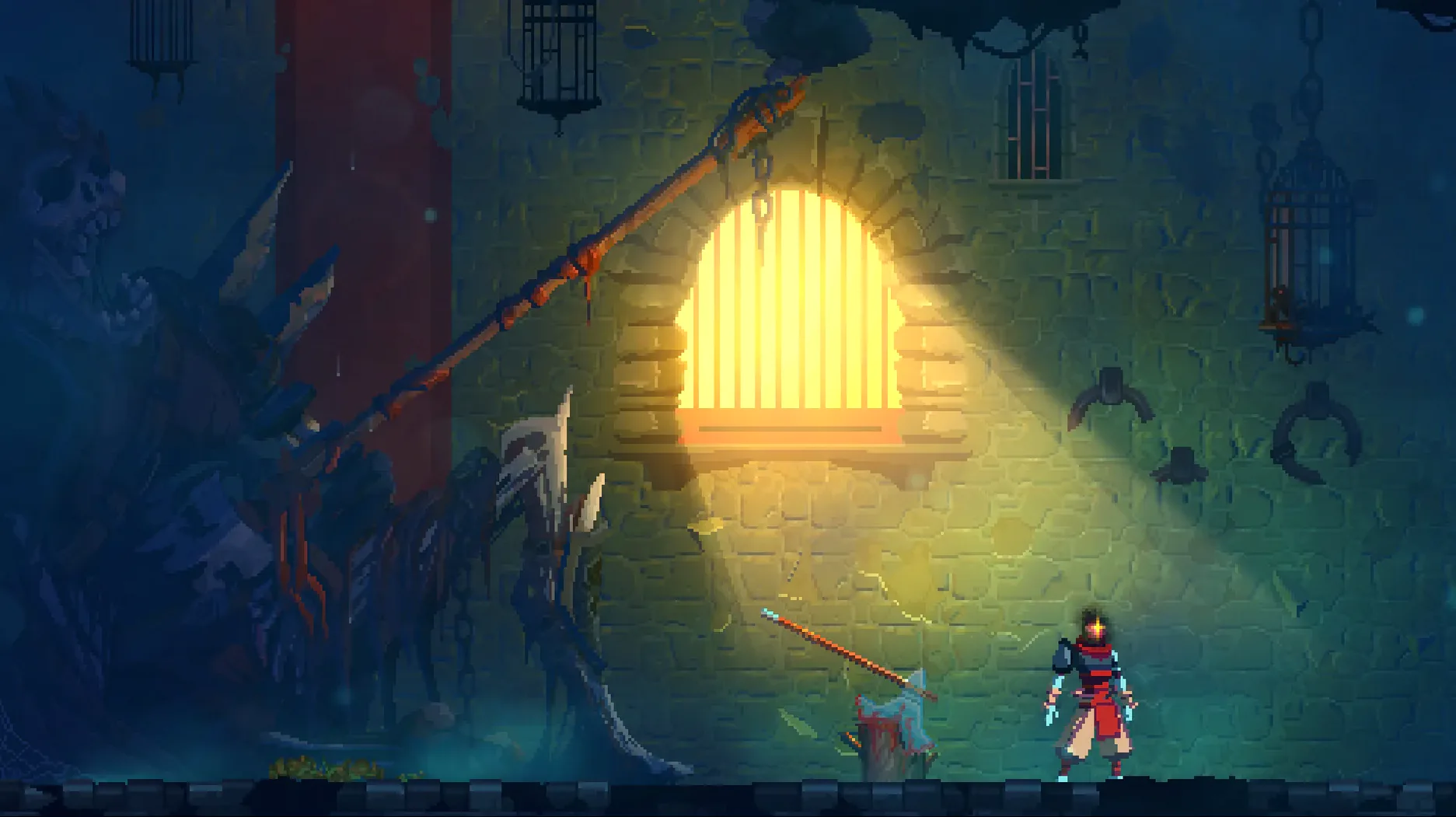
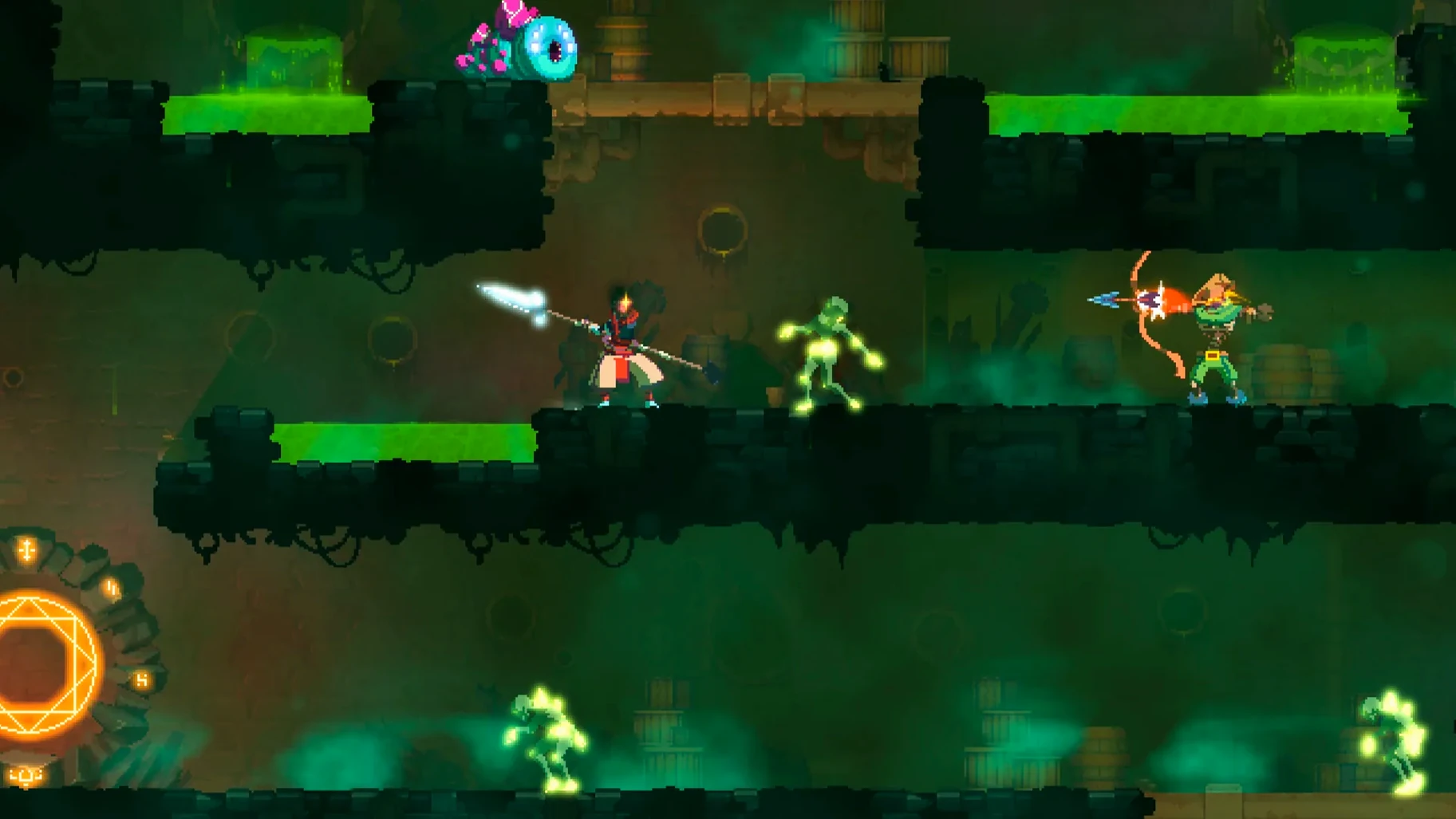
Dead Cells is a rogue-lite action-platformer where you fight through a shifting, interconnected castle with the precise, punishing combat cadence of a Souls-like. You are a failed alchemic experiment, a reanimated prisoner who possesses a headless body and immediately sets out through the island’s ever-changing corridors with whatever rusted blade is closest.
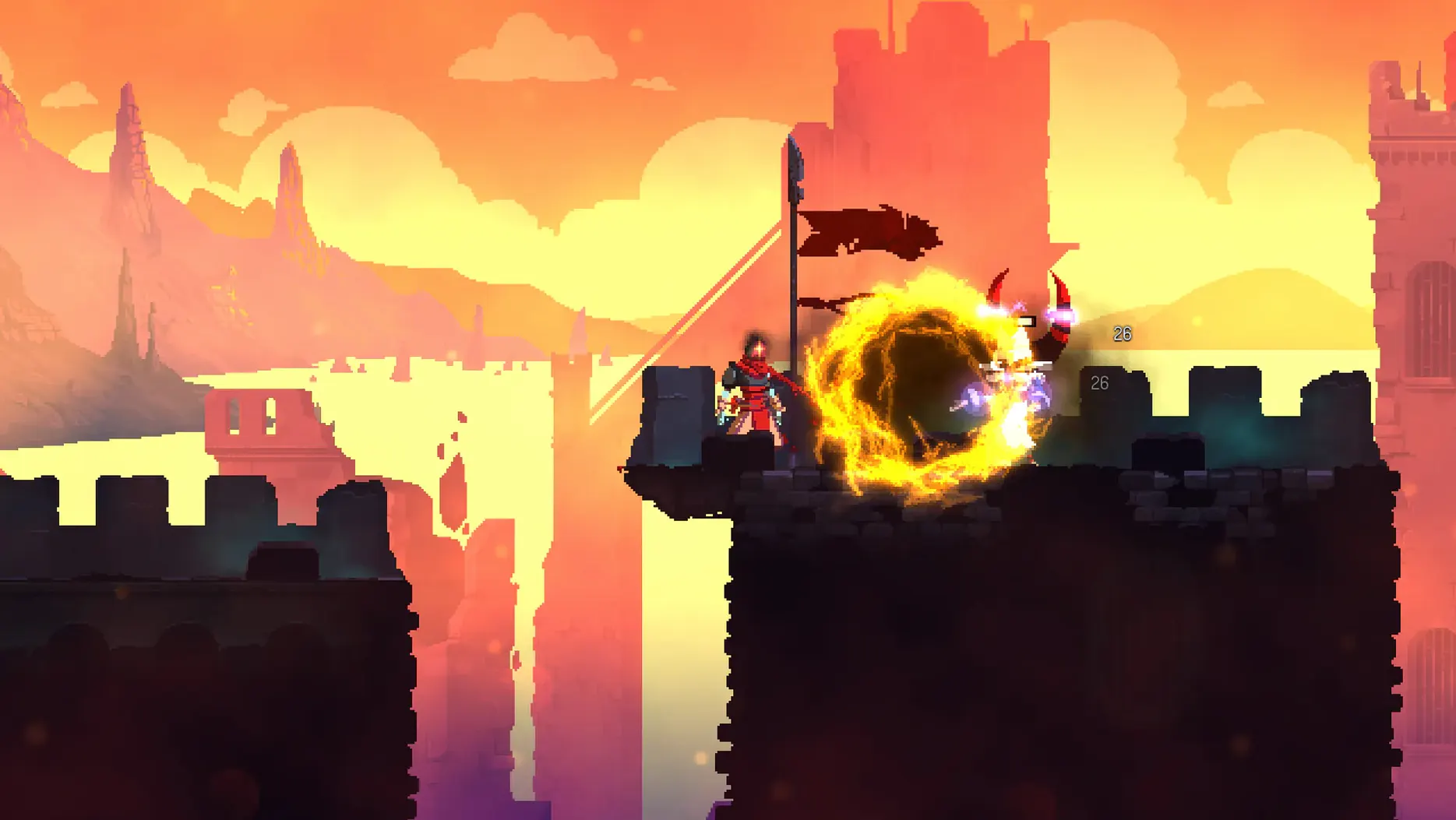
The moment-to-moment work is a constant read of attack tells: an undead archer draws its bow, you roll through the arrow and close the gap with two quick slashes. A shield-bearer plants its feet; you wait out the block, stun it with a kick, then finish with a ground slam. Speed is your main survival tool, and the game rewards fast clear times with bonus cells locked behind timed doors. Between floors you pick a route — through the toxic sewers or the crumbling ramparts — knowing the layout and enemy mix will not be the same as last time.
Enemies drop cells and blueprints, and that is where the longer arc lives. You can spend cells on permanent upgrades at the Collector between levels: more health flask charges, random starting weapons, the ability to keep a portion of your gold after death. Breaking down a new weapon blueprint takes a few runs to deliver, but unlocking something like the heavy crossbow or the oil grenade can reshape every future attempt.
Death wipes your run, but cells and unlocks survive
People often want to know how much the game punishes failure, because the phrase "no save system" lands differently for different players. Dead Cells wipes your current run on death — no checkpoint, no quick reload. But the permanent progression softens that edge considerably. Every cell you hand to the Collector is yours forever, so even a death two rooms from the final boss still adds a flask charge or a new mutation to the next attempt. It helps to think of a run less like a campaign and more like a scouting trip: you are gathering cells, testing a weapon pairing, maybe unlocking a route you have not taken before.
Another frequent question is whether the game feels too hard if you are not already fluent in parry windows and dodge cancels. The opening biome, the Prisoners’ Quarters, teaches the rhythm gently. Early enemies telegraph slowly and the game places a shield in one of the first rooms. You can finish your first handful of runs without ever parrying — rolling and positioning cover a lot of ground — and then layer in shield timing once the enemy density pushes you to find tighter answers. The difficulty scales with the Boss Stem Cells you earn from completed runs, so the base difficulty is approachable for anyone comfortable with a side-scroller that expects you to pay attention.
People also ask whether the metroidvania label means hours of backtracking. The interconnected map is real, and you will need certain runes — the vine-growing ability, the teleportation rune — to reach alternate biomes. But those runes come from specific boss arenas along the main path, not from hidden corners, so the gating pushes you forward rather than sending you back through old corridors with a checklist.
Learning enemy attack patterns becomes your main weapon
Players who enjoy building a mental library of enemy behaviours tend to sink deepest into Dead Cells. Every biome introduces creatures with distinct tells and attack chains — the shield-wielding zombies in the Ramparts, the teleporting slashers in the Stilt Village — and the satisfaction comes from reading a room faster than the last time you entered it. If you like games where death feels like a lesson rather than a loss, the loop fits.
Mac users with limited gaming time often gravitate toward it because a full run, once you know the biomes, clocks in around forty-five minutes, and shorter deaths still contribute to the permanent upgrades. The game launches quickly, loads biomes in seconds, and pauses cleanly when you minimize the window — small things that matter when you are squeezing a session between tasks. It also runs comfortably on Intel Macs that are a few years old, since the 2D sprite work and the tight level sizes keep the performance steady without a dedicated GPU.
Creative professionals — the kind who spend a day in Logic Pro or DaVinci Resolve and want something tactile to switch gears — often describe Dead Cells as a palate cleanser. The controls are immediate, the music is wordless and propulsive, and the game never asks you to watch a cutscene or read a lore dump before it hands you a weapon and lets you move.
Drag the folder onto an external SSD and launch without a launcher
Because Dead Cells is DRM-free, it plays neatly with how some Mac users organize their non-Store libraries — the game folder can live on an external SSD, launched directly from the deadcells file without a launcher or an internet check. That makes it a reliable travel companion on a MacBook when Wi-Fi is spotty. The windowed mode cooperates with Mission Control and multiple desktops, so you can swipe between a run and a full-screen editor without the game fighting for resolution priority.
If you use a controller, macOS recognizes most Bluetooth gamepads natively, and the game maps face buttons sensibly — dodge on a shoulder button, primary attack on a face button, secondary on the opposite shoulder. The on-screen prompts adjust to the controller layout, and switching back to keyboard mid-run works without restarting. For players who remap heavily, the custom control screen is accessible from the pause menu between biomes.
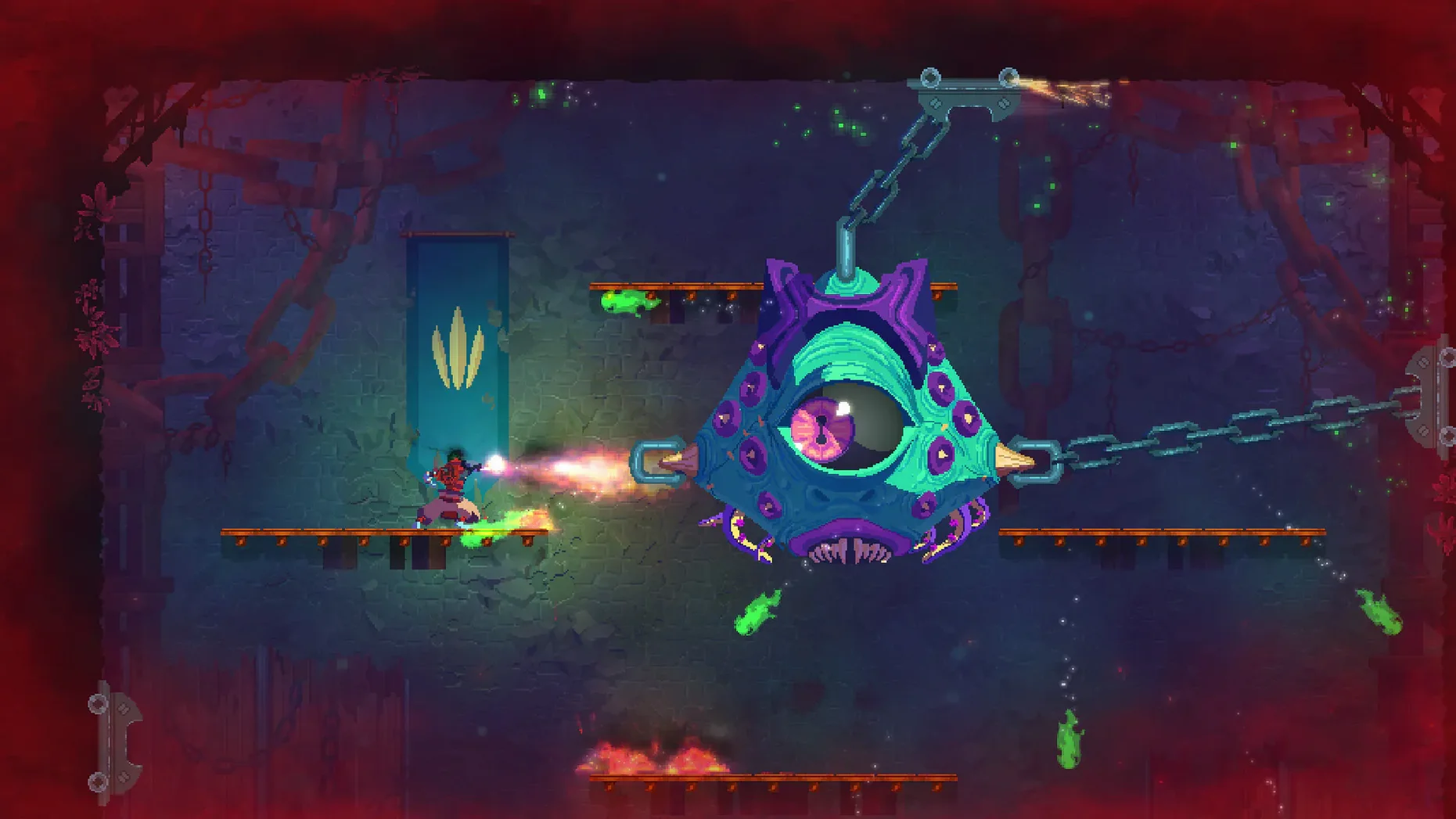
Recording a run for reference or a clip is straightforward with the built-in macOS screen capture or with OBS. The pixel-art palette stays readable even on a compressed recording, and the HUD is clean enough that a thirty-second capture of a boss fight needs no cropping to make sense to someone watching later.
Drop from a ledge and slam down to break floors and stun foes
Slamming the ground from a ledge — not a full jump, just dropping and pressing down — breaks fragile floors and stuns nearby enemies. The game mentions it once in a loading tip, but plenty of players go their first dozen runs without realizing that the stun radius is large enough to interrupt a cluster of bats or a pack of rats before they scatter.
Holding the interact button near a teleportation monolith brings up a biome map that shows unexplored exits as question marks. It is not a full minimap, but it spares you from doubling back through a cleared corridor hunting for the one door you missed. The map also marks vendors and treasure rooms you have already discovered, which matters when you are weighing whether to spend gold now or save it for a flask refill later.
The timed doors between biomes reward more than just speed — the first one, after the Prisoners’ Quarters, grants a stack of cells and a choice of weapons if you reach it in under two minutes. You can track your pace by glancing at the clock on the minimap screen, and a surprising number of players miss that the clock pauses while you are in a vendor menu or reading a lore room. Use those moments to catch your breath without losing the bonus timer.
Weapon affixes — the bonus modifiers that roll when you find a weapon — can be rerolled at the blacksmith NPC who appears between certain biomes. The cost scales with how many times you have already rerolled that item, but even one reroll can turn a decent sword into one that spreads oil or deals extra damage to burning enemies, which suddenly makes your fire grenade loadout sing. It is a small interaction tucked behind a character some players walk past without stopping, and it quietly changes how you evaluate every weapon drop.
- macOS (Intel architecture)
Questions from the booth
The game supports both input methods natively on Mac. Many players prefer a controller for the tight roll-and-parry timing, but the keyboard rebinding options are extensive enough to dial in something comfortable.
The core loop resets your weapons and stats each death, but you permanently unlock new weapon blueprints, health flask upgrades, and traversal abilities like the wall climb rune that persist across every future run.
Motion Twin describes it as a rogue-lite with Castlevania-inspired level design, meaning you get the interconnected world and ability-gated paths of a metroidvania wrapped inside the restart-and-retry structure of a roguelike.