
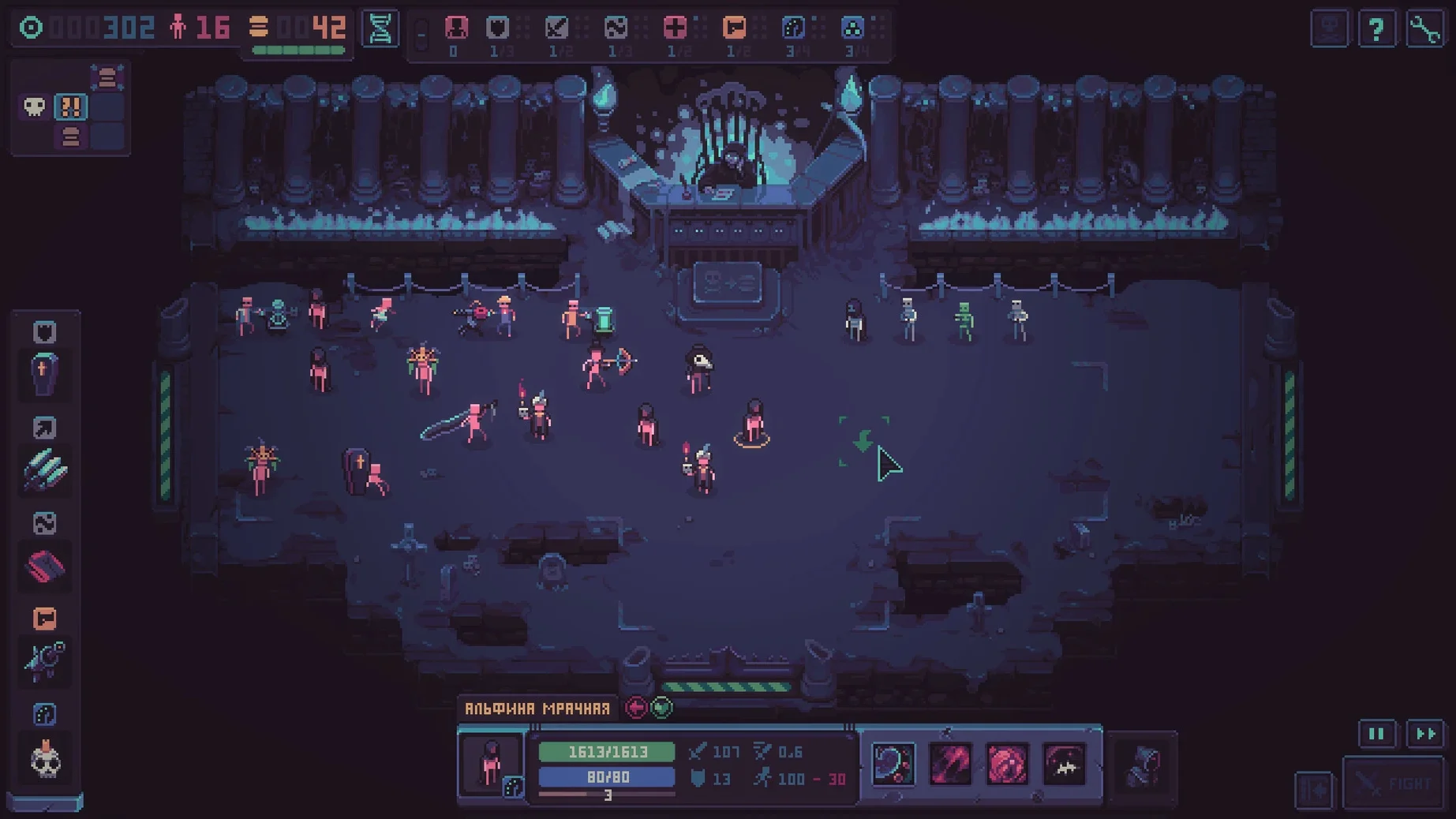
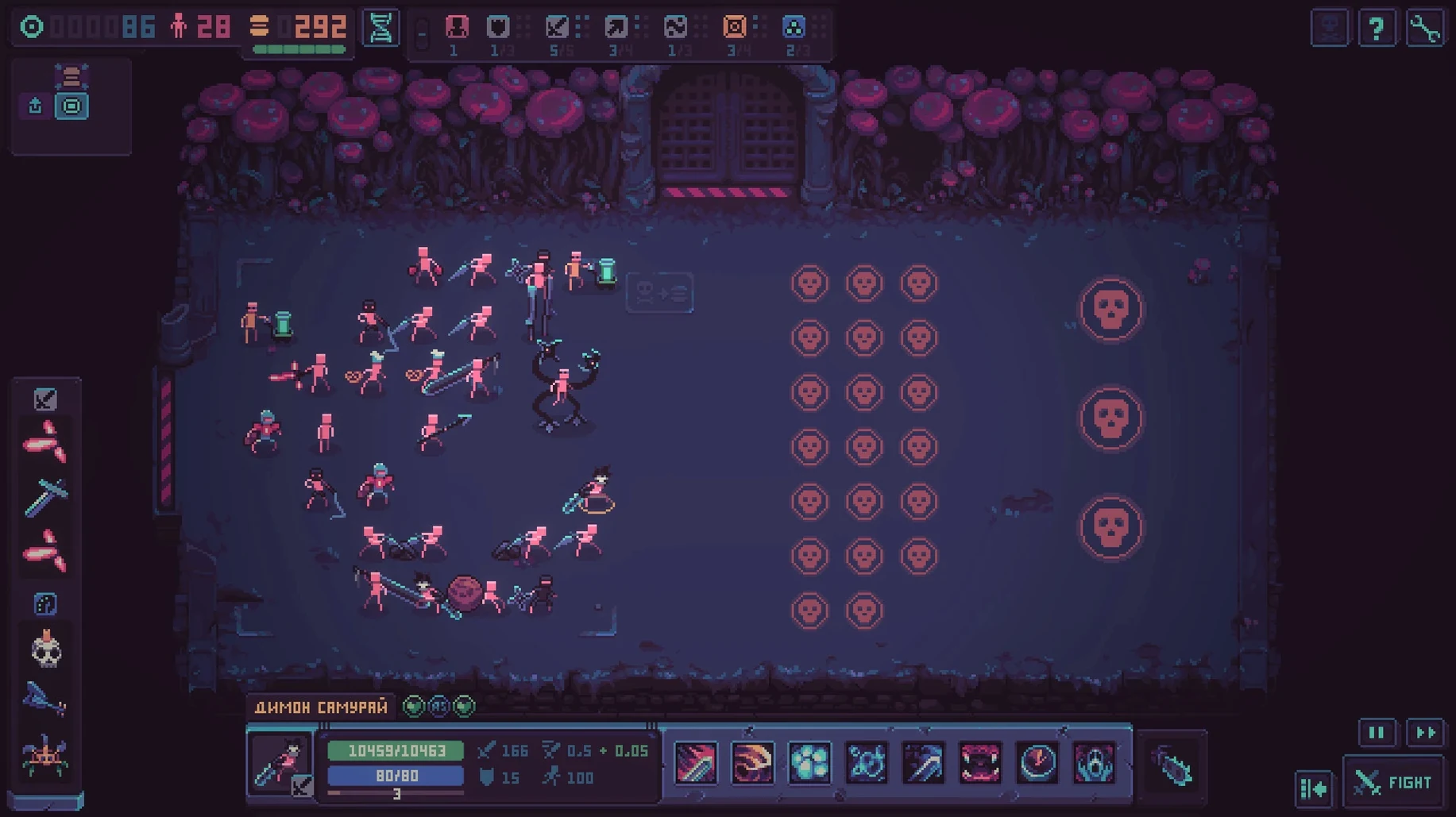
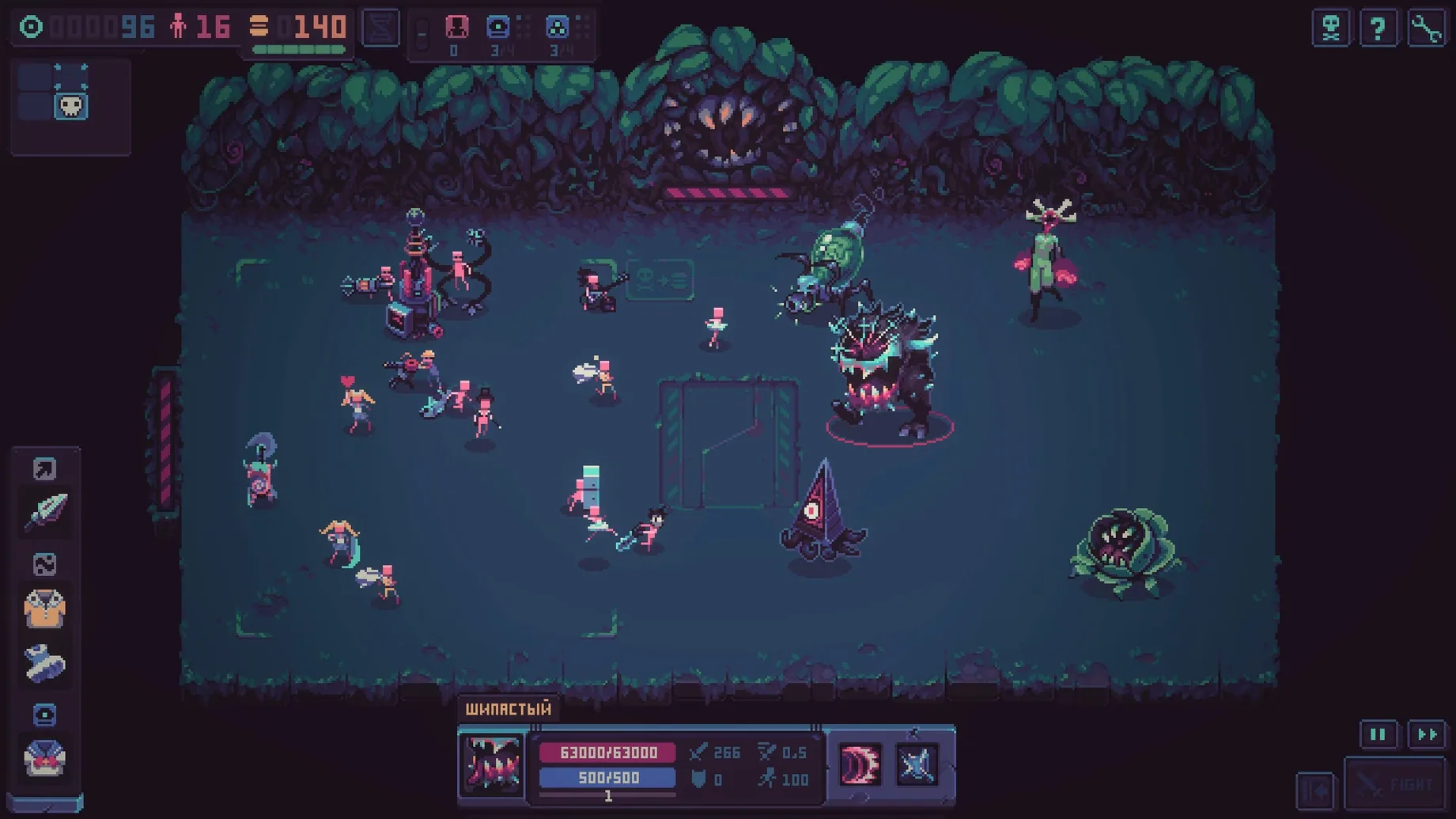
How a run unfolds
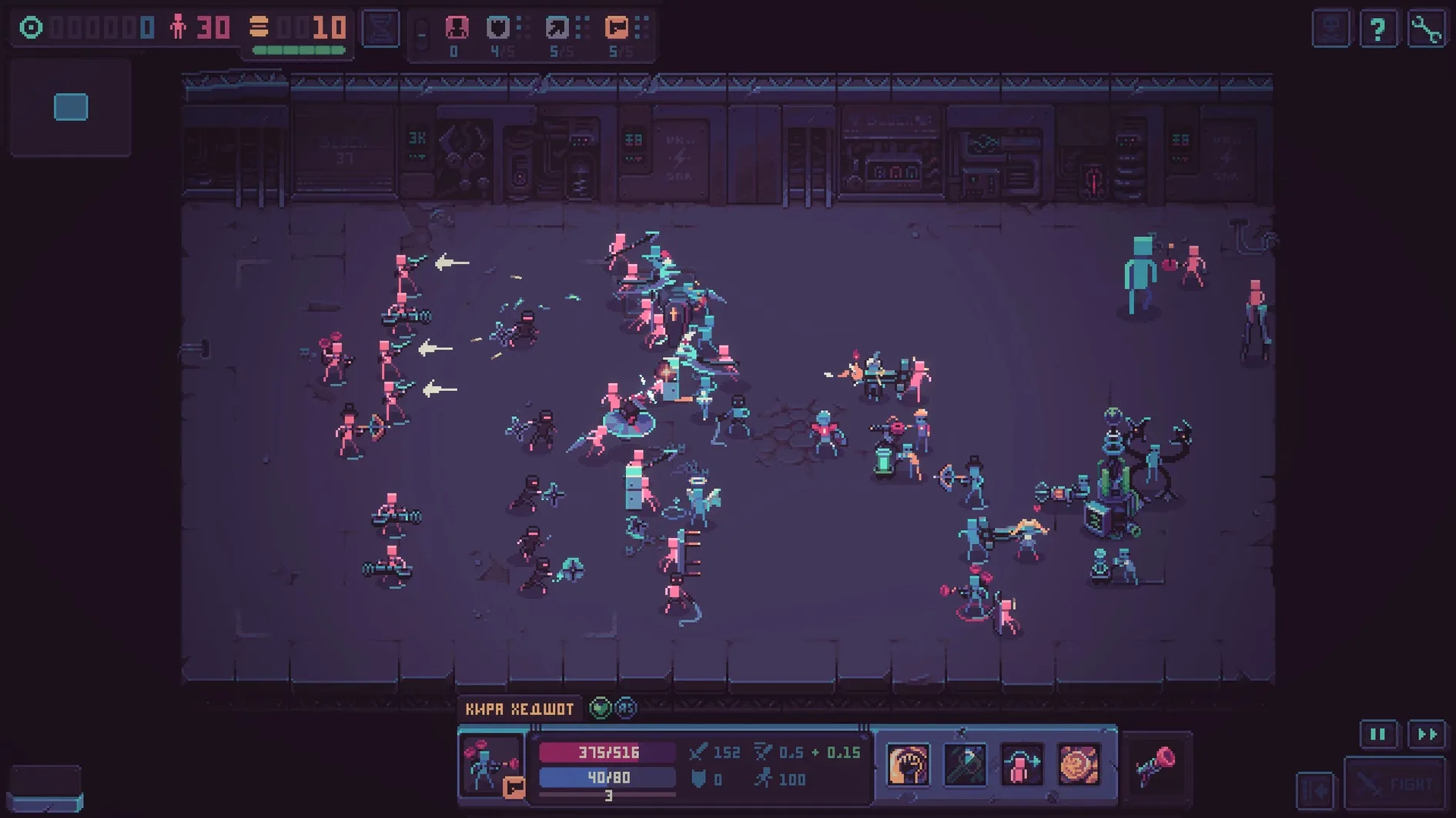
- Your pixelated squad wakes in a procedurally stitched dungeon with no clothes, no memories, and no idea how they got there. The first thing you do is scavenge — rations and random loot that decide who lives and who becomes something stranger.
- Spend food to turn weak humans into specialized fighters: mages, ninjas, cultists, even brezel throwers. Squad composition matters more than raw numbers, and a weird build often outlasts a safe one.
- Battles play out automatically once formations are set. Your job is positioning, predicting synergies, and reacting when the dungeon throws a rival player’s army into the corridor. Those encounters feel less like PvP and more like stumbling into another doomed expedition.
- Die, unlock new perks and mutations, start again. The labyrinth is different every time, and the music—the only voiced language in the game—sets a deadpan, synth-heavy tone that suits the absurdity.
On a 2024 M4 Mac mini running macOS Tahoe, the game held a steady frame rate during crowded later floors. Keyboard and mouse controls are responsive, and the interface scales cleanly. Expect a lightweight install that plays nicely with Apple Silicon and older Intel machines alike.
Mistakes that end runs early
New players tend to treat Despot's Game like a traditional auto-battler and stack damage dealers in a neat row. That works for the first three floors, then collapses the moment a shielded cultist or a rival player's formation shows up. The game punishes one-dimensional squads harder than most roguelikes in this space.
The most common misstep is ignoring the food economy. Every ration spent on a flashy tier-two class is a ration not spent keeping someone alive through attrition. Beginners often enter floor six with three glass-cannon mages and no front line, wondering why the brezel thrower died before it could attack. Another trap: rerolling the mutation pool too aggressively early on. The first few mutations shape your run, and burning resources chasing a perfect perk leaves you under-levelled when the difficulty spikes.
Positioning mistakes compound quietly. Placing a ninja behind a tank sounds logical, but ninjas have a dash range that can pull them ahead of your formation and into focus fire. The game never explains this, and the carnage looks like bad luck. It isn't. Also worth remembering: rival player squads that appear mid-dungeon aren't balanced encounters. They're snapshots of someone else's build, and some are outright broken. Running away is a legitimate tactic the tutorial never mentions.
Turn on formation preview outlines before your first dystopian run
The defaults are sensible, but two changes make a difference in everyday play. First, turn on formation preview outlines in the gameplay settings. This adds a faint grid overlay during placement that reveals exactly which tiles a unit's movement range covers. It turns positioning from guesswork into something deliberate, especially with classes that have erratic pathing like the fanatic or the brezel thrower.
Second, dial the battle speed slider to about 80% of maximum. At full speed, status effects and area-of-effect overlap become hard to read, and you'll miss the moment a mutation procs or a synergy fails. Slowing things slightly gives you enough time to see why a formation worked or crumbled, which is the feedback loop the whole game runs on. The music, by the way, sounds better when battles aren't racing past it. On the M4 Mac mini, performance stayed fluid at every speed setting, so there's no hardware reason to rush.
A smaller but useful tweak: disable screen shake in the accessibility menu. Later floors throw enough visual chaos at you without the camera shuddering on every critical hit. It's a minor thing that quietly improves readability across hour-long sessions.
Rival player squads now scale more fairly in the mid-game
Version 1.12.2 arrived after the initial Steam release and focused on tightening the mid-game rather than adding headline features. The most noticeable shift is how rival player encounters are seeded. Earlier builds could drop an overpowered squad two floors before you had the tools to handle it, which turned some runs into coin flips. The current version applies stricter composition checks before spawning those armies, so the difficulty curve feels more like a deliberate ramp and less like a trapdoor.
Mutation balance saw a quiet overhaul too. Several underused perks—particularly the ones affecting food conversion and retreat cooldowns—got numeric buffs that opened up weirder builds. A despot's game dystopian battle simulator crack mac community run a year ago might have ignored half the mutation pool; today, you see genuine variety in what people take. Cultist-heavy squads became viable for the first time without relying on a single overpowered synergy.
Load times between floors improved noticeably on both Apple Silicon and Intel machines. The procedural generator got a backend optimization pass that trimmed the post-battle calculation phase, which means less staring at a progress bar and more time in the labyrinth. Interface scaling was refined for higher-resolution displays, fixing a handful of text-overlap issues that cropped up on 1440p and above. Nothing earth-shattering, but the cumulative effect is a game that feels more frictionless in the moments between decisions.
- Runs on Intel and Apple Silicon Macs.
- Tested on macOS Tahoe (M4 Mac mini).