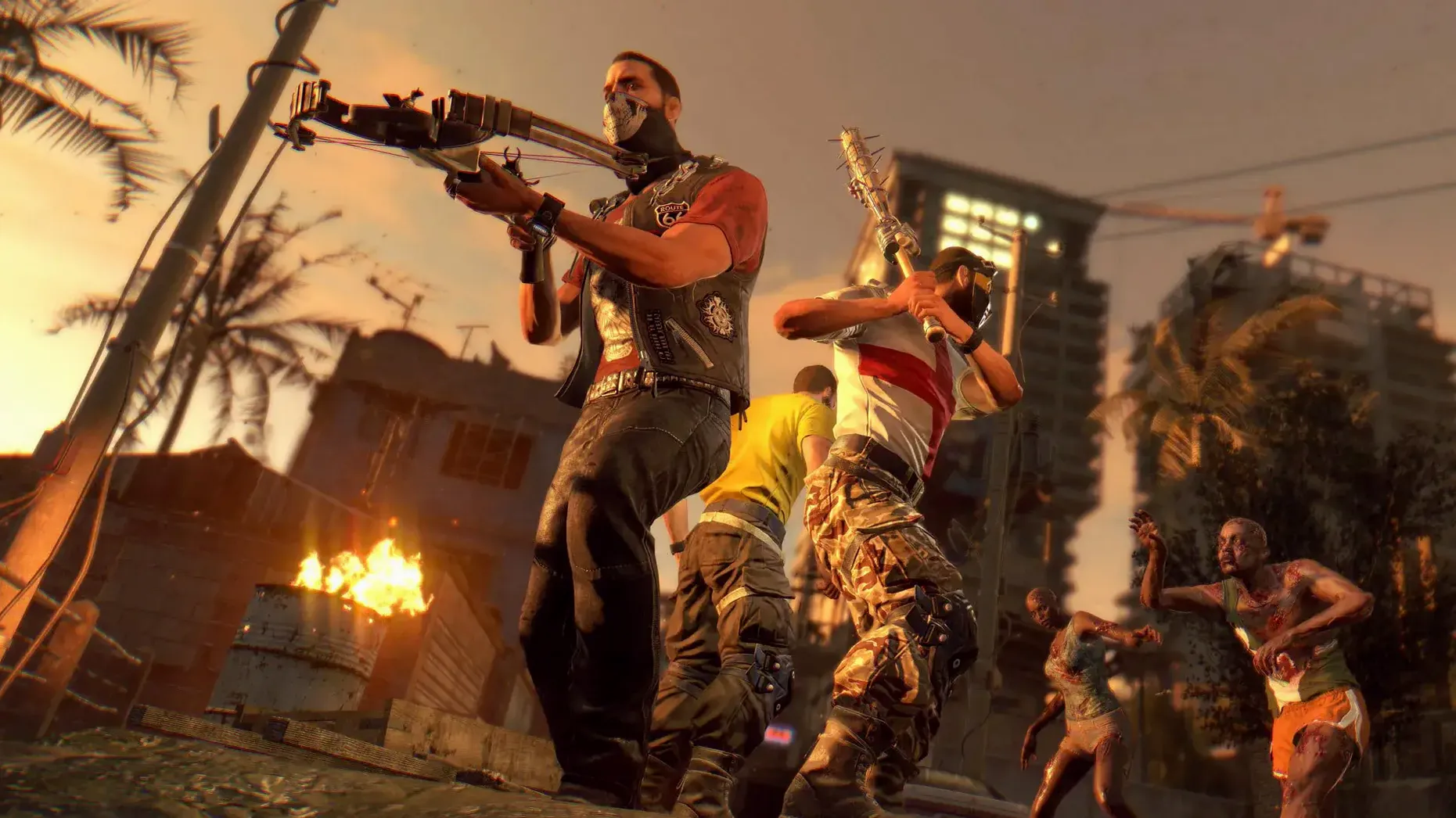
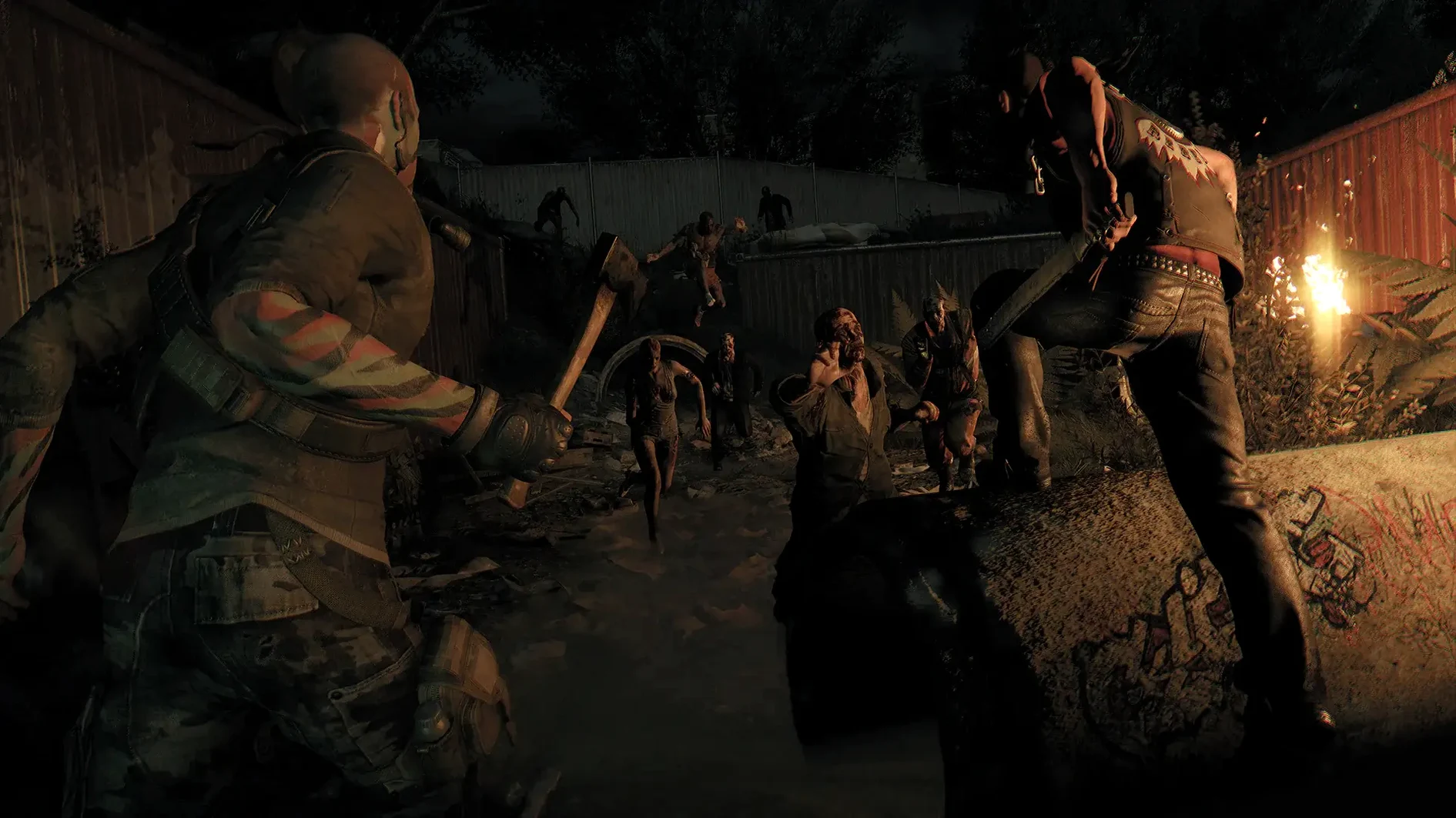
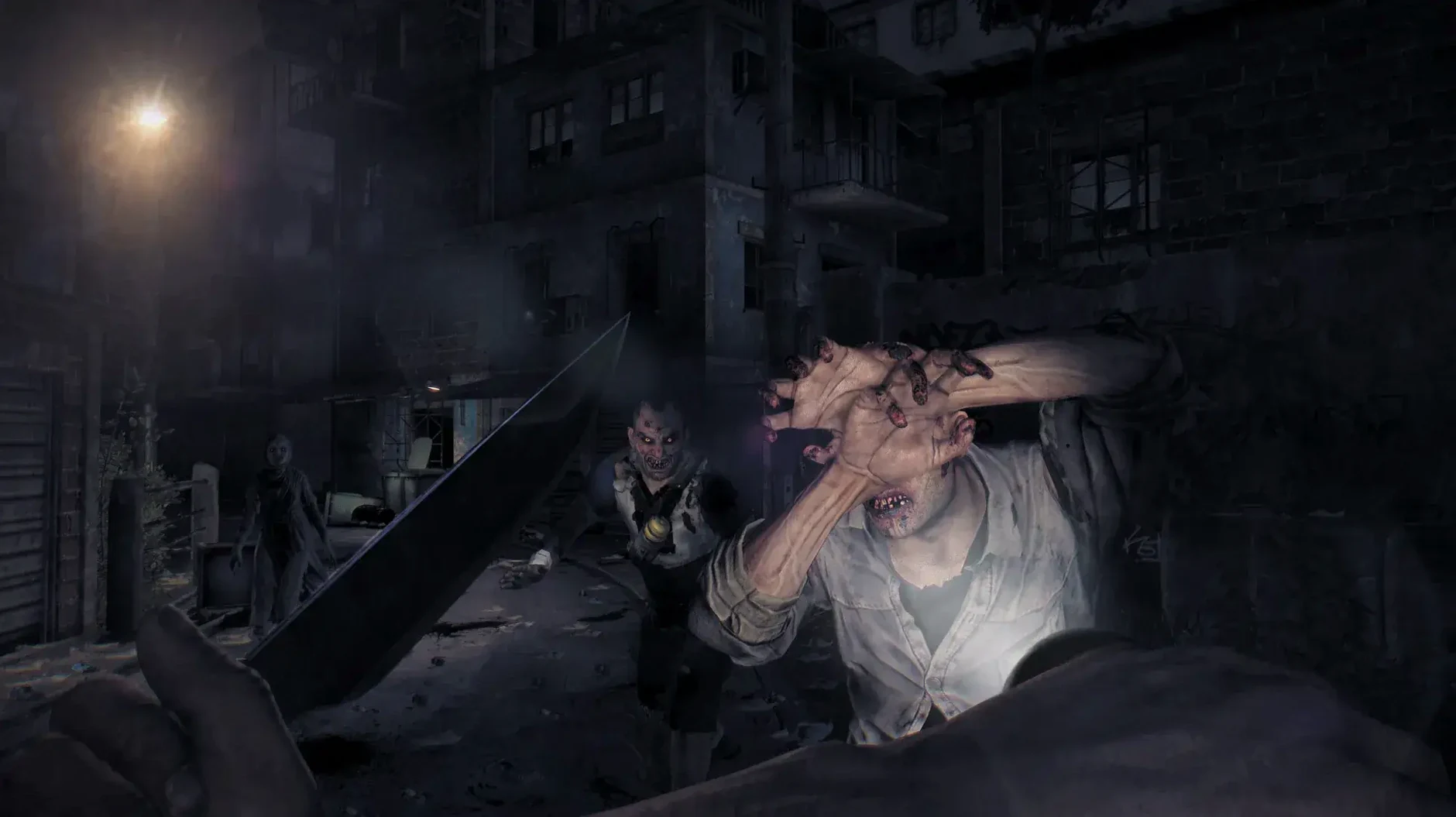
The quarantine wall didn't keep the infection in. It trapped everyone else inside with it. Harran is a city of sun-bleached rooftops and dark interiors where the infected stand still, twitching, waiting for a sound to react to. You play as Kyle Crane, an operative dropped in to retrieve a file, who gets pulled into the lives of the survivors almost immediately. That's the problem the game hands you: not just staying alive, but deciding who to help while the day burns down around you.
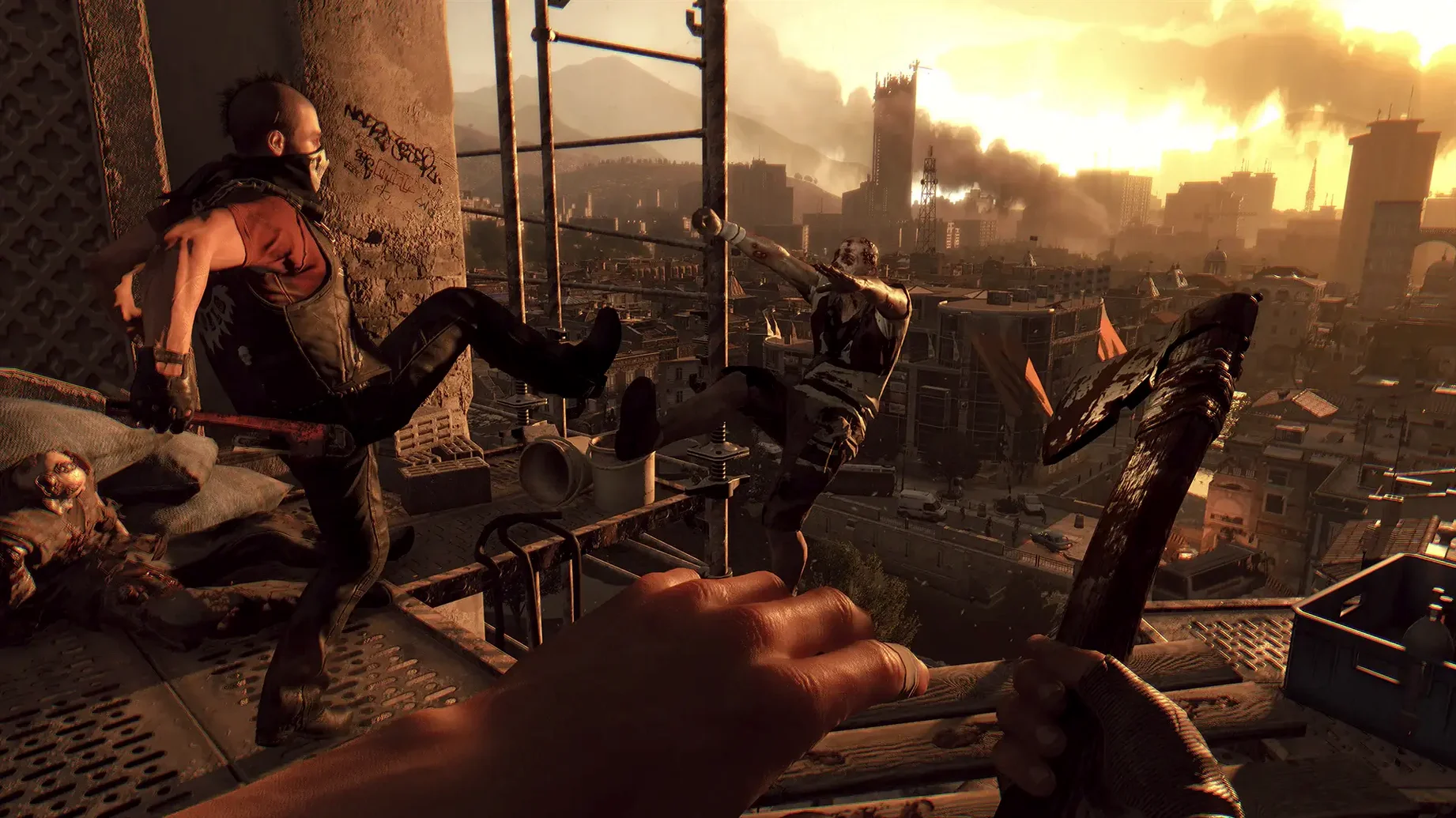
Minute to minute, you're moving. Parkour turns the city into a vertical playground — drainpipes, awnings, bus roofs, balcony ledges — each one something you can grab. A misjudged jump costs you stamina, or worse. Combat is scrappy and physical: lead pipes, electrified knives, molotovs, a dropkick that sends a biter off a roof. When the sun sets, the infected grow faster and deadlier. Volatiles hunt by sound, and your minimap becomes a radar of things you can't outrun. The only sensible move is to run, find a safehouse, and hope your flashlight battery holds. A special mission late in the game forces you to make a choice that no amount of parkour can get you past.
Faster district loads and fewer Mac friction points
The jump to version 1.55.1 wasn't a headline-grabbing content drop — no new map, no extra weapon class — but it cleaned up a handful of friction points that had been nagging Mac players for years. Load times between districts shrank noticeably, especially on Apple Silicon machines where the earlier port sometimes paused mid-transition as if the engine needed a moment to remember where it was. Shadow cascades no longer flicker when you pan the camera across sunlit rooftops at a sharp angle, a small fix that anyone who spends hours scanning the Old Town skyline from a chimney stack will appreciate immediately. Controller support tightened up too; DualSense and Xbox Wireless pads now map correctly on first connection without the game forgetting your layout between sessions, which used to mean remapping the d-pad every time you launched it.
Audio occlusion got a quiet polish. You can now hear a volatile's breathing change when it's on the other side of a concrete wall versus a corrugated metal sheet, and that distinction makes night runs more legible — less guesswork, more listening. The Be the Zombie mode, which had been temperamental on macOS for several builds, reconnects faster after a dropped session and no longer stutters when the Night Hunter pounces from a long draw distance. For a game where one badly timed lag spike means being dragged into a nest, that matters.
Stable fullscreen switching and smooth screen capture
On a Mac, Dying Light plays well with the operating system's fullscreen spaces — flick left to your desktop while the game holds steady, then flick back without a resolution hiccup. If you use OBS or ScreenFlow to capture footage for a reel, the game's windowed-borderless mode (toggled in the pre-game launcher) feeds a clean signal without green-screen workarounds. The built-in audio mixer doesn't fight with Loopback or BlackHole, so routing game sound and a commentary mic into separate tracks for later editing is straightforward.
Sidecar and AirPlay are less practical for this one — the latency is fine for inventory management, but you won't want to time a wall-run on a wireless display. Where the game does shine is with a pair of headphones that support Apple's spatial audio pipeline; the engine's binaural panning, especially at night, tracks threats in a hemisphere around you. Combine that with the dense reverb zones in Harran's sewers and apartment blocks, and you get a soundscape that rewards closing everything else and playing in a dark room. If you keep a capture card in your workflow, the HDMI output carries a standard 16:9 signal that doesn't letterbox unpredictably, which older Mac ports sometimes did.
Native Apple Silicon code, not another Rosetta translation
Does it actually run well on Apple Silicon, or is this another Rosetta compromise? The 1.55.1 build is a universal binary, so you get native ARM code on M-series chips. On an M4 Mac mini running macOS Tahoe, the game holds a steady frame rate at high settings without the fan ramping up — a genuine step forward from the days of tweaking .ini files on Intel MacBooks to keep temperatures sane. It's not a console port wrapped in a translation layer; the Metal backend does real work here.
What if I've only played zombie games on handhelds or consoles before? The first-person parkour takes a couple of hours to feel natural, especially if your muscle memory is built on twin-stick shooters. Harran's verticality is the tutorial — by the time you've missed three ledges and fallen into a crowd of biters, you'll learn to look up before you jump. The difficulty curve isn't gentle, but it's fair in a way that encourages you to move smarter rather than grind for better stats.
Can I pick up my save from another platform? There's no cross-progression between the Mac build and console or Windows versions. Your Harran runs on macOS start fresh. The game doesn't require activation or an online check-in, so once it's installed, nothing phones home when you launch it.
- Architecture: Apple Silicon and Intel
- Interface languages: Russian, English, German, Spanish, Italian, Dutch, Polish, Portuguese, French, Japanese
- Audio languages: English, German, Spanish, Italian, Dutch, Polish, Portuguese, French, Japanese