
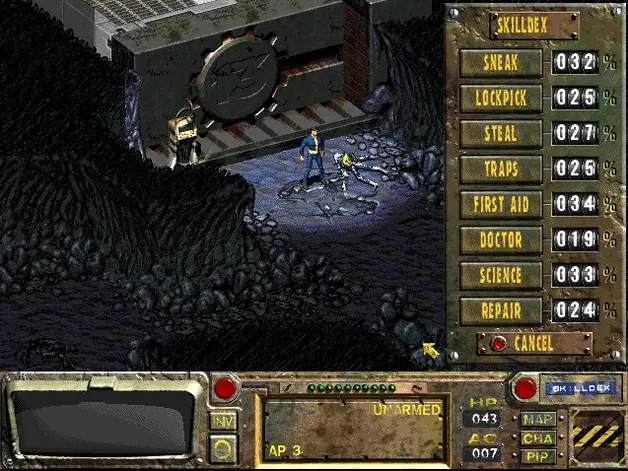
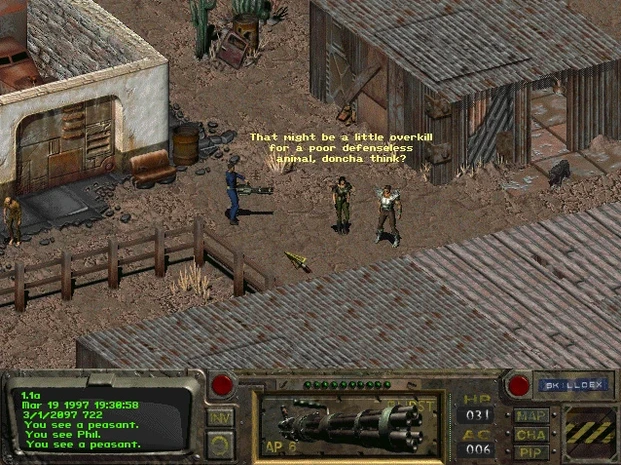
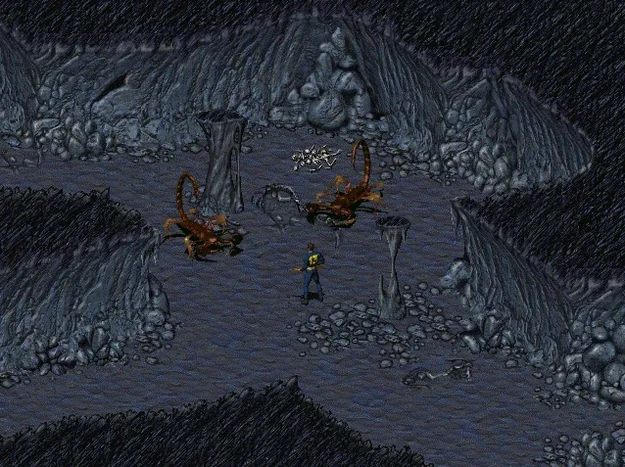
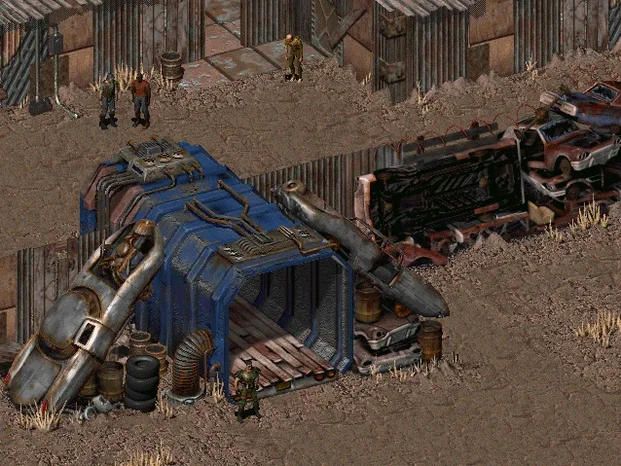
This build, tested on an M1 MacBook Air running macOS Sonoma, runs through a 64-bit x86 translation layer and holds steady — which matters, because Fallout’s desolate charm depends on you sinking into its rhythm without technical friction. The isometric perspective and turn-based combat feel deliberate, not dated, if you have the patience for a game that treats every encounter as a small story.
- You will enjoy this if you read terminal entries for pleasure. Fallout buries its world-building in flavour text and environmental clues, and the retrofuturistic aesthetic — vacuum tubes, rusted vault doors, mid-century optimism turned to ash — rewards close attention.
- You will enjoy this if moral ambiguity interests you more than hero arcs. The wasteland doesn't track a paragon meter; it watches what you do and remembers, often in uncomfortable ways.
- You might not enjoy this if you need a clear quest marker. The main objective — finding a water chip for Vault 13 — is urgent, but the game will happily let you wander into a super mutant camp you are not ready for.
- You might not enjoy this if slow, tactical combat feels like friction rather than deliberation. Every action point spent is a small decision, and the game never rushes you, which can feel either meditative or punishing depending on your temperament.
What you get is a game that trusts you to pay attention. It doesn't explain its systems so much as hand you a Pip-Boy and let you figure out why the geiger counter is clicking.
Performance on a modern Mac
The Community Edition wrapper handles the translation from x86 to ARM quietly. On an M1 MacBook Air, the game rarely touches the fan — Fallout's 1997 assets simply don't push the chip hard enough to matter. Load times between zones are near-instant, and the isometric maps scroll without hitching, even with half a dozen NPCs wandering the screen. Memory use sits around 300 MB during play, which leaves the rest of the system free for notes, a browser tab open to a walkthrough you'll swear you won't need, or whatever else is running.
Stability is the bigger question with older titles, and this build has been uneventful in the best way. Across several hours of play, no crashes during dialogue trees, no corrupted saves when entering the Glow or Necropolis — two areas that historically made the original engine nervous. The save files live in /Applications/Fallout/DATA/SAVEGAME, a plain folder that makes manual backups trivial if you want to experiment with character choices you may regret.
Wasteland 2 gives you a squad, Fallout ties you to one flawed soul
The most direct comparison is Wasteland 2: Director's Cut, which runs natively on Apple Silicon and modernizes the squad-based post-apocalyptic formula. Wasteland 2 offers a cleaner interface and party creation from the start, but it lacks Fallout's tight single-character focus and the specific melancholy of 1950s Americana filtered through rubble. Where Wasteland builds its world through mission logs and radio chatter, Fallout lets a single skeleton in a bathtub tell the story.
Then there's UnderRail, an indie isometric RPG with native Mac support that draws heavily from Fallout's combat and exploration loop. It's more mechanically dense — the crafting and stealth systems run deeper — but its subterranean setting trades irradiated skies for claustrophobic tunnels, which changes the emotional register entirely. Fallout's Southern California wastes still feel vast, even when the map is only a few dozen screens wide.
Against ATOM RPG, a Soviet-inflected homage with full Mac compatibility, Fallout shows its age in interface friction but wins on pacing. ATOM's writing is earnest and detailed; Fallout's is leaner, sharper, and trusts silence more. If you have already spent time with these modern successors, the original feels like reading the source material after only knowing the adaptations.
Tag Speech and Lockpick before the vault door closes
The game opens by handing you a deadline and a pistol, then steps back. A few habits make the early hours smoother. Tag skills that let you avoid combat — Speech, Lockpick, and one combat skill like Small Guns for when talk fails. The water chip timer is real but generous; you have 150 days, and the main quest line consumes perhaps a third of that if you don't wander obsessively. Still, make mental notes of settlements with water merchants. Shady Sands fills your canteen for free.
When the game first launches, if macOS throws a security prompt, the disk image includes an Auto Fix script that sorts permissions without drama. After that, the fallout-ce app icon is all you'll need. Don't sleep on the Pip-Boy's alarm function — it sounds retro, but setting reminders for timed quests or merchant restocks keeps you from reloading saves you made three hours ago. And Ian, the first companion you meet in Shady Sands, has a habit of firing burst rounds into your back. Give him a pistol, not an SMG.
- macOS Sonoma (tested)
- Apple Silicon or Intel (64-bit x86)
Questions from the booth
Your primary goal is to leave Vault 13 and find a replacement water chip for its failing generator before the vault runs out of drinking water.