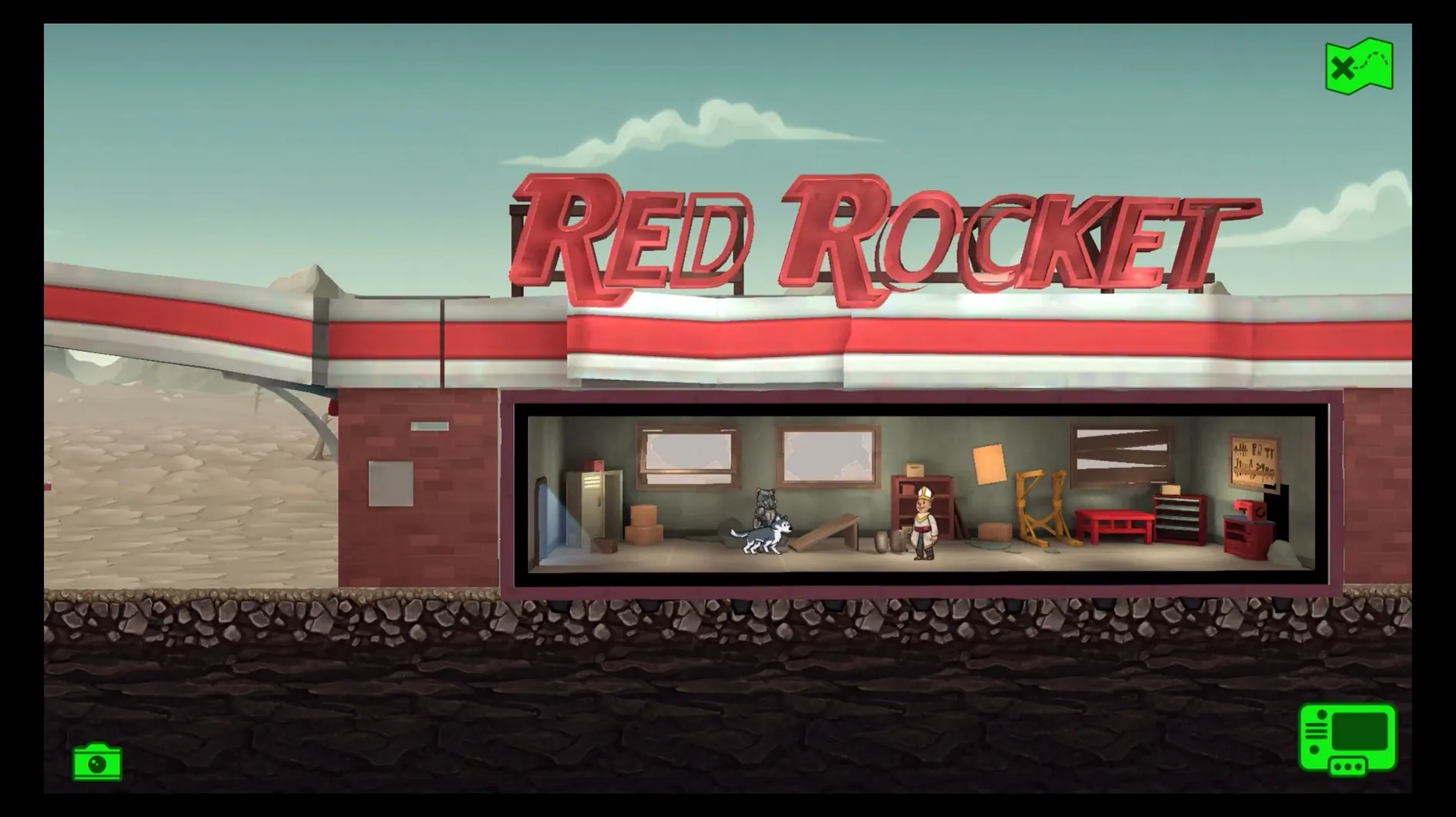
Anyone who has nudged a city budget into the black in SimCity will recognize the rhythm of Fallout Shelter. It replaces zoning ordinances with radiation sickness and power grids with water purifiers, but the core loop is a familiar, quietly compulsive hum. You are not a mayor, though — you are an overseer, responsible for a high-tech Vault-Tec shelter carved deep into the earth.
Dwellers, disasters and the daily grind
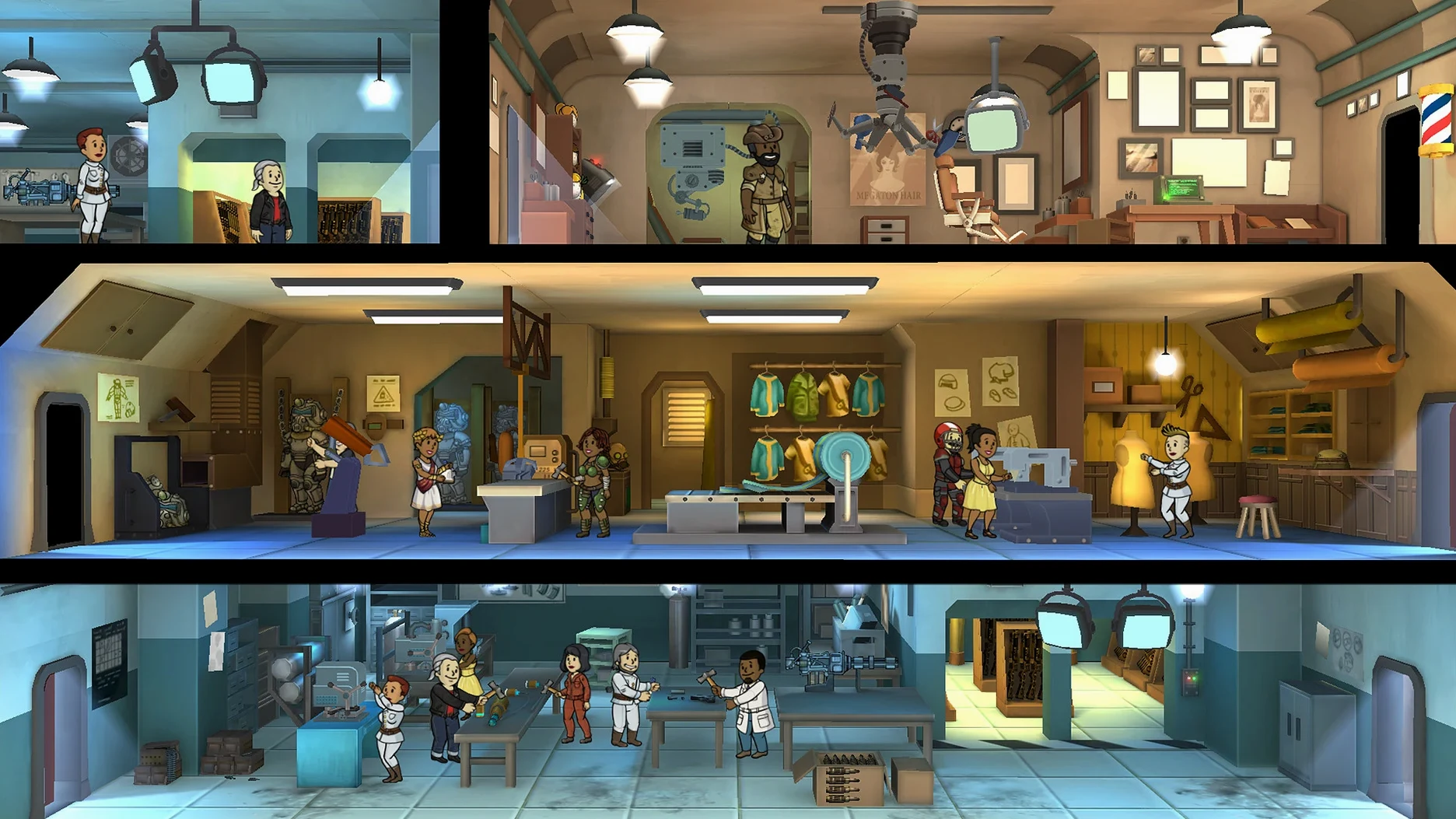
Minute to minute, you are matching dwellers to rooms. A character with high Strength belongs in the power plant; someone with Perception runs the water treatment. Drag and drop. The rooms generate resources on timers, and you tap to collect caps, the currency that lets you excavate more of the 2,000 feet of bedrock waiting to become living space. Between collections, incidents interrupt the rhythm — radroach infestations scuttle through the cafeteria, raiders breach the vault door, fires bloom in storage. You drag dwellers into the fray and watch tiny health bars drain until the threat passes. The satisfaction comes from building a vault that absorbs these shocks without your intervention, a self-correcting machine of happy, productive people.
The surface and the barber shop
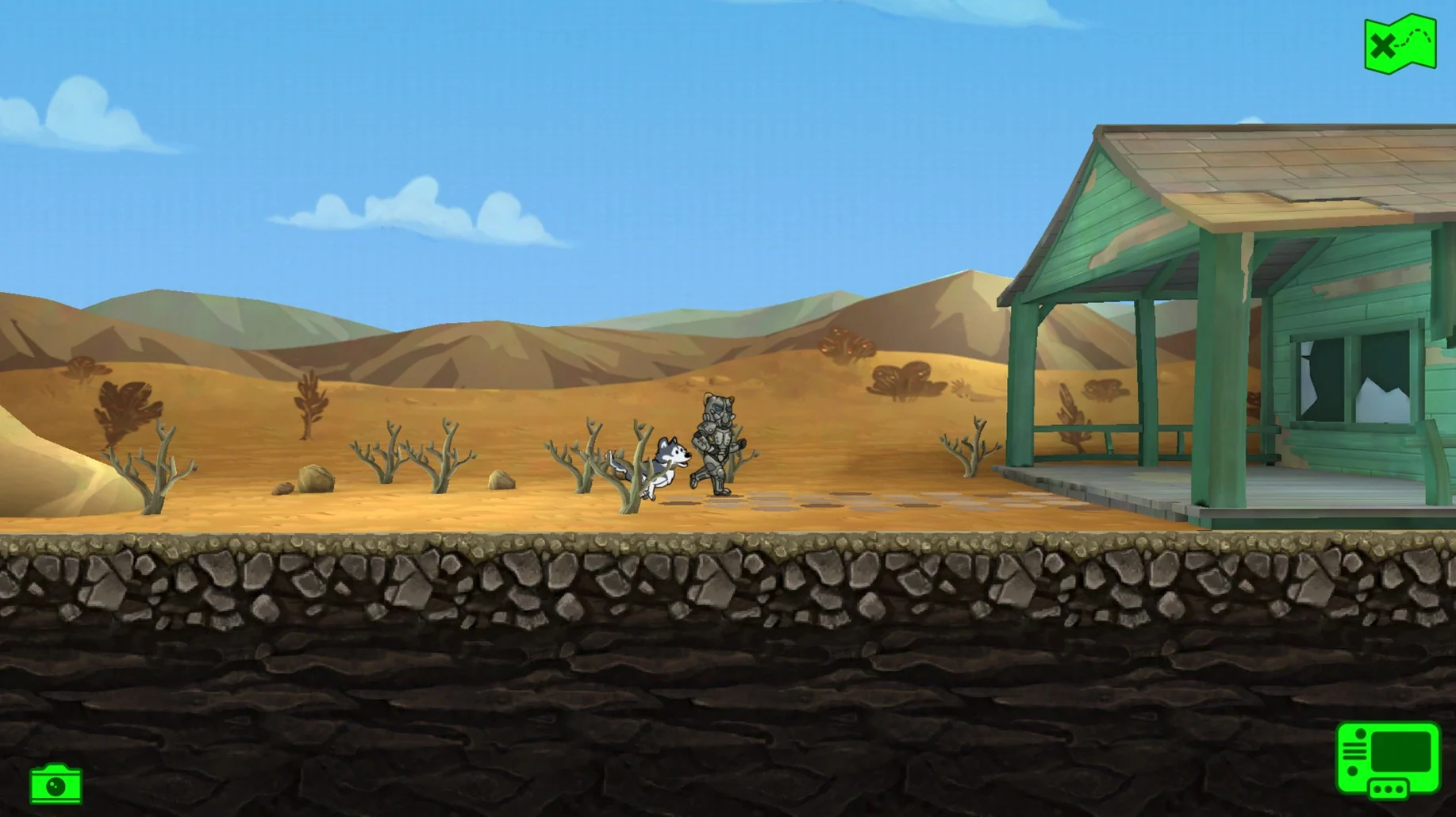
Not everything happens underground. You can outfit a dweller with a weapon and healed wounds, then send them into the wasteland with a wave. They return hours later with a journal of encounters, caps and sometimes a rare piece of gear, or they do not return at all. Between expeditions, the quieter rituals take over — sending a dweller to the barber shop to change their hairstyle, or rearranging room layouts as the vault grows. The game speaks six languages, including English, Russian and French, and on an M1 MacBook Air running macOS Sequoia, the version 2.4.1 build feels as responsive as tapping on a phone screen.
First days underground
The first hours after installing are the most fragile. You will be tempted to build rooms as fast as the caps allow, but every new room demands power, and every power room demands dwellers to staff it. A vault that expands too quickly becomes a place where the lights flicker and the water runs brown. Spend the first days doubling up on your generator and diner instead, and only excavate a new floor when you have three dwellers waiting in the living quarters with nothing to do. Pregnancy, by the way, is not the fastest way to grow your population — the radio room unlocks later and calls new arrivals from the wasteland with less waiting around.
Small conveniences worth learning
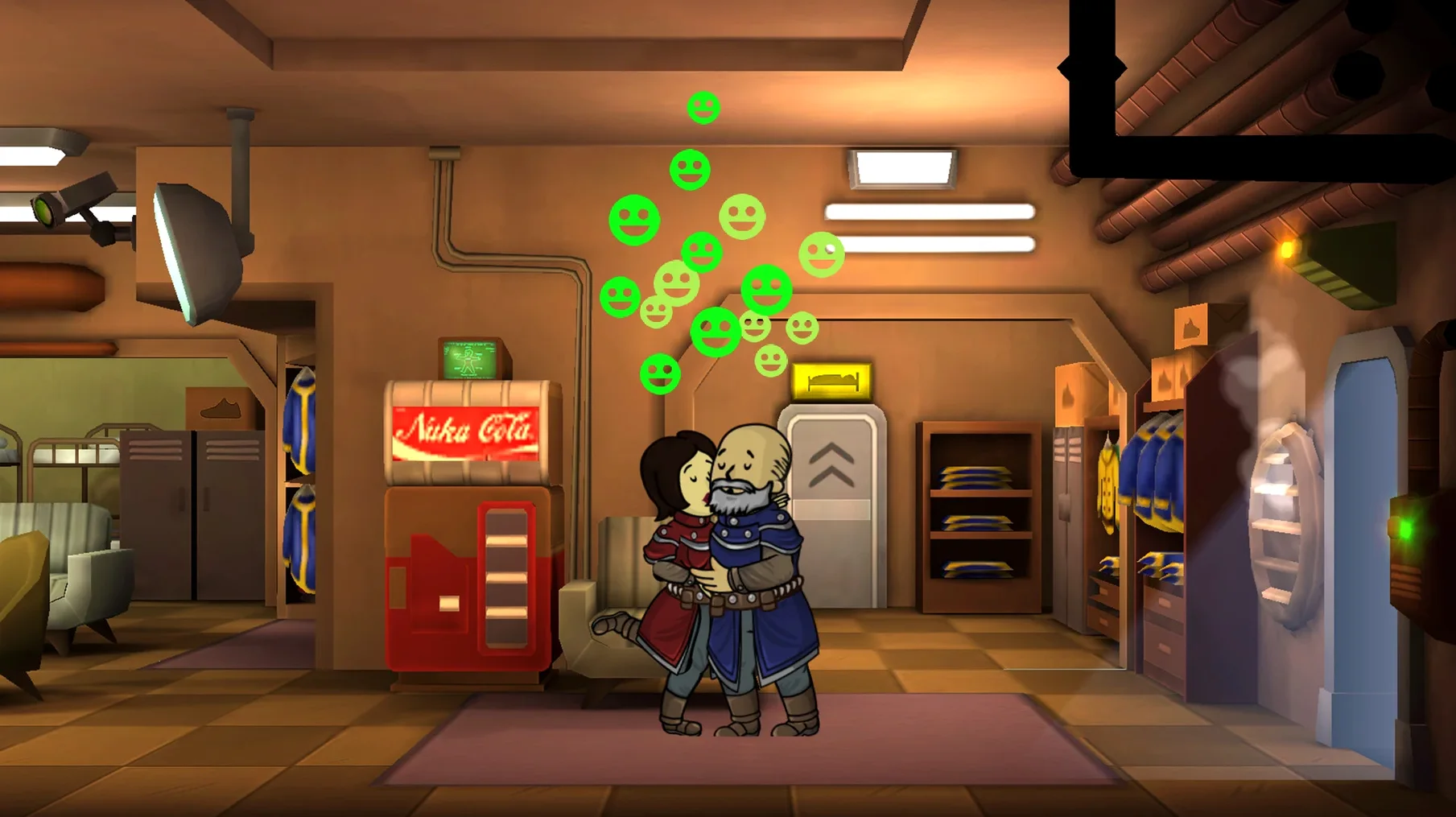
Some of the best details are easy to overlook in the first session. Tap a dweller's name while they are working and you can rename them, which is useful for remembering who has the highest Agility when you are shuffling people between rooms. The game also lets you zoom out to see the full vault, and dragging the screen quickly flicks between floors instead of scrolling one room at a time. Another quiet feature: dwellers in the same room sometimes exchange lines of dialogue that hint at their mood, and a dweller standing idle for too long will start to mutter about the overseer. It is a small pressure, but it keeps you moving.
A night with a vault manager
Picture a player who opens the game after dinner, mostly to check on a dweller named Cole. Cole was sent into the wasteland yesterday with a laser pistol and three stimpaks, and the journal says he found an abandoned shack outside a ruined settlement. Caps, a leather chest piece, a little experience. So far, no death. While Cole is out there, the vault's water reserve dips below half because a radroach swarm chewed through the generator wiring, and two dwellers are now standing in the medbay with thin health bars. The radio room blinks — a new dweller named Marcy is at the door, level one, Charisma three. The player lets her in, sends her to the diner, and queues up one more power room before closing the laptop. Cole will report back tomorrow.
- Apple Silicon Mac
- Tested on macOS Sequoia (MacBook Air, M1, 2020)