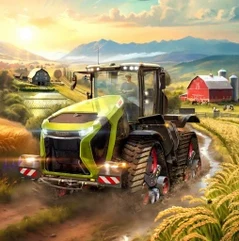
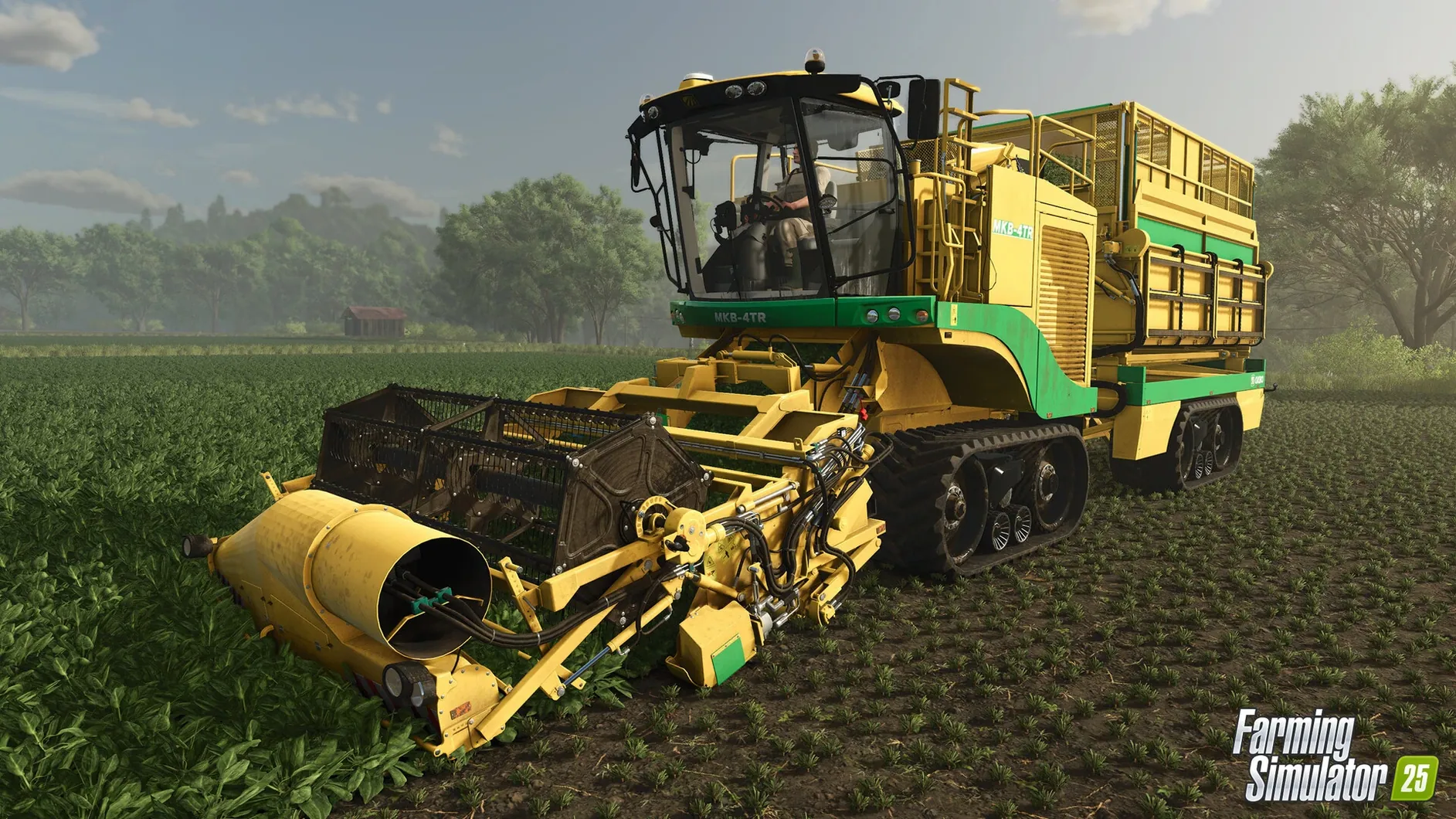
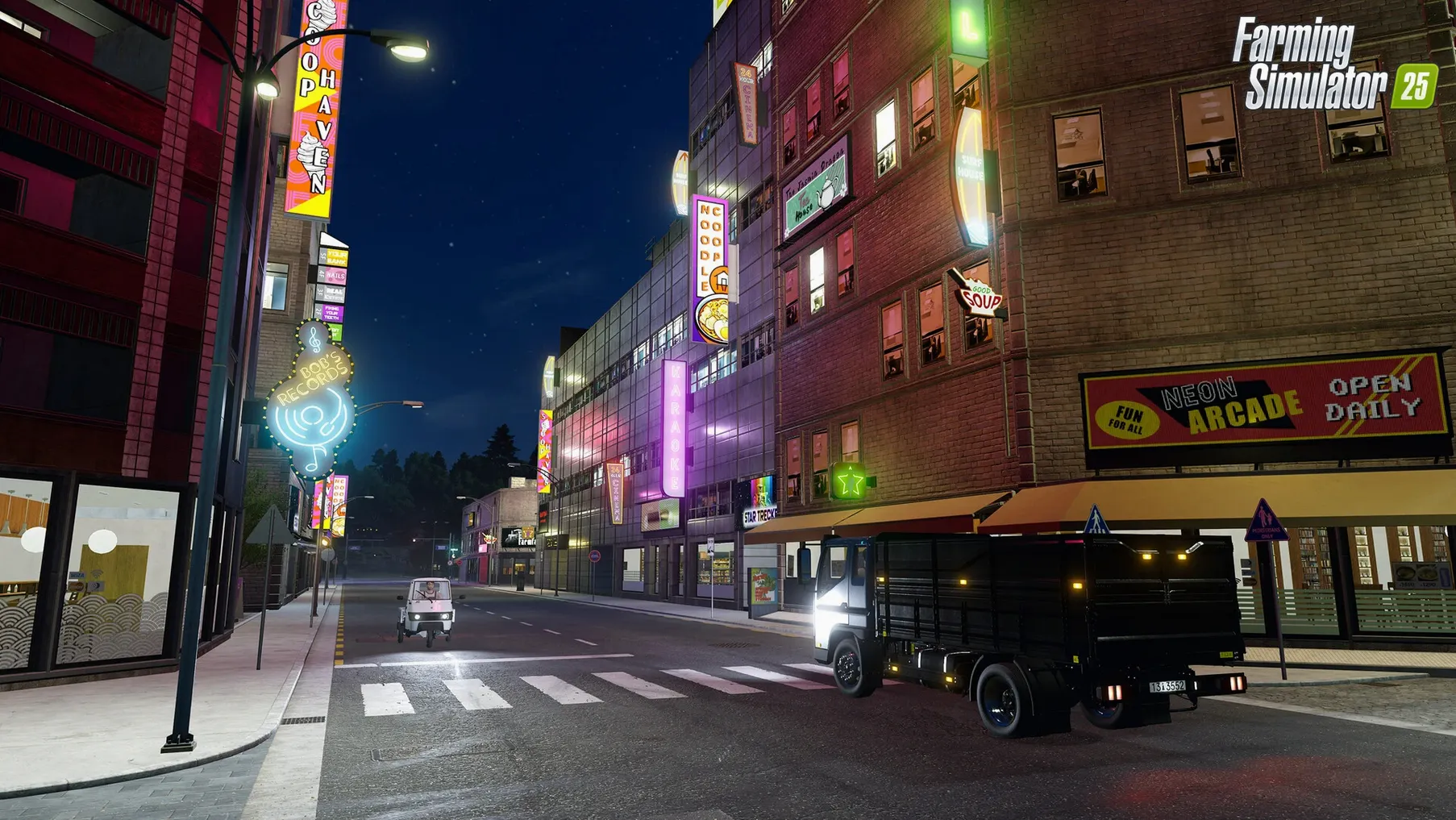
Most sims hand you a tractor and a single field already prepped for harvest. Farming Simulator 25 drops you into a landscape that needs reading — soil that remembers where you drove last season, weather that doesn't care about your planting schedule, and a supply chain that stretches from a flooded paddy to the grain elevator. It solves the problem of farming games that feel like dioramas. Here, the ground deforms under your wheels and a hailstorm can undo a week of careful work in twenty minutes.
Unhurried fieldwork and a 400-machine garage
- Long, unhurried sessions where the rhythm of fieldwork sets the pace
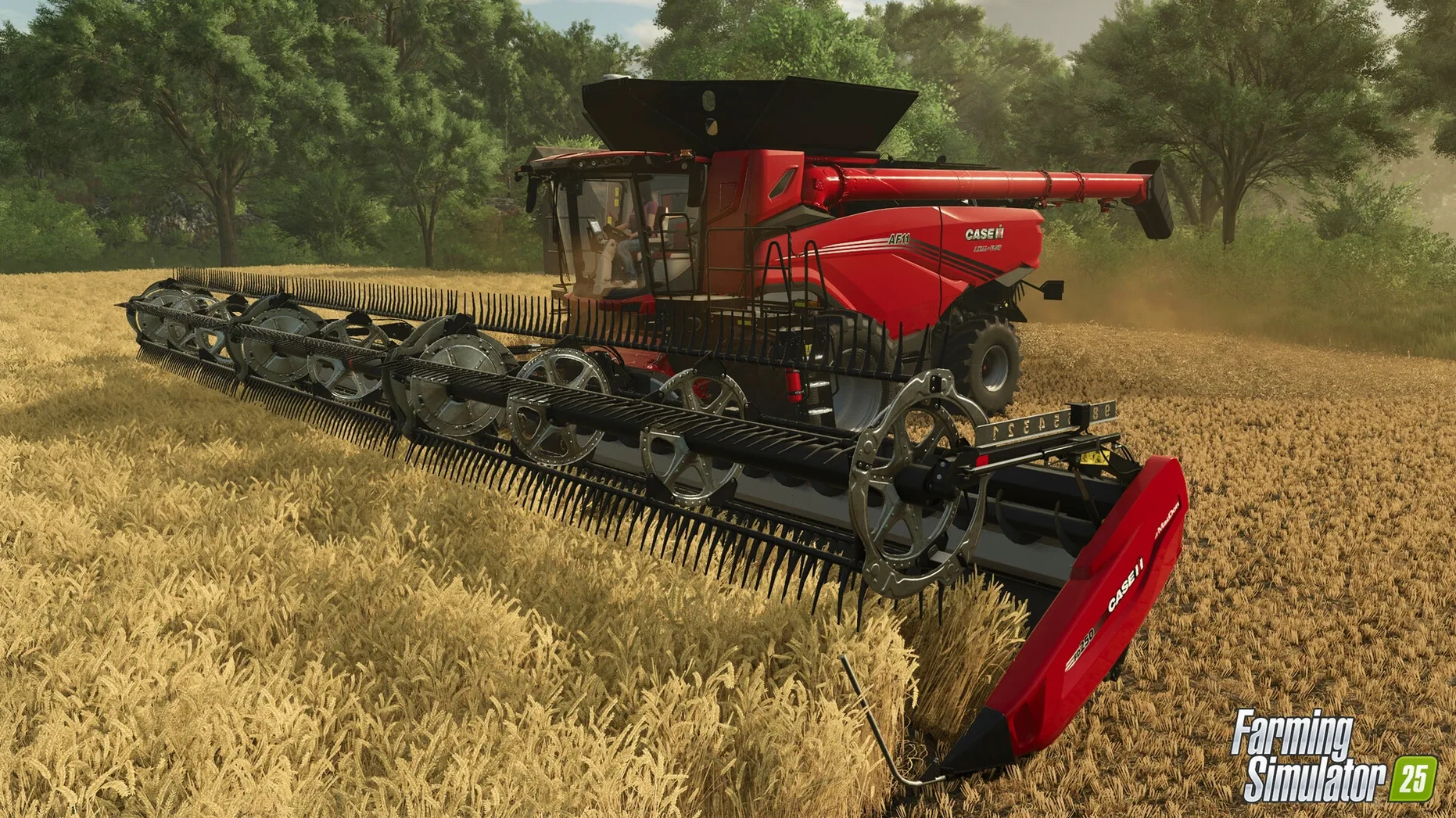
- Equipment enthusiasts — more than 400 machines and tools from over 150 manufacturers fill the garage
- Anyone curious about GPS-assisted steering and the real logistics of a modern farm
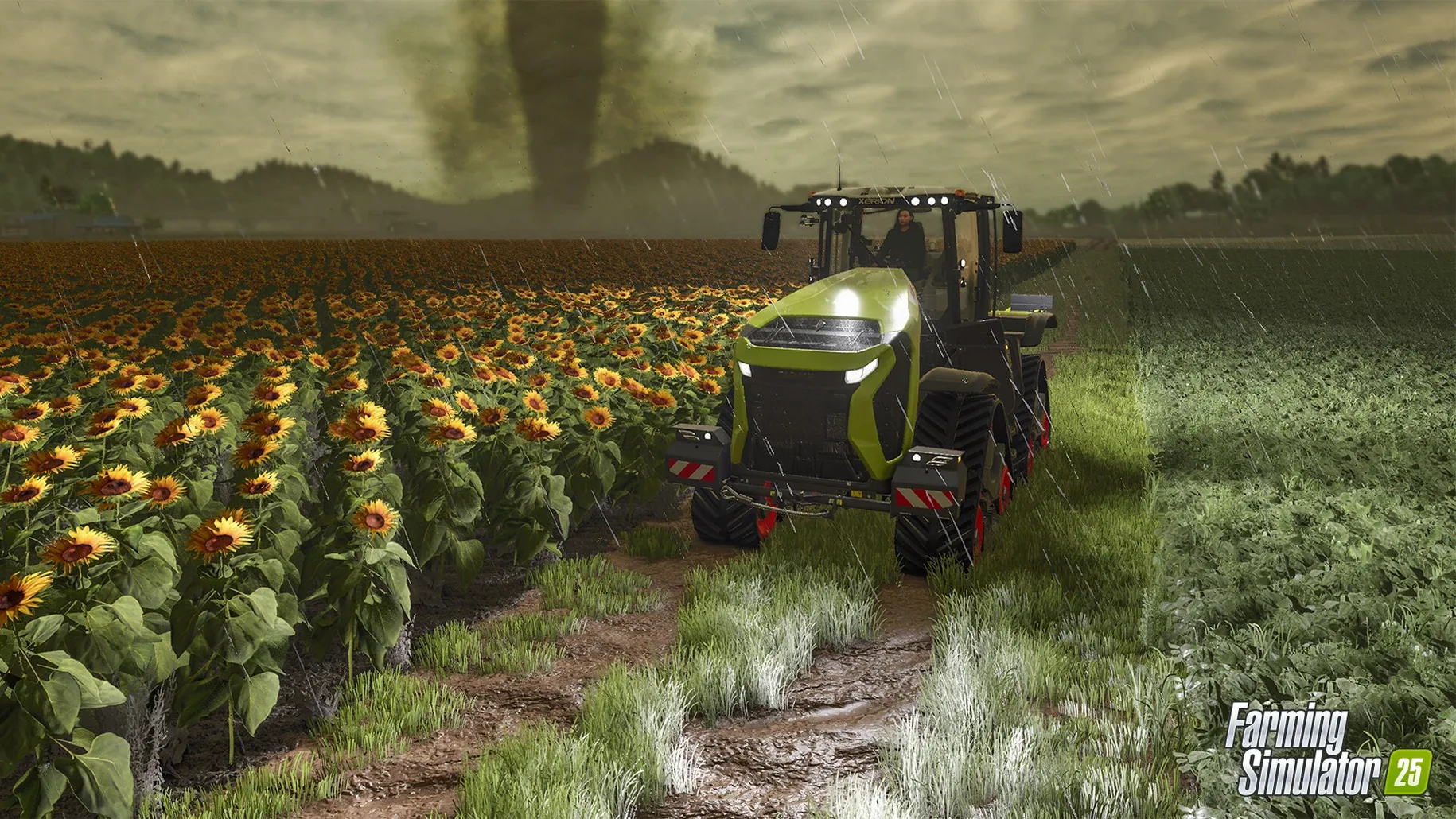
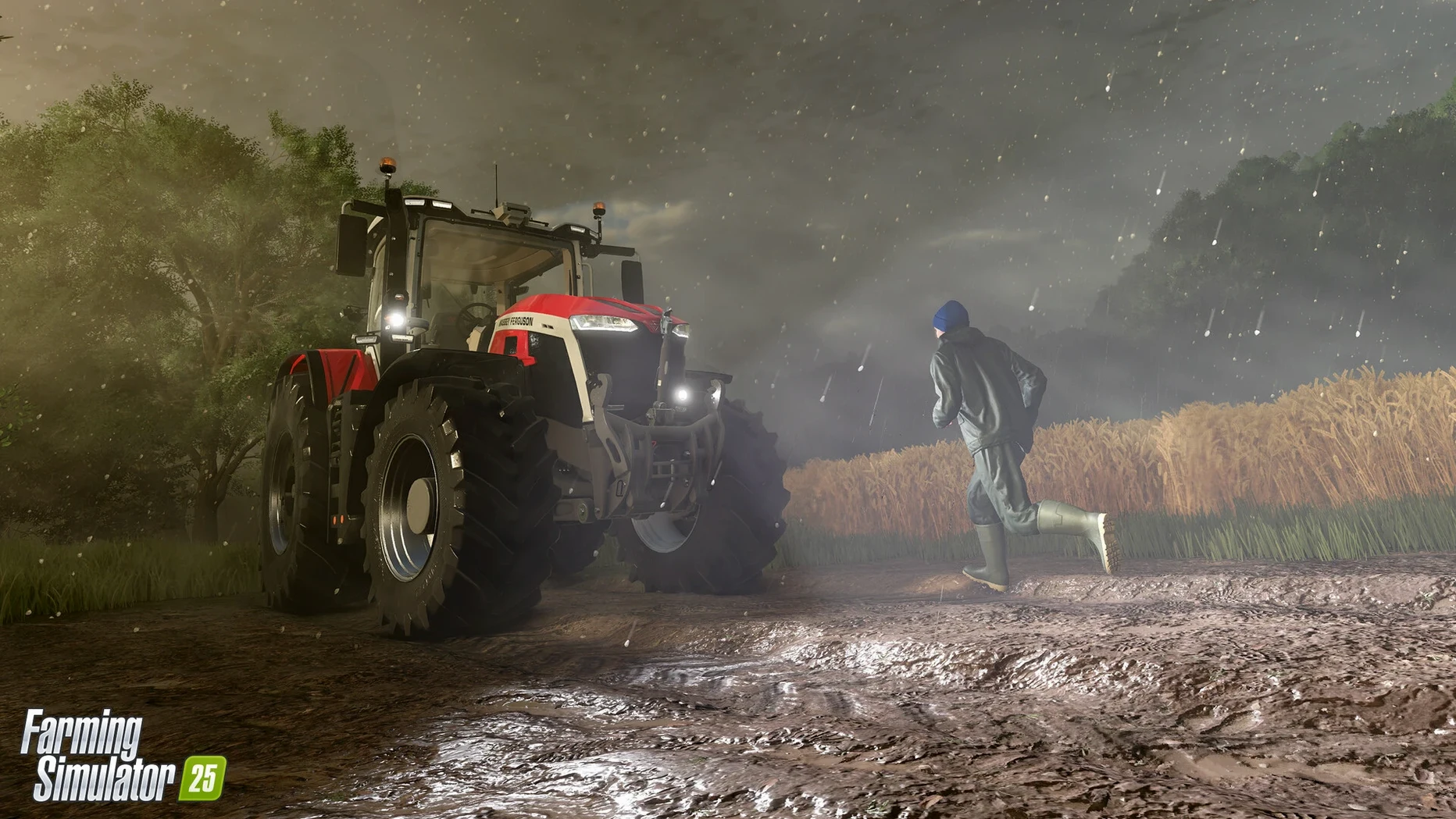
- Players who want their sim to push back: hurricanes flatten crops, tire tracks stay in the mud, and there are water buffalo and baby animals to manage
- Modders and tinkerers — ModHub adds a stream of player-made creations to the base game
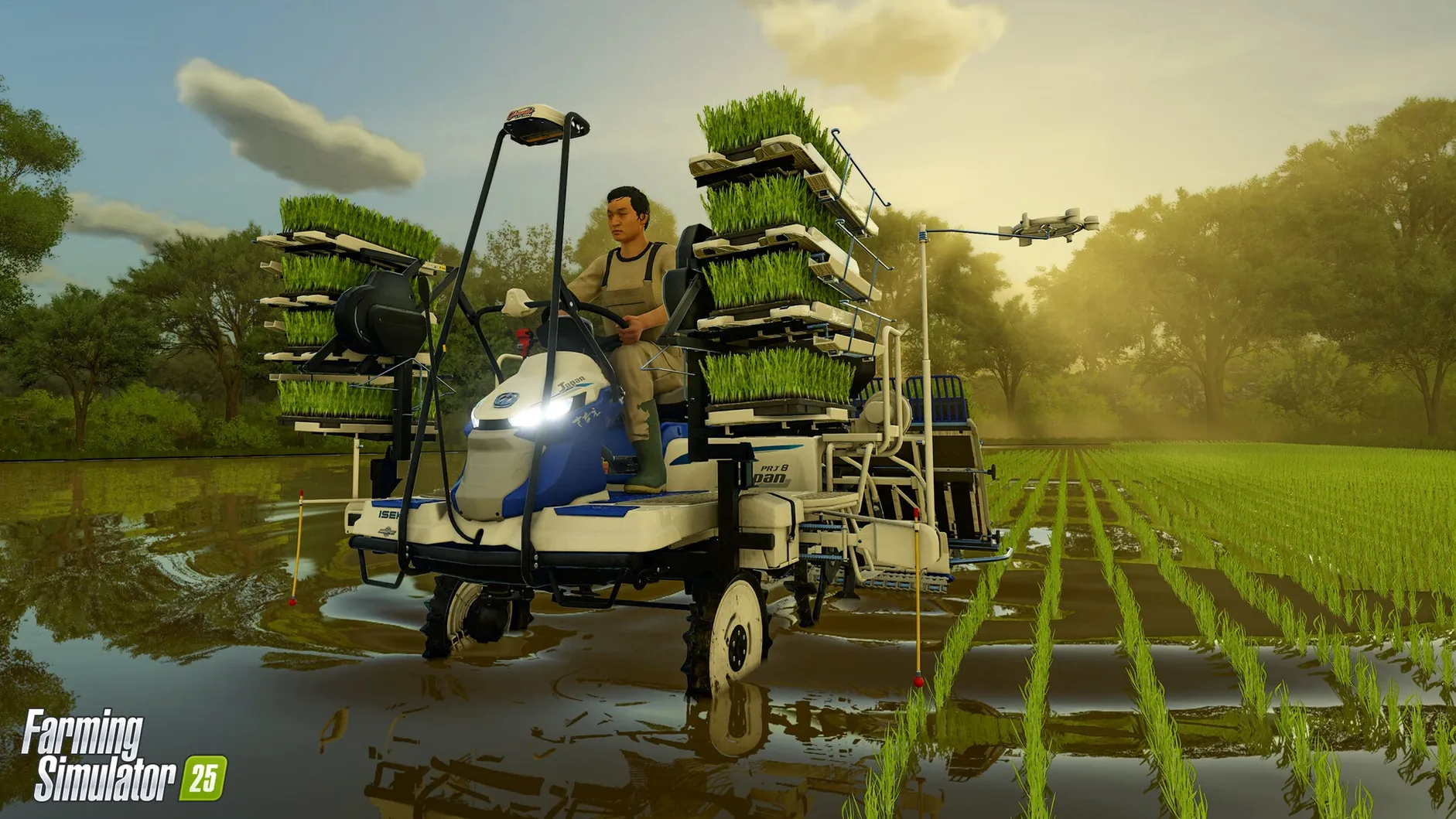
Two rice varieties, two very different water headaches
- This is a logistics sim as much as a driving sim; two kinds of rice mean two very different water-management headaches
- The storage appetite is significant — budget 45 GB before you sow the first seed
- It runs best on Apple Silicon; an M1 or later Mac with 8 GB of RAM sits at the lower end of comfortable
The shelf is no longer empty for Mac farm sims
There was a stretch where the only serious farming sim on macOS was the previous entry in this very series. That has changed. Giants Software now shares shelf space with a few distinct alternatives, and the differences matter more than the feature lists suggest.
Pure Farming 2018 came closest to the same ambition — global maps, multiple crop types, and a single-player campaign that tried to stitch the sandbox into something narrative. But it launched in a year when the engine underneath Farming Simulator 25 was already pulling ahead in deformation detail and mod support, and it hasn't seen the same post-release care. The machine roster is thinner, the weather system more cosmetic. Where Pure Farming feels like a curated tour of farming, Giants' sim feels like a working farm you can break through neglect.
On the lighter end sits Stardew Valley, which is less a competitor than a different genre wearing the same hat. Its farming is a daily checklist wrapped in character relationships. Farming Simulator 25 has no townsfolk to romance and no Community Center to rescue. It replaces that warmth with the hum of a combine at dusk and the slow dread of watching a storm front roll across the hills toward your unharvested peas. The two games scratch opposite itches: one is a life sim with crops, the other is a systems sim that happens to take place on a farm.
Then there is the question of modding. ModHub gives Farming Simulator 25 a tail that the other two do not share. A morning spent searching for a specific Claas forage harvester or a map of a real Polish village often leads to a download that slots into the game without fuss. That kind of community plumbing keeps the simulation feeling alive between official updates. Stardew has its own mod scene, but it lives on PC; the Mac experience of Farming Simulator 25 mod support is first-class from the start.
A builder ignores the rice paddies at dawn
Consider someone who has no interest in grain at all. This player — let's call him a builder who came to the sim through construction games — opens the East Asia map at dawn and ignores the rice paddies entirely. He bought a plot of wooded hillside and a second-hand Ponsse harvester with too many hours on the clock. His goal is not profit but clearance: he wants to flatten a ridge and put up a sawmill and a workshop before the first snowfall.
The morning starts with the harvester stalling on a slope. He learns, over coffee, that tracked machines climb differently on wet ground, and yesterday's rain has turned the logging trail into a slide. He abandons the direct route and cuts a switchback through the stand, felling trees one at a time and bucking them into logs he can actually carry. By noon the ridge is a mess of stumps and slash, but the mill foundation is staked out. He takes a break to check the forecast — clear skies — and spends the afternoon running a forwarder down to the collection point, listening to the engine labour under load. When the light goes orange and the shadows stretch long across the cleared ground, he saves and sits back. No crops were planted, no animals fed, and the sim did not care. It gave him mud, gravity, and a machine that earned its repair bill.
Dragging from the DMG to the first map choice
You launch the game from the Applications folder after dragging it from the DMG, and the first choice is whether to continue an existing save or start fresh. Selecting a new game presents the three maps — North America, Central Europe, East Asia — each with its own light, its own field shapes, its own sense of scale. Central Europe loads quickly on an M1 iMac; the engine warms up with a flyover of your starting plot and a short tutorial prompt you can dismiss if you have done this before.
The first ten minutes tend toward reconnaissance. You walk the field edges — third-person over the shoulder, the sound of boots on stubble — or climb into the starter tractor and drive the perimeter. The HUD shows field state, growth stage, and a mini-map you learn to check obsessively once weather becomes a factor. On the North America map, an early-autumn start might greet you with canola ready to swath and a weather forecast showing a hailstorm arriving in two in-game days. That is the sim's way of handing you a problem before you have even opened the store menu.
The middle hour is the rhythm the game is famous for: attach the header, lower it, watch the harvest stream into the grain tank, unload into a trailer at the field edge, repeat. GPS-assisted steering takes over the straight lines, and your hands relax. The satisfaction is physical — the wheel stays true, the tank fills, the yield map builds. Then the rain hits early. The combine bogs. You spend the next twenty minutes pulling it out with a second tractor, cursing the deformation system that made the ruts in the first place. A session that began as a quiet harvest becomes a salvage operation, and that pivot is where the sim earns its place on the drive. It does not script drama; it just gives the mud enough fidelity that drama emerges.
Workflow: building a production chain from scratch
This task suits a player who has outgrown the single-field loop and wants the farm to feel like a business with moving parts. The goal is to turn raw spinach into bagged salad, sold directly from a farm shop, without taking a loan that cannot be repaid in one season.
Start on the Central Europe map with the starting capital and a medium-sized field close to the main road. Plant spinach — it grows fast and the harvester attachment fits the mid-range tractor you can afford after selling the starter grain setup. While the crop comes in, visit the construction menu and place a small production building near the field gate: a washing and packing station. The placement matters because every trip between field and processor burns fuel and time, and the sim does not forgive a poorly sited building the way a management sim might. The ground deforms under delivery traffic, so plan a gravel path.
Harvest day arrives. The spinach harvester is a specialized machine — lighter than a combine, more delicate — and the crop comes in as bulk pallets rather than loose grain. You haul each pallet to the packing station manually, stacking them outside until the building's input buffer is full. Inside, the station converts raw spinach to packaged bags over time, and the output appears as a new pallet type you can load onto a flatbed truck. Drive the truck to the farm shop you built near the main road, set the selling price, and open for business. NPC traffic stops if the price is right. The first sale is quiet — a car pulls in, a bag vanishes from the inventory, and the ledger ticks upward. By the end of the season the chain runs itself, but you built every link by hand, and the sim tracked every wheel rut between the field and the shop door.
Update 1.23.1.0 arrived on September 9, 2026, with a round of bug fixes and general improvements to the simulation.
- macOS 11.3 or later
- Apple M1 or later (Intel also supported)
- 8 GB RAM
- 45 GB available storage
- 64-bit processor and operating system
Questions from the booth
Yes, hurricanes and hail are among the weather events, and hail can directly damage your fields.
Yes, player-created mods can be downloaded through the in-game ModHub.