
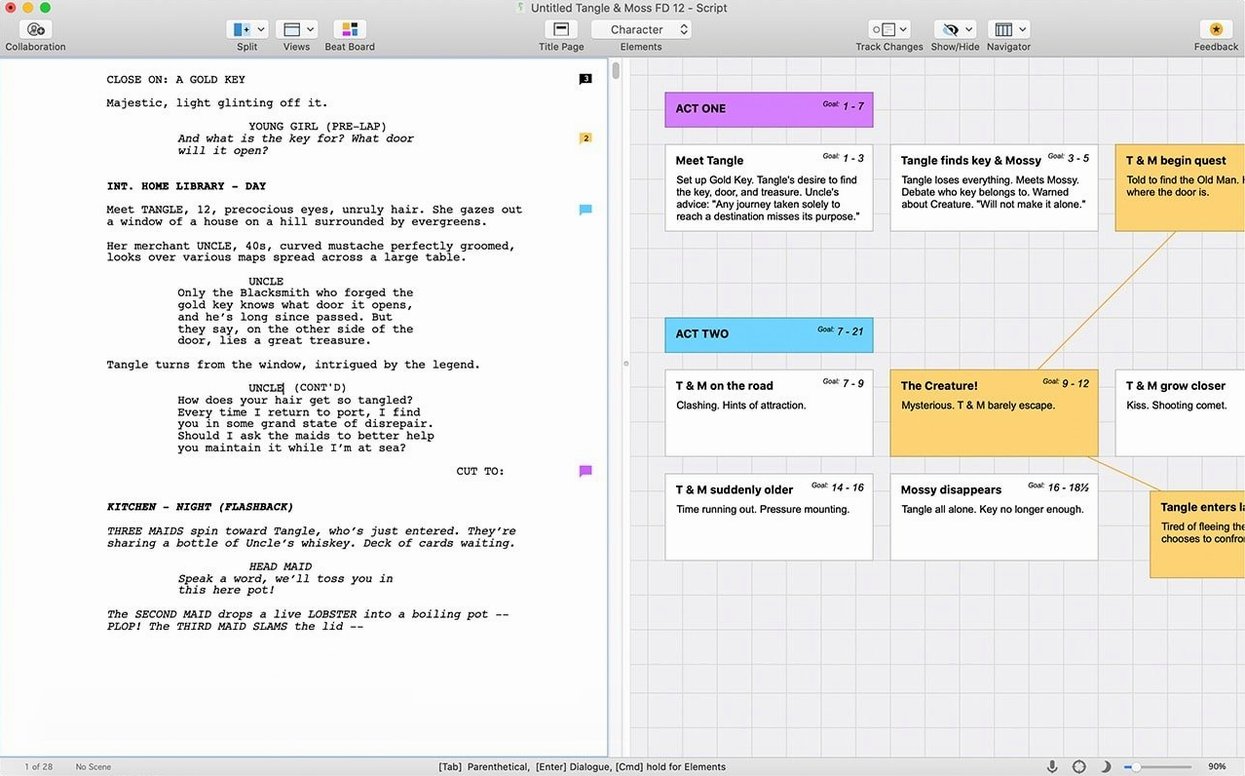
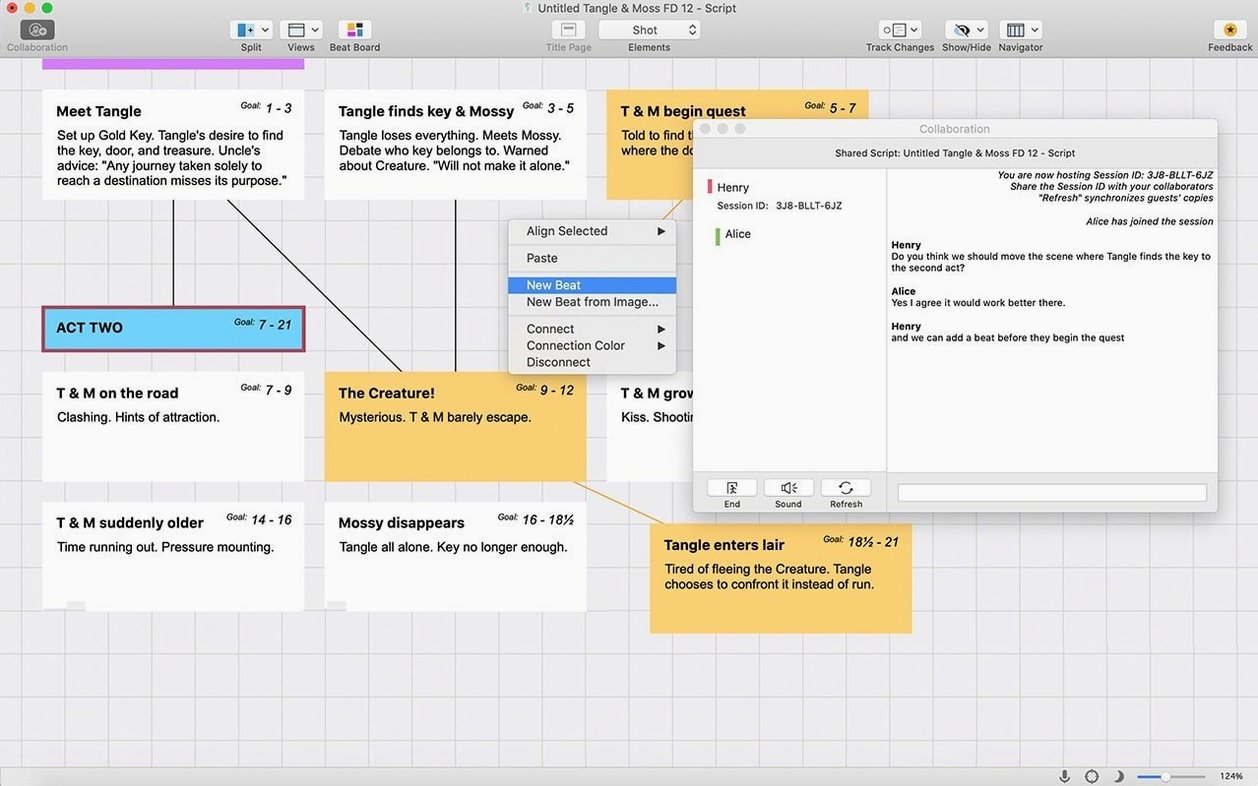
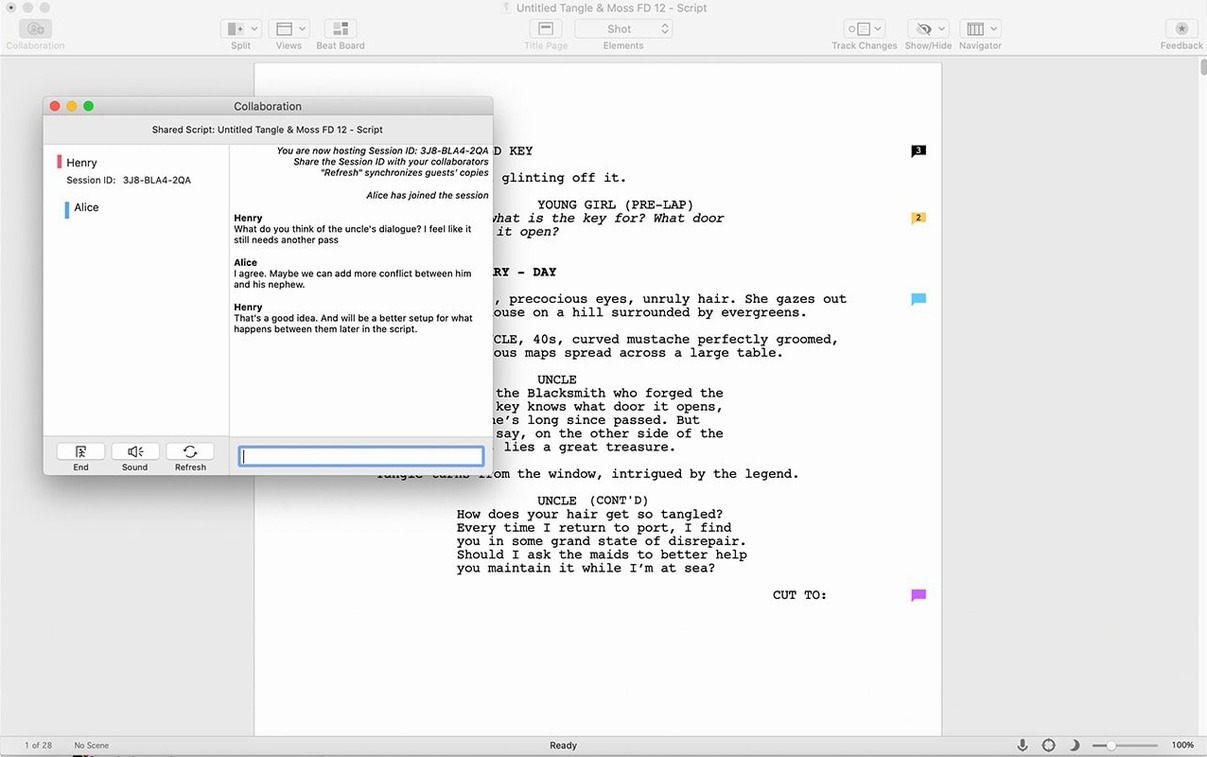
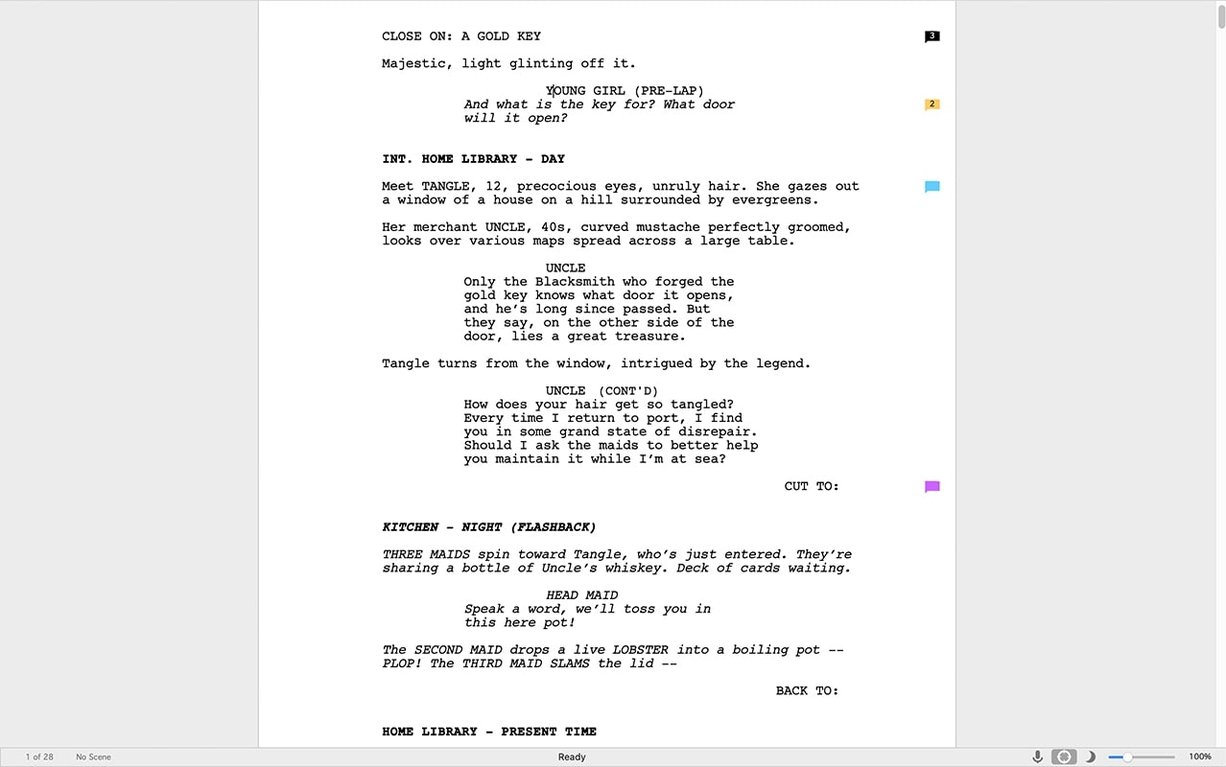
A stage playwright shaping dialogue in a Vancouver café, a television writer's room breaking a season arc, an indie filmmaker drafting her next short — they all reach for the same tool. Final Draft 13 keeps its focus on the page, formatting to industry standards while you work out character and story.
Will Final Draft 13 run on your Mac
Check three things before you download. First, your Mac needs an Intel processor — this version runs on x86 64-bit architecture, so Apple Silicon machines rely on Rosetta 2. Second, your system must be on macOS 12 Monterey or later. Third, an active internet connection is required during the initial sign-in; after that, you write offline without interruption.
Writing your script, step by step
- Create a new screenplay, teleplay, or stage play — the template handles margins, font, and element styles from the first line.
- Write in the standard script editor. Character names, dialogue, and scene headings auto-format as you type, leaving you in the flow of the scene.
- Track story beats with the integrated Scrivener connection, linking your Final Draft pages to research and outline material in a separate project window.
- Revise using revision mode and scene view, then output a locked shooting script or a clean reading draft.
How Final Draft fits into a working writer's setup
Final Draft doesn't demand you abandon the rest of your toolset. Export to Fountain or plain text and you can edit a scene in anything — a minimalist markdown editor when you're sketching beats on the train, or a full Scrivener binder when you need to shuffle fifty index cards before a deadline. The Scrivener integration goes both ways: outline in Scrivener, then send scenes into Final Draft for proper formatting, knowing the link back stays intact if you retitle a scene heading later.
On the Mac side, the app plays well with system-wide text replacements you've already set up in Keyboard preferences — character aliases expand inside scene action lines without fighting the auto-formatting. Drag a Final Draft file onto a Shortcut that renames it with the date and copies a backup to iCloud, and you've got versioning that doesn't rely on remembering to Save As. Spotlight finds your scripts by character name and scene heading, which means a project with sixty location changes stays searchable months later.
Turn on page breaks and teach SmartType your character names
The defaults are sensible, but a few tweaks make the workspace yours. Open Preferences and head to the General tab. Switch on Display page breaks if you think in pages rather than minutes. Under Editing, enable SmartType — it learns character names, locations, and extensions as you type, then suggests them after the first few letters. That alone saves hundreds of keystrokes across a feature-length draft.
Set your backup interval to five minutes under the Save tab instead of the default ten. Screenwriting sessions run long and macOS's autosave sometimes isn't granular enough when you're deep in a rewrite and forget to manually hit save. While you're there, tick Backup on save to a folder of your choice — preferably one synced outside iCloud, since large script bundles can confuse cloud sync during rapid saves.
If you write in a dim room, switch the page colour to Script under Display preferences — off-white with softer contrast, closer to paper under a warm lamp than a glowing white rectangle. Your eyes notice the difference on day three of a binge-writing weekend.
Bypass the Gatekeeper block with one Terminal command
The Gatekeeper hurdle catches newcomers on first launch. After dragging the app into Applications, macOS blocks it with an unidentified-developer warning. The fix is routine: open Terminal, type xattr -cr followed by a space, drag the Final Draft icon into the terminal window to fill the path, then press Enter. Launch it once, sign in, and you're clear — the next cold start opens without ceremony.
A less obvious headache is the disappearing SmartType cache. If character names stop auto-suggesting mid-project, close the script, find the file SmartTypeData.fdt inside your user Library's Final Draft folder, and delete it. The app rebuilds a fresh cache on the next open. No data is lost — it's just a trained suggestion database that occasionally trips over itself after a crash or a forced quit.
Final Draft 13 on Apple Silicon via Rosetta sometimes misreports page counts by a line or two compared to an Intel Mac. It's a layout rounding quirk, not a formatting error. If you're sending a PDF to a producer who'll measure margins with a ruler, export the final draft as a PDF and check the pagination on a second machine or in Preview before you hit send. For everything else — table reads, workshops — the difference is invisible.
Coffee, a click on the recent file list, and forty-two pages fill the screen
You open the app at six in the morning, coffee still too hot to drink. A click on the recent file list brings up the half-finished pilot — forty-two pages, three scenes left to break. The script fills the screen with nothing else around it. You scroll to the last slug line, type INT. WAREHOUSE — NIGHT, hit Return, and Final Draft drops you into an action element without asking. You describe the space in three lines, then name a character. SmartType fills the rest after two keystrokes. You write the scene's first exchange without touching the mouse.
Mid-morning, you realize the warehouse location has shifted — it's now a dockside container yard. You open the Scene Navigator, select all four appearances of the old location, and rename them in one pass. The script updates everywhere. You export a snapshot as a locked draft before the structural change, knowing you can diff the two versions later in revision mode if the producer questions the geography.
After lunch, you connect the Scrivener project where you've been storing research on cargo-ship schedules and port-security protocols. A reference window sits open on the second display — no need to leave the script or juggle apps. You copy a detail about container seals from a research note and work it into a dialogue line. The rest of the afternoon is just you, the characters, and the page incrementing one scene at a time.
Alongside other screenwriting tools
Next to Highland 2, Final Draft feels deliberate. Highland embraces Fountain plain-text minimalism — write in any text editor, preview formatting in a sidebar. It's light, fast, and free of toolbars, but it doesn't carry the production features: no revision-page colours, no locked-pages workflow, no script-note reporting for a writers' room. Highland suits a solo draft. Final Draft suits a draft that's about to become a shooting script with a dozen people annotating it.
Fade In shares Final Draft's professional formatting ambitions and reads and writes Final Draft files without conversion. It's leaner on system resources and native on Apple Silicon, no Rosetta required. Where Final Draft pulls ahead is in the wider ecosystem — script coordinators, story editors, and studios have used Final Draft's revision-tracking and production features for so long that a Fade In file often ends up re-saved as a Final Draft document before it enters a formal pipeline. The choice comes down to whether you need that last five per cent of production-level compatibility or prefer a faster native app that still speaks the language.
WriterDuet lives in the browser first, with offline desktop versions as a secondary offering. Real-time collaboration is its centre — two writers typing into the same scene simultaneously, changes appearing on each other's screens. Final Draft's collaboration can work across a local network or through its own sharing, but it wasn't built from the ground up for simultaneous online editing the way WriterDuet was. If your writing partner lives three time zones away and you need to see each other's cursor move, WriterDuet handles that natively. Final Draft answers with thirty years of studio trust and a feature set that assumes the script will eventually be locked, paginated, and handed to a first assistant director who expects the formatting to be unquestionably correct.
It's a quiet, uncluttered workspace that speaks fluent script — no clutter between you and the next line of dialogue.
Version 13.4.0 tidies up a handful of minor bugs, keeping the writing surface smooth.
- macOS 12 Monterey or later
- Intel processor (x86 64-bit)
- Active internet connection for initial sign-in