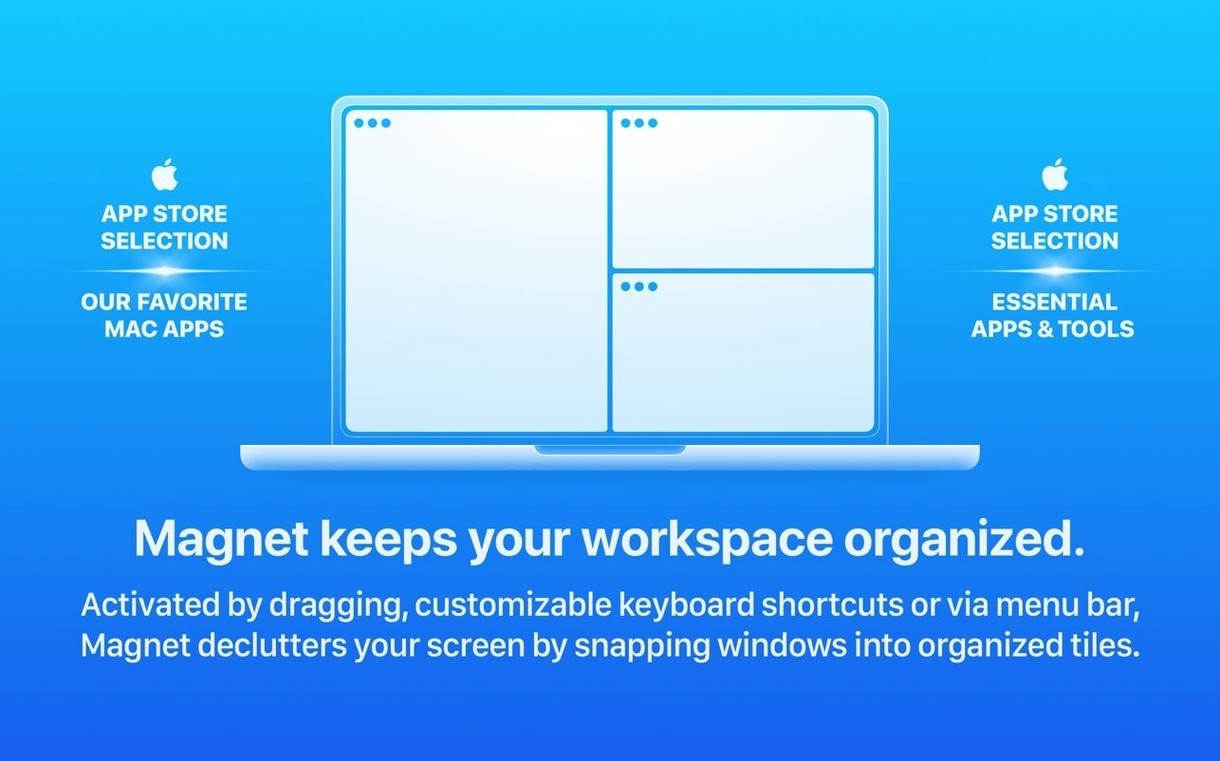
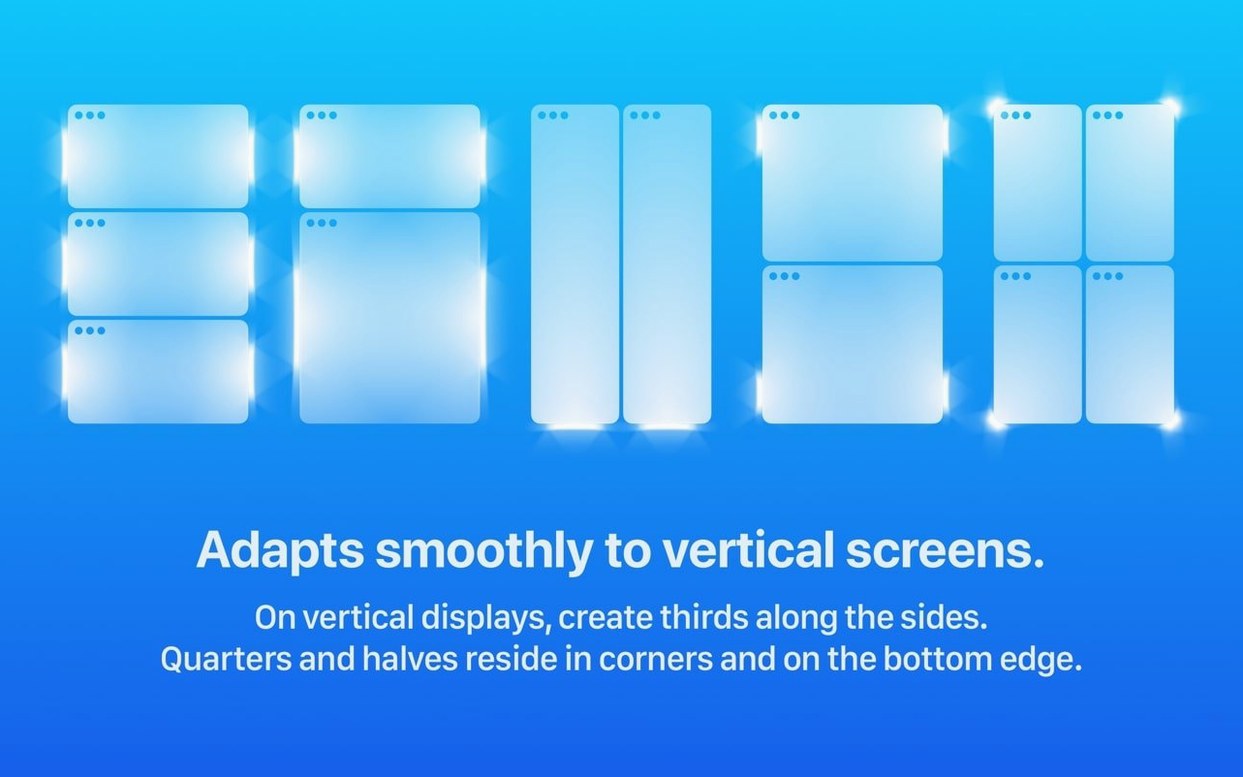
Three script pages, a rough cut, and the sound mix open all at once — the screen turns into a collage of overlapping panels. Before reaching for a magnet download mac, you drag the timeline to the left edge and watch it fill exactly half the display. The mixer snaps to the right.
Window manager — extends macOS so windows snap into halves, thirds, and quarters by dragging to screen edges or tapping keyboard shortcuts.
Multi-display — arranges windows across up to six external screens, keeping the same shortcut logic on each.
Localization — the interface speaks fourteen languages, including Russian, Japanese, and Czech, so the tool fits into a multilingual post-production room without friction.
When the picture lock drags late into the night, a single keystroke pulls the script back from the left half and slides the colour grade into its place — no hunt for title bars, no mouse gymnastics.
Stage Manager fears are unfounded
One hesitation that comes up in editing rooms is whether Magnet fights with Stage Manager. It does not. Stage Manager can be on or off — Magnet works either way, though I keep Stage Manager off because quarter-snapping and the left-side app strip feel like two organising brains arguing over the same desk. Another common worry is permissions. On first launch, macOS asks for accessibility access in System Settings; that is not a bug, it is how any window manager reads window positions. Grant it once and the menu bar icon appears, quiet and unassuming. People also ask if it slows down when twelve windows are flying around. In my experience, it does not. Window snapping is handled by the same system frameworks that move windows when you drag them, so the overhead is negligible.
If you are searching for a Magnet Mac crack because you want to try before committing, the menu bar icon gives you a quick toggle to pause Magnet entirely. Flip it off and windows behave like stock macOS again — useful when you are handing the machine to someone else or troubleshooting an obscure app that draws its own window chrome.
how it actually feels day to day
On an M1 MacBook Pro with 16 GB of RAM, Magnet sits at around 35 MB of memory and barely registers on the CPU meter. It launches at login by default and I never notice it until I need it — exactly what a utility should do. Stability has been uneventful across two major macOS releases. I have not seen it crash or corrupt window states, and I push it through long editing sessions where Resolve and Logic are both fighting for screen real estate on two displays.
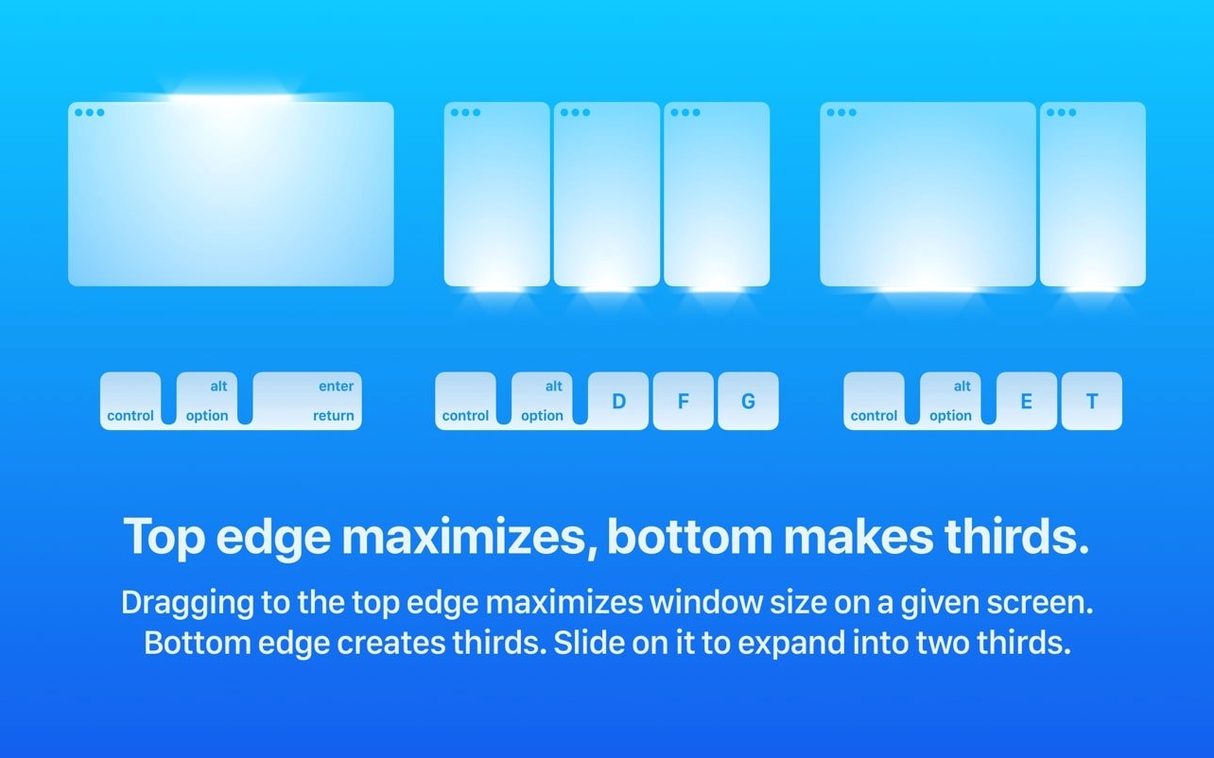
What impresses me more than the numbers is the absence of lag. When you drag a window to the top edge to maximize, the translucent preview outline appears in a frame or two. There is no rubber-band wobble, no animation stutter on a 60 Hz display. Even with a 4K timeline monitor and the internal Retina panel running simultaneously, the snap response stays crisp. Battery impact is a non-story — the process sleeps when windows are idle, and waking it with a shortcut feels instant.
Exclude your color picker from resizing
The right-click menu on the Magnet icon is worth exploring. You can set windows to ignore specific apps entirely — I exclude the color picker utility and a tiny audio meter that should never resize. There is also a "snap back" behaviour: if you drag a window to a quarter slot and then drag it away, releasing it without hitting another zone restores its previous size. It feels like an undo for window placement, and once you internalise it, you stop worrying about committing to a layout.
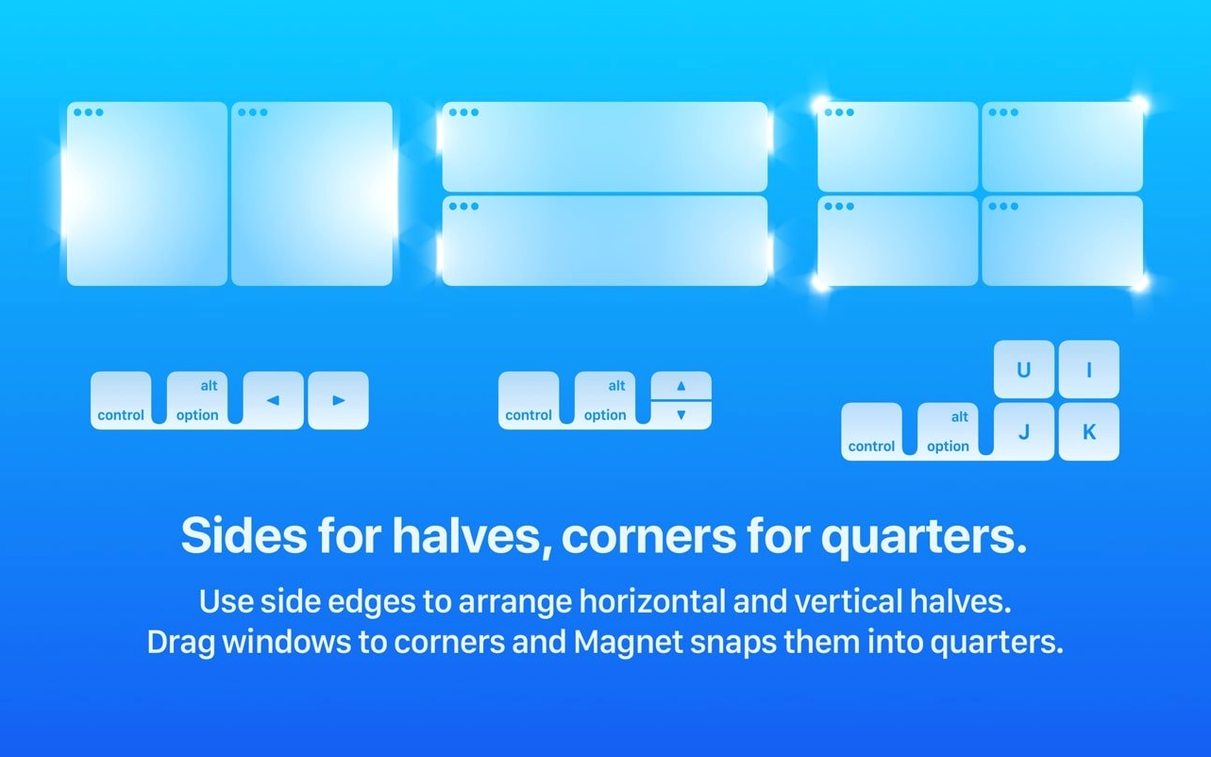
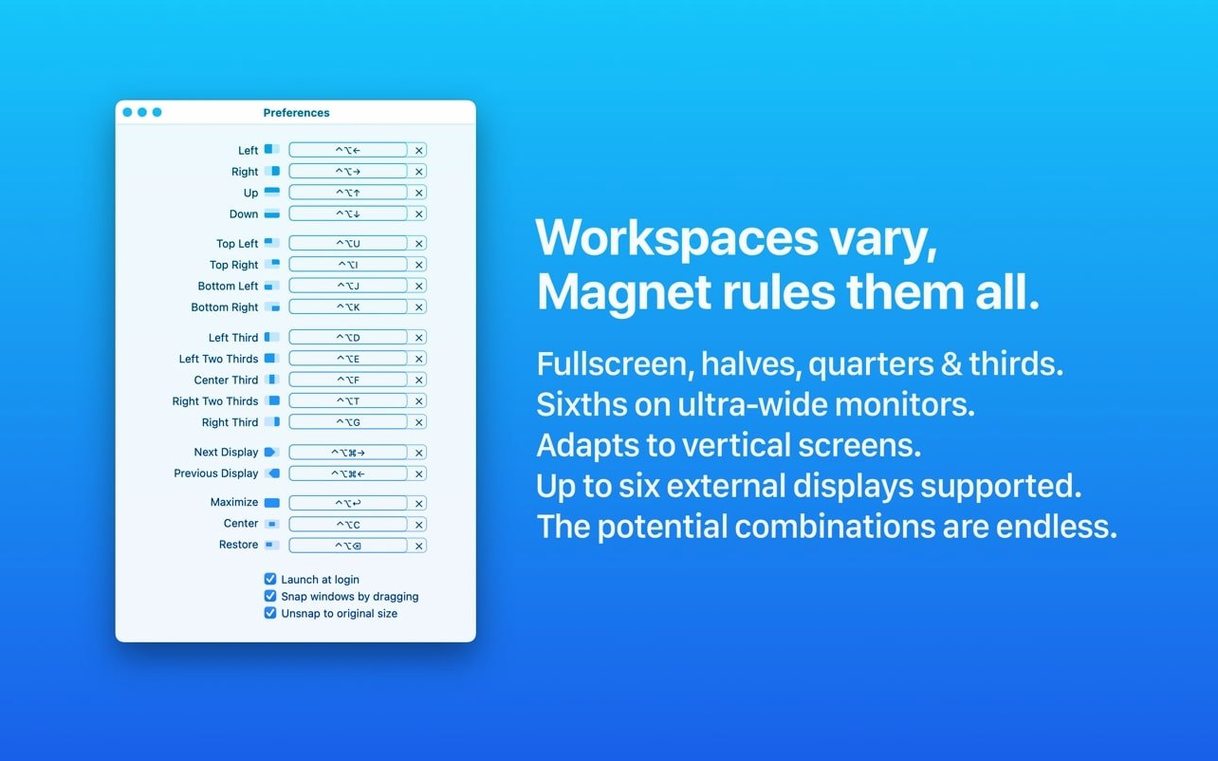
Keyboard shortcuts are fully customisable, and the default set uses the same modifier logic across layouts. Control-Option-Left for the left half, Control-Option-Right for the right half — add Shift to those and you get the outer thirds instead. The consistency makes muscle memory stick faster than you would expect. One shortcut I missed for months: Control-Option-Enter toggles a window between its last two sizes, which is brilliant for comparing a full-screen playback against a half-screen timeline without re-snapping.
If you came here from a Magnet torrent Mac search, you will find the app weighs under 10 MB installed. That is smaller than most sample packs, and it updates quietly through the same mechanism as any other app on your system. No background daemons, no phone-home chatter I can detect through Little Snitch.
Layers neatly above Spaces and Mission Control
Magnet does not try to replace macOS Spaces or Mission Control — it layers on top. I run four Spaces: one for writing and research, one for the edit suite, one for sound design, and a clean desktop for screen sharing. Magnet shortcuts work within each Space independently, so half-snapping in the edit Space never disturbs the arrangement in the sound Space. Swiping between Spaces with three fingers on the trackpad keeps each workspace exactly how I left it.
It also respects third-party window behaviour. DaVinci Resolve panels that float outside the main window snap just like Finder windows. The same goes for Logic's mixer and piano roll. The only time I toggle Magnet off is when using an app that draws a custom title bar with its own snapping — a rare edge case, and the menu bar toggle handles it in a click. For anyone exploring a magnet mac free workflow alongside other utilities like BetterTouchTool or Keyboard Maestro, Magnet coexists peacefully because it hooks into the same accessibility API without overriding other triggers.
Open the morning with a script snapped left
I open the morning with a Finder window and my script in Highland 2. Control-Option-Left snaps the script to the left half. Control-Option-Right sends Finder to the right. I pull footage from the drive into the project folder, then close Finder and snap DaVinci Resolve into the right slot. The layout is set in two keystrokes.
Later, the sound designer sends a revised mix. I drag Logic from the dock to the bottom-left corner — it fills the lower-left quarter. The video playback window goes top-right, the mix notes sit top-left in Preview, and the Finder window with stems drops into the lower-right quarter. Four windows, no overlap, arranged in under ten seconds by dragging each to its corner and feeling the haptic feedback from the trackpad.
When a note comes in asking for a quick export, Control-Option-M maximizes the export dialogue so I can see every codec setting without scrolling. Export starts; I drag the progress window to the right third with Control-Shift-Option-Right so it is visible but not in the way. The whole rhythm becomes tactile — the screen feels less like a container and more like an instrument.
- macOS 13 or later
- Apple Silicon and Intel 64-bit
Questions from the booth
Yes, version 3.0.7 runs natively on ARM and x86 (64-bit) architectures and requires macOS 13 or later.