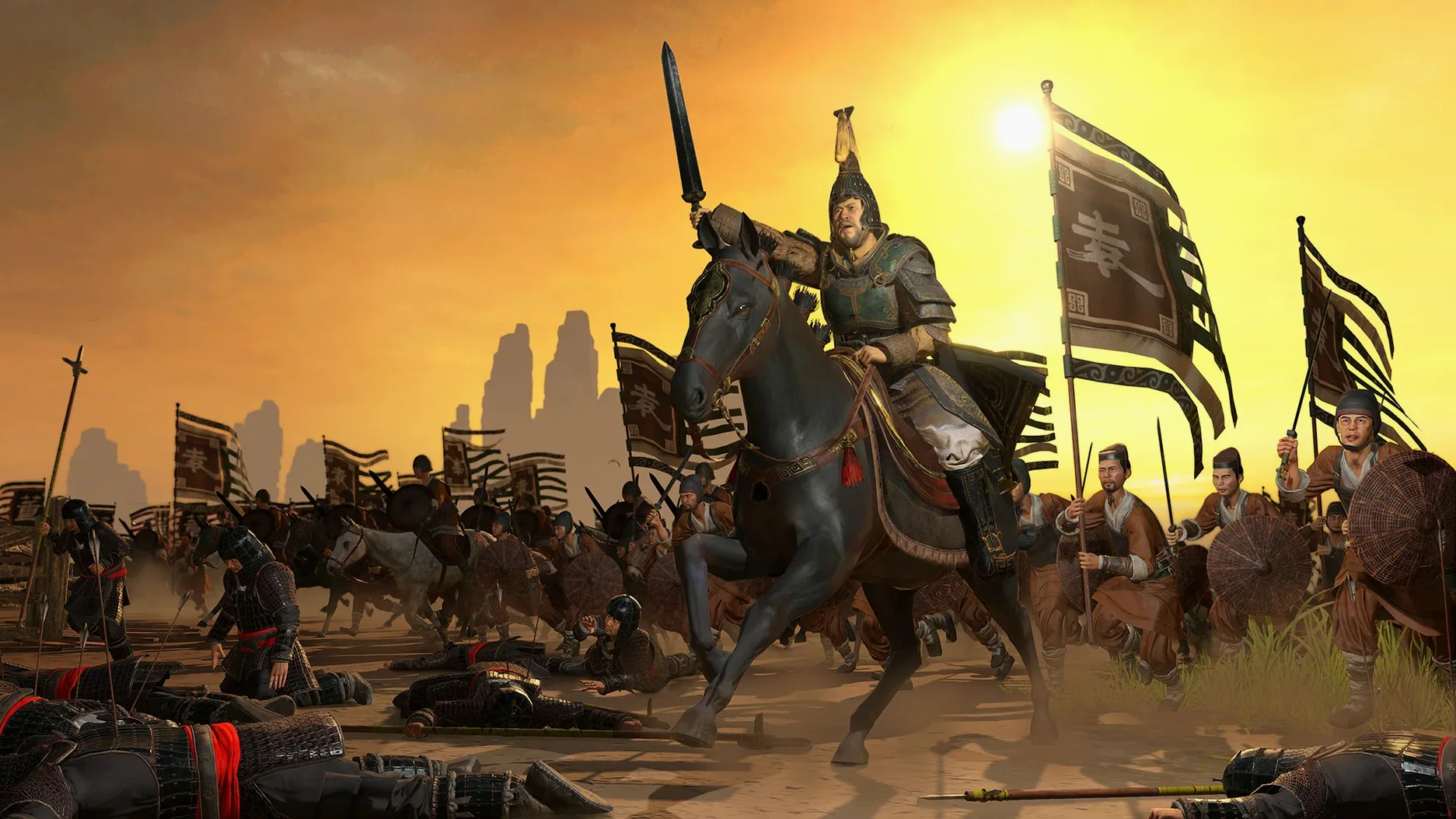
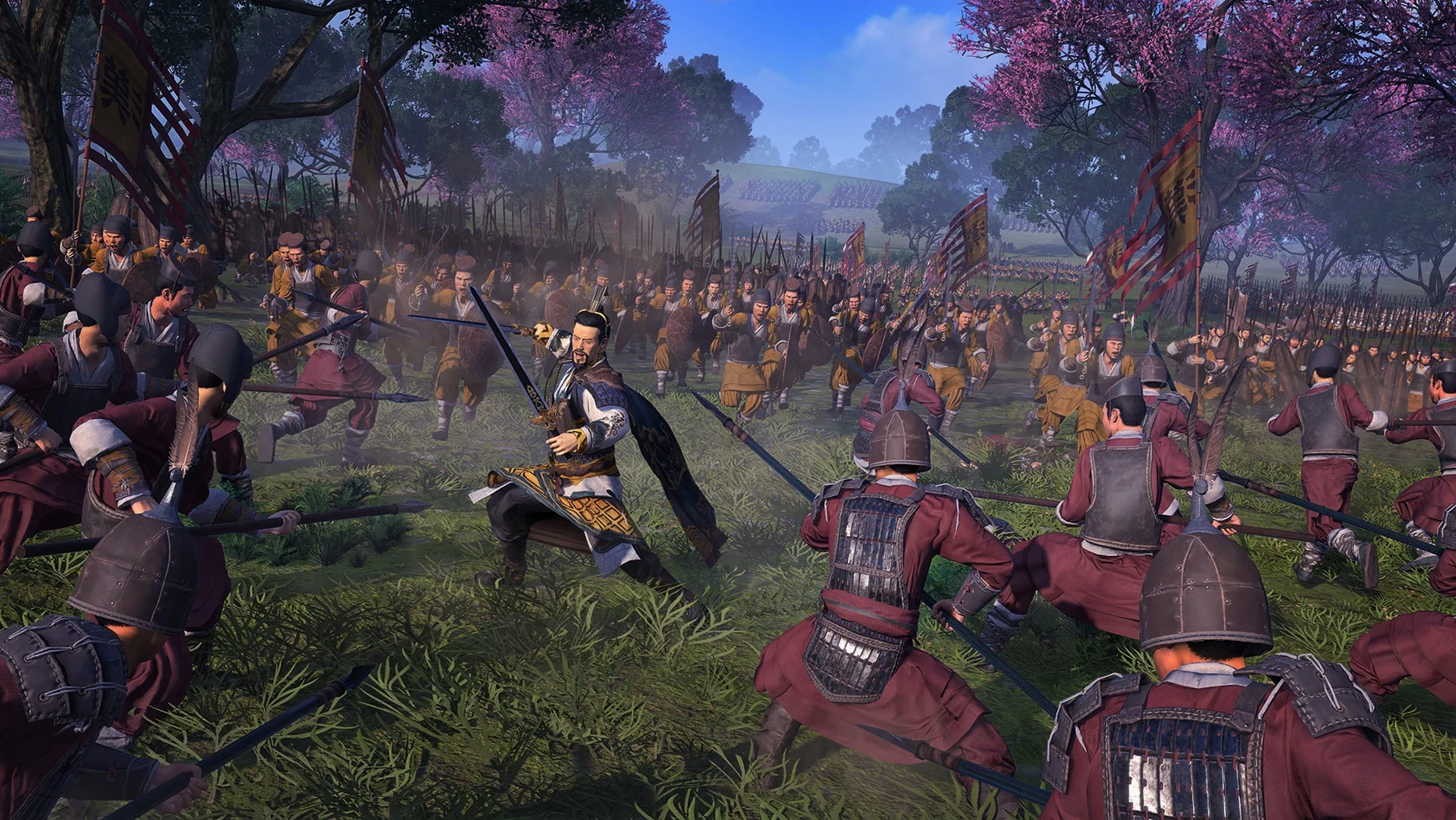
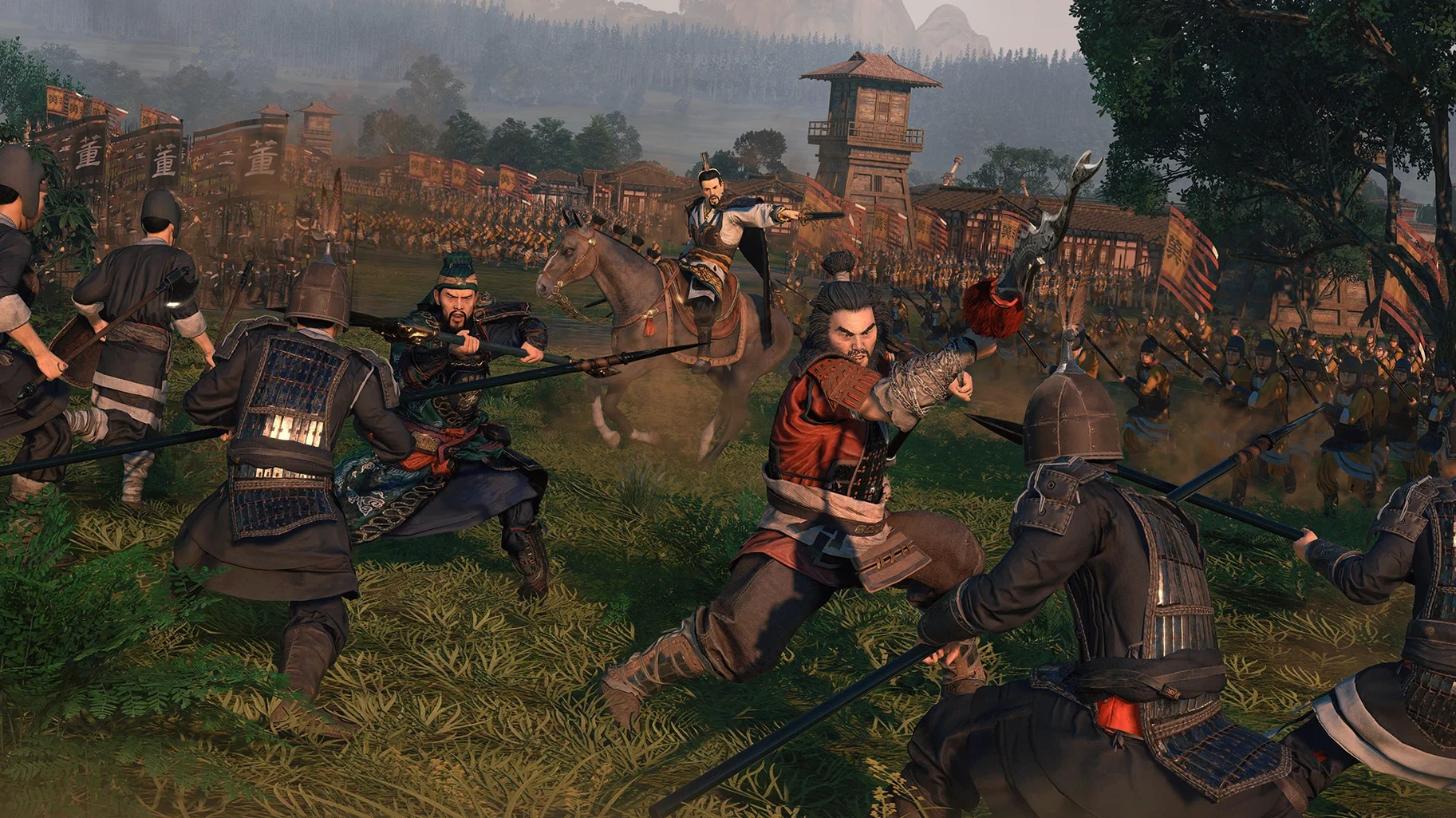
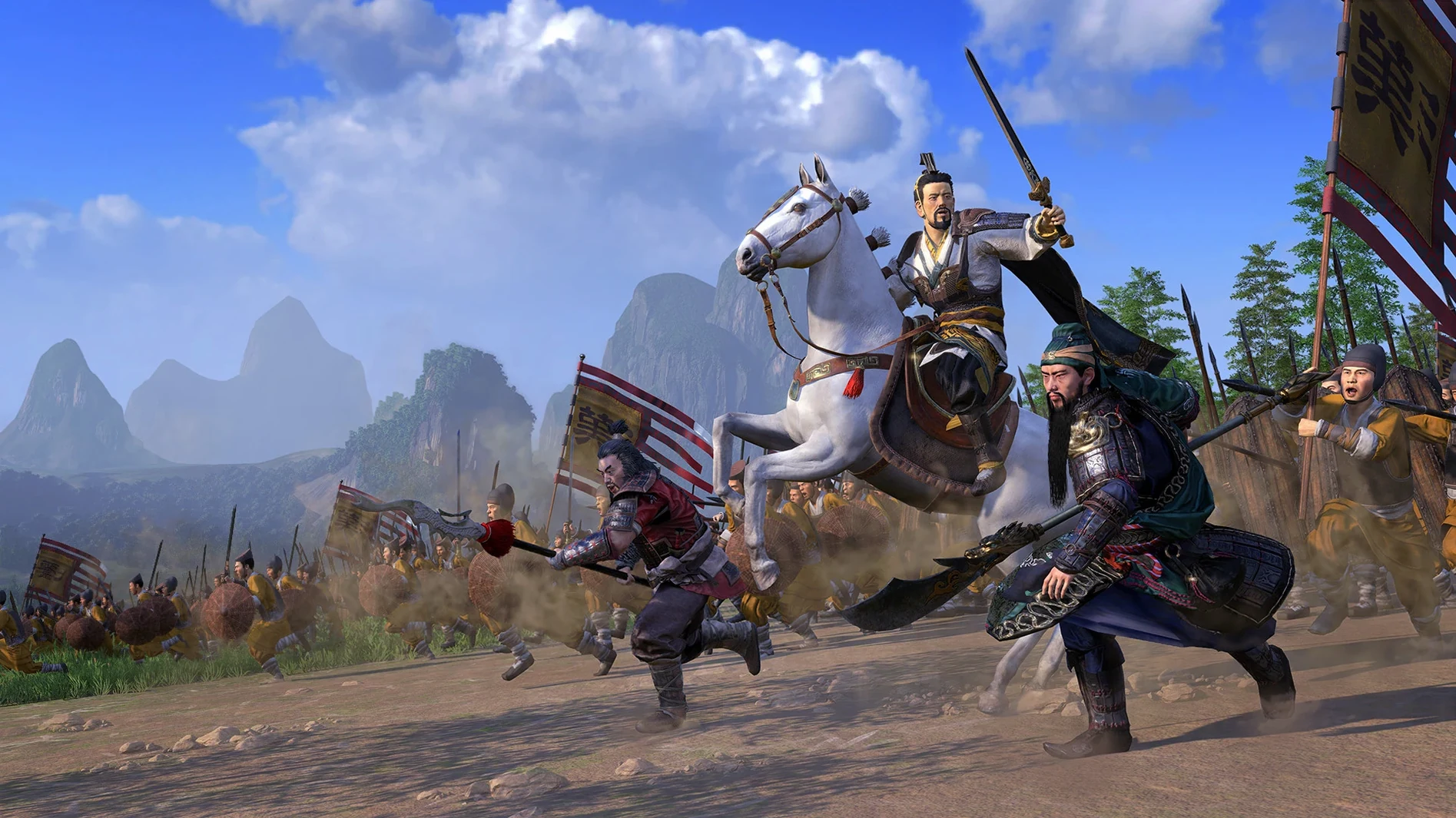
Guanxi. It's the social fabric that binds every decision in Total War: THREE KINGDOMS, translating the personal debts, loyalties and grudges of ancient China into a cascading series of strategic consequences. Playing as one of twelve warlords, you don't just command armies — you navigate a web of relationships that can define a campaign as sharply as any battlefield victory.
A stage for shifting loyalties and character drama
- Players who treat a game like a long-form historical drama, where character dynamics and shifting alliances matter as much as territory.
- Strategists who enjoy alternating between a sweeping turn-based campaign map and zooming into real-time tactical battles that can swing on a single cavalry charge.
- Anyone drawn to the Three Kingdoms period and the physical scale of its setting, from the Great Wall in the north to the Yangtze River cutting through the heart of the map.
Dual rhythms and a 46 GB footprint
- The 46 GB install and the dual-layer of turn-based planning and real-time execution demand both drive space and a willingness to live in two very different rhythms of play.
- Voice language support spans Russian, English, German, Simplified Chinese, Korean and French, but the emotional weight of guanxi hinges on character drama — if faction politicking feels like menu management, the system loses its spark.
A session, moment by moment
I launch the game on a quiet afternoon, the kind where the campaign map’s amber light and the low rustle of wind through pines feel like the right tempo. Cao Cao’s faction is a few turns deep. The map, painted in the dry golds and muted greens of a fractured empire, shows a crescent of territory I’ve managed to hold through two careful marriages and one very public betrayal of a neighbour who trusted me too much.
The turn begins with notifications stacked like dispatches. A spy I planted three seasons ago in Yuan Shao’s court has finally reported back — troop movements near the Yellow River, a general low on satisfaction. Guanxi at work. I spend five minutes reshuffling court positions, moving a disgruntled commander into a role that strokes his ego while keeping him far from the front line. His loyalty icon ticks from amber to green.
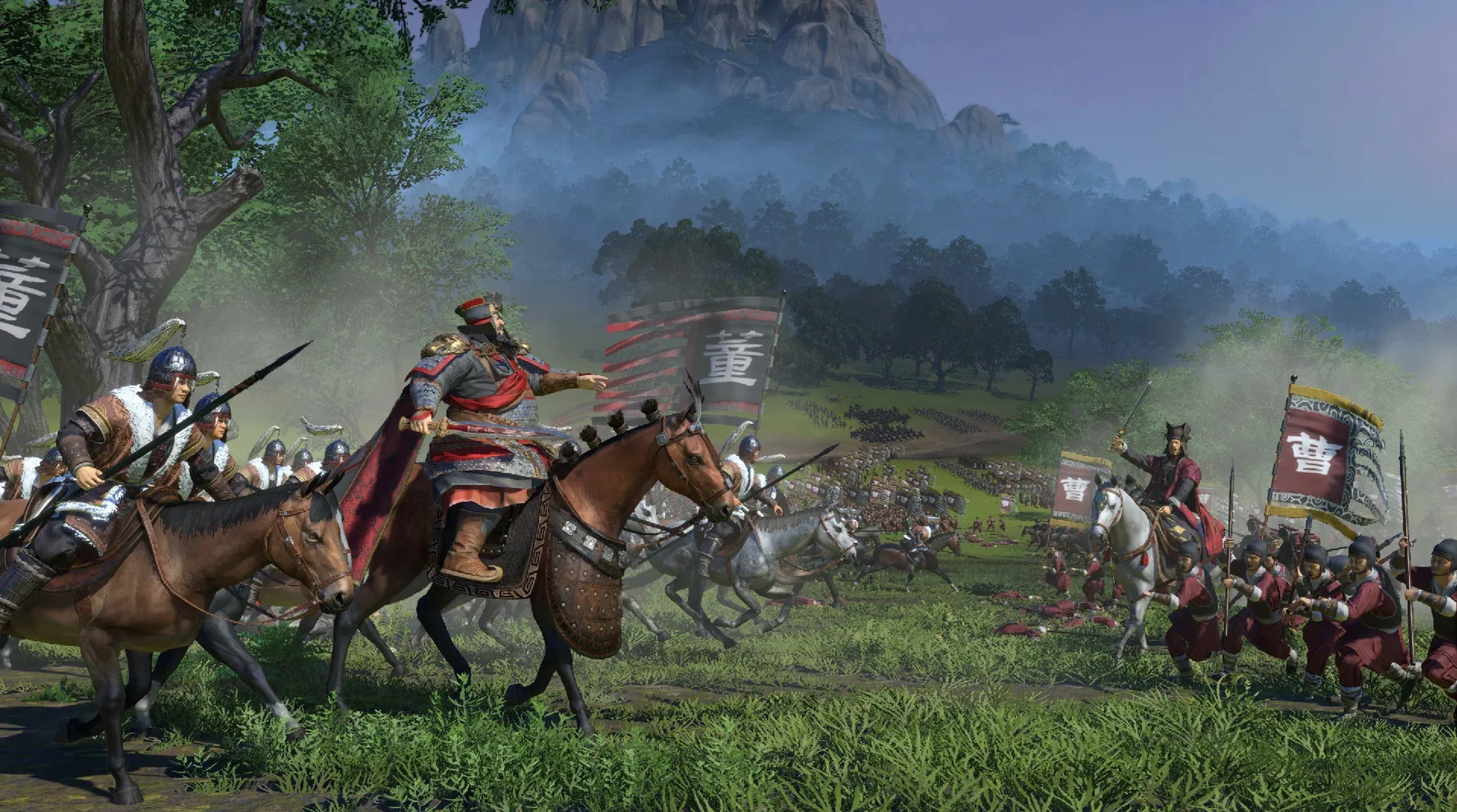
Then the battle. A rebel army has drifted dangerously close to a minor settlement, and I intercept with a half-stack led by Xiahou Dun. The camera drops from the parchment map into a river valley at dawn. Mist clings to the rice paddies. I arrange spearmen in a crescent behind a shallow ford, hidden cavalry in a copse to the left. The real-time fight lasts twelve minutes — a slow crush of infantry meeting at the waterline, a charge from the trees that folds their flank inward, and a duel between Xiahou Dun and the rebel captain that draws a small circle of silence around them. When the rout triggers, the enemy dissolves into the fog. The map returns. I annex the settlement. One more grain of sand on the scale.
Dial unit size before you build your first army
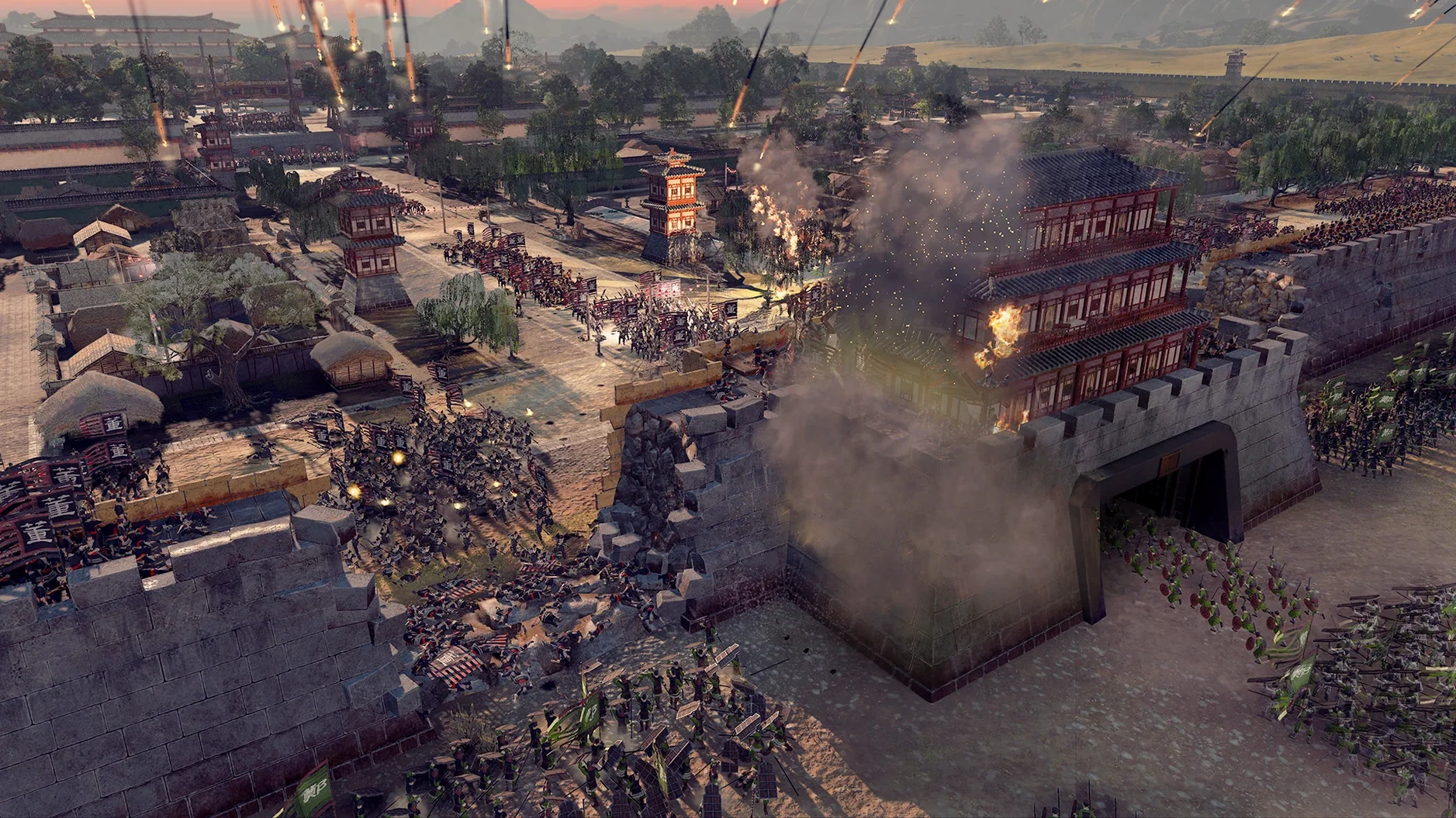
The default settings lean toward spectacle, and on Apple Silicon the game holds up beautifully, but a few adjustments sharpen both the visual clarity and the tactical rhythm. First, unit size — the slider lives in the graphics options. Larger units make battles more cinematic and drag out engagements long enough for flanking manoeuvres to matter; smaller units keep the frame rate smoother on integrated graphics and make micro-management less frantic. I settled on “large” for the M1 Air, which strikes a workable balance.
Battle camera restrictions are on by default, limiting how far you can pull back. Turn them off. The extra height reveals terrain contours you need for ambushes. Under the game settings tab, battle realism mode locks the camera to your general’s viewpoint and hides enemy units beyond line of sight — purists swear by it, but it transforms every engagement into a tense, partially blind scramble. Worth trying for a session or two, especially if the standard battles start to feel like a solved puzzle.
Lastly, advisor frequency can be dialled down from “high” to “low” without losing critical warnings. The voice actress is excellent, but the advice repeats. A quieter campaign map lets the guanxi panel and the end-turn summary do the storytelling instead.
Alongside other Mac strategy epics
Set it beside Civilization VI and the differences are immediate. Civ abstracts diplomacy into a tidy exchange of favours and grievances; THREE KINGDOMS buries it inside individual personalities who remember a slight from thirty turns ago. The map in Civ is a blank slate you paint with your own history, while here the geography already carries the weight of the Han dynasty’s collapse. Civ rewards patience and long arcs. THREE KINGDOMS rewards patience, then punishes it with a sudden duel that kills your best general.
Crusader Kings III feels like the closest cousin on Mac — both treat characters as vessels for drama and both let a grudge reshape an empire. But CK3 pushes into the intimate scale of family lineage and personal schemes, while THREE KINGDOMS anchors the same impulses to the grand sweep of a military campaign. The real-time battles are the dividing line: CK3 leaves warfare to dice rolls and map arrows, whereas here you spend as much time positioning archers on a hillside as you do negotiating a coalition. For players who want the character web from Crusader Kings but need the tactile weight of Total War combat, no other Mac game bridges the gap quite the same way. A cracked copy of total war three kingdoms for mac won’t change that calculus — the systems are what they are, and they’re dense enough to hold attention for hundreds of hours regardless of how the app lands on your drive.
Against a fantasy counterpart like Total War: WARHAMMER II, the comparison is more about texture than scale. WARHAMMER II runs on spectacle and asymmetry — dragons, magic, faction mechanics that feel like entirely different games. THREE KINGDOMS replaces that with coherence. Every warlord operates inside the same political language, and the tension comes from how differently they speak it. For a Mac user who wants a grounded historical canvas where a single character’s ambition can ripple outward across the map, it still stands alone in the catalogue.
- macOS 10.14.4 or later
- Apple Silicon and Intel Macs
- 46 GB of free storage