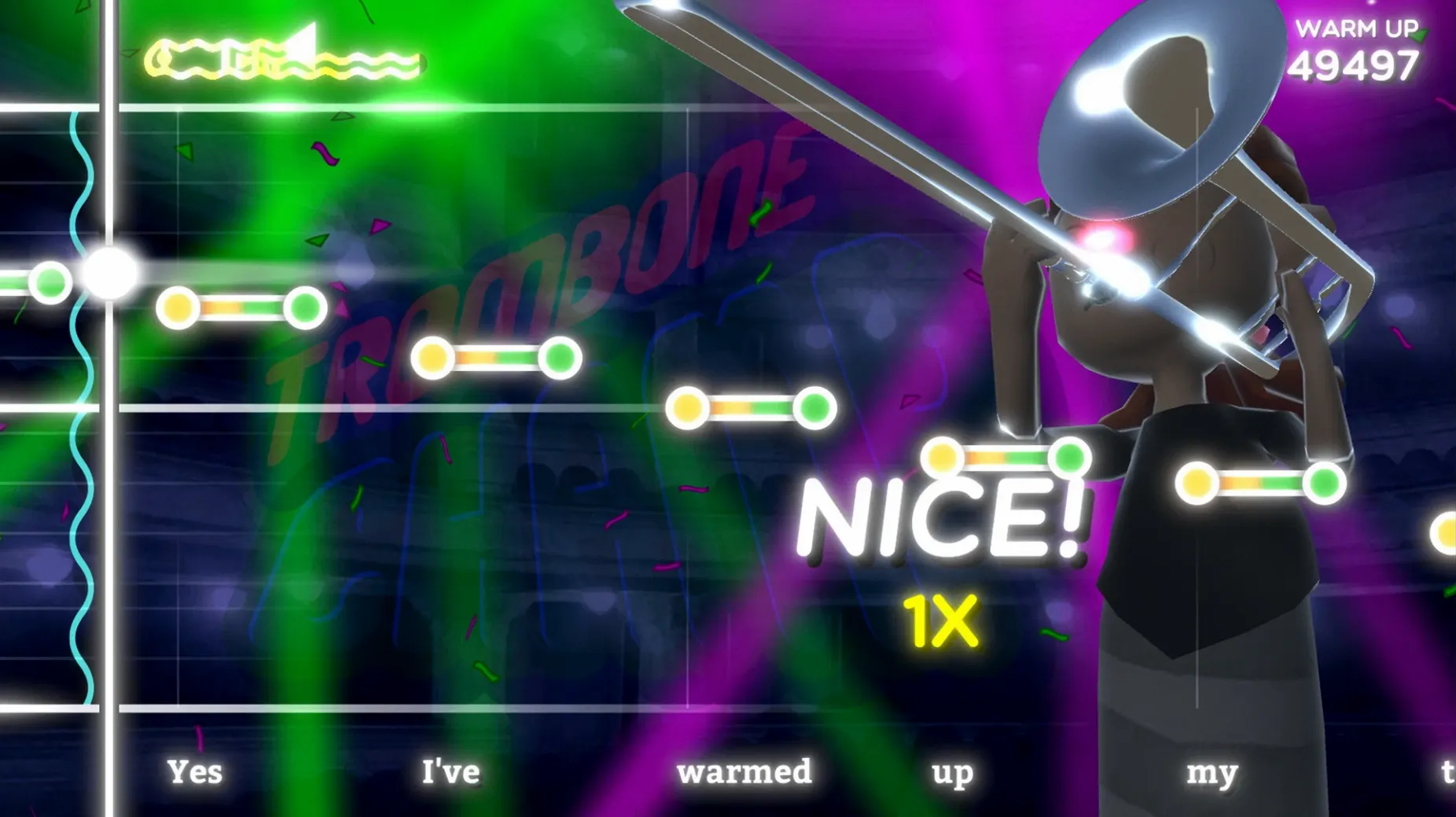
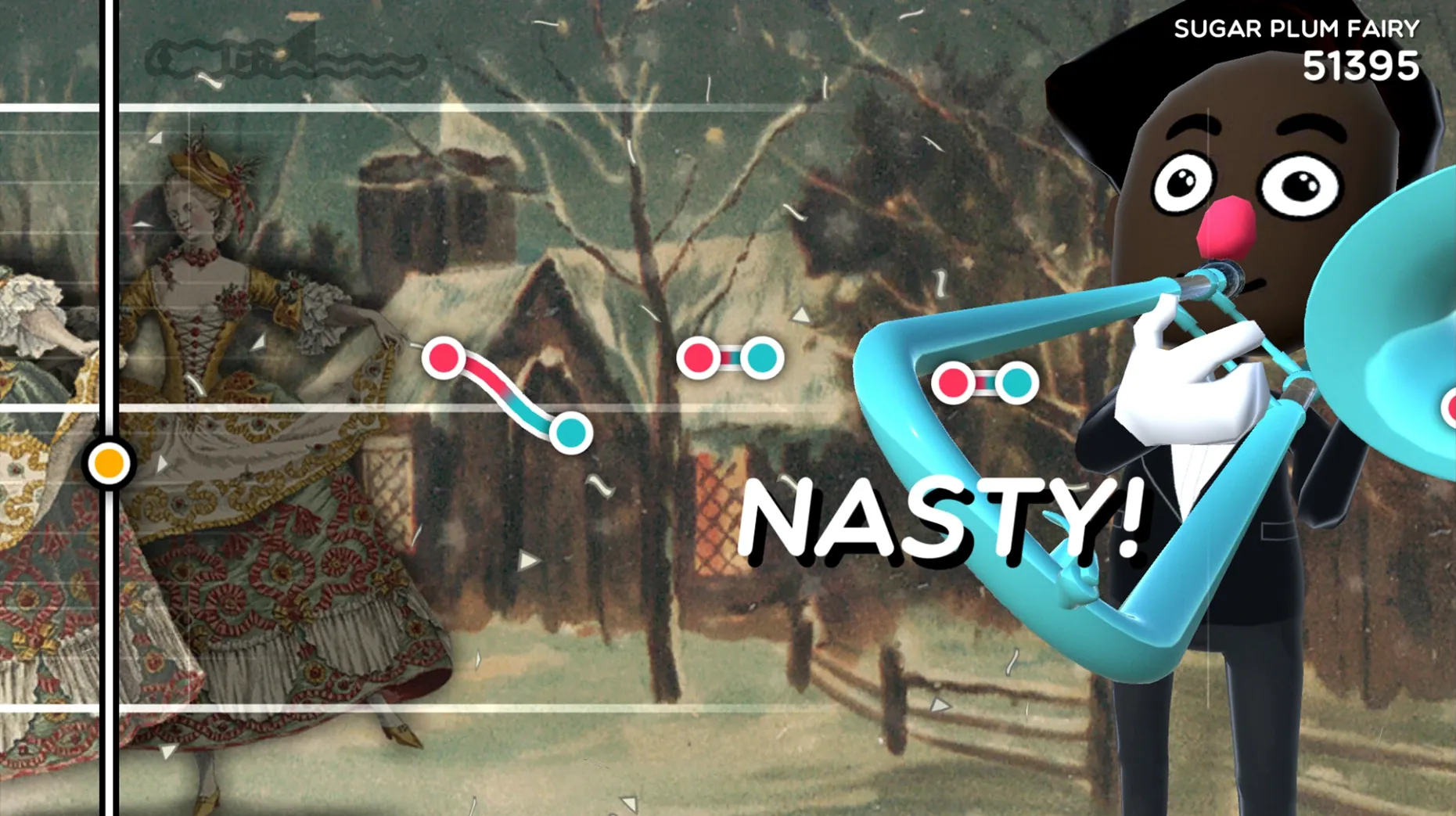
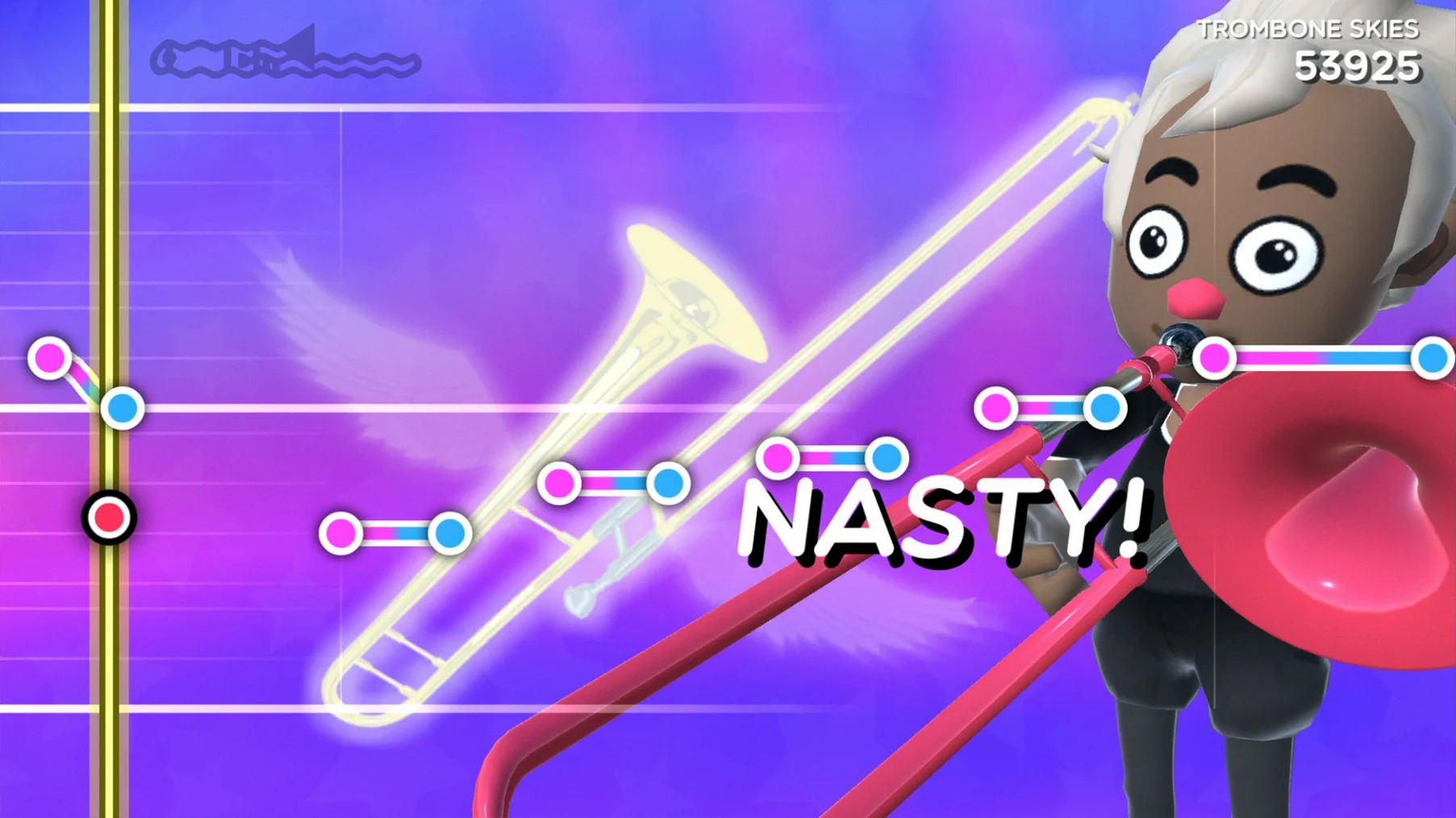
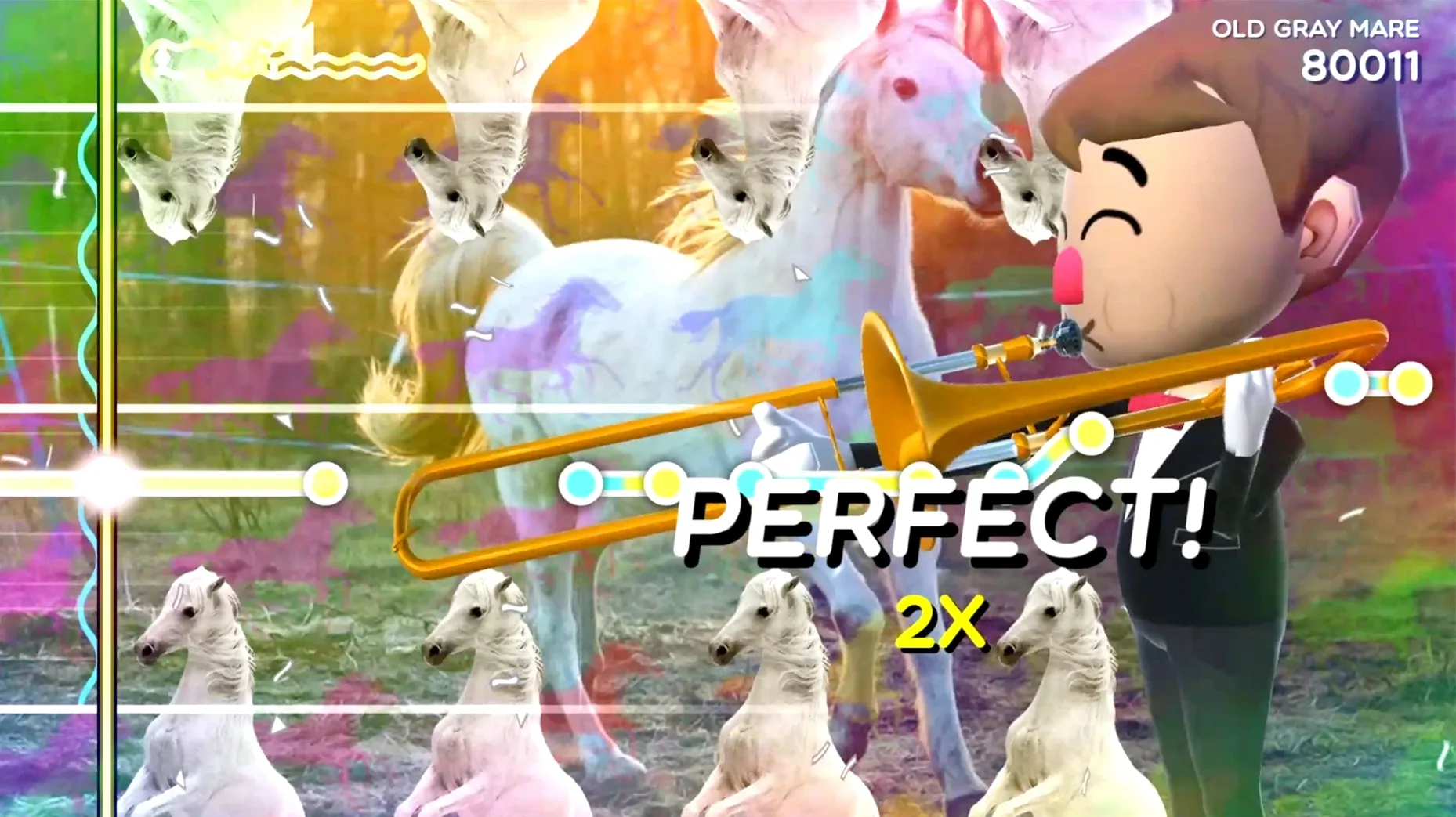
…Freedom, a track that arrives early in the setlist, is where the game’s peculiar tone really announces itself. You’re not tapping along to a beat so much as wrestling with pitch, sliding between notes with a key press that makes the trombone warble and honk in ways that feel less like a performance and more like physical comedy. Holy Wow Studios has built something that sits between a rhythm game and a wind instrument simulator, and the Mac version arrives with everything intact.
- More than 60 playable tracks spanning classical, folk, jazz, and original compositions, all interpreted through the game's deliberately unwieldy trombone mechanics.
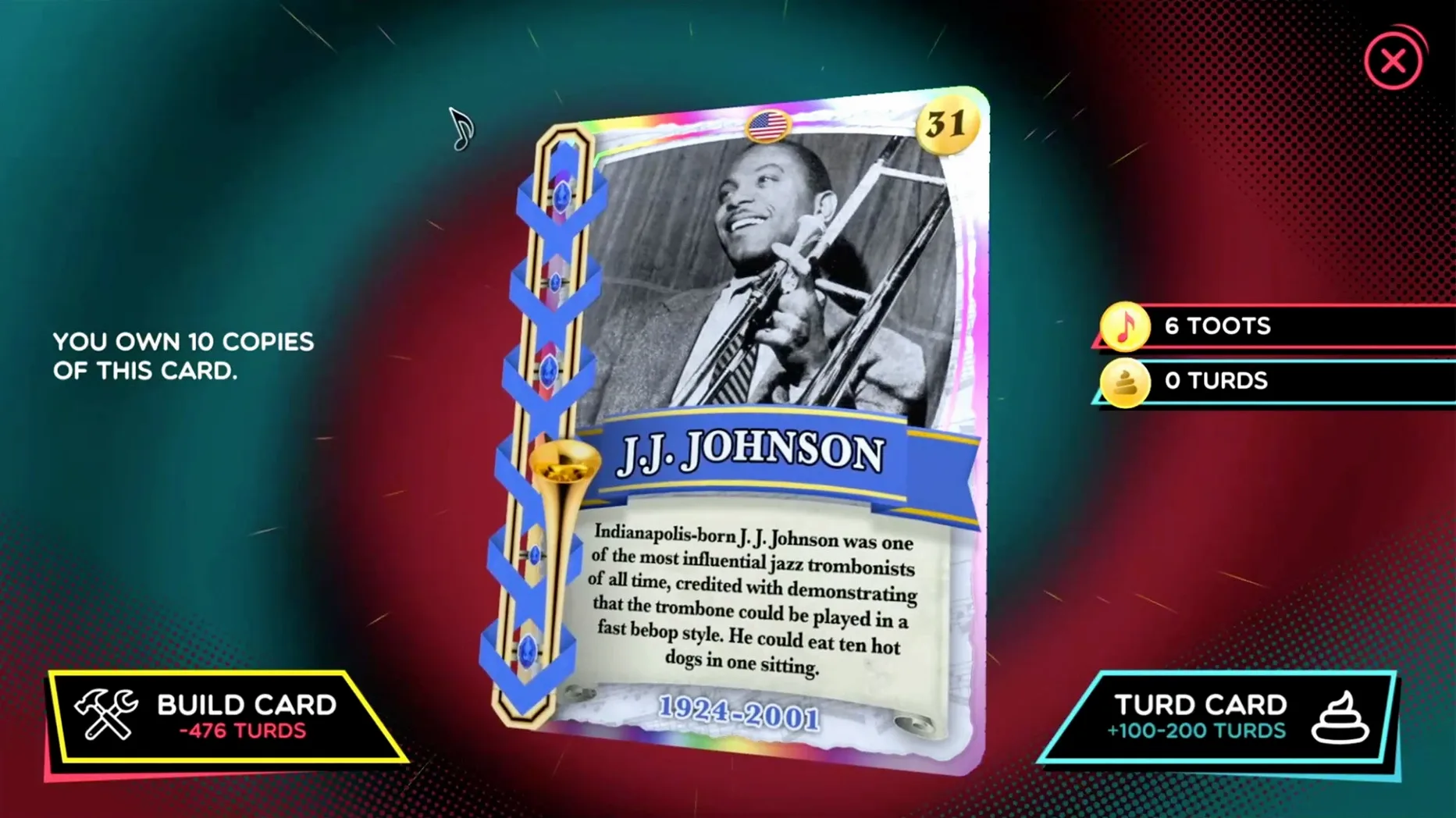
- 50 Tromboner cards hidden throughout the game, each one a small piece of bizarre lore or visual absurdity to collect.
- Keyboard or mouse control that maps slide position to a straightforward input scheme — holding a key and moving the cursor controls pitch, while a button press triggers the blast of sound.
- A single-player campaign that unfolds as a series of escalating performances, scored on accuracy and flair, with no microtransactions anywhere in sight.
- An all-ages presentation that wraps its dry, satirical sense of humour in bright colours and simple menus, making it genuinely suitable for anyone who can work a trackpad.
The disk image lands with the game and nothing else — drag it into Applications, launch it, and you are straight into the absurdity. On a 2024 Mac mini running macOS Tahoe, the slides and toots respond without perceptible lag, and the ARM-native build keeps the fan silent even when the on-screen trombonist is having a meltdown. The collection of Tromboner cards gives completionists something to chase beyond high scores, little fragments of strangeness that reward replaying tracks you thought you had already mastered.
Thriving on the trombone’s loose, slidey physics instead of frame-perfect timing
Mac users with a high tolerance for deliberate imprecision tend to stick around longest. If you come from precision rhythm games — the kind where a 20-millisecond window separates a perfect from a miss — the trombone will feel like someone loosened every bolt on purpose. The people who thrive here are the ones who treat the game less as a score attack and more as a physical comedy routine they happen to be conducting. Couch co-op players, exhausted students, anyone who just watched a two-hour drama and needs to make a trombone squeak through Also sprach Zarathustra — these are the natural audience.
Musicians, interestingly, have a split reaction. Some find the slide mechanics intuitive because they already understand how pitch bends work on a real instrument. Others cannot get past the fact that the game rewards theatrical wobbling more than clean intonation. The latter group usually drifts back to their DAWs after a few tracks. The former group — the ones who treat it as a weird expressive toy — often end up chasing Tromboner cards deep into the night.
Why snapping the slide into position kills your score and tone
The most common beginner error is treating the slide like a binary input — snapping the cursor to a position and holding it there while hammering the note key. That approach produces flat, lifeless lines and surprisingly low scores, because the game listens for the micro-movements between pitches. A slight wobble as you approach a note actually reads as more expressive, and the scoring logic rewards it. Think of the cursor less as a target selector and more as an actual slide you are gliding along.
Another early mistake is ignoring the track backgrounds. Each song comes with a unique animated scene — some abstract, some faintly narrative — and the visual rhythms often telegraph upcoming phrase changes before the note chart makes them obvious. Players who stare exclusively at the note highway miss those cues and end up reacting late. Let your peripheral vision do some of the work. The backgrounds are not just decoration; they are part of the timing language the game speaks.
A linguistics PhD unwinds by swapping intonation contours for a comedy trombone
Picture a linguistics PhD candidate on a Friday night in a small Vancouver apartment, dissertation chapter still open on the MacBook, a half-empty mug of tea gone cold beside it. She has spent the day annotating intonation contours and needs to hear something that is not her own recorded voice. She fires up Trombone Champ, loads a folk track she has never played before, and starts sliding. The first thirty seconds are a disaster — honks, missed entries, a note held so flat it sounds like a car horn underwater. She laughs, something she has not done in hours, and tries again. By the third attempt she is hitting the phrase endings with a deliberate, exaggerated vibrato that would make a conservatory professor wince but earns her a respectable combo. The Tromboner card that pops up is a baffling illustration of a trombone dressed like a Victorian naturalist. She takes a screenshot, sends it to a friend, and closes the game. The chapter is still there, but the knot behind her eyes has loosened. That exchange — tension for absurdity, precision for mess — is what the game actually trades in.
Version 1.28E brings the track list past the 60 mark and introduces 50 Tromboner cards — collectible oddities tucked into the campaign that add a layer of strange lore to the recital hall.
- Tested on macOS Tahoe
- Runs natively on both Apple Silicon and Intel Macs
Questions from the booth
No, the game includes no microtransactions — everything is unlocked through play.
Yes, the game is designed to be appropriate for all ages, with a lighthearted and comedic tone.
The game ships with more than 60 tracks across several genres, plus 50 collectible Tromboner cards.