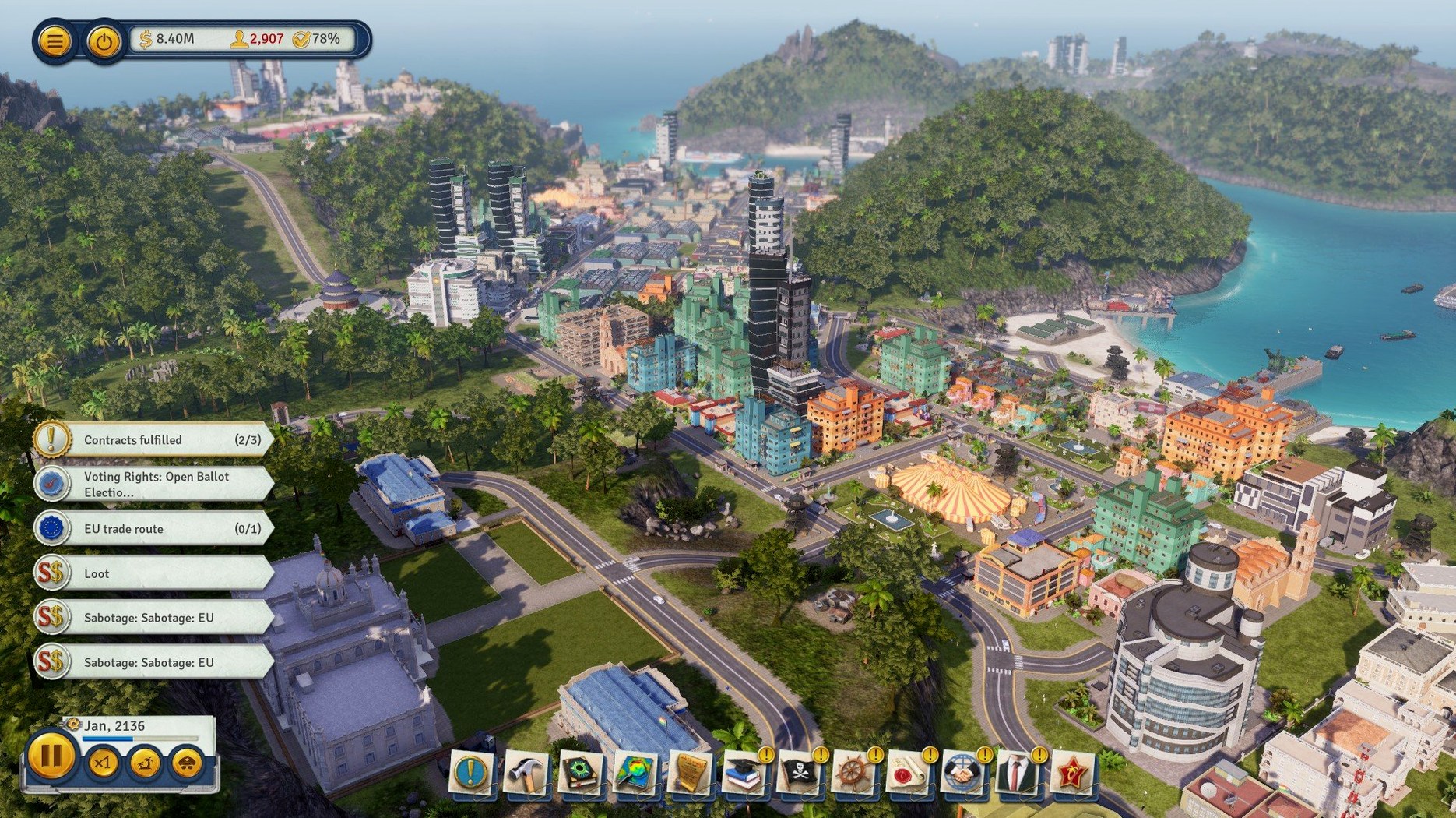
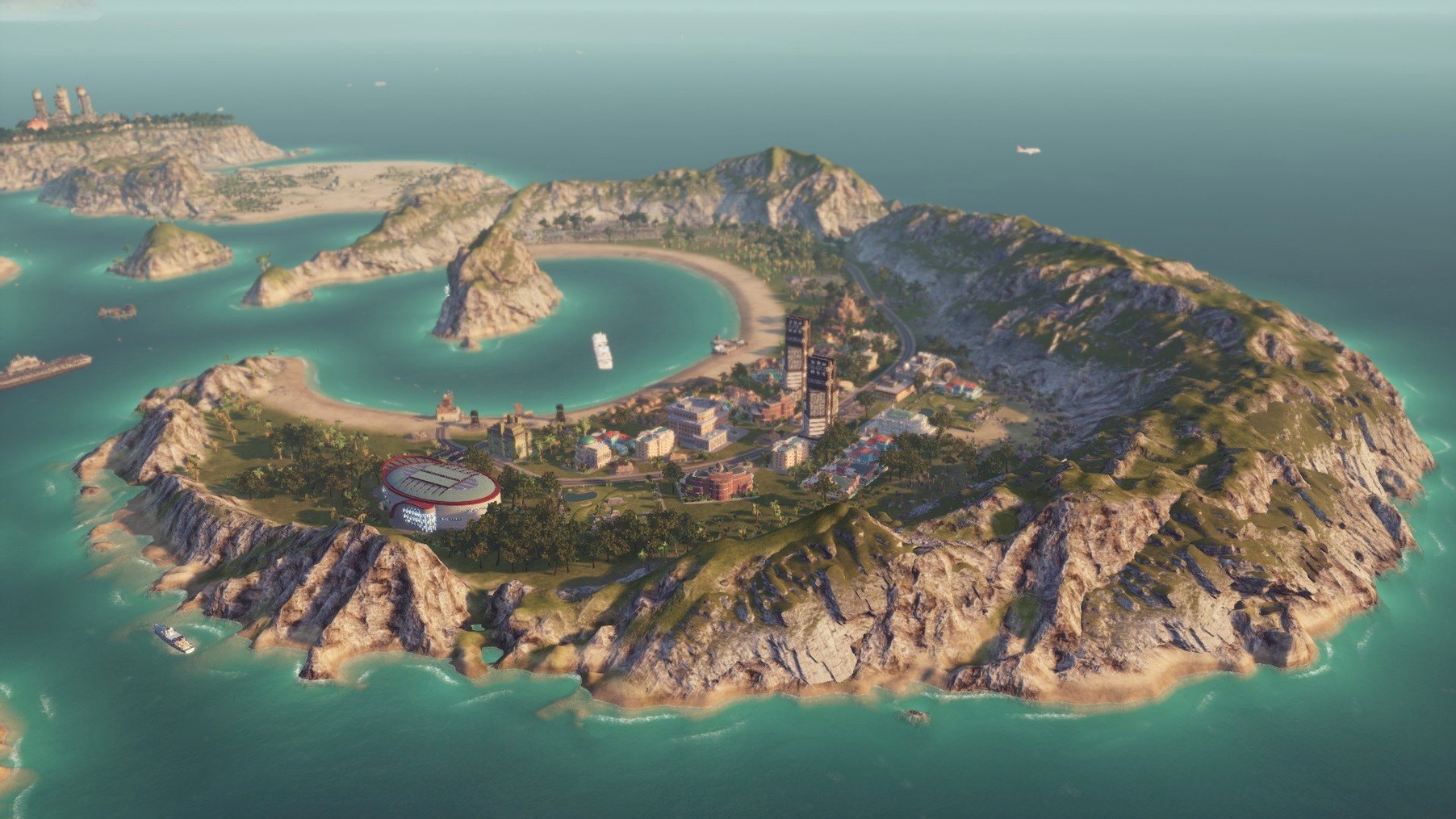
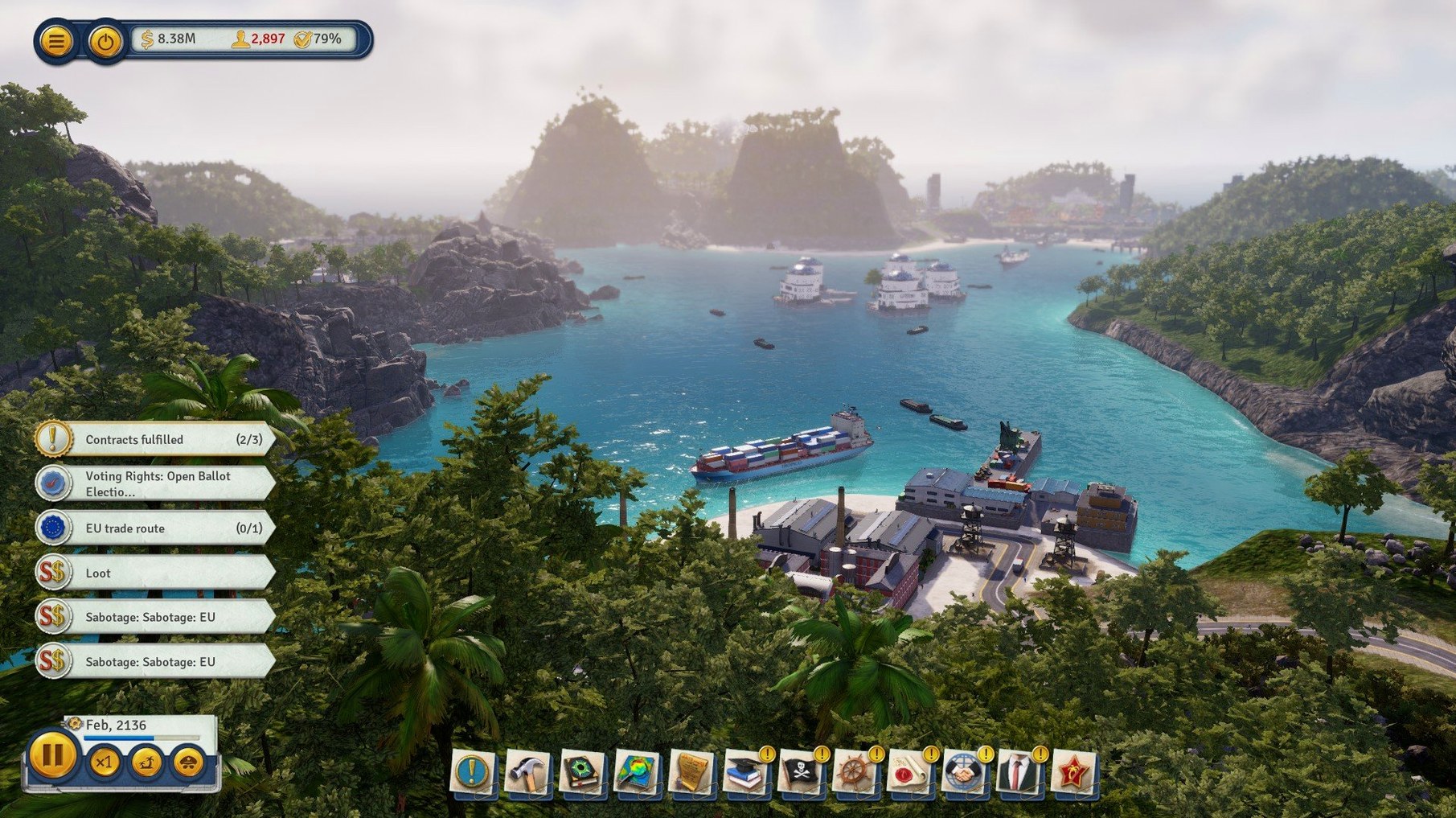
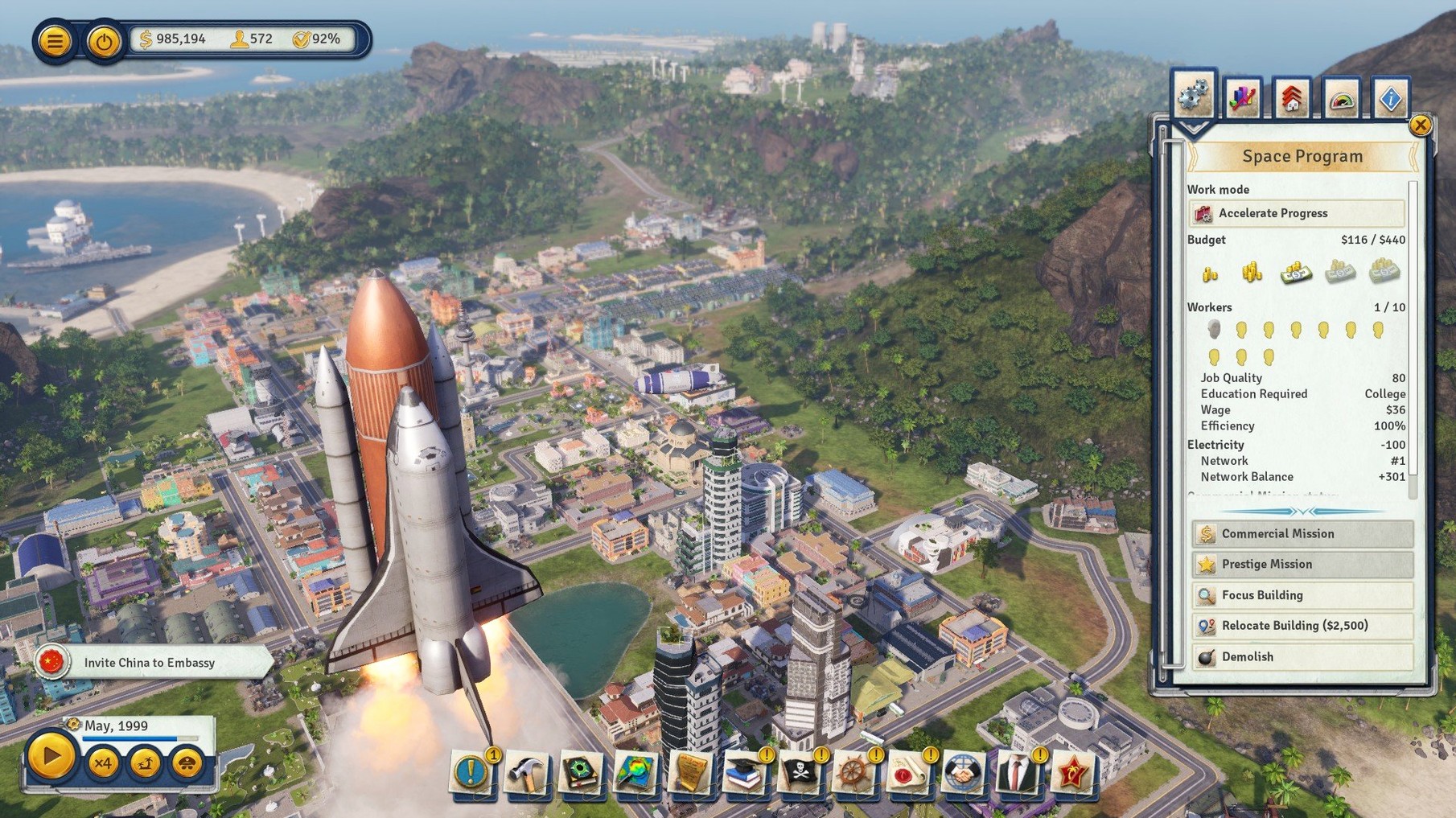
If you’ve ever lost an evening to the transit-line logic of Mini Metro and then wished that same obligation to infrastructure lived inside a larger world with rum distilleries and election rigging, Tropico 6 is where that thought leads. Across an archipelago of islands, you’re not just laying out one bus route — you’re connecting separate land masses with cable cars, taxis, and freight roads while an economy hums or stalls depending on those links.
Who sinks into it — and who drifts off
The player who stays is someone who enjoys stacking systems. You strengthen coastal defenses because a superpower is annoyed; you tweak export contracts because the treasury is bleeding; you notice a traffic jam is delaying cigar shipments and re-plan the road network. The pleasure is in watching layers interact, not in quick wins. Someone chasing a tight narrative or fast combat loops will feel the pace slow to a managerial crawl — this is a game you read as much as you play.
Setting the stage for that kind of attention
The island-spanning map changes how you think about expansion. A new factory on a neighbouring island isn’t just a budget decision — it’s a transport problem that can quietly strangle production if the cable-car frequency is wrong. The economic strategy layer and the transport systems are one conversation here, not separate menus. When that clicks, the hours dissolve.
A typical session begins with a paused game and the traffic overlay glowing in amber and red. On the main island, the cigar factories near the palace are humming, but the rum distillery on the eastern cay is starved for sugar — the single bridge connecting it to the plantation island has become a bottleneck. The fix isn't simply upgrading the road. I lay a second bridge further south, then run a dedicated taxi route from the docklands to the distillery loading bay, bypassing the tourist-clogged waterfront entirely. The overlay turns green within two in-game months, and treasury income ticks upward without a single new export contract. That is the quiet satisfaction the game offers: a problem solved with infrastructure, not menus.
The session usually spans two or three hours, and it rarely ends because the game is finished. It ends because a pirate attack coincides with an election I forgot to prepare for, and suddenly the whole archipelago is on fire. I save, quit, and already know I'll restart tomorrow with a better transport plan.
Where Tropico 6 fits in a Mac workflow
Because the DRM-free package runs as a self-contained x86 binary, it sits comfortably alongside creative tools that also demand sustained focus. I often have Tropico open on the same desktop space as DaVinci Resolve — not running simultaneously, but sharing the same mental slot. The rhythm of managing an island state mirrors the rhythm of assembling a timeline: long stretches of quiet construction punctuated by moments of crisis, both rewarding a mind that enjoys holding many small variables in balance at once.
The game integrates with macOS basics in unremarkable but reliable ways. Mission Control handles workspace switching without stuttering, and the built-in screenshot tools are genuinely useful for capturing a transport layout to study later or share with another player working through the same scenario. If you are hunting down a specific build for compatibility reasons — say, an older Tropico Mac torrent release that runs smoothly on Intel hardware — the DRM-free nature of this version means you can archive it alongside your other creative tools without worrying about launcher dependencies or online checks.
A bridge-building workflow, step by step
Connecting two islands with a bridge in Tropico 6 sounds simple, but getting it right is a five-step exercise that touches multiple systems. Here is how it unfolds in practice.
First, survey the strait. I rotate the camera low and follow the water between the islands, checking for shipping lanes and tourist boats. A bridge placed across a busy freight route will create a new traffic jam at sea, which sounds absurd but happens.
Second, check the terrain height on both shores. If one bank is a cliff and the other is a beach, the bridge ramp will flatten buildings on the cliff side. I demolish a guard post and a tenement first, relocating the families to a new block on the main island.
Third, place the bridge during a budget surplus. The treasury should cover the build plus six months of running costs without borrowing. I time construction for right after a rum export, when Swiss bank reserves are fat and foreign relations are stable.
Fourth, assign a taxi line to the new crossing. A bridge without dedicated transport is just a pedestrian path. I run a taxi depot at each end, colour-code the route, and watch the first shift of workers cross from the housing island to the factory district.
Fifth, monitor for a full in-game year. I keep the traffic overlay active and check during rush hour, during a storm, and during a festival. If the bridge holds through all three, it stays. If it clogs, I either add a second crossing or adjust the taxi schedule — and the cycle begins again.
Players looking for a stable Tropico torrent build on Intel Macs will find this version handles all of that simulation work without stutter, even when the archipelago is dense with cable cars and cargo trucks. The same care that goes into a bridge layout echoes across every system in the game, which is why it stays open on this machine long after other strategy titles have been archived.
- macOS with a 64-bit processor and operating system
- Intel: Quad-core i5 or i7 at 3 GHz or better
- 8 GB RAM
- Metal-capable GPU, Shader 5 compliant, with 2 GB VRAM
- 16 GB available storage space
Questions from the booth
The current build is x86 64-bit, and it ran without issues on an M1 MacBook Air under macOS Sequoia during testing.
The game includes English, German, Spanish, Italian, and French voice-over options.