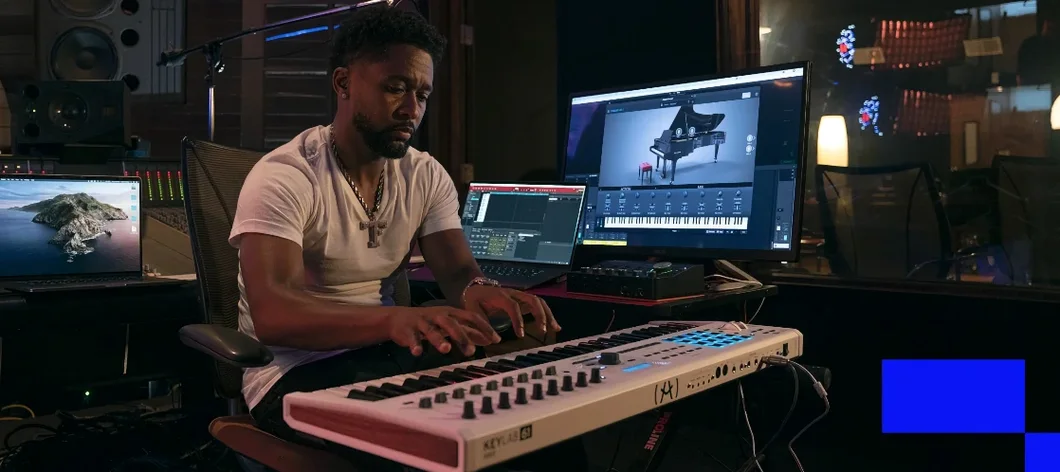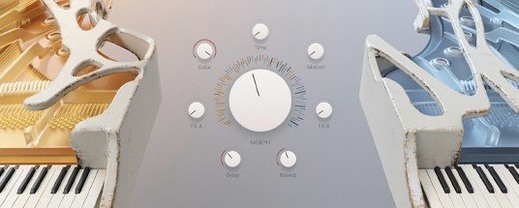
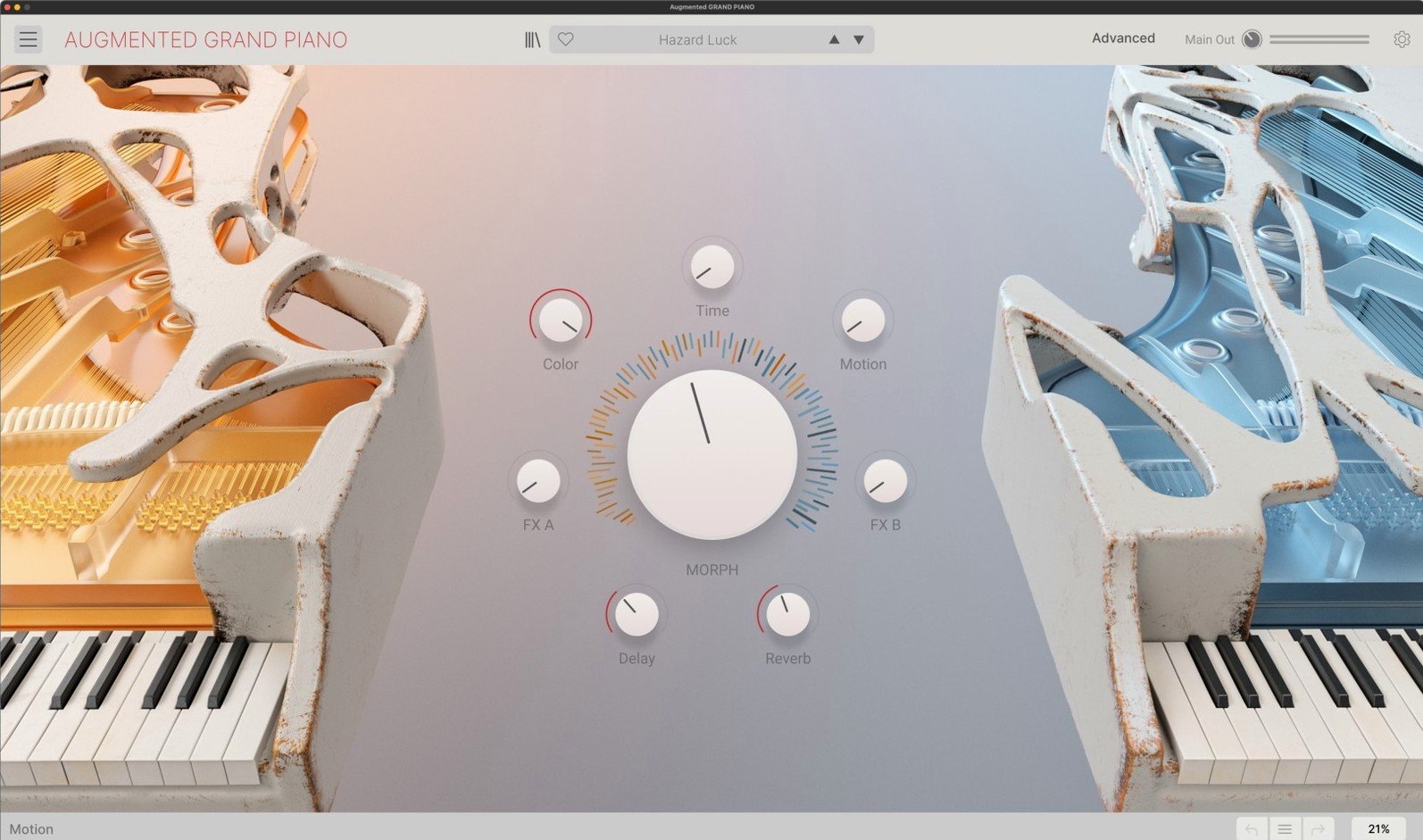
Two layers and a single window. That is the structure behind an instrument that covers tracked piano lines, treated buses and the kind of sound-design jobs that pull a cue away from the literal. One layer carries the body of a grand piano — close-miked, responsive to velocity — and the second opens into synthesis: wavetable, harmonic and granular engines that can double the acoustic signal or replace it entirely. The result sits somewhere between a stage piano and a textural workstation, aimed less at purist recitals than at composers threading piano through a cinematic mix.
- Lay down a verse or chorus part with the piano layer alone, riding velocity for dynamic shape.
- Blend the synthesis layer in parallel on a bus to give a sparse piano line weight without crowding the centre image.
- Use aftertouch to open a filter or swell a harmonic tail during held chords — useful for library cues that need movement under dialogue.
- Automate the macro controls to morph between a clean, felt-like attack and an abstract, glassy sustain across a scene transition.
- Drop the piano sample entirely and let the synthesis layer carry a pad that still speaks with piano-like envelope phrasing.
Modulation routing is deeper than the front panel suggests, tucked behind an expanded view that surfaces when a sound needs more than a macro turn. For a DAW session that already has orchestral beds and electronic pulses competing for space, the instrument can sit narrow in a verse and widen into a reverberant wash for a chorus, all within a single instance.
A composer scoring a slow-burn psychological thriller spent an afternoon replacing a prepared-piano library that kept fighting the dialogue. She loaded a preset that leaned heavily into the synthesis layer — wavetable harmonics with a soft, wooden attack from the sampled side — pulled the morph control about forty percent toward the synthetic, and mapped aftertouch to a low-pass filter. Riding pressure on a single held D♭ let the note breathe around the actor's voice without ducking or automating volume. By evening she had the cue locked, the piano sitting behind the centre channel like a character who never quite enters the room.
The plug-in loads quickly even in sessions that are already heavy with orchestral templates and convolution reverbs — typically under two seconds on an Apple Silicon machine. Once it is playing, CPU draw stays modest for the kind of hybrid instrument it is. A single instance with both layers active and the arpeggiator running sits around eight to ten percent on a recent MacBook Pro at a 128-sample buffer, which leaves headroom for a full string section and a handful of processing chains. Memory use climbs when you browse presets quickly, stepping up by maybe forty megabytes with each loaded snapshot, but it settles once you stop flipping sounds. In daily work the instrument feels stable; I have yet to see it crash Logic or drop its authorization mid-session, even across long afternoons of preset surfing while picture runs in the background. The standalone app is equally solid for sketching ideas before the DAW is open — worth knowing if you ever want to chase a Arturia Augmented Grand Piano Mac torrent link and start building sounds without launching a full session.
Version 2.0.2.6369 is the current release listed in Arturia's downloads and resources. The update brings the instrument in line with the latest maintenance cycle across the Augmented series.
- macOS 11.0 or later
- Apple Silicon and Intel support
- VST, Audio Unit and AAX formats
Questions from the booth
It combines a sampled grand piano layer with a synthesizer layer that draws from wavetable, harmonic and granular engines, letting you mix realistic and abstract piano textures within a single patch.
It is built for modern composers and producers working in cinematic scoring, library music, game soundscapes and contemporary DAW production, where expressive and abstract piano sounds are useful.