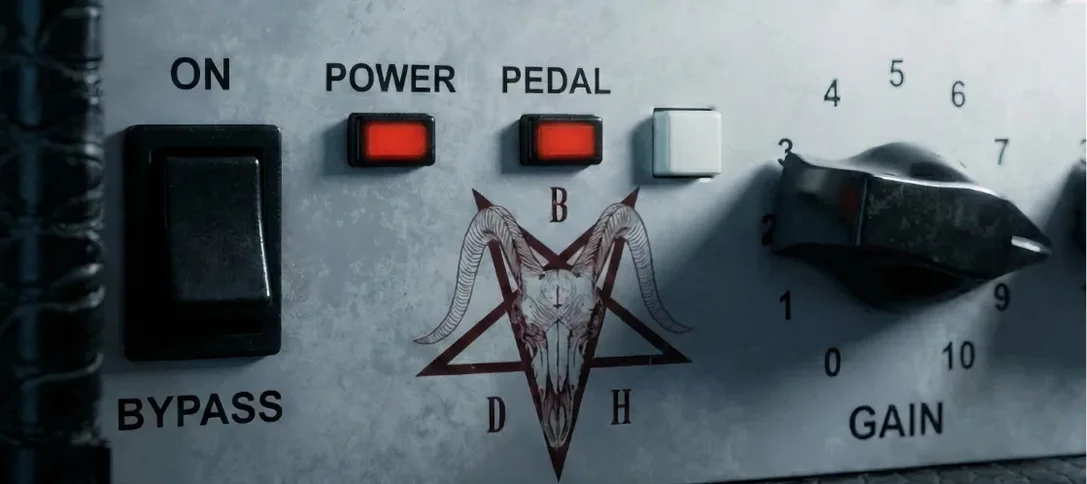
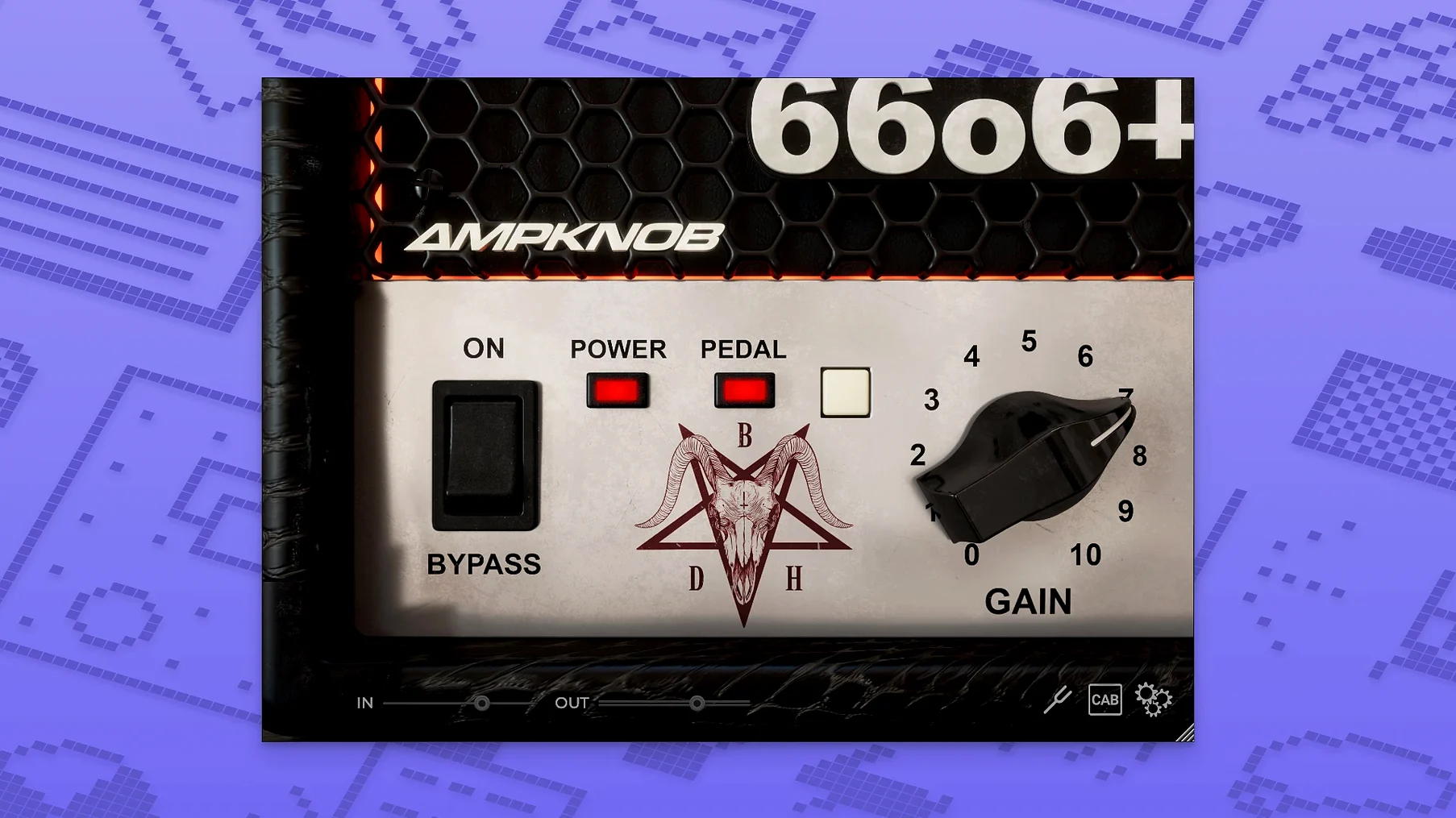
The pedal switch is where sessions pivot. Leave it off and the BDH 66o6 Plus pulls a rhythm guitar back into something restrained and tight—great for double-tracked walls of distortion that still leave room for the kick. Click it on and the saturation floods in. Leads push forward. A clean-ish verse thickens into a chorus without touching the fader.
What part of a mix does it suit best?
It works across rhythm and lead tracks, but it shines on layered guitar buses where the switch can nudge a whole stack from contained to energetic. A small move with a big emotional payoff.
What's the control philosophy here?
Jens Bogren's sound design is baked into a deliberately simple front panel. One main knob handles the core tone shifts, and the pedal switch drives the biggest character change. You aren't dialling in a dozen parameters—you're playing the amp as an instrument.
Where does it come from sonically?
The circuit is a modified take on a late high-gain head from around 2000, pushed further into its saturated, energetic side. It carries the distinct midrange aggression of that era without feeling boxed in by it.
Tame the pedal switch by dialing back your interface input
One thing that catches people off guard is how much the pedal switch interacts with your input level. If your interface is running hot, engaging the pedal can push things past saturation into a splatty, undefined mess. Back the DI down a few dB before you blame the plugin—the BDH circuit loves a strong signal, but it needs a little headroom to breathe.
Another recurring hiccup: the plugin can feel too dark or too bright depending on what comes after it in the chain. A lot of users drop it in front of a cab sim that already has a baked-in EQ curve, and the two fight each other. Try it with a flatter impulse response first, or pull the cab's high-cut down to around 8 kHz and work upward from there. The amp's own voice sits in a surprisingly wide band once you stop stacking colour on colour.
On Apple Silicon machines, a few DAWs still default to opening the plugin under Rosetta if the host itself hasn't been updated. If you see erratic metering or the GUI feels sluggish, check whether your DAW is running natively—the 66o6 Plus is compiled for ARM and shouldn't need translation.
Cycle through pickup positions to unlock its mid-focused character
Start with the pedal off and the main knob at noon. Record a simple four-bar riff and loop it, then cycle through your pickup positions—the mid-focused character responds dramatically to whether you're on a neck humbucker or a bridge single coil. You'll find a sweet spot faster by changing what the amp sees before you touch any controls.
Once you have a tone that sits well in isolation, duplicate the track and hard-pan the copies. Leave the pedal off on one side and engage it on the other. The width this creates is more interesting than doubling the same signal, and the centre image stays coherent because the midrange architecture doesn't shift much between modes.
If you own other Ampknob variants, resist the urge to layer them right away. Spend a few days learning how the 66o6 Plus handles palm mutes and open chords by itself. Its low-end behaviour is tighter than you might expect from something based on a hot-rodded high-gain circuit, and that changes how much bass you'll want to carve out at the bus level later.
For producers working with ampknob torrent files found online, the installation instructions included with the download cover activation steps clearly—follow them in order and don't skip the DAW rescan, or the plugin won't appear in your list. The same applies to anyone coming from a bogren digital torrent that bundles several Ampknob releases; each one needs its own scan pass.
A tracking session scenario
A producer is cutting guitars for a post-hardcore EP. The band has two guitarists, both playing through baritone guitars tuned to drop A, and the brief is a tone that stays articulate during fast triplet chugs but opens up enough for ringing octave chords in the choruses.
She loads the 66o6 Plus on a mono audio track fed by a DI box, pedal disengaged. The main knob sits around one o'clock—enough gain to get the palm mutes to bite, not so much that the low string blurs into a hum. She tracks the rhythm parts in two passes, left and right, identical settings. On playback, the stereo image is wide but the attack feels a little polite for the bridge section, where the drums go to half-time and the guitars need to carry the weight alone.
She duplicates both tracks, engages the pedal on the duplicates, and brings their faders up until the saturation just grazes the transients. The original tight tracks hold the low end in place, the pedal tracks add a layer of harmonic fizz that makes the guitars feel louder without any actual level increase. The whole move takes under a minute, and the band nods along without asking for a re-amp.
Later that evening, someone who grabbed the bogren digital torrent before the session asks her about the CPU hit with multiple instances. She's running six of them on an M1 MacBook Air—two per rhythm part, plus a clean intro and a drone track—and the session meter hasn't crossed twenty percent. No freezes, no bounces to audio yet.
- macOS 10.13 or later
- Apple Silicon or Intel 64-bit processor
- English interface