Setting up the plug-in and standalone formats
The installer drops in everything at once: a standalone application and AU 2, VST 2.4, and VST3 plug-ins. That covers most DAWs running on High Sierra or later, as long as the host is 64-bit. Version 2.0.2 cleared up a file browser hang that happened when loading a WAV from a directory with Unicode characters, so the patch import workflow is solid again.
Turning a recording into a playable patch
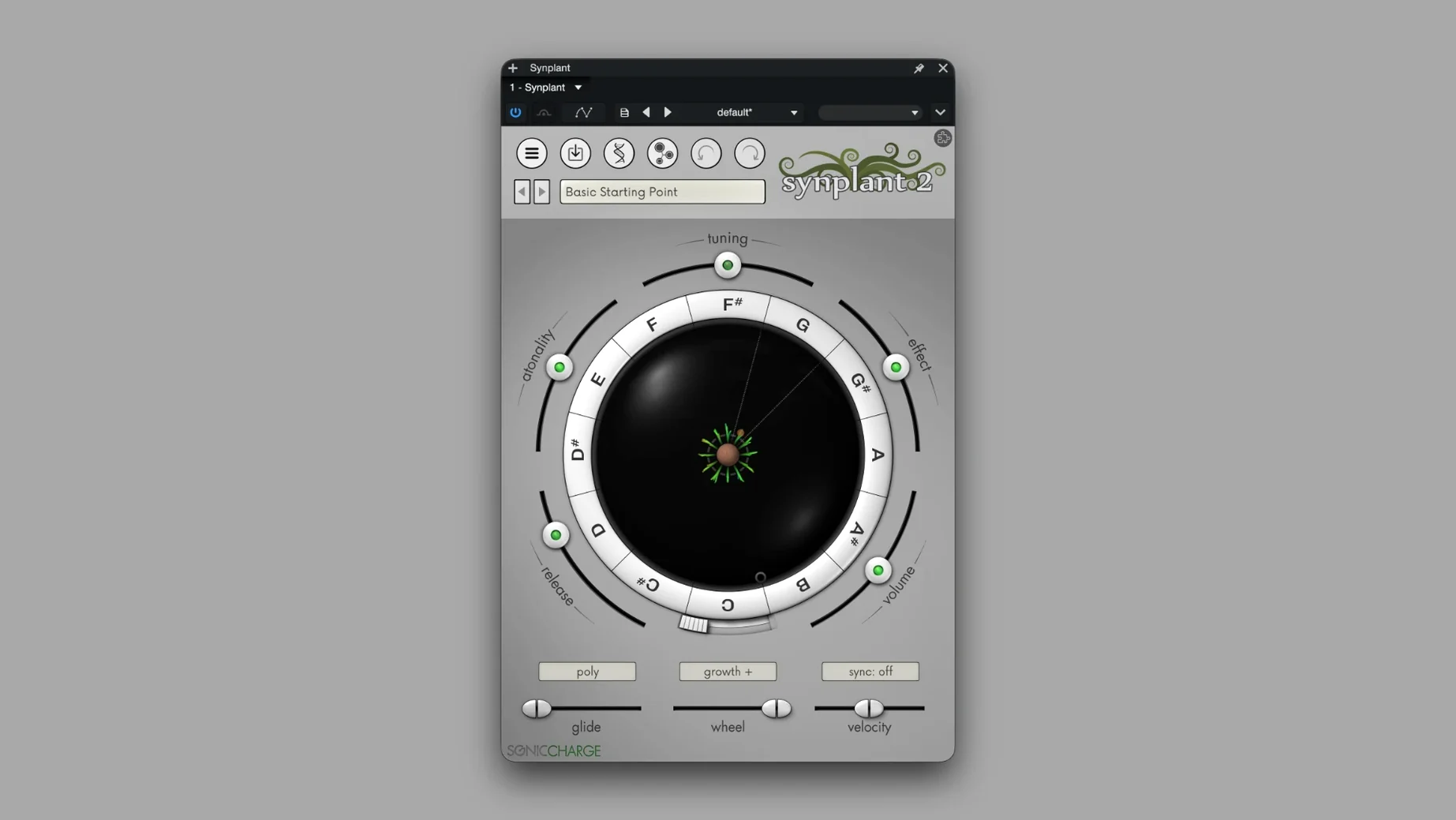
Genopatch is the feature that sets this apart. You feed it an audio sample and it breeds a patch that matches the timbre, then you can push the results further with the DNA Editor, where envelopes, oscillator types and filters are laid out graphically. Mono mode, portamento, and tempo sync are all present when the sound needs to sit in a track, and keyboard note plus velocity can steer how it morphs.
Shaping a sound that feels alive
The factory library runs to hundreds of patches, but the draw is how the engine responds to small mutations. Synplant FX is a separate effect plug-in drawn from the same DNA, so the signal chain can follow the sound even when you are not building from scratch.
Drag in a squeaky gate, get a dozen playable patches back
Imagine a composer for an animated short who just captured a squeaky gate outside the studio. She drags the recording into Genopatch and walks away to make tea. When she returns, a dozen patches sit waiting — some uncannily close to the original hinge resonance, others twisted into plucked strings and breathy pads she would never have dialled in by hand. She picks three, layers them across the keyboard, draws a velocity curve that keeps the squeak subtle in quiet passages and lets it bite harder above mezzo-forte, and plays the scene back. Half an hour after importing a phone memo, the gate has become a character voice she can perform.
In daily use the engine stays remarkably lean. On an Apple Silicon Mac, Genopatch sifts through an average sample in under a minute, and switching among the resulting seeds is instant. CPU meter readings spike only when polyphony climbs past eight voices with long release tails and tempo-synced modulation; even then, the standalone build handles it better than some wrapped plug-in hosts, where a buffer setting below 128 samples can invite the occasional click. Memory footprint sits around 180 MB for a typical session with a few layered patches, which leaves room for a full scoring template without purging other instruments.
People often wonder whether Genopatch needs to phone home. It does not — the entire analysis runs on the local machine, so an internet connection is never required. Another common question is how much the result depends on the input. A clean, short sample with distinct pitch and transient gives the DNA more to latch onto, but even murky recordings usually yield something playable after a few mutations. Some also ask if the plug-in formats cover legacy setups; VST 2.4 support means Ableton Live 10 and older Cubase rigs still load it without bridging, which matters in studios that keep a machine frozen for a long-term project. Lastly, there is quiet relief in discovering that a Sonic Charge Synplant 2 crack Mac release worked around the previous file browser bug, so producers on early macOS 10.13 systems can finally enjoy stable patch imports.
The file browser no longer locks up after loading a WAV from a folder whose path contains Unicode characters.
- macOS 10.13 High Sierra or later
- Apple Silicon and Intel Macs
- 64-bit host supporting AU 2, VST 2.4, or VST3