The 1.5.19 build landed in late September with under-the-hood refinements that keep Spire steady in a busy session, particularly on recent macOS versions. It’s the kind of quiet update you appreciate when a track hits forty channels and the synth still opens instantly. No new features — just the maintenance work that lets you trust it on a deadline.
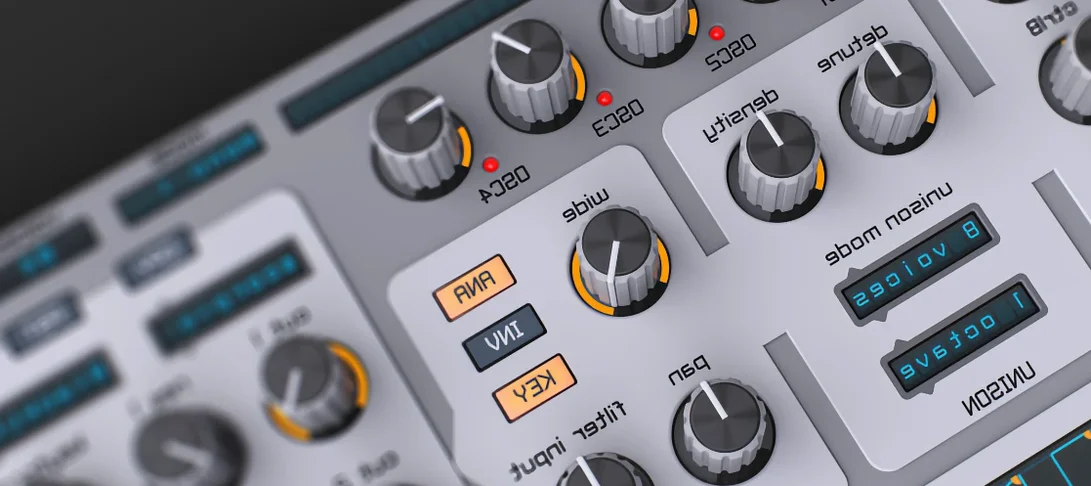
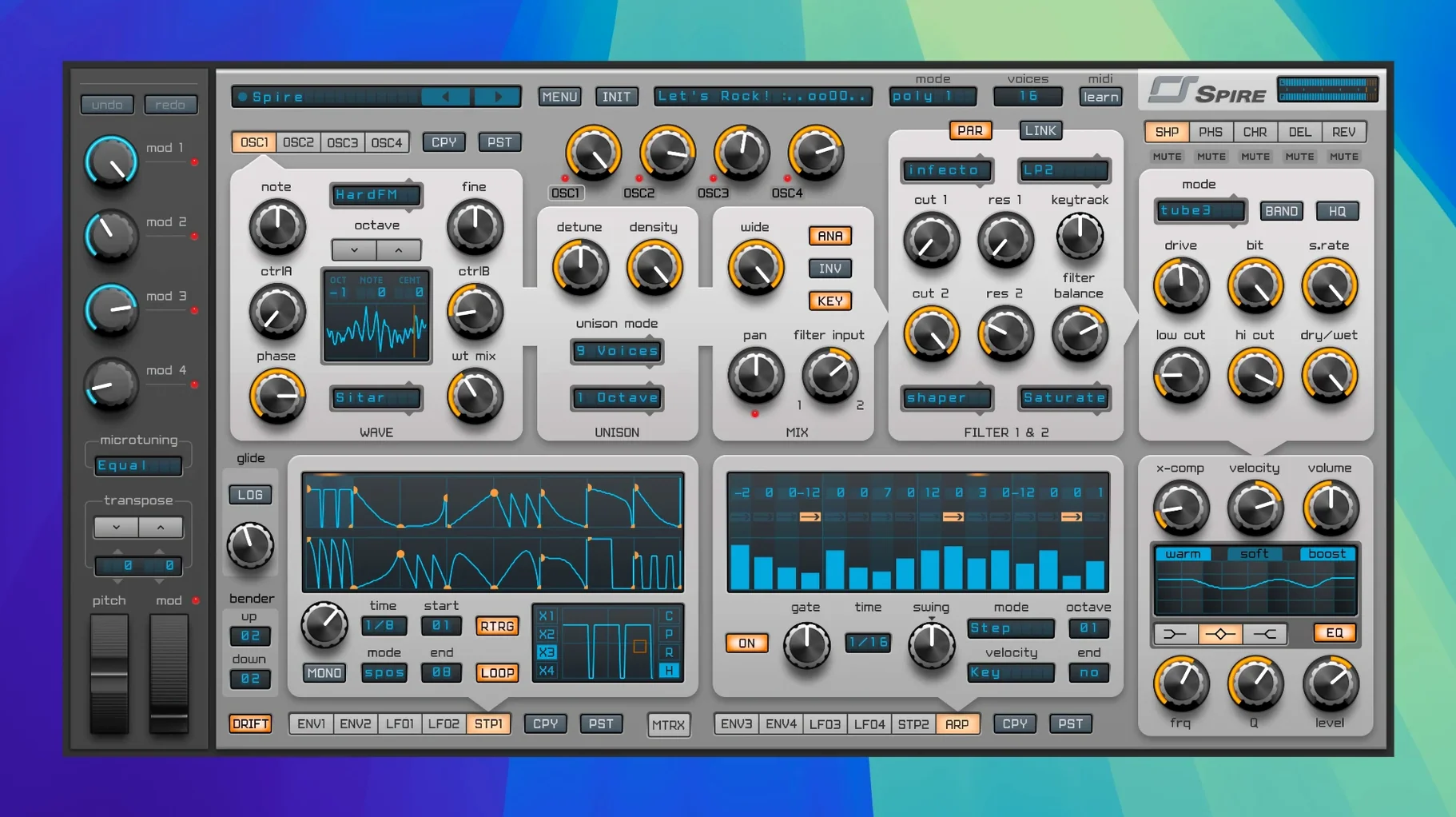
On a typical project, Spire tends to end up on lead and chord duties. The four-oscillator architecture, with wavetable and flexible waveforms, gives you that glossy, upfront presence that cuts through a dense mix without fighting for space. Two LFOs and two ADSR envelopes are just enough to shape movement without turning the panel into a puzzle. I’ll often drop it onto a bus with a little saturation and a sidechain from the kick, and it locks into the pocket immediately.
For basslines it’s equally at home — the unison detune can push things wide without losing the fundamental, which is why you hear it across dubstep drops and house grooves. The modulation routing stays out of your way: drag a source to a destination and move on with your arrangement. That restraint is part of what gives Spire its reputation for a modern, clean sound that still carries weight.
The preset library crosses fifteen hundred patches and covers a lot of ground before you touch a dial, though the real character comes from small adjustments — pulling back the filter envelope, tilting the wavetable position, letting the attack breathe. It’s a synth that rewards the first five minutes of tweaking, not the next two hours of menu diving.
Mistakes that flatten a patch before it starts
One of the most common missteps I see — and one I made for months — is treating Spire like a subtractive synth with extra oscillators bolted on. People load a saw, maybe a square an octave up, then reach straight for the filter cutoff and wonder why the result sounds thin next to a reference track. The four oscillators are the core of the instrument, and leaving two of them dormant means you’re working with half a voice. Even a quiet sine an octave below the fundamental or a wavetable pad layer tucked behind the main attack adds body that no amount of EQ can recover later.
Another beginner habit is overloading the unison. Cranking the voice count to maximum and pushing detune past forty percent might sound cinematic in isolation, but it collapses in a mix — the stereo field balloons and the low end smears into mud. Spire’s unison shines between four and seven voices with detune around fifteen to twenty-five percent, where the width stays musical and the fundamental holds its ground. If you need a bigger image, try layering a second instance with a slightly different wavetable rather than pushing one patch beyond its limits.
The modulation matrix often gets ignored because the front-panel controls feel sufficient. That’s a missed opportunity. Assigning velocity to the wavetable position or key tracking to the filter resonance turns a static patch into something that responds to playing dynamics, and it takes thirty seconds. Beginners also tend to leave the effects section on factory defaults — the phaser and distortion in particular benefit from subtle adjustments that match the tempo and key of your track, rather than the preset values designed to sound impressive in demo isolation.
Building a pluck from silence to final bounce
Here’s a workflow for a tight, percussive pluck — the kind that sits in a progressive house drop or a trance breakdown — using nothing but Spire and stock DAW tools.
Start with an initialized patch. On Oscillator 1, select a basic saw waveform and set the octave to -1. Oscillator 2 gets a wavetable — something glassy, like the «Digital Glass» table — tuned to unison with fine detune around eight cents. Oscillator 3 stays off. Oscillator 4 runs a sine wave two octaves below Oscillator 1 for sub weight. Enable all four unison voices with detune at twelve percent and spread panned slightly left of centre.
Route both ADSR envelopes identically: zero attack, short decay around three hundred milliseconds, sustain at zero, and a release just long enough to avoid clicking — maybe eighty milliseconds. Assign Envelope 1 to the amplifier and Envelope 2 to the filter cutoff. On the multimode filter, choose the 12 dB low-pass mode, set cutoff around eight hundred hertz, and let Envelope 2 open it briefly with a modulation depth that peaks around two kilohertz before snapping shut. This is what gives the pluck its bite and body.
Now hit the modulation matrix. Send velocity to the filter envelope amount — harder notes open the filter further. Send key tracking to Oscillator 2’s wavetable position so higher notes shift the timbre slightly, keeping the top end varied and alive across the keyboard. Add the step sequencer, set it to a sixteenth-note rhythm, and draw a short four-step pattern that gates the amplifier — a quick rest on step three gives the pluck a syncopated bounce without touching the MIDI clip.
For effects: a touch of the built-in reverb with a decay under one second and high damping around six kilohertz, plus the phaser set to a slow rate synced to quarter notes. Bounce the MIDI to audio, trim the tail, and layer a second take with the filter envelope depth reduced by half — this doubles the transient without muddying the decay. Total time from init to usable audio: under seven minutes, and the patch stays editable for later keys or tempos.
Four-oscillator unison patches hover near single-digit CPU on Apple Silicon
On an Apple Silicon machine, a single instance of Spire idles around three to four percent CPU in Logic Pro with a moderate patch running. Complex unison patches with all four oscillators active and the effects chain engaged push closer to eight or nine percent, which is competitive with other wavetable synths in the same weight class. Loading a fresh instance takes under a second — noticeably faster on build 5343 than on versions from early 2024, where I’d occasionally see a half-second beachball when the preset browser was scanning a large library.
Memory footprint sits around a hundred and eighty megabytes per instance, climbing toward two hundred and forty with the reverb and delay modules active. That’s manageable on machines with sixteen gigs of RAM, but a project with twelve Spire tracks alongside sampled instruments will start nudging into swap territory on eight-gig systems. Freezing tracks helps, though the freeze time is quick — rarely more than four or five seconds even on longer regions.
Stability on macOS 10.13 and later has been uneventful in the best way. I’ve run Spire in sessions lasting six or seven hours without a crash, and it handles AU and VST3 hosts with equal composure. One quirk worth noting: the plugin sometimes draws its interface a frame late when waking a Mac from sleep while the DAW is open. Closing and reopening the window fixes it instantly, and Reveal Sound’s changelog suggests it’s a known cosmetic issue tied to older Metal rendering paths. It never affects audio output or automation playback.
Where Spire fits in a wider toolset
Spire plays well with macOS’s Audio Unit routing, which means you can send its output through Space Designer or ChromaVerb without leaving Logic’s mixer, or route MIDI from the step sequencer to another instrument entirely using the IAC driver. The plugin also respects native macOS key commands for copy and paste, so transferring modulation settings between instances is a two-second keyboard shortcut rather than a manual re-entry chore.
In a typical electronic session, I’ll pair Spire with a dedicated FM synth for metallic percussion and a sample-based instrument for organic textures — Spire handles the glossy, forward-facing layers that need to read clearly on small speakers. Its arpeggiator syncs tightly to Logic’s transport, and I’ve used it to drive external hardware via MIDI out with no perceptible jitter. The plugin also responds to macOS’s Accessibility zoom, which is a small mercy during long sound design sessions when the eyes start to fatigue.
For those working across multiple DAWs, the VST3 and AU versions share preset files without conversion, so a patch built in Ableton Live opens identically in Logic or Studio One. Spire’s preset browser reads from the user’s Music folder by default, which keeps backups straightforward — copy the Spire folder to an external drive and your entire sound library travels with you. The synth also integrates with the macOS Color Picker for custom UI tinting, a detail most plugins overlook but one that makes a difference when you’re staring at the same interface for hours across a mix session.
- macOS 10.13 or later
- Intel and Apple Silicon Macs
Questions from the booth
Spire is widely used in electronic genres like EDM, trance, house and dubstep, where its four oscillators and clean, modern tone fit lead, chord and bass roles.