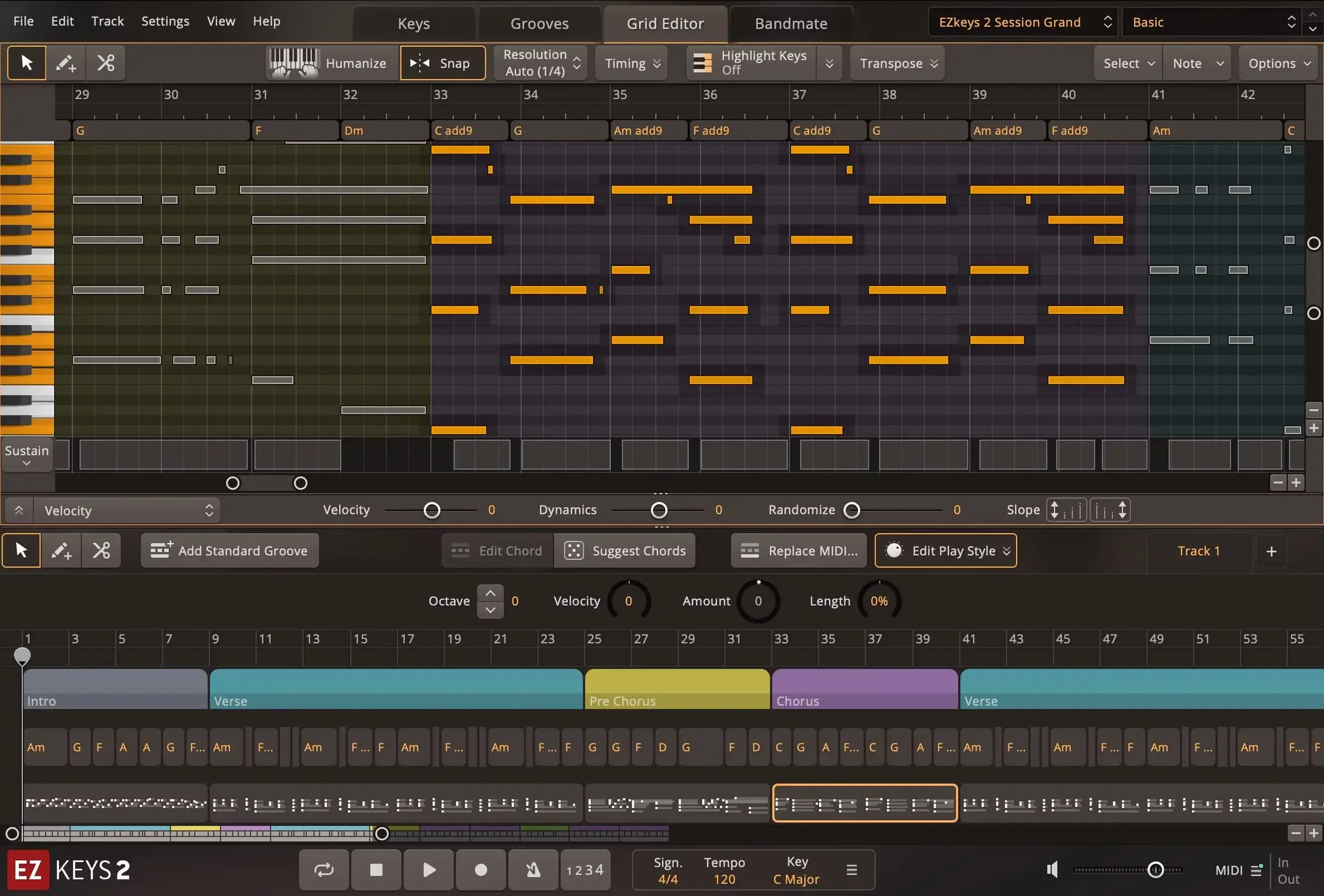
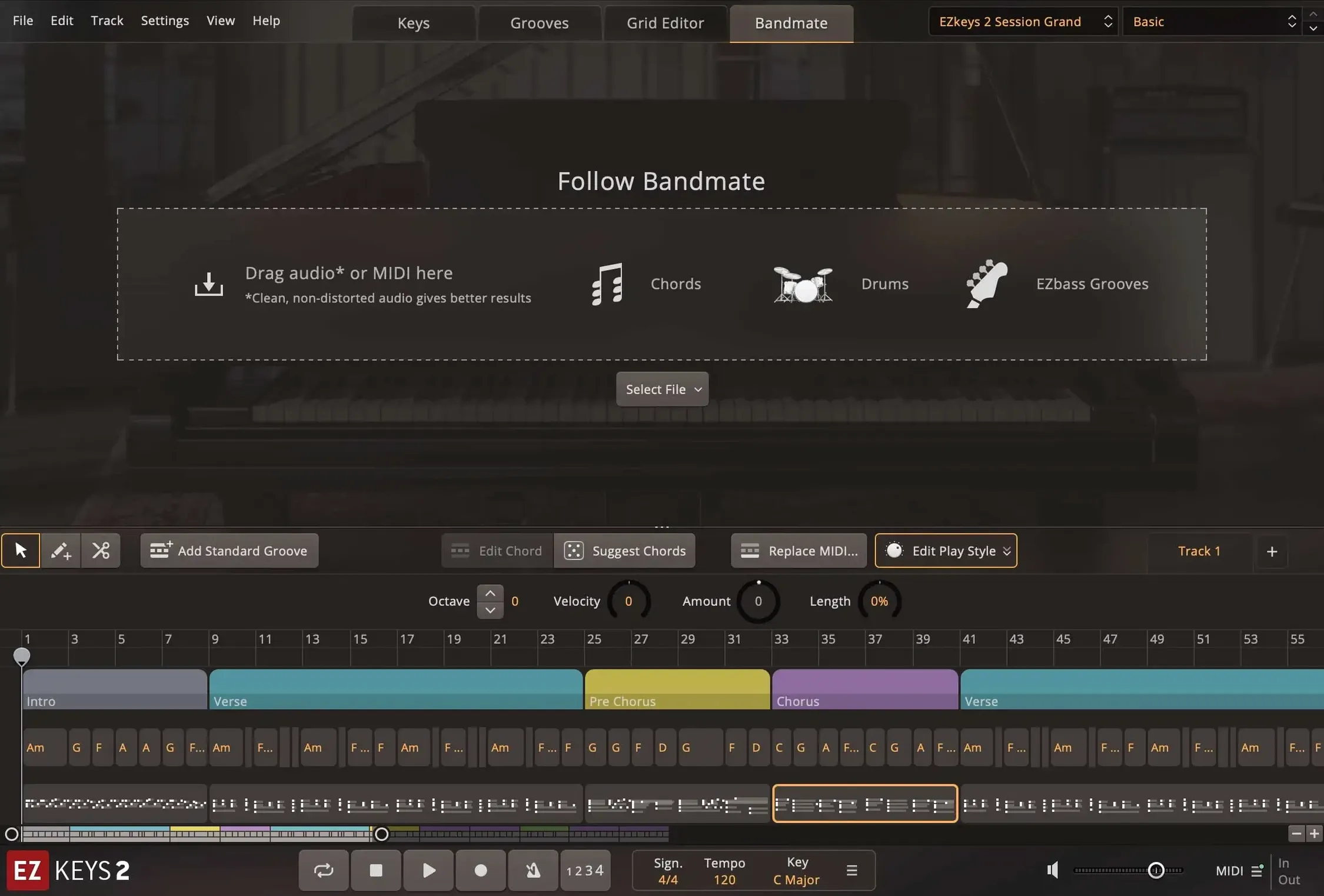
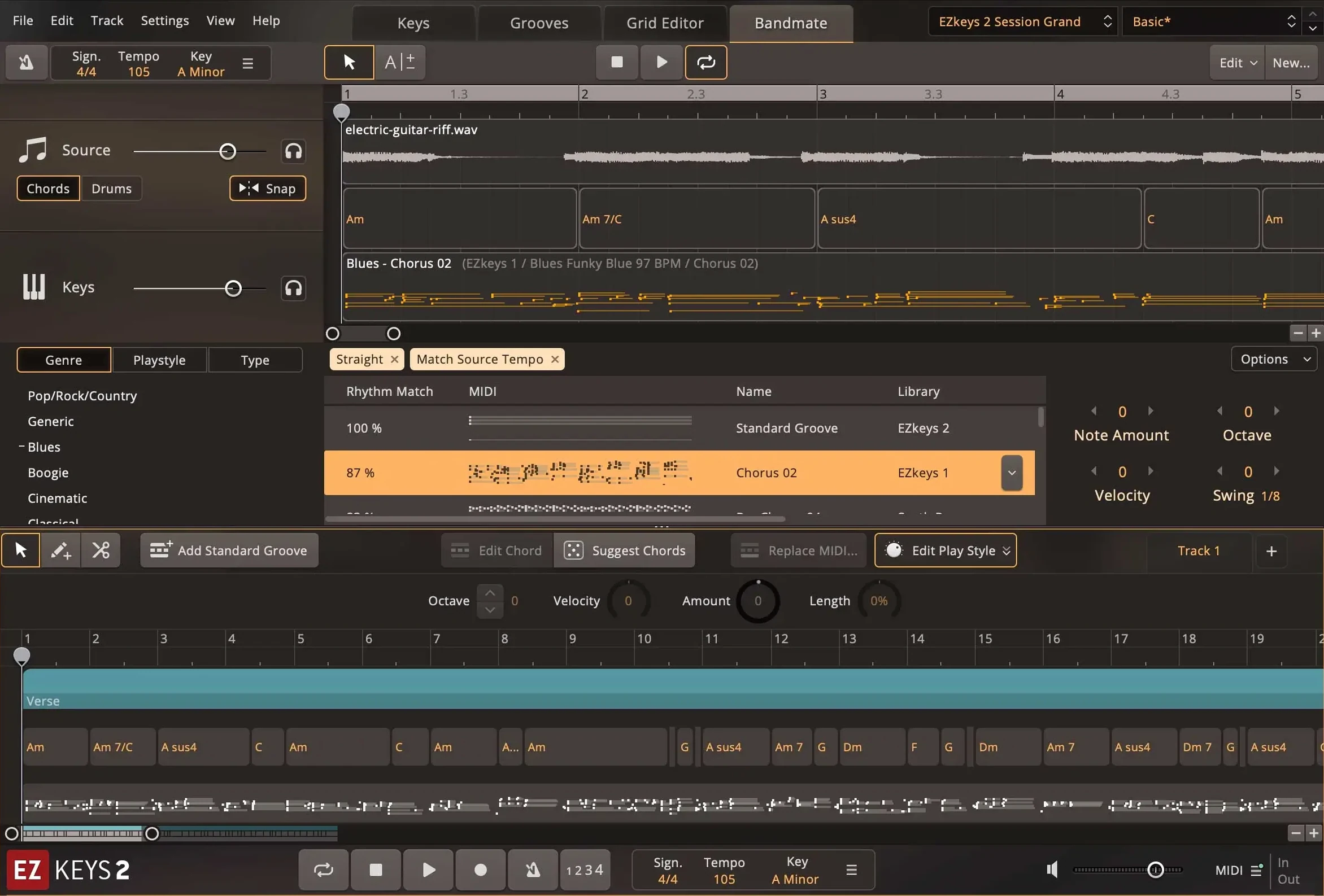
If you have spent time with Toontrack’s drum software, EZkeys will feel like a familiar room with a different instrument in the corner. The same philosophy of pairing a deeply sampled core instrument with a searchable MIDI library carries over, only here the focus shifts to harmony, chord progressions and the weight of a grand piano under your fingers.
Building an idea, step by step
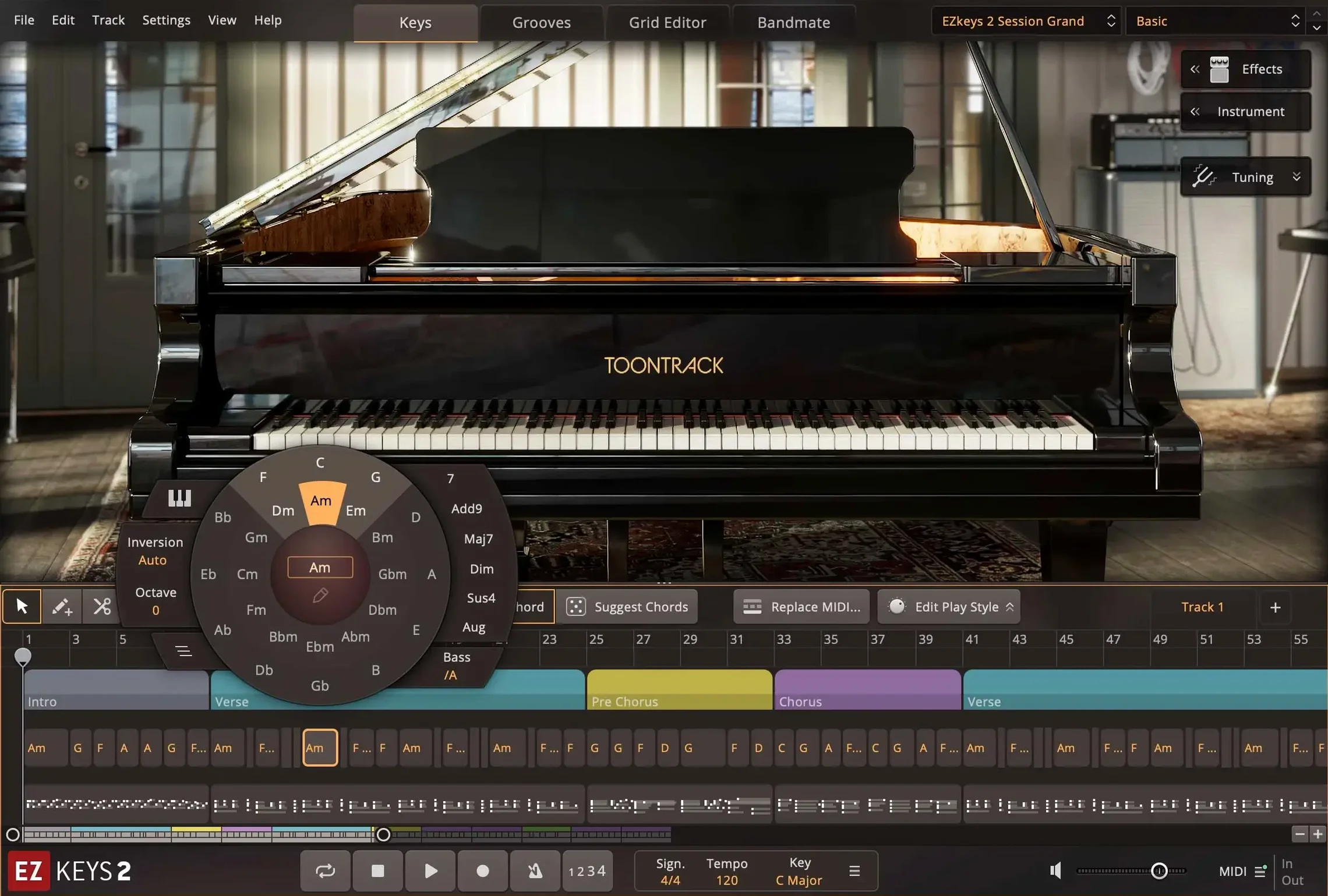
- Open the standalone app or load the plugin in your DAW and select a mix-ready preset. The core library is a grand piano captured with multiple microphone sets and room ambiences, so you can move from a close, damped tone to a wide concert-hall resonance without touching an EQ.
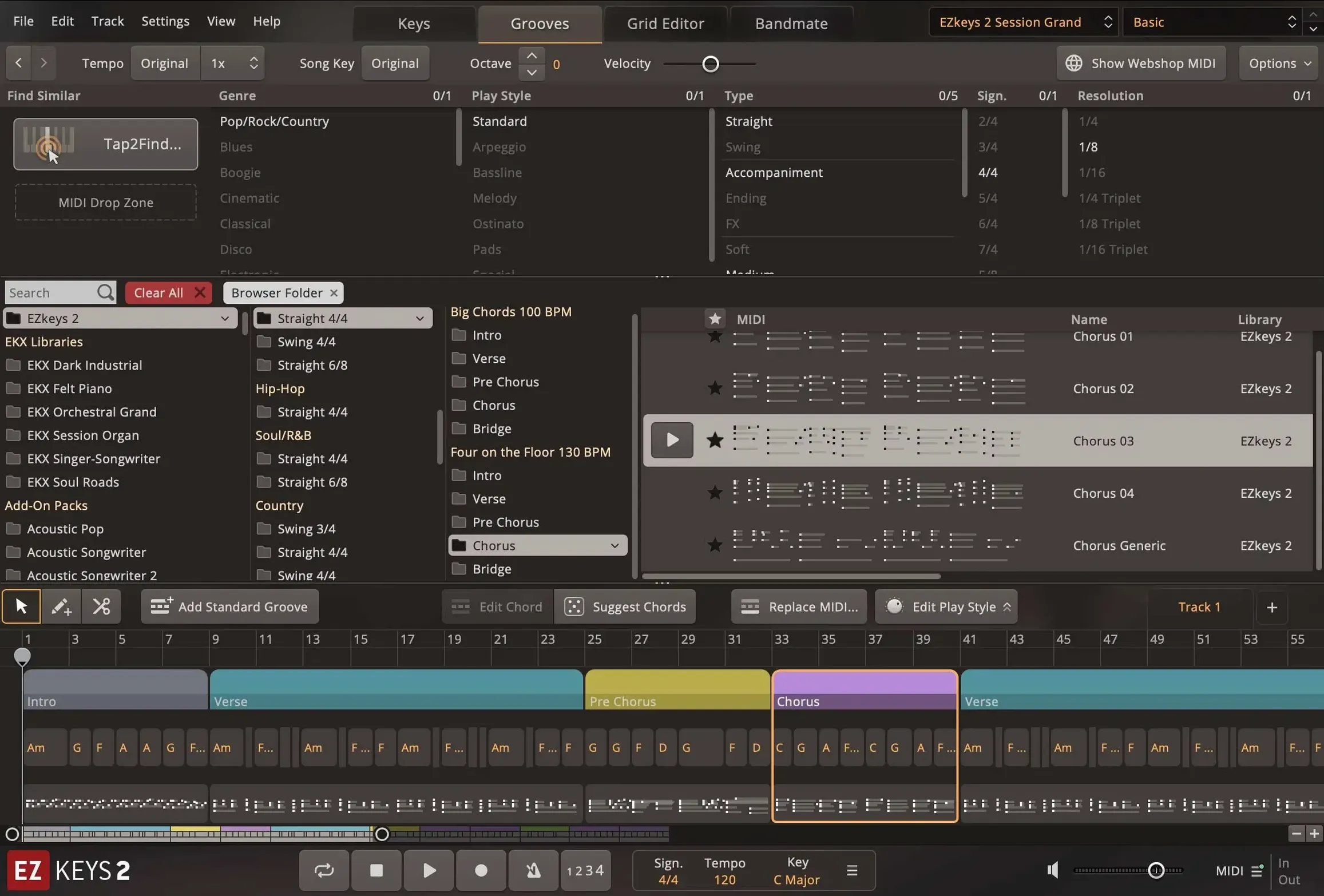
- Play a few chords or a loose melody. The Tap2Find function listens for rhythm and note clusters, then pulls matching MIDI patterns from a library performed by professional pianists. What comes back is not a quantized grid of identical hits but phrasing with ghost notes, pedal noise and dynamic variation that suggest a player, not a machine.
- Browse the suggested patterns by feel and genre. The library spans playing styles from restrained ballad arpeggios to driving rock eighths. Drag a pattern onto the timeline and the internal arranger lets you chain sections, adjust chord voicings and edit individual notes.
- Shape the tone further with the onboard effects and presets, then drag the MIDI into your host to continue arranging with other instruments. The software also runs as an AAX plugin for Pro Tools sessions.
On the Mac side, the current build polishes what was already there. Standalone and project icons now follow the macOS Tahoe style, and CPU usage across multiple cores has been leaned out so larger arrangements with several instances stay responsive. The update also opens the door to the Transistor Organ EKX expansion, widening the palette beyond acoustic piano. The interface stays in English, the minimum macOS version remains 10.13, and the core idea endures: a writing tool that disappears into the sound of a real instrument.
What the recent moves mean for a session
Version 2.1.5 is not the kind of update that rewrites the manual. The addition of Transistor Organ EKX support is the headline, and for anyone who works across multiple EZkeys expansions, it means one less barrier when reaching for a different tone mid-arrangement. You can load the organ engine without closing the project, and the instrument controls view in the Keys tab now includes an expression pedal knob for the String Machine EKX—a small shift that makes swells and slow filter rides feel less like menu-diving and more like reaching for a pedal on the floor.
The Tahoe-style icon refresh on Mac is a quiet signal that Toontrack is keeping the build current with Apple’s visual language. It does nothing for the sound, but it matters in a dock full of apps where older icons start to look like furniture from a previous apartment. More consequential is the CPU work under the hood. Sessions that used to nudge the fan into action on larger arrangements—three or four instances with ambient mic channels open and the chord track running—now settle sooner and stay there. The improvement is most noticeable on multi-core Macs, where the load spreads more evenly across cores rather than bunching up on the first two. In practice, that means you can keep the buffer low while tracking a vocal alongside a piano part without the clicks and pops that used to force a compromise.
Fast patch switching that keeps you in the flow
Across a working day, EZkeys loads fast and stays out of the way. The core piano library streams from disk without the long greyed-out pause that heavier orchestral libraries demand, and patch switching between presets is quick enough to audition tones during playback. On Apple Silicon, the native ARM build feels transparent—no Rosetta translation layer, no memory spikes that suggest emulation overhead. Intel machines running 10.13 or later handle the same sessions with a little more heat but no meaningful drop in stability.
Memory use scales with the microphone channels you keep active. A single close-mic setup sits comfortably under a gigabyte; opening all ambience channels and the overhead pair pushes closer to two. It is worth being deliberate about which mics stay on during writing versus mixing, especially if you are stacking multiple EZkeys instances for layered piano and organ parts. The plugin recovers gracefully from sleep and session reloads, and the MIDI drag-and-drop between EZkeys and a DAW has not broken once across Logic and Ableton sessions on the current build.
Match the sample rate before pitch drift sneaks in
A handful of preferences shape the experience more than they advertise. First, open the audio settings and check that the sample rate matches your session; EZkeys defaults to 44.1 kHz, and mismatches with a 48 kHz project cause subtle pitch drift that is easy to blame on the piano tuning. Second, in the MIDI settings, switch the Tap2Find sensitivity from the default to one notch lower if your playing is heavy-handed. The pattern suggestions tighten up noticeably when the engine is not trying to interpret every accidental velocity spike as rhythmic intent.
The Chord Wheel defaults to a major-scale view. Switching it to display borrowed chords and secondary dominants—a single click in the scale menu—opens up progressions that feel less like a theory exercise and more like a songwriter reaching past the obvious changes. Finally, disable the onboard reverb when you are routing individual mic channels to separate DAW tracks for mixing. The close and room mics carry enough natural ambience from the Riksmixningsverket hall that the built-in tail can muddy a mix before you have added your own spatial treatment.
Version 2.1.5 brings support for the Transistor Organ EKX expansion, updates the standalone and project icons to the macOS Tahoe style, and improves CPU performance when the plugin runs across multiple cores, especially on Mac.
- macOS 10.13 or later
- Intel and Apple Silicon Macs
- Interface language: English
Questions from the booth
It runs both as a standalone application on Mac and Windows and as an AAX, VST or Audio Units plugin inside a DAW.
The core library includes a MIDI pattern library covering a range of playing styles and genres, all performed by professional pianists so the phrasing feels natural and human.