Field recordists, sound designers, and producers who carry a phone everywhere have a particular relationship with XLN Audio Life. It is the endpoint for those accidental recordings — the clatter of a train carriage door, a kitchen drawer sliding shut — and the deliberate ones captured through the companion Life Field Recorder app. Life takes those sounds and treats them as raw material for a beat engine.
Drag a sound in, watch it slice itself
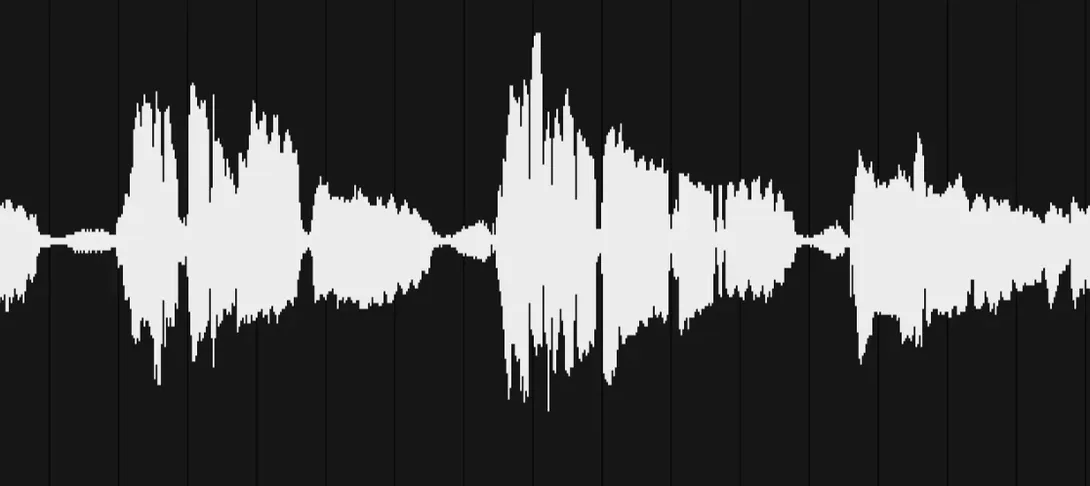
- Load a source. Drag a recording into a lane, pull something from the onboard library, or grab a file the Life DAW Recorder captured straight from another session. The waveform appears, sliced automatically into transient-triggered hits.
- Shape the lane. Each lane holds its own pattern, and the playback direction, pitch envelope, and decay are all within reach. A short metallic hit stretched long becomes a pad-like pulse; a vocal fragment played backwards turns percussive.
- Write a sequence. The sequencer is step-based but never static. Probability, offset, and repetition per step mean the pattern mutates over eight bars without ever sounding like a loop.
- Duck to the kick. The Duck control, added in version 1.2, routes sidechain compression through the sequencer so any lane can dip beneath the kick. A full rhythmic bed of rustling paper and water drops tightens around the low end without manual gain automation.
The result is a beat that breathes. Because the source material comes from unglamorous, everyday moments — a lift motor, gravel underfoot — the rhythms carry texture that a synthesised drum machine cannot replicate. Life does not just sequence hits; it makes field recordings behave like a rhythm section.
How the 1.2 update reshaped daily sessions
Until version 1.2, Life depended on a live connection to the mobile app for anything beyond its stock library. That changed with offline file support — recordings stored or captured directly on the computer now load straight into a lane, no phone required. In practice, this means a producer can pull a folder of found sounds gathered months ago, drop them in, and start building without pausing to sync devices. The mobile apps remain essential for spontaneous field capture, but the desktop side gained independence.
The Duck control arrived in the same update. Sidechaining had always been possible with external routing, but having a per-lane Duck parameter tied to the kick channel collapses a multi-step mixing task into a single drag. A lane of crackling footsteps or rain on glass can be pushed back behind the kick transient with enough precision that the groove tightens rather than muddies. It is the kind of addition that, once used, becomes muscle memory — you reach for it on every second lane because the alternative feels unnecessarily manual.
A foley artist's late-night session
Consider someone scoring a short film who needs percussion that does not sound like percussion. They have spent an afternoon recording props — a wooden chair dragged across concrete, coins dropped into a ceramic bowl, the zip of a jacket. Back in the studio, they open Life as an AU plugin inside their DAW. The chair drag becomes a low, irregular thump spread across eight steps with probability nudged so the hit occasionally ghosts. Coins are pitched up and assigned short decay, landing on off-beats. The jacket zip, reversed and stretched, pulses underneath as a textural bed. Within twenty minutes, the scene has a rhythmic backbone that belongs to its own sound world. No one hears a kick drum or a snare; they hear the room the film lives in.
Transient detection that finishes before you look up
On an Apple Silicon Mac, Life launches as a native process and sits comfortably in a project alongside several instances without spiking the CPU unpredictably. The transient detection happens on import — fast enough that dragging a two-minute field recording feels near-instant — and once the slices are mapped to steps, playback is a read operation rather than an ongoing analysis task. Memory use scales with the length and number of loaded samples, but a dozen lanes of short percussive hits barely registers. The standalone app is similarly lean; it does not demand a particular audio interface or sample rate, and switching between on-board output and an external interface mid-session causes no hiccups.
Stability has been uneventful in the best sense. Crashes are rare, and the plugin behaves predictably in Logic Pro and Ableton Live. The one caveat worth noting is that the DAW Recorder's buffered input, added in 1.2, requires a moment of attention when setting routing — it is easy to miss the buffer setting and wonder why the recorded audio is silent. Once configured, it works without further intervention.
Building a kitchen-sink groove from scratch
A concrete example helps. The task: create a 90-second rhythmic bed from a single recording of cutlery being sorted into a drawer.
Open Life as a standalone session. Drag the cutlery recording onto Lane 1. The waveform appears with transient markers already placed. Listen through and adjust the threshold so only the sharpest clinks and the drawer thud are triggering slices. Set the lane to monophonic playback, shorten the decay to tighten each hit, and draw a pattern on the sequencer grid — kick on one and three, a pair of spoons clinking on the off-beats.
Duplicate the source onto Lane 2. This time, raise the slice count so the subtler rattles between the main hits register. Reverse playback direction, drop pitch by seven semitones, and let the decay ring longer. In the sequencer, scatter sparse hits with probability at around forty percent so the reversed clatter drifts in and out. Add a third lane with the same source, pitched up an octave, and sequence rapid sixteenth-note bursts on the last two beats of every fourth bar.
Now enable Duck on Lanes 2 and 3, keyed to Lane 1's kick hits. Pull the Duck amount down until the reversed textures recede behind each drawer thud and snap back in the gaps. The groove tightens immediately — the cutlery sounds wrap around the main hits instead of competing. Export the stereo mix, or leave it as a live track feeding into the DAW for further processing. The whole process takes less time than boiling water for tea.
- macOS 10.13 or later
- Apple Silicon and Intel native