What changed in AnyTrans 8.9.14
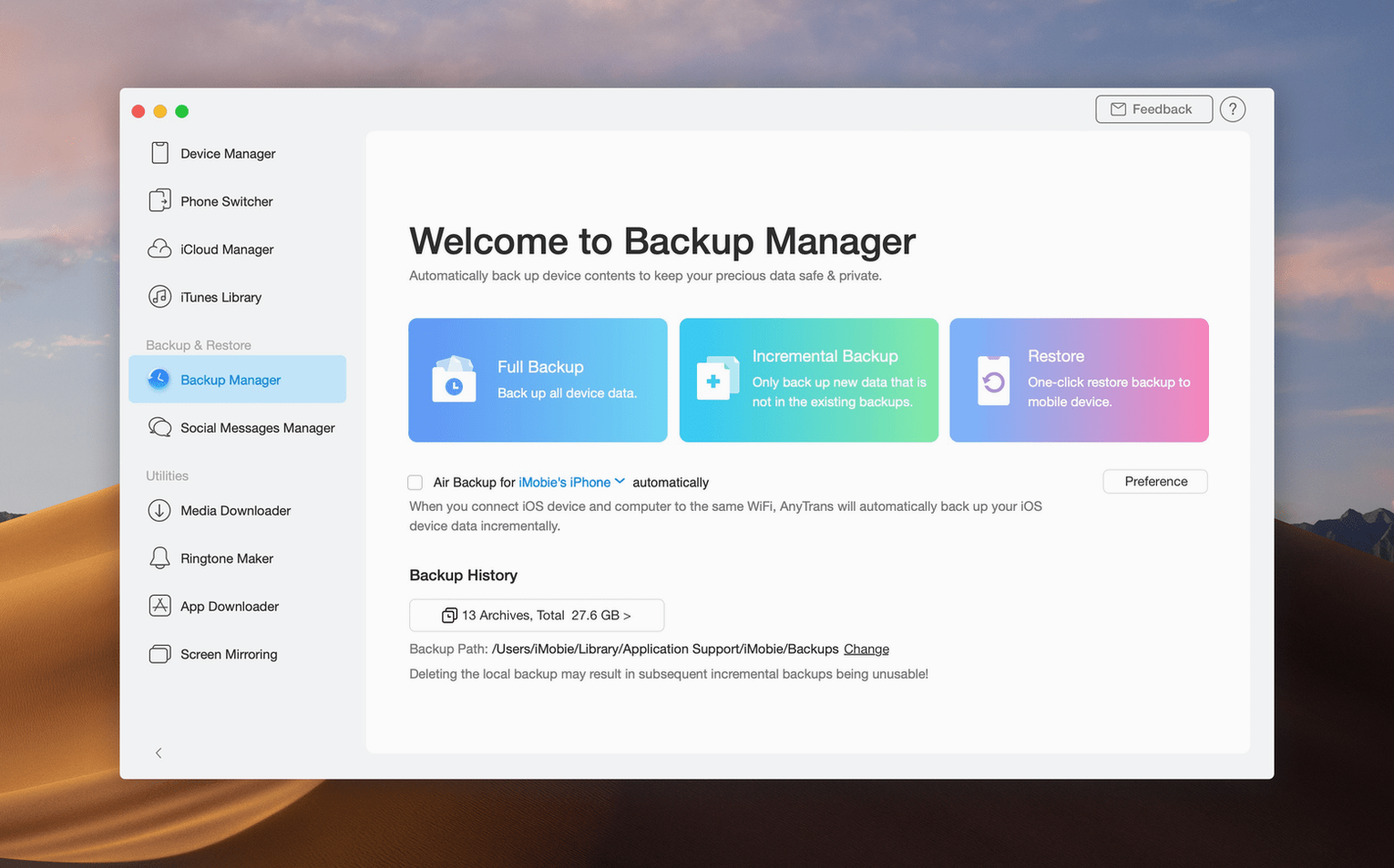
The version number ticked forward to 8.9.14 in late March 2026, but the toolset carries over without new feature flags or interface shifts. The downloader still pulls audio and video from over 900 websites, the backup routines write iOS data to your Mac on the same schedule, and the iCloud account mover continues to shuttle content between accounts without forcing a full library rebuild. For anyone arriving via an AnyTrans for iOS crack search, the functional surface is identical to the previous build—just rolled forward with maintenance in the background.
A numbered workflow for moving an iPad library
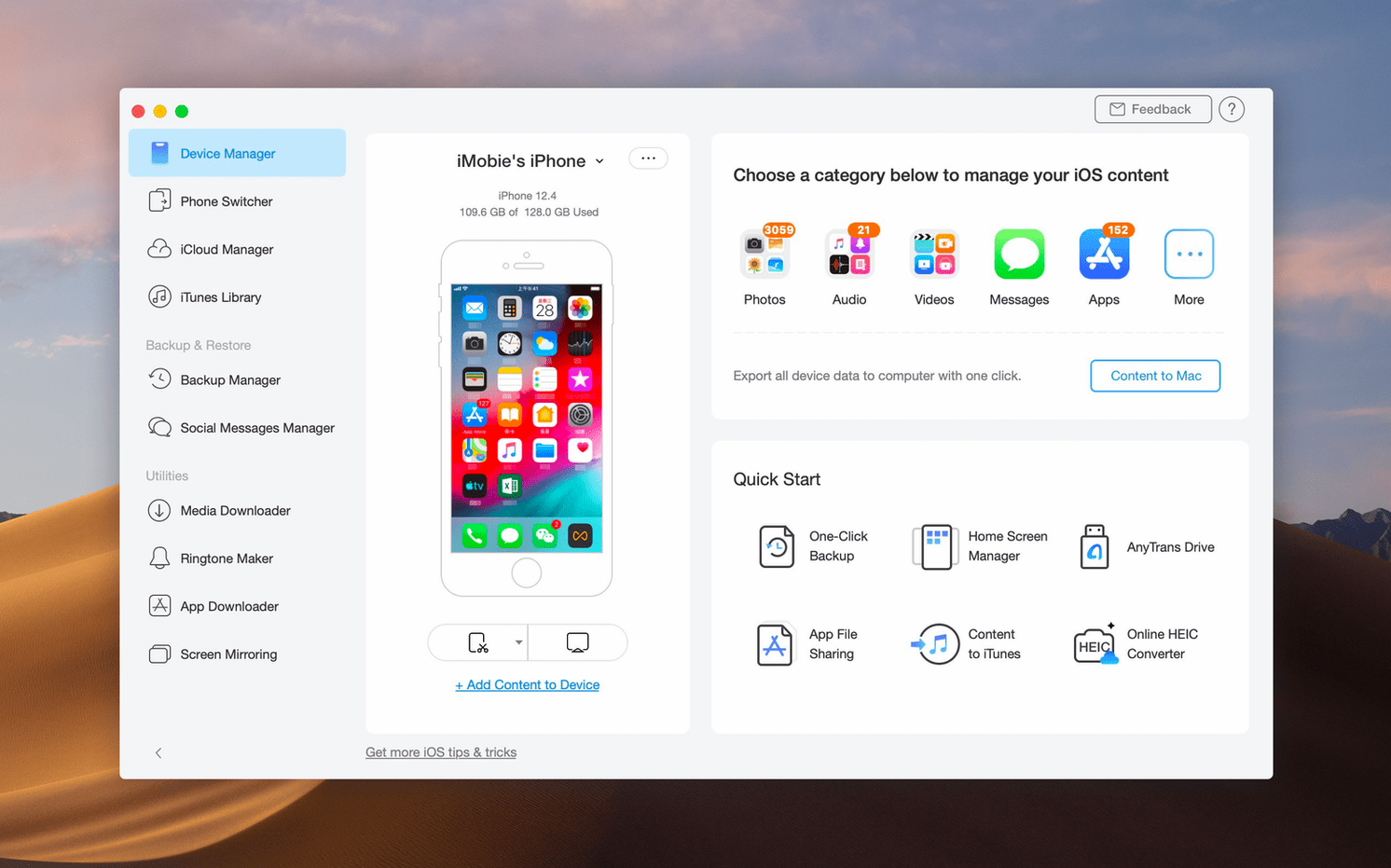
- Connect the iPad and open the device manager. AnyTrans reads the categories—photos, messages, music, books—and lays them out in a column.
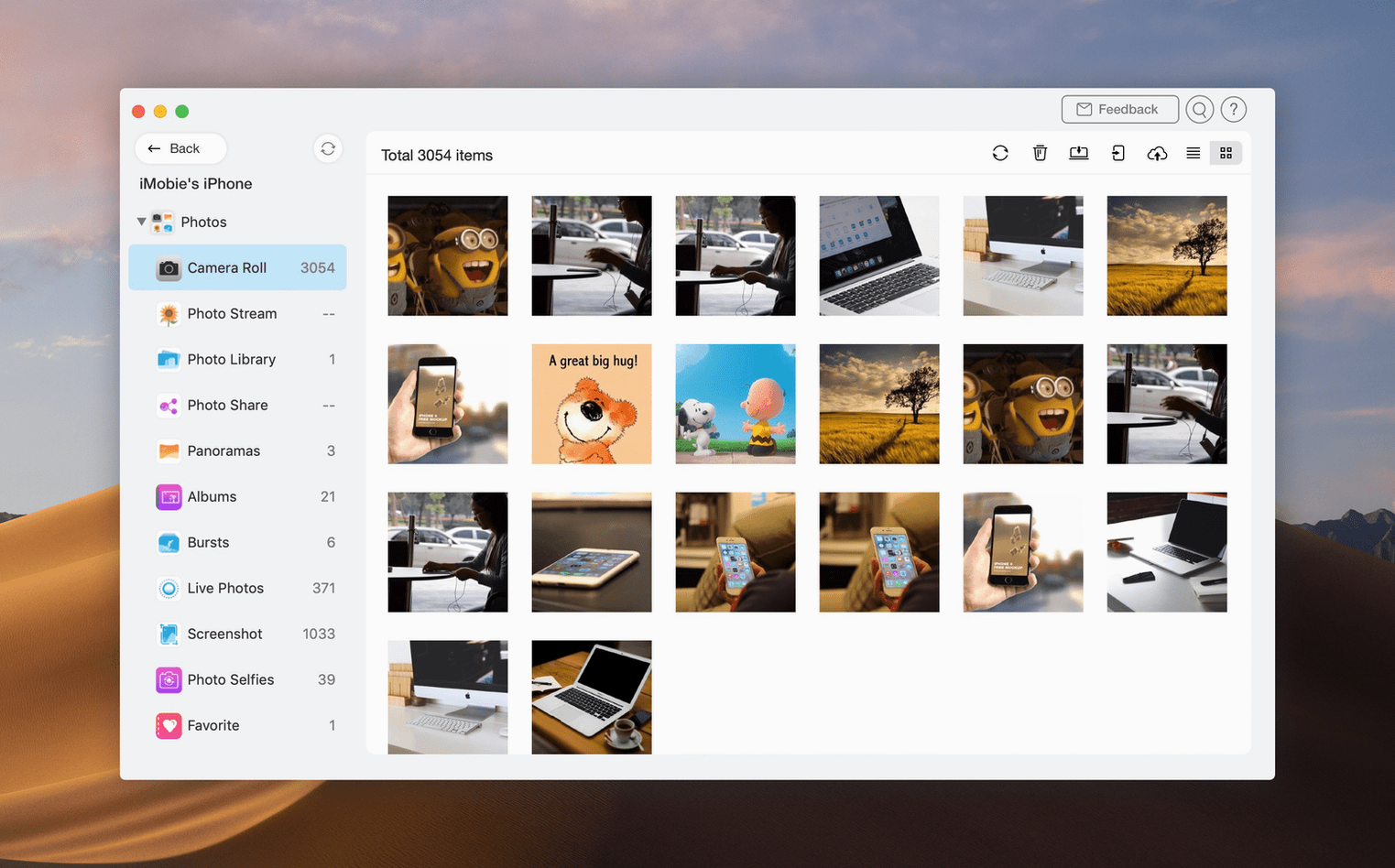
- Pick a category. Tapping Music shows playlists, albums, and individual tracks stored on the iPad.
- Choose a destination on the Mac. A dropdown lets you point the transfer at a folder or send it straight into an iTunes library.
- Click the one-click copy button. The selected category streams across the cable with file names and metadata intact, no sync erasure.
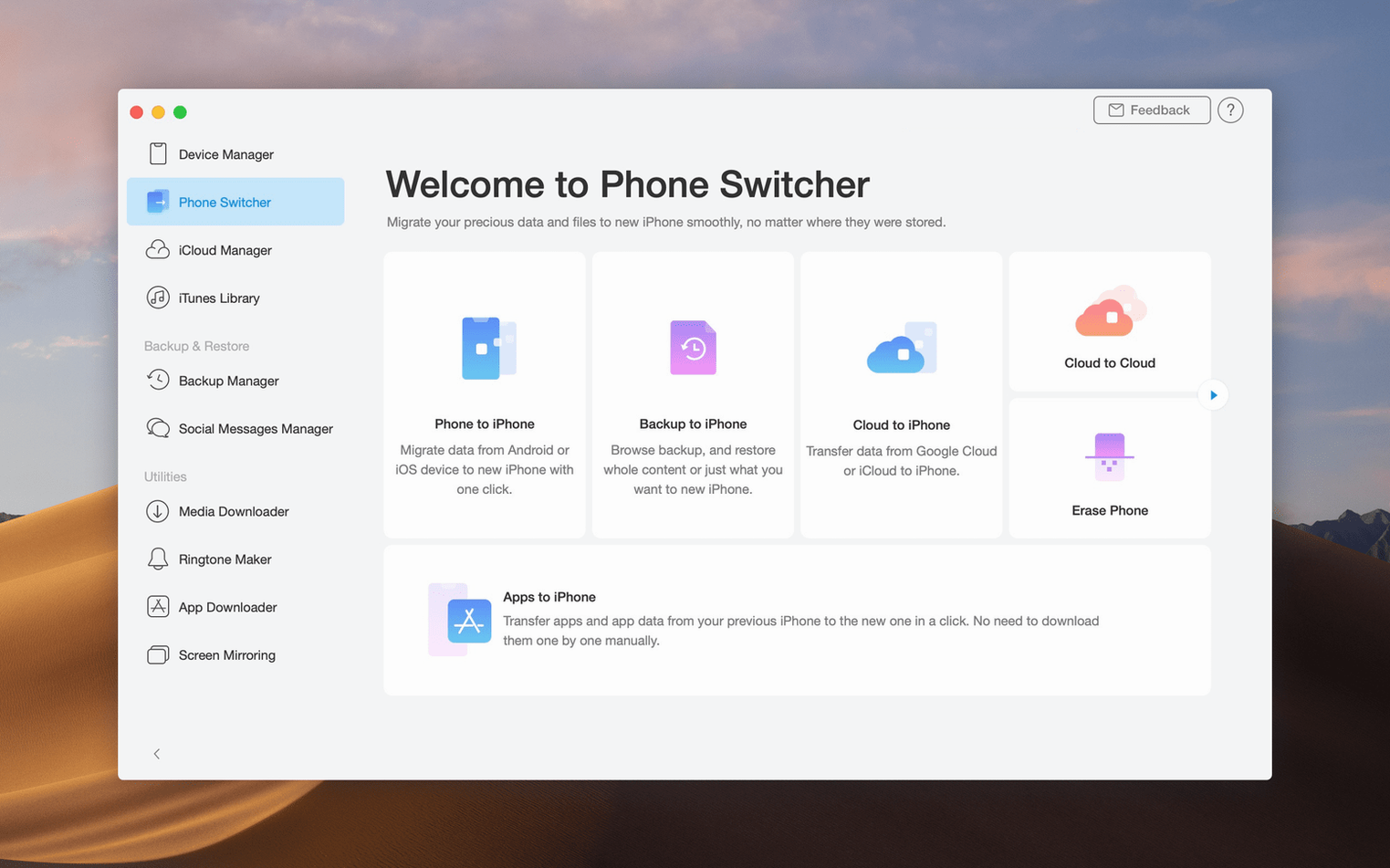
The app can also pull the same data from an iCloud backup or an iTunes library, letting you rebuild a device from fragments spread across Apple's ecosystem without overwriting what is already there.
Switch the media-handling defaults so your transfers don’t create duplicates
AnyTrans ships with a handful of defaults that make sense for a cautious first run, but the app works better once you tell it how you actually manage media. Open the preferences pane before connecting a device and look at the backup location first. The default path usually lands somewhere inside the user Library folder, which is fine until a drive fills up or Time Machine starts chewing through incremental copies of old iPhone backups. Pointing it at an external volume or a dedicated folder keeps the Mac's boot drive lean and makes the backup routine easier to inspect later.
Then check the import behaviour for photos. By default the app preserves original filenames, which is useful for archival work but creates messy folders when you pull a few thousand shots off an iPad over USB. Switching to a date-based naming scheme groups frames by shoot day, and that alone makes a year of footage far easier to scan in Finder. The device manager also has a toggle for automatic conversion of HEIC files during transfer—leave it off if you edit in Lightroom or Final Cut, enable it if you mostly need JPEGs for sharing and slideshows.
One more worth setting: the Wi-Fi transfer toggle. It is off by default, and for good reason. USB is faster and more predictable for large libraries, but for quick single-file pulls—a voice memo, a short clip—letting the app find the phone on the local network saves a cable hunt. The trade-off is that Wi-Fi transfers pause when the phone locks, so keep the screen awake or plug in for anything substantial.
Where AnyTrans sits among the usual alternatives
The Mac has no shortage of iPhone managers, but they split into two camps. iMazing takes the deep-inspection route: it reads backups like a forensic tool, surfaces individual app data, and offers fine-grained export options that AnyTrans only brushes against. Filmmakers and audio people who need to pull a single recording out of a third-party app often prefer that granularity. AnyTrans counters with a simpler category view and a media downloader built into the same window, which keeps it closer to a general-purpose content hub than a device autopsy kit.
SyncBird aims at much the same iTunes-replacement niche, and its interface feels lighter on first launch. In practice it leans on system libraries more heavily, which means fewer moving parts but also less control when an iTunes library is already corrupted or split across drives. AnyTrans works around a broken iTunes installation more gracefully, which matters on older Macs where iTunes has accumulated years of metadata drift.
Then there is Finder itself, which handles basic music and movie syncing on modern macOS without any third-party layer at all. Finder is unbeatable for a single playlist or a small batch of files, but it has no notion of iCloud account migration, no website downloader, and no way to assemble a new iPhone from an Android handset and an old backup simultaneously. That is the space AnyTrans occupies: not the deepest tool, not the lightest, but the one that covers the widest stretch of migration and media chores without sending you to three different utilities.
Scattered Apple data finds one home when you’ve outgrown a single device
The clearest fit is the person who has lived inside Apple's ecosystem long enough to have data scattered across it. An old iPhone in a drawer, an iTunes library on a decommissioned Mac mini, a few years of photos in iCloud, a new Android phone that needs to hand off contacts and messages. AnyTrans is built for that migration day—the moment when moving everything by hand would take an afternoon and a spreadsheet. It does not solve every edge case, but it collapses the most common ones into a single cable session.
Independent creators and video people get a different kind of value. Footage shot on an iPhone or iPad tends to live in unpredictable places: some in Photos, some in third-party camera apps, some in Messages threads where a collaborator sent a clip. The category-based transfer means you can pull only the video folder, or only voice memos, without syncing photos you do not need or touching the rest of the device. The downloader covers the other side of that workflow, grabbing reference audio or b-roll from the web and dropping it into the same folder structure you are already using for the transfer.
Mac users who keep a machine on High Sierra or slightly newer are another natural audience, simply because newer management tools have moved on. An older Mac that still runs fine for editing and archiving does not need to be abandoned just because iTunes changed shape; AnyTrans bridges the gap between an aging system install and a current iPhone without demanding a macOS upgrade first.
A charge-only cable stalls the app before you see your first file
The first question is usually about cables and connections. AnyTrans works over USB, and that means a genuine or at least properly wired Lightning or USB-C cable—cheap charge-only cables will not pass data and the app will sit there waiting for the device to appear. The phone also needs to trust the Mac, which triggers the usual iOS prompt on first connect. After that, the device manager simply reads what is there.
Another common concern is whether the app duplicates everything during a transfer. It does not, by design. The import routines are additive: they copy from the device or backup to the destination you set, without erasing the source. The one-click copy for an iPad library works the same way. The risk of duplication appears only if you run the same transfer twice into the same folder, so naming folders by date or keeping a clean destination directory handles that.
People also ask whether an iCloud transfer requires the password for both accounts. It does. AnyTrans does not bypass Apple authentication; it logs in through the standard iCloud sign-in and then moves content between accounts once both are authorized. The same applies to pulling iCloud files down to the Mac—two-factor authentication still applies, so have a trusted device nearby for the code.
Finally, there is the question of whether the app replaces iTunes entirely. In daily use it can. Transfers, backups, media import, and device management all happen inside AnyTrans without opening iTunes at all. The only time iTunes still appears is when a specific feature depends on an iTunes library file, and even then AnyTrans reads it directly rather than launching the player. For anyone arriving through an anytrans for mac or anytrans mac torrent search, the installed app is self-contained in exactly that way—one window, one cable, the device tree on the left, the content on the right.
- macOS 10.13 High Sierra or later
- Intel-based Mac