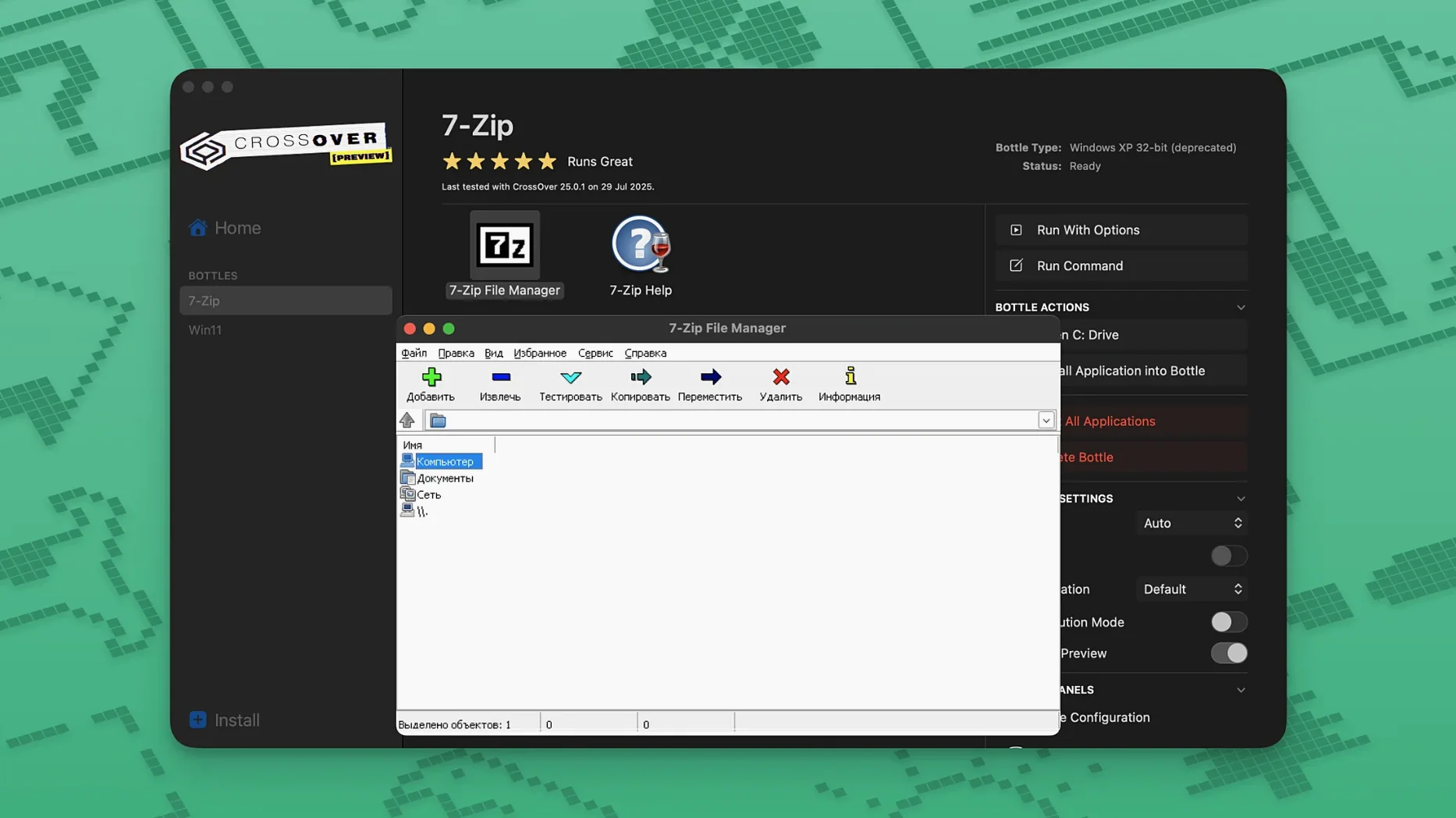
Version 26.3.0 arrived as a maintenance salvo aimed squarely at launchers that broke after their own updates. Diablo IV players who stared at a dead icon will find it boots again, the Epic Games Launcher resumes downloading on Mac, and the GOG Galaxy client loads instead of hanging. These fixes keep the compatibility layer in step with moving targets — a rhythm every CrossOver user recognizes.
The bottle as a self-contained apartment
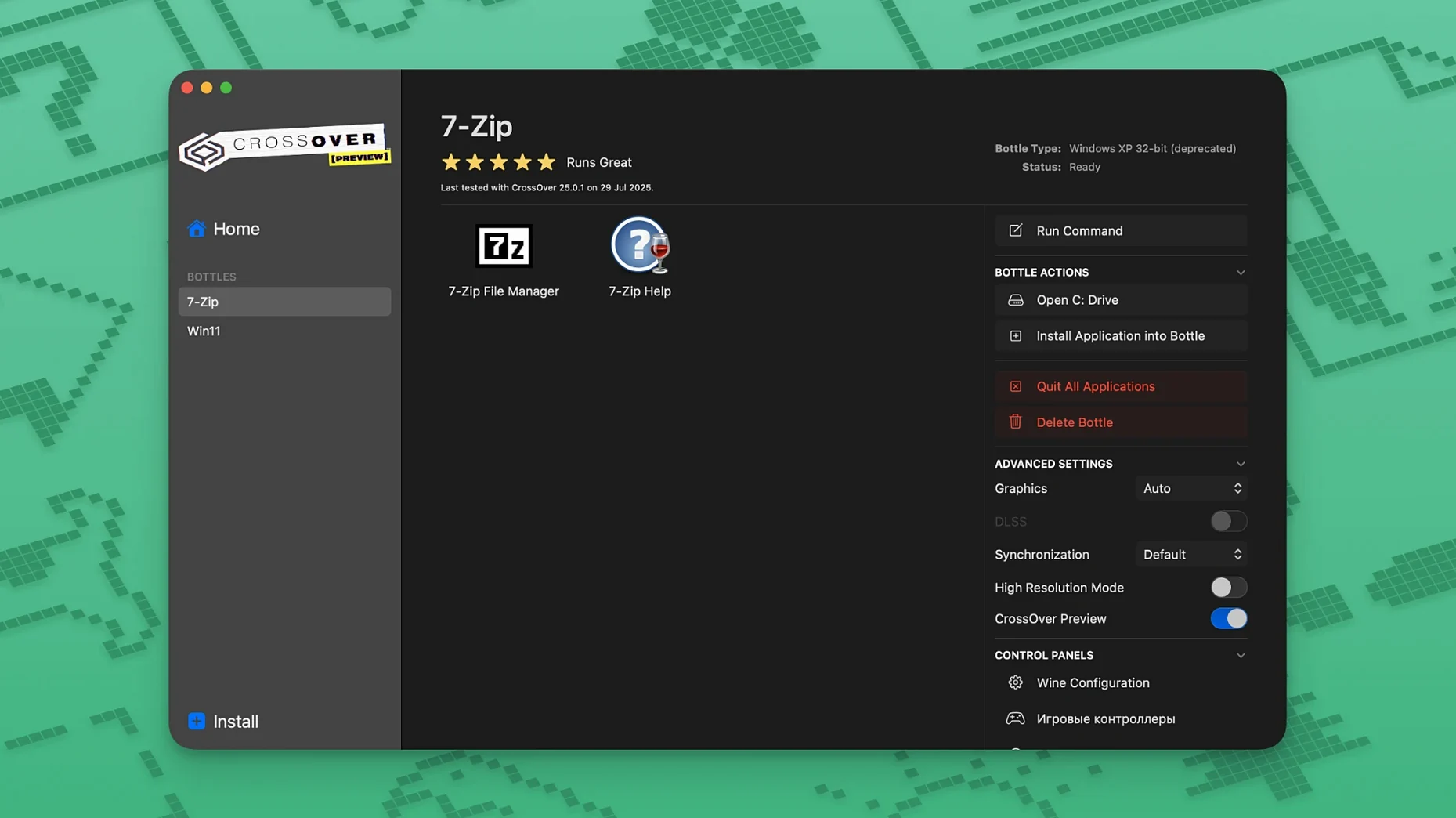
Each Windows program lives inside what CodeWeavers calls a bottle — a discrete environment with its own virtual C drive, directory structure, and registry. This means a finicky old game and a demanding productivity app never trip over each other’s dependencies. When you're running a cracked CrossOver build to isolate a particular application version, that apartment model is what keeps the rest of your library stable. A corrupted bottle gets deleted, not the whole compatibility layer.
Wine, translated for the desktop
Underneath the bottle management sits Wine, the long-running open-source project that translates Windows API calls into something macOS can digest. CodeWeavers wraps that engine in a graphical installer and configuration layer, so you drag an .exe onto the window instead of editing prefixes by hand. For anyone hunting a CrossOver full release that handles the translation plumbing quietly, the value is in how much it hides — DXVK for DirectX, font smoothing, and window management all negotiated without a terminal window staying open.
Launching a late-night audio tool inside an old bottle
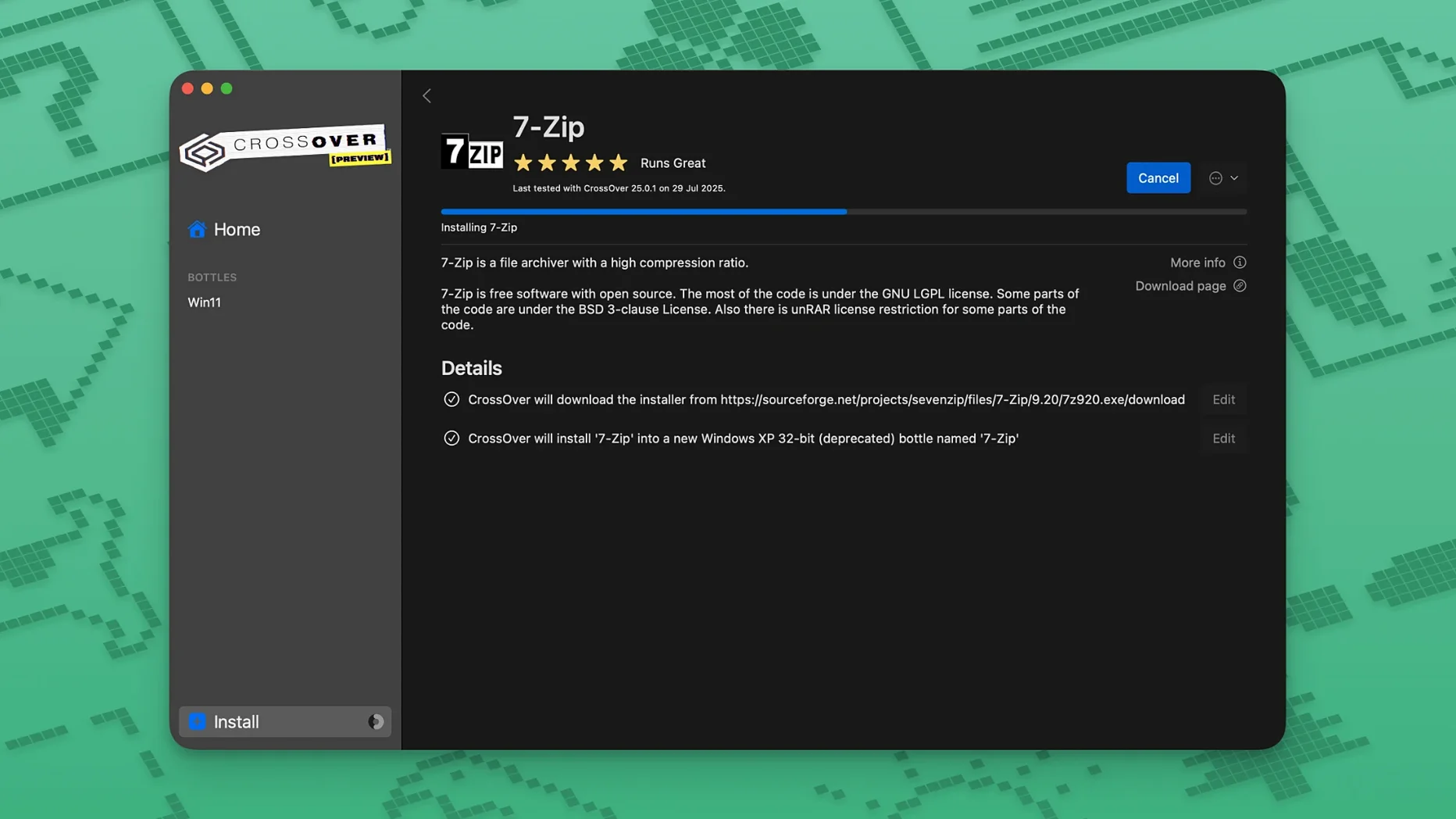
Say it is late evening and a small Windows-only audio utility has been sitting in the Downloads folder since lunch. I launch CrossOver, and the main window opens to a single column of bottles I have accumulated over months: one for a mid-2000s RPG, one for a text editor that never made the jump to Mac, one that holds the remains of a game I uninstalled but never quite cleaned up. I click New Bottle, give it a name tied to the audio tool, and pick the Windows version from a dropdown. The bottle forms in a few seconds — a quiet moment where the application creates the C drive, the registry skeleton, and the folders that will hold whatever comes next.
Then the installer. I drag the .exe into the bottle and CrossOver steps through the familiar Windows install wizard, with all its licence screens and destination prompts rendered inside a native Mac window. The installer believes it is running on a real Windows machine, and that illusion is the entire point. When it finishes, a launcher icon appears in my bottle, and I can double-click it like any Mac app. The audio utility opens, scans for its plugins, and settles into the menu bar. The whole session — from empty bottle to working tool — runs about the length of a cup of tea going cold.
Swiping between a Windows game space and the workday desktop
CrossOver cooperates with macOS in small, practical ways. It respects the Mission Control spaces I already use, so a Windows game can live on its own desktop and be swiped away when the workday returns. Files move between environments through the standard Finder: a bottle exposes its C drive as a folder on the Mac file system, which means a Windows document lands in the same Spotlight index as everything else. I have dragged a save file out of a bottle and backed it up to iCloud without ever opening the game again. The integration is not a bridge between two operating systems so much as a series of doors that open in both directions.
On the hardware side, an Intel Mac owner gets the straightforward path — the translation happens on the architecture Windows applications expect. That matters for anyone still running an older machine where Boot Camp used to be the only answer. CrossOver does not ask for a reboot, does not reserve a partition, and does not require a second OS licence. It simply occupies the same space as every other app in the Applications folder. When I think of cracked CrossOver Mac scenarios, I think less of circumventing anything and more of the quiet convenience of launching a Windows utility between two native Mac apps without ceremony.
The application also pairs well with macOS accessibility features. I have seen VoiceOver read labels inside a Windows installer dialog, and the system-wide dark mode carries a certain coherence into the bottle windows. Nothing feels quarantined. A Windows app running under CrossOver receives the same command-tab treatment as Finder or Pages, and that continuity is easy to underestimate until you have lived without it.
Who finds the most use in this
The product casts a wide net, but three groups stand out. First come the players — people with a specific PC game that never received a Mac port and likely never will. They tend to maintain one or two bottles, update them only when a launcher breaks, and otherwise want the compatibility layer to stay out of the way. Second are the productivity holdouts: writers, accountants, engineers who rely on one Windows utility that their entire workflow grew around. For them, CrossOver is not a gaming tool but an archive that keeps a familiar instrument alive. Third are the IT administrators who manage fleets of Macs and quietly deploy CrossOver so a legacy internal tool remains usable without supporting a parallel Windows infrastructure.
These groups share a common trait — they are not hunting for a CrossOver 26 free experiment, but for a stable translation layer that behaves predictably. The bottle system rewards a certain temperament: someone willing to isolate a problematic app, test a configuration, and leave it alone once it works. Tinkerers thrive, but so do people who never want to see a Wine log file in their lives.
A full workflow: moving a journal app from Windows to Mac
Here is a concrete path I walked recently with a friend who kept years of entries in a Windows-only journaling program. Her old PC was failing, and the MacBook Air she inherited could not run the installer natively. CrossOver turned the migration into an afternoon project.
First, I copied the journal's data folder from the old PC to a USB drive and then into a folder on the Mac's desktop. Inside CrossOver, I created a fresh bottle and installed the journaling application from its original installer disc image — no dual-boot, no virtual machine. Once the application launched, I opened its import dialogue and pointed it at the desktop folder through the bottle's file system mapping. The import ran inside the bottle, writing to the virtual C drive, while the original data stayed untouched on the desktop as a safety copy.
Then came the small integration work. I set the journal application to save its database into a folder that sits inside the bottle but is also symlinked to a subfolder in the Mac's Documents directory. That way the data flows through two backup systems: Time Machine on the host side, and the journal's own internal backup schedule inside the bottle. We also pinned the application icon to the Dock, so launching it feels no different from any native program. The whole setup — install, import, backup wiring — took under an hour, and the journal has opened every day since without complaint.
The detail worth keeping from that session is how little the Windows-ness of the application mattered. It behaved like a well-mannered citizen of the Mac, writing its files, respecting the window manager, and staying quiet until summoned. The bottle remained a container we never had to open again.
Diablo IV launcher handshake restored after a Windows patch
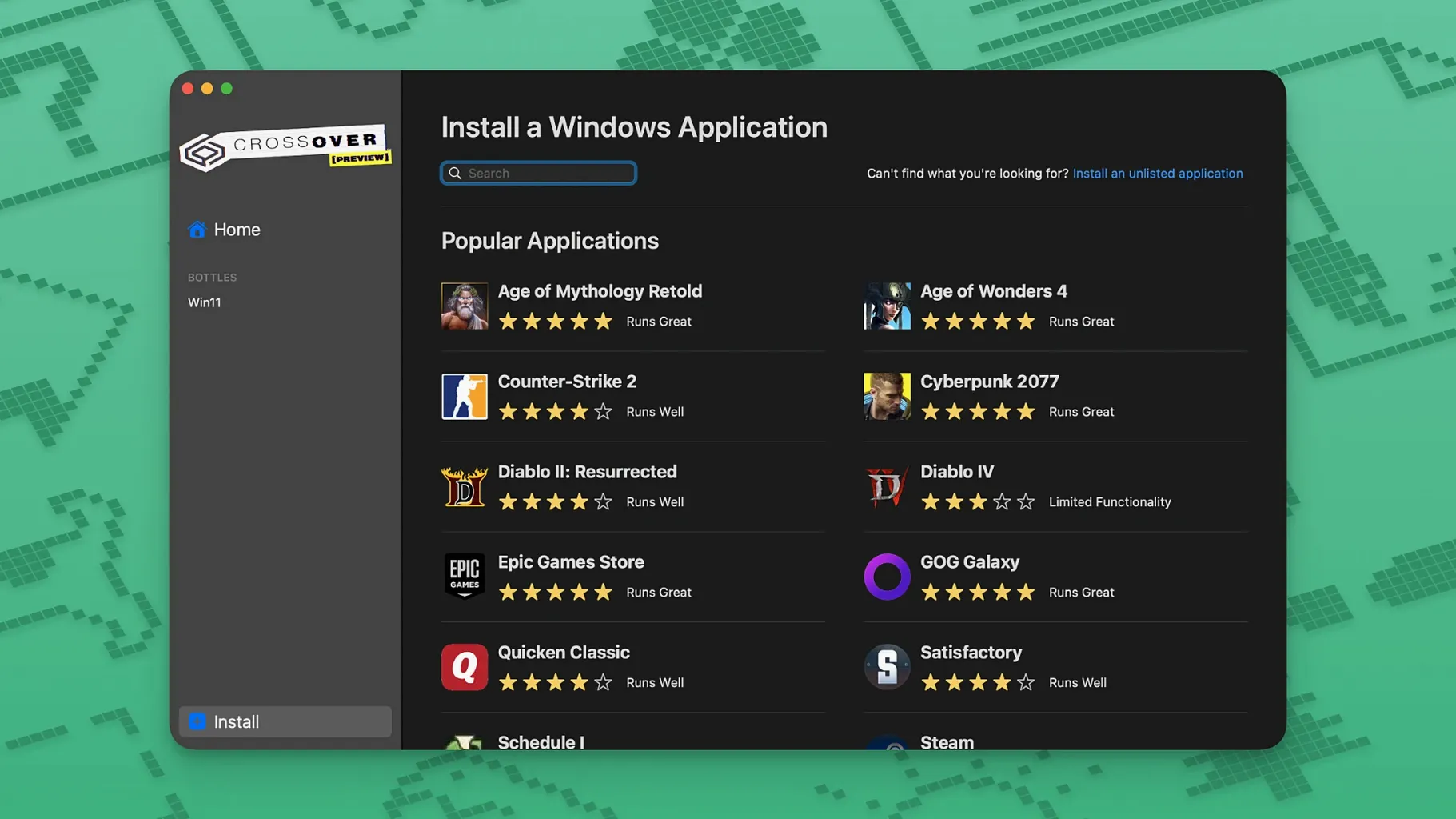
The three fixes in this release address launchers that many users open before anything else. Diablo IV players on Mac had watched the game stop launching after a patch on the Windows side; 26.3.0 restores that handshake without requiring a fresh installation or a rewritten prefix. The Epic Games Launcher download failure similarly affected anyone relying on the store to fetch titles, and the fix returns that channel to working order. GOG Galaxy, which handles a sprawling library of DRM-free games, now loads its client interface instead of stalling after an update.
These are not glamorous changes, and they do not need to be. They are the kind of fixes that keep a CrossOver full installation viable week to week, because launchers and stores update far more frequently than the compatibility layer itself. CodeWeavers watches those moving targets and responds with the bottle mechanics already in place. For the user, the daily effect is simple: fewer dead ends, fewer workarounds, and a clearer sense that the Windows software on their Mac will still open tomorrow morning.
CrossOver 26.3.0 patches three launcher-breaking regressions: Diablo IV starts again after a game update, Epic Games Launcher downloads function on Mac once more, and the GOG Galaxy client loads instead of stalling.
- macOS 10.15 Catalina or later
- Intel-based Mac
Questions from the booth
A bottle holds a self-contained virtual C drive with its own directory structure and Windows registry, isolating each application's dependencies from others.
CodeWeavers produces CrossOver for both macOS and Linux, built on Wine-based compatibility technology.