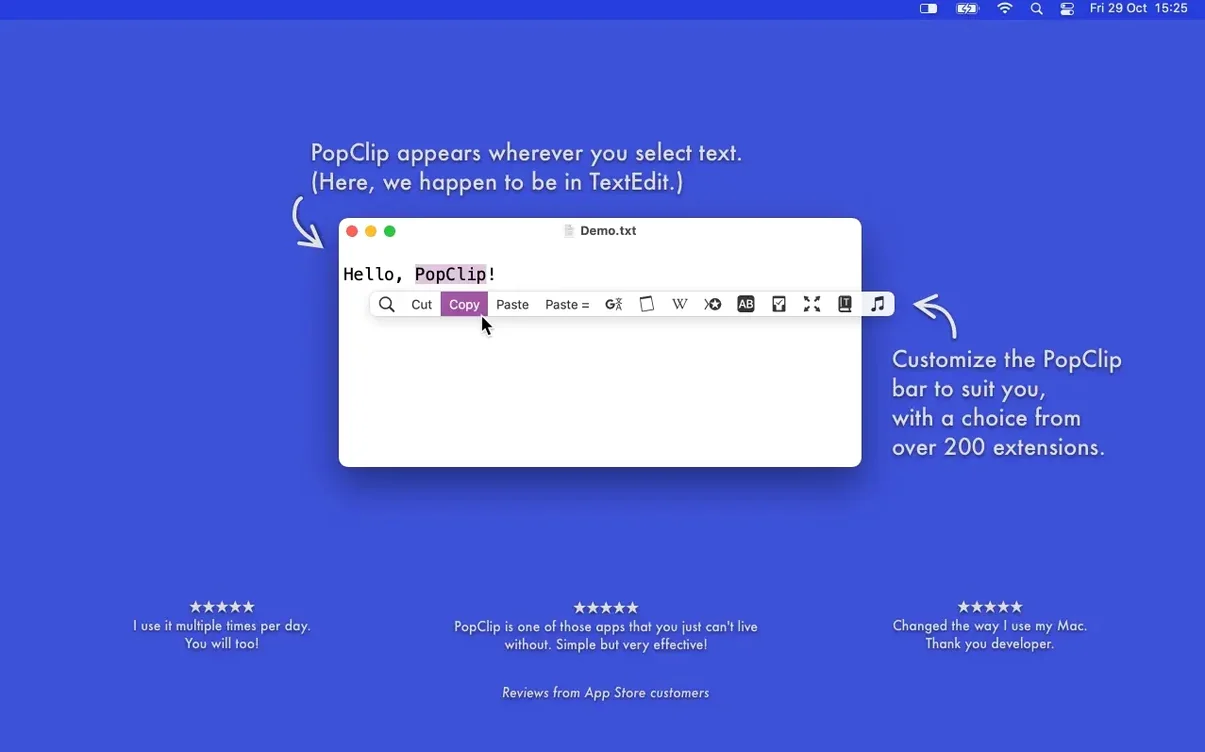
You highlight a URL in a note, and a small row of actions fades in just above the text. One tap opens it in your browser. That is PopClip in its natural habitat: a quiet strip of tools that appears only when text is selected, then disappears again.
Before reaching for a popclip crack, check the basics. The app runs on macOS 13.5 Ventura or later, with native support for both Apple Silicon and 64-bit Intel Macs. It works inside most Mac apps, though a handful of older or unusual text views do not cooperate.
Once installed, the workflow is simple:
- Select text in almost any app.
- Choose an action from the bar that appears: copy, paste, search the web, or open a URL, email address, or file path.
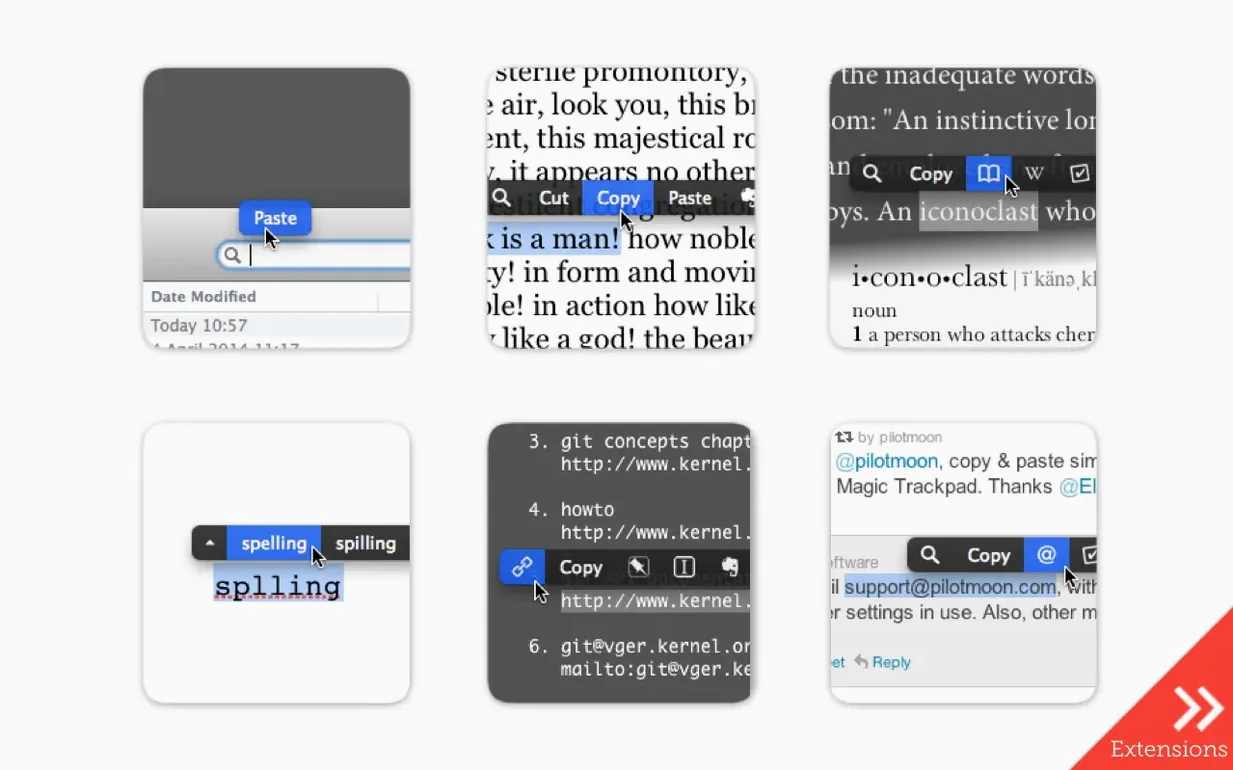
- For a misspelled word, tap a suggested correction instead of retyping.
Small touches that hide in plain sight
PopClip’s bar does more than the obvious copy-and-paste routine, and some of its best moves are easy to walk past. A double-tap on a word selects it and then immediately shows the bar — no drag required. If you hold the Option key while clicking an action, the bar stays open afterward instead of dismissing itself, which is useful when you need to apply two or three actions to the same selection in quick succession.
URL handling is cleverer than it first appears. Select a bare domain like instantcinema.org without the https prefix, and PopClip still offers to open it. The same logic applies to email addresses and file paths: highlight something that looks like a path in a plain-text log, and the “Open File” action appears. In the preferences you can also set a default browser per action, so web searches open in Safari while work links open in Firefox — a small separation that keeps research and production from tangling.
Keyboard-only users tend to ignore PopClip, but it meets you halfway. After selecting text with the mouse, you can trigger the first action with Return and cycle through the bar with the arrow keys. It is not a full keyboard replacement, but it keeps your hands near the home row for that one extra step.
The extension ecosystem quietly fills gaps you did not know you had. Word count, case conversion, and “Paste and Match Style” ship free, and they sit alongside Send to Evernote for anyone still deep in that notebook. A popclip free installation ships with over a hundred extensions, and iCloud sync means a layout you build on a desktop Mac shows up on a laptop without a second thought.
An editor’s afternoon, piece by piece
Imagine a freelance subtitle editor working across a dozen text files in BBEdit, a spreadsheet of timecodes, and a browser window full of terminology references. She selects a technical term in the script, taps “Search with Google,” and checks the correct spelling in a few seconds. A few minutes later she highlights a file path in her notes, opens the video clip directly from the pop-up bar, and confirms the line reading. When a co-writer sends a raw URL in Slack, selecting it and tapping “Open Link” saves her from the copy-switch-paste dance that eats small seconds all afternoon. She has also mapped a shortcut that copies selected text and immediately pastes it without formatting into her notes app — two steps collapsed into a single tap. None of this is flashy. By the end of the day, though, she has stayed in flow for an extra hour because the tool removed friction she stopped noticing years ago.
A selection watcher, not a screen grabber like TextSniper
PopClip’s closest cousins are the system-wide text tools that also watch your selection. TextSniper grabs text from images and screenshots — a different problem entirely. It is not a pop-up action bar; it extracts, then you paste elsewhere. The two complement each other well, but TextSniper does not offer search, open-link, or correction actions on the text you already have.
BetterTouchTool can replicate some PopClip behaviour through custom triggers and floating menus, but it demands building the workflows yourself. Where PopClip gives you a ready-made bar the moment you select text, BetterTouchTool asks you to define gestures, design the menu, and wire up the actions. The power is enormous, and so is the setup time. People who love tinkering often run both.
Keyboard Maestro sits even further along the automation spectrum. It can watch the clipboard and fire macros, so a determined user can mimic the “select URL → open browser” flow, but it lacks the visual, mouse-driven bar that makes PopClip feel like part of the operating system. PopClip’s strength is its immediacy: no palette to summon, no shortcut to remember, just select and act. The trade-off is that Keyboard Maestro goes far deeper into system automation, while PopClip stays tightly focused on the moment text is highlighted.
Roads beginners tend to stumble down
The most common early mistake is hunting for a popclip download that promises features the base app already includes. Some users install the app, see a modest bar with copy and paste, and assume they need a popclip 2025.9 release or a separate package to unlock the rest. In reality, the extension library is built in — open preferences, browse the list, and install what you need in two clicks.
Another habit that trips newcomers: expecting the bar to appear in every single text field. A few apps, particularly those that draw their own text views with custom frameworks, do not play along. Terminal windows, some Electron apps, and certain older Java-based tools remain blind spots. When the bar does not show, the fix is usually to try a different app—and if you're working with a popclip crack, double-check that accessibility permissions are granted and the extension is loaded correctly.
Beginners also overlook the app’s exclude list. If PopClip keeps popping up in a game, a code editor, or a full-screen writing app where it is more distraction than help, you can add that application to the exclude list in preferences. The bar simply stops appearing there, and the rest of the system carries on as normal. It is a small setting that turns an occasional annoyance into a non-issue.
What you get from 2026.8.1 is a cleaned-up, more predictable version of the tool after the larger 2026.7 release. Same habits, fewer rough edges.
PopClip 2026.8.1 arrived on September 7, 2026 as a maintenance and cleanup release following PopClip 2026.7. Nothing showy here — just a quieter, tidier build under the same familiar selection bar.
- macOS 13.5 Ventura or later
- Apple Silicon or 64-bit Intel Mac
- Available only for macOS