


Most days, a blank page feels less like an invitation and more like an accusation. When you want to check in with yourself but don’t know where to start, that silence can push you away from the habit before it even forms.
Tracking a mood in seconds
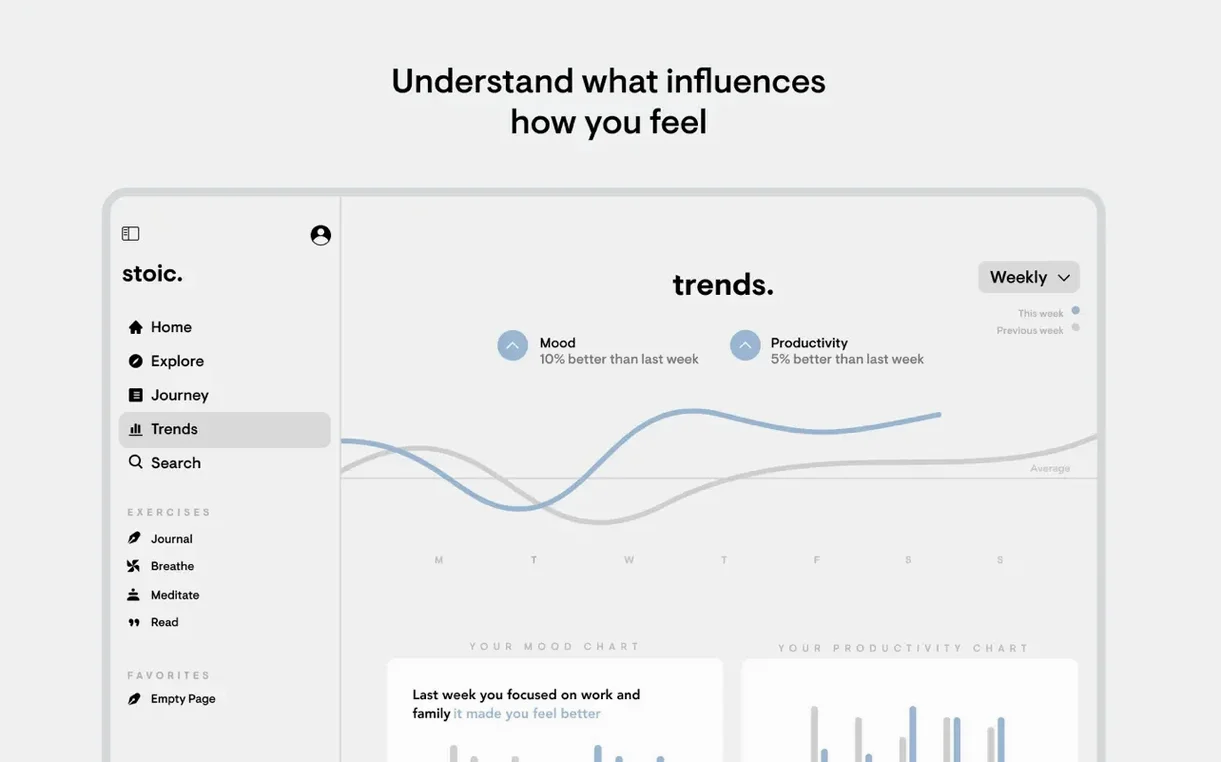
Tap a colour and a few words during the day to log how you’re actually feeling, not how you think you should be feeling. The stats that build up over time show patterns you’d otherwise miss.
Writing with a nudge, not a demand
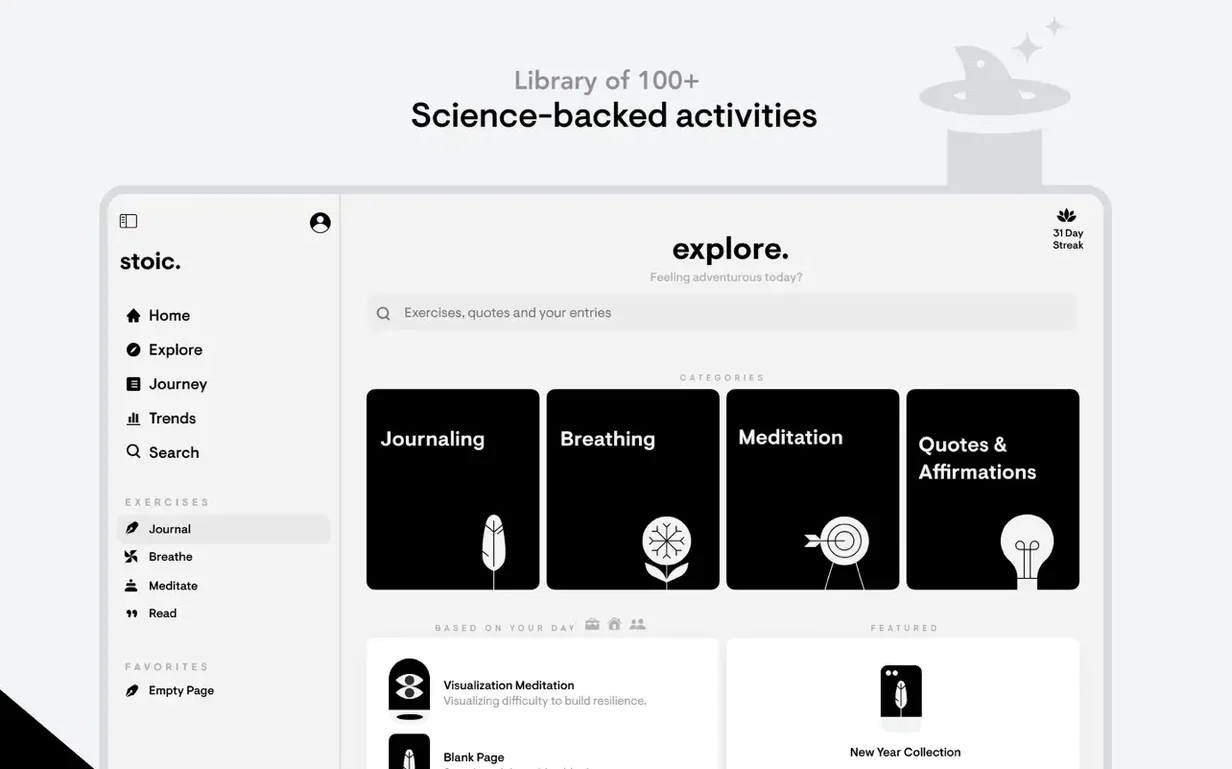
Guided journaling offers prompts that change weekly, so the entry point shifts with your headspace. It’s reflection structured enough to start, loose enough to be honest.
Taking a short breath between tasks
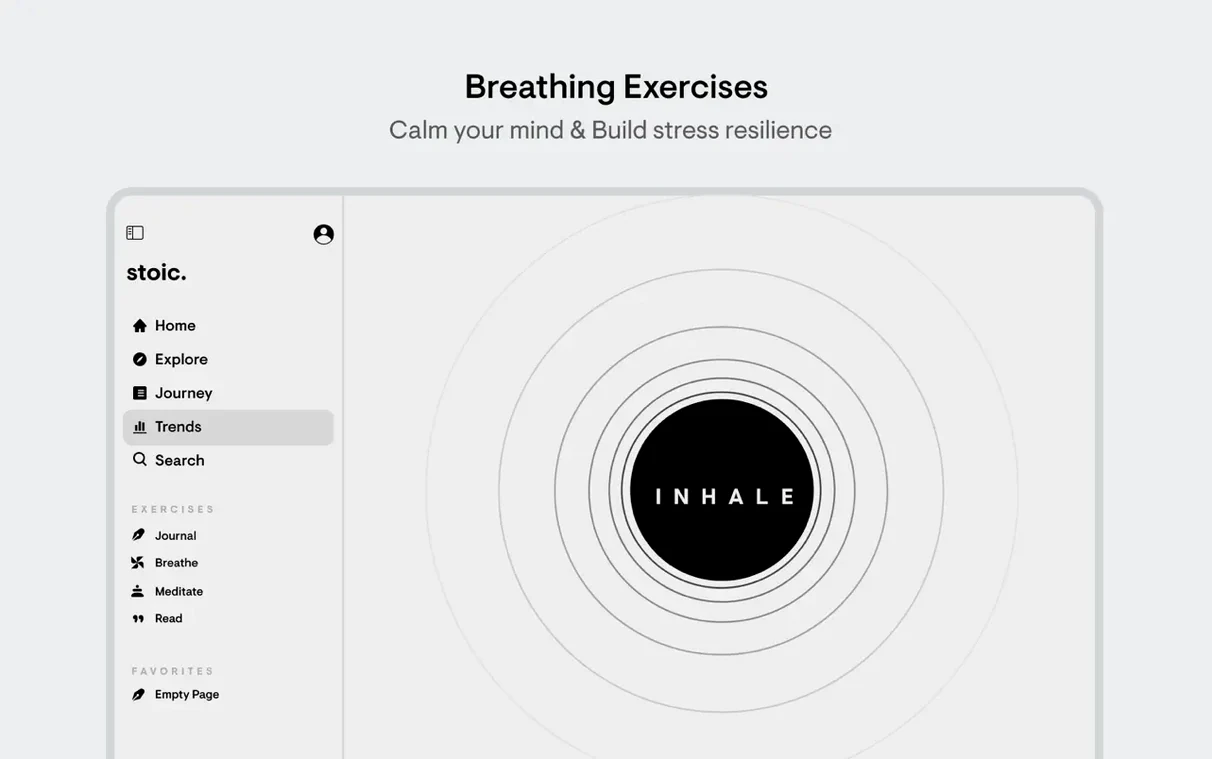
Brief meditations sit alongside the journal, not as a separate course to commit to. A few minutes of quiet, right there in the app, when the afternoon tilts sideways.
Make it yours before the streak even starts
Out of the box, Stoic lands with sensible defaults, but a few quick changes make it feel less like a generic app and more like a space you actually want to return to. Head into preferences and set your morning and evening routine windows. The app nudges you around those times, and picking realistic slots — say, 8:30 a.m. with coffee rather than 6:00 a.m. on principle — means you’ll answer the prompt instead of dismissing it. Turn on iCloud sync right away if you journal across an iPad or phone; entries from your Mac appear elsewhere without friction, and the streak count stays honest across devices.
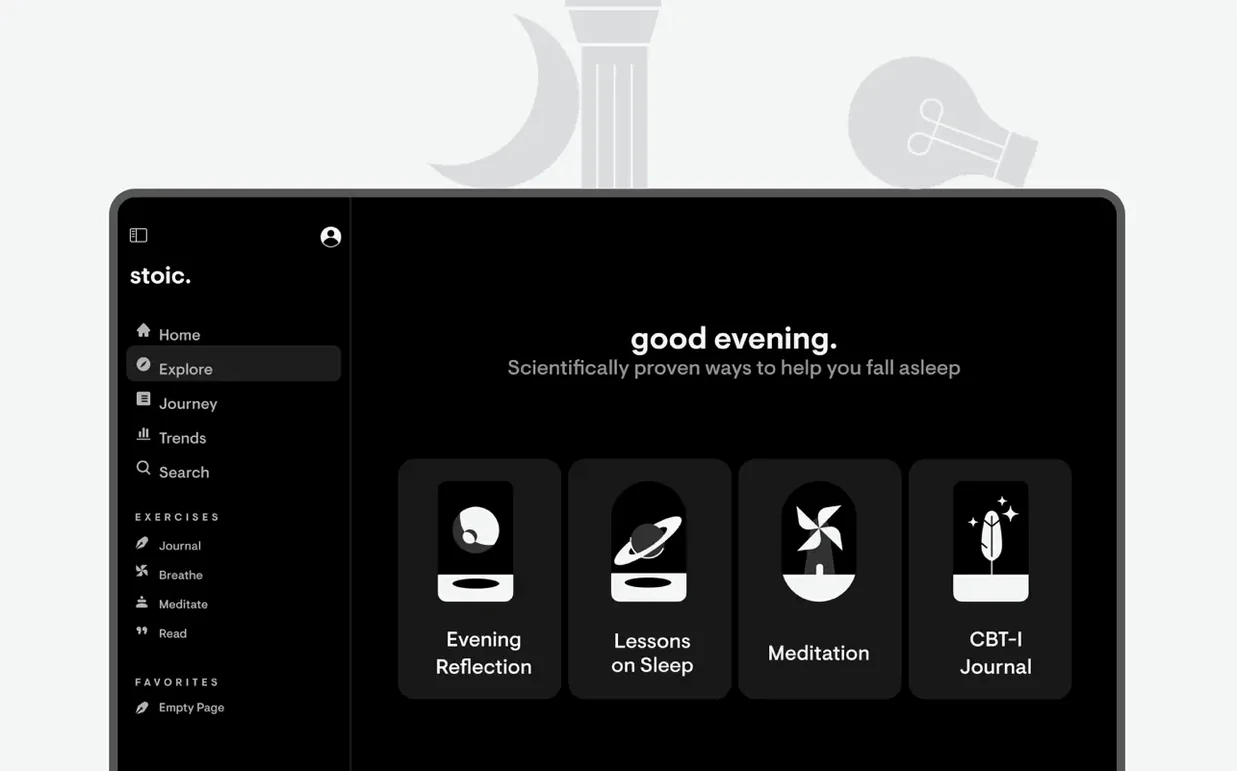
Under notifications, switch off anything that feels like pressure. The daily reflection reminder is useful. The mid-day mood prompt, if your afternoons are already packed, can become noise. Stoic lets you toggle each one independently, so the app asks only when you want to be asked. Lastly, pick a theme colour that doesn’t fight your desktop at 11 p.m. The darker palette with muted amber accents reads softer in low light, which matters more than you’d think when you’re typing something vulnerable before sleep.
What recent versions quietly improved
Version 2026.10 and the releases leading up to it didn’t rewrite the app’s personality, but they sanded down daily friction in ways that compound. The mood-tracking flow now accepts a single tap to log a baseline feeling, then optionally lets you add factors — sleep quality, exercise, caffeine, social time — afterward rather than forcing the full questionnaire upfront. It’s a small change that respects the moment you’re in: capture the emotion first, contextualize when you have the bandwidth.
Streak tracking also got smarter. Miss a morning journal entry but log a mood in the afternoon? The app still counts the day toward your continuity, which aligns better with how people actually use a mental health companion. Earlier versions broke the chain on a technicality, and that discouraged people who were engaging, just not on schedule. The breathing exercises expanded too, with a new four-second inhale, seven-second hold, eight-second exhale pattern that lands somewhere between box breathing and the physiological sigh — useful when anxiety spikes and you need something slower than the default timer.
Three sentences on what you’re avoiding
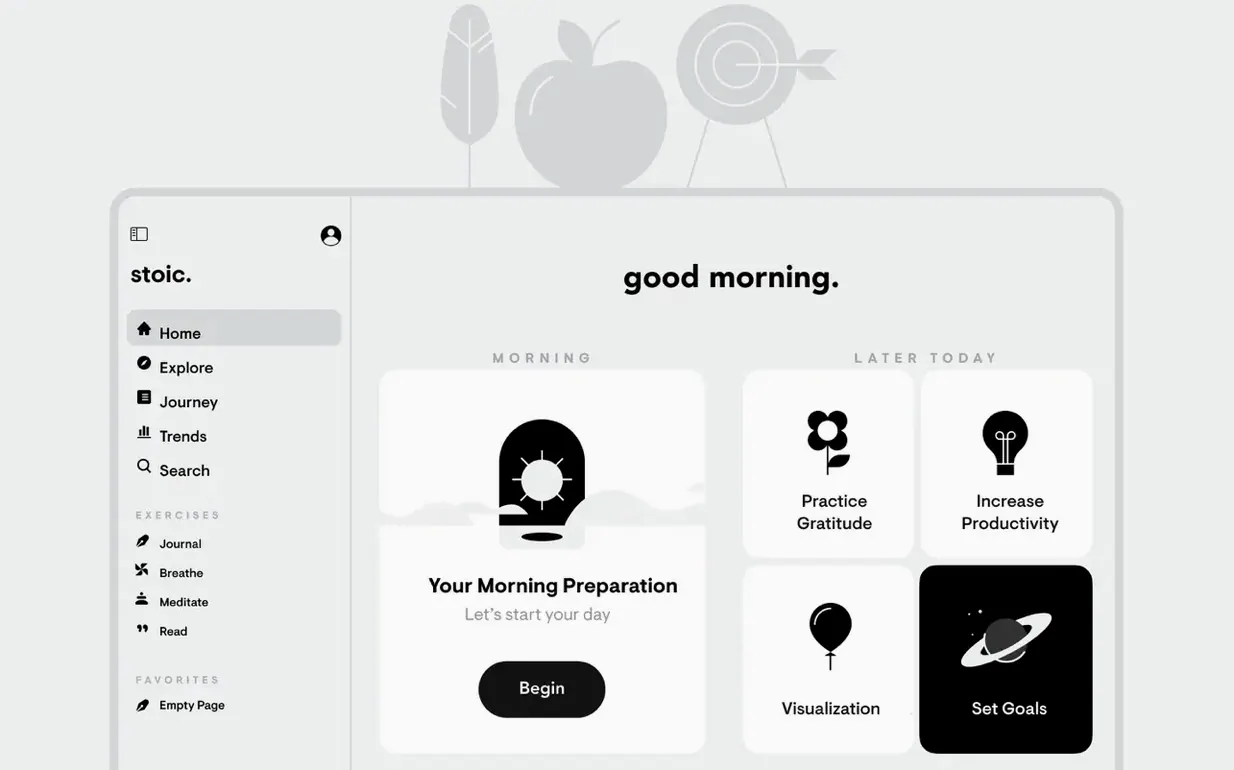
The laptop is still cold when you open Stoic, and the morning routine appears: a single prompt built around the week’s theme. This week it’s something about what you’re avoiding. You type three sentences, not because you’re a disciplined journaler, but because the question is specific enough to answer without ceremony. You close the lid. That’s it. The streak counter ticks up by one, and the app doesn’t ask for more than you gave.
Around 2 p.m., a notification asks how you’re feeling. You tap the amber-orange band — not terrible, not fine — and add a factor: poor sleep. No journal, no meditation, no extra step. The mood dot lands on the calendar, and later, when you look back at a month of amber afternoons, you’ll start connecting dots you didn’t notice in real time.
Evening comes, and the app surfaces the second routine. It’s shorter than the morning — a prompt about what went well, or a breathing exercise if you’ve flagged high stress earlier in the day. You follow the four-seven-eight rhythm until the haptic pulse on your wrist tells you the timer ended. The entry saves. Tomorrow’s prompt will be different, drawn from a rotating set that shifts each week, so the ritual stays a conversation rather than a form to complete. The whole session — morning entry, afternoon check-in, evening wind-down — takes less time than scrolling a social feed, but it leaves a record you can actually learn from.
- macOS 15 or later
- Apple Silicon or Intel processor
Questions from the booth
Yes, Stoic uses iCloud to keep your journal entries, mood data, and progress in sync across iPhone, iPad, Mac, Apple Watch, and the web app.
It provides guided journaling with prompts and weekly changing themes, designed to help you build a consistent reflection habit without staring at a blank page.