
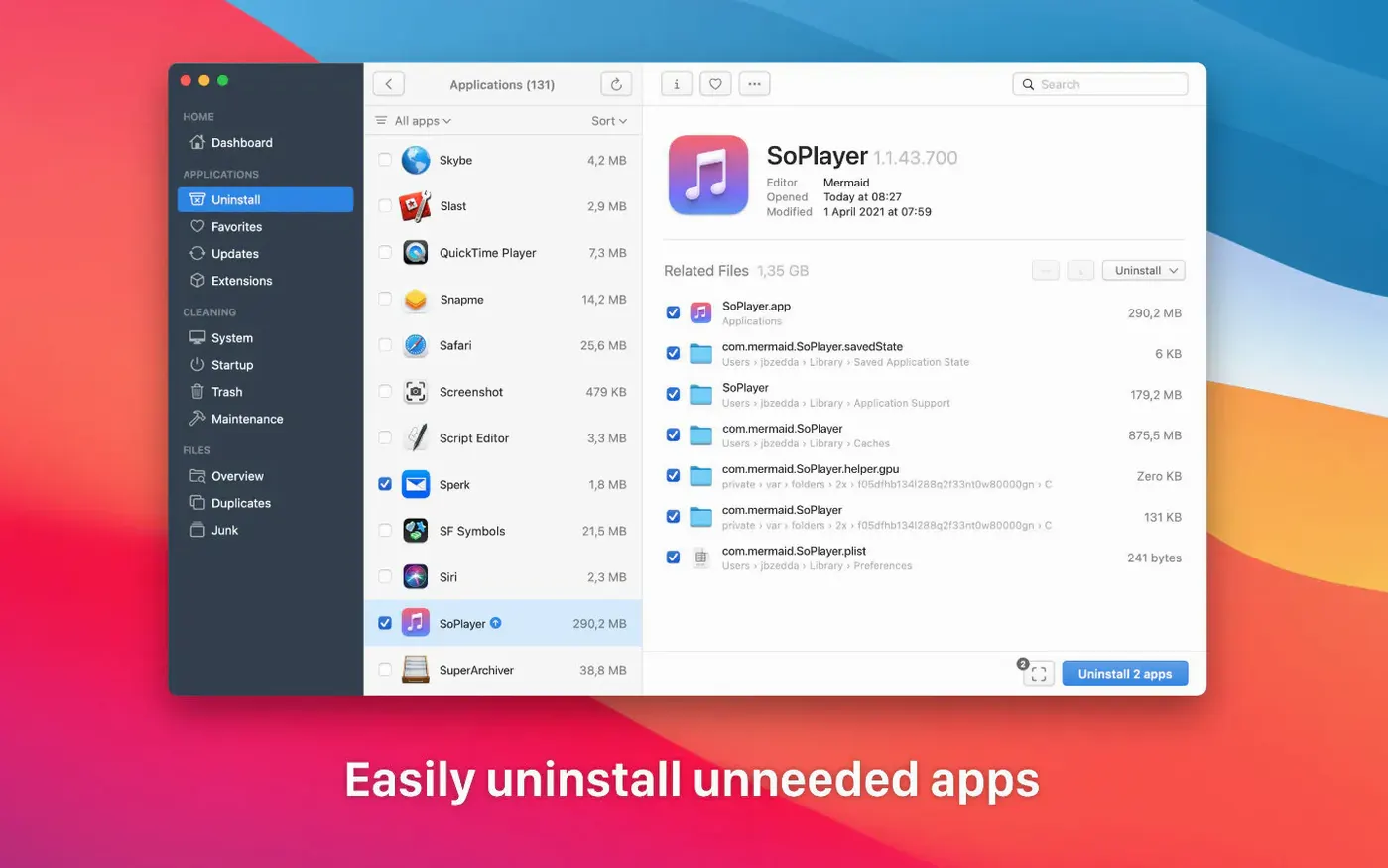
Smart mode is the thing that sets it apart. You drag an application to the Trash like you always have, and TrashMe steps in — a panel appears, listing every associated file scattered across Library folders, and offers to delete them all at once. It turns a lazy habit into a proper uninstall without changing the gesture you already know.
Smart mode won't rescue apps you deleted before today
- Does it catch leftover files from apps I’ve already deleted? No. Smart mode triggers at the moment you move an app to the Trash. It can’t hunt down fragments from uninstalls that happened before TrashMe was installed, though the manual app list lets you search for remnants of anything still lingering.
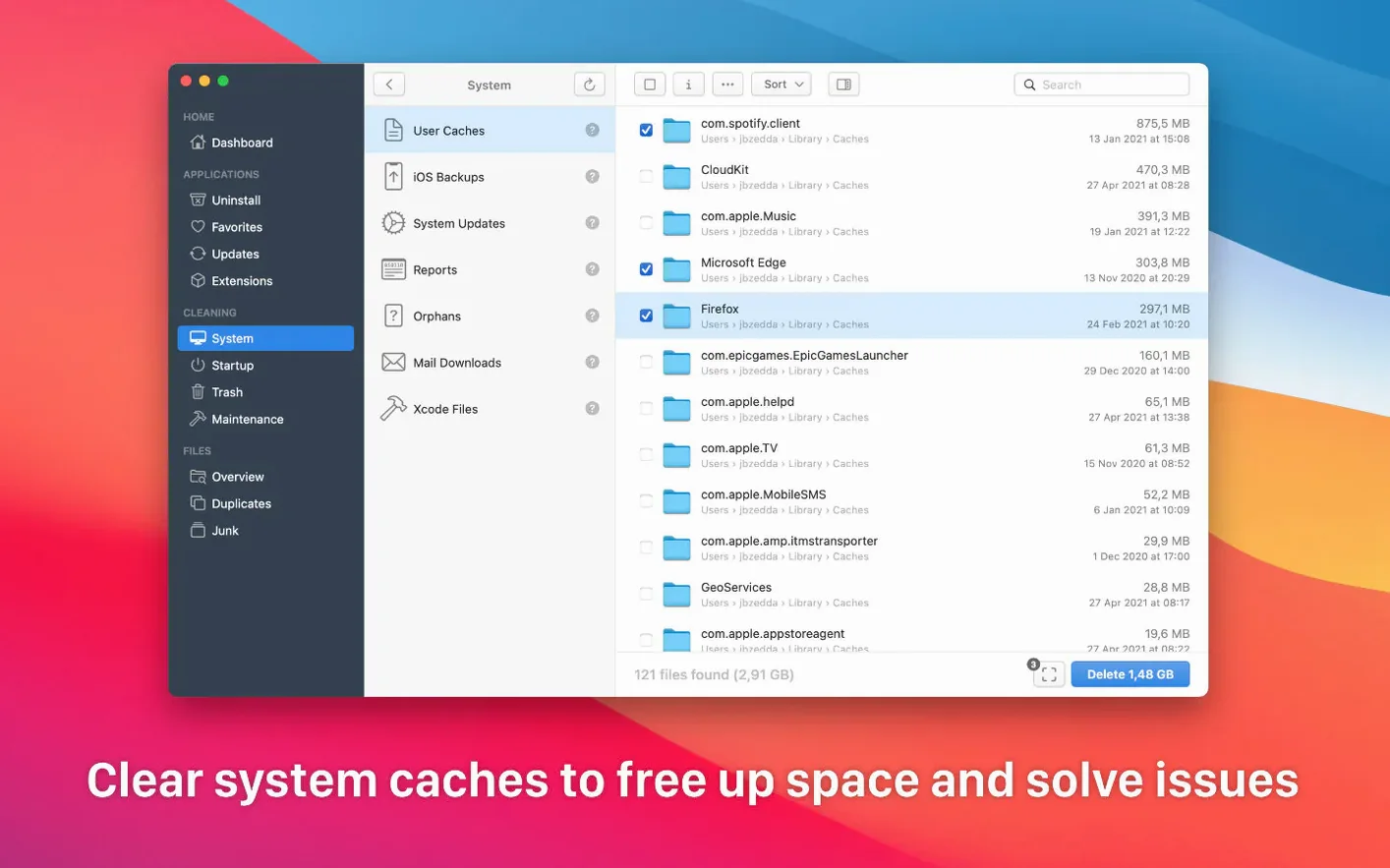
- What does it touch beyond applications? System caches, temporary files, and maintenance scripts. The Maintenance section — restored by an extension — handles the kind of housekeeping that usually requires Terminal, and an interactive space map shows exactly which folders are eating your drive.
A quiet overhaul for Tahoe
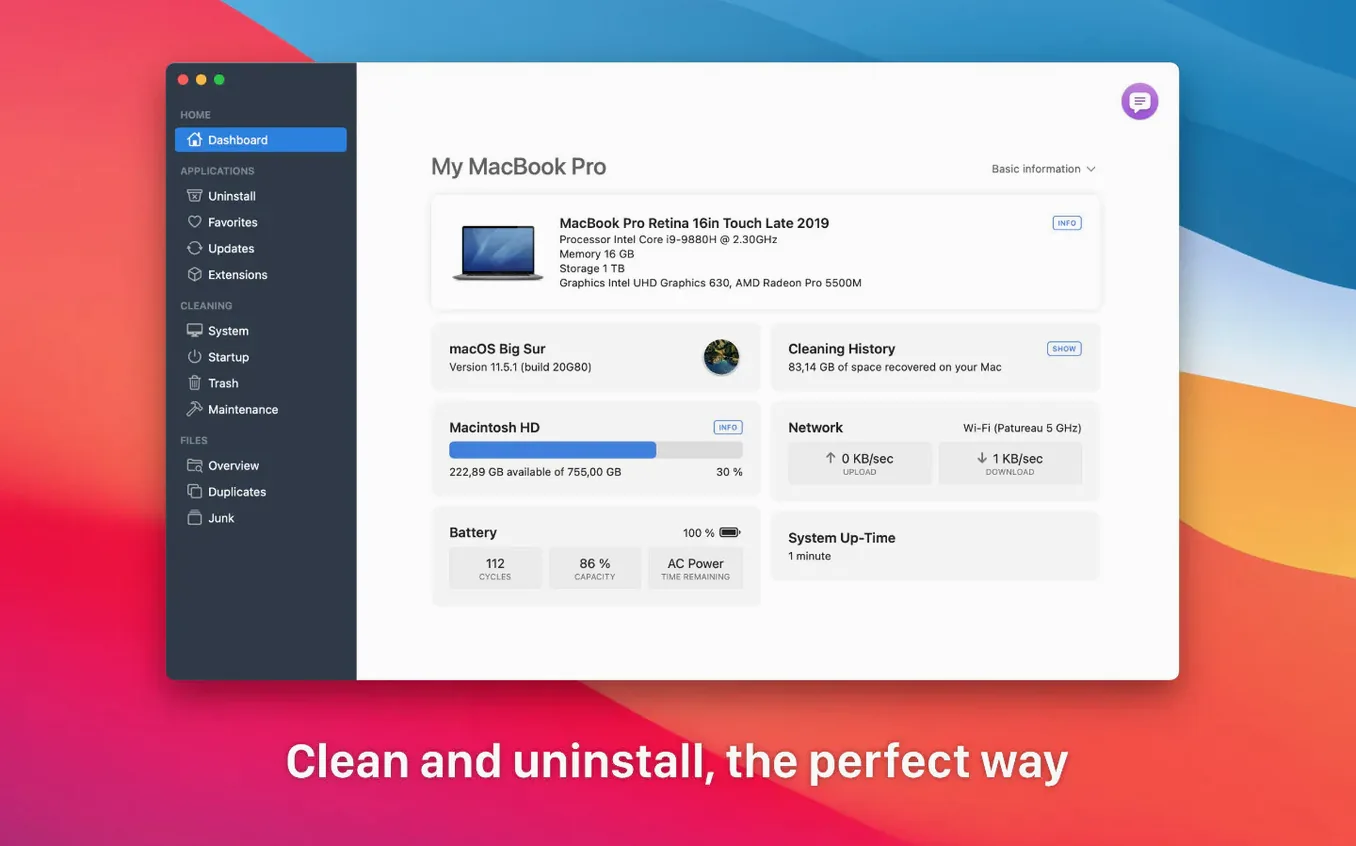
Version 3 is fully notarized by Apple and ready for macOS Tahoe, with dark mode support across the interface. It runs on anything from High Sierra onward, Intel and Apple Silicon alike. There’s no dashboard fanfare — just a utility that watches the Trash, strips away the cruft an app leaves behind, and gets out of your way. The Trash inspector also lets you browse and remove individual items already sitting there, which feels like a small but honest addition to the Finder.
Where TrashMe sits in the daily toolchain
I use it alongside a handful of utilities that each handle one quiet job well. DaisyDisk gives me the visual map of storage, but TrashMe adds the uninstall trigger and the system maintenance scripts in the same window — so I rarely open both at once. The menu bar monitor is light enough that I’ve stopped running iStat Menus on my writing machine; the CPU and battery readouts are enough for a quick glance between renders. And because it taps into TrashMe for Mac cracked builds circulating in the wild, the app has a surprisingly active community of users who share launch agent paths and cache locations that Jibapps later incorporates into the detection engine — a weirdly symbiotic loop.
Flip on Smart mode so it actually speaks up when you trash something
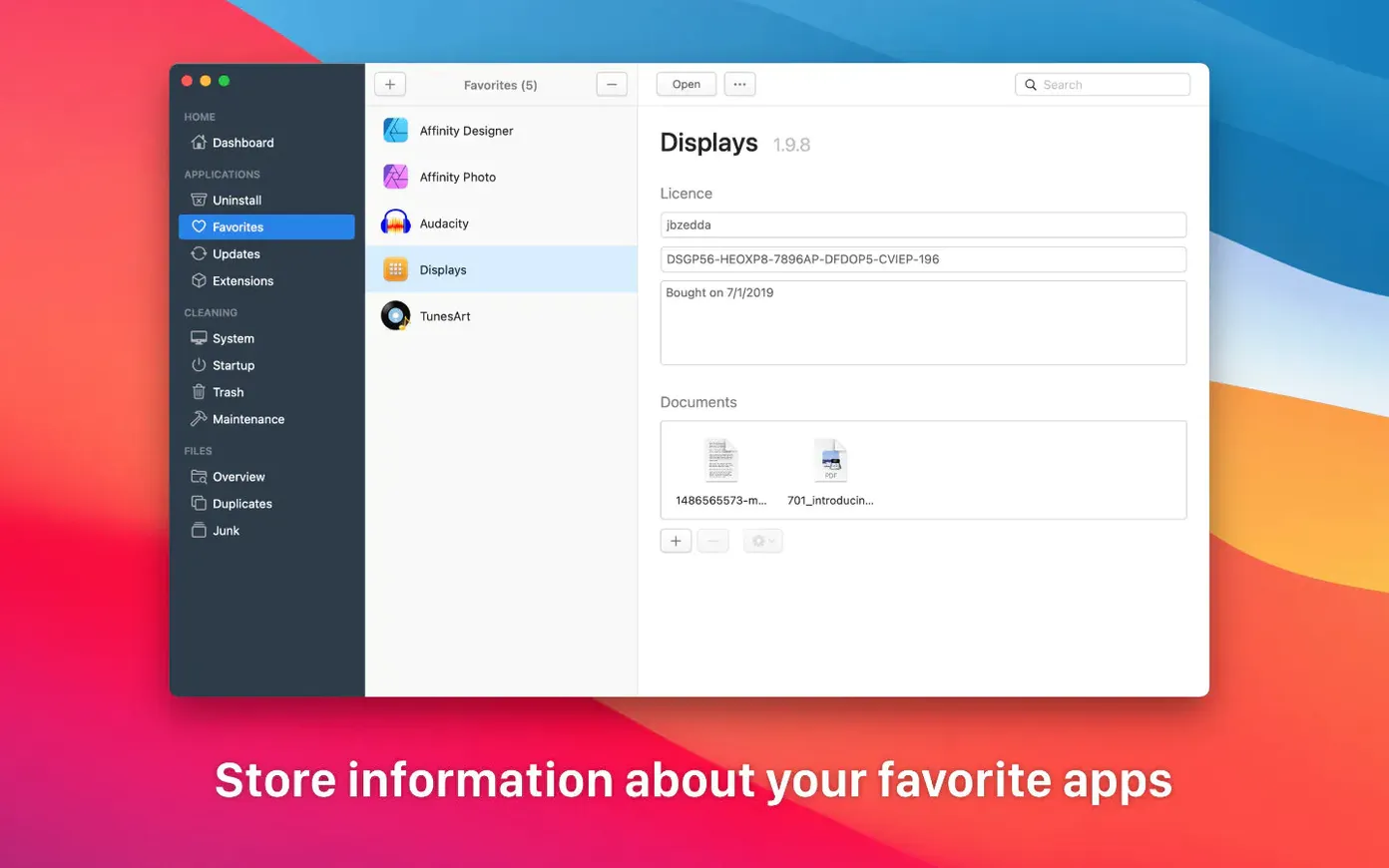
Out of the box, Smart mode is off, which makes sense — not everyone wants a panel appearing every time they toss a file. I turn it on, then immediately open Preferences and check two things. First, I set the Trash inspector to show hidden files; a surprising number of apps bury .plist orphans in ~/.config that Finder never reveals. Second, I disable the update checker for apps I intentionally keep on an older version — DaVinci Resolve, for example, where a point release can break a project mid-edit. The list of favourites is where I store licences for small indie tools that don't have accounts; it's a plain text field per app, nothing cloud-synced, and I prefer it that way.
45 MB of RAM and silent until you pull the trigger
On an M1 MacBook Air with 16 GB of memory, TrashMe idles at around 45 MB of RAM and sits flat at zero CPU unless it's actively scanning. A full uninstall — Smart mode triggered, scanning a 2 GB application with plugins scattered across three Library folders — takes about four seconds before the confirmation panel appears. I've never seen it beachball. The duplicate file scanner is the one operation that will spin the fans on older Intel machines; it walks every byte of a folder and compares hashes, so pointing it at a media drive with hundreds of gigabytes of footage is a patience test. On Apple Silicon it stays quiet and finishes faster than I can make a coffee. Stability-wise, across six months of daily use, I've had one crash — when I asked it to uninstall itself, which felt like a fair philosophical objection rather than a bug.
- macOS 10.13 or later
- Intel or Apple Silicon Mac
- 64-bit
Questions from the booth
Yes. Smart mode opens TrashMe whenever you move an application to the Trash, so you can remove all its associated files immediately.
It can remove system caches and temporary files, run maintenance scripts, and show an interactive map of disk usage.