
UltraEdit runs on any Mac with macOS 10.13 or later, on both Intel and Apple Silicon machines. It is a desktop editor through and through, not a cloud service—everything lives locally by default, which suits anyone working with sensitive codebases or large log files.
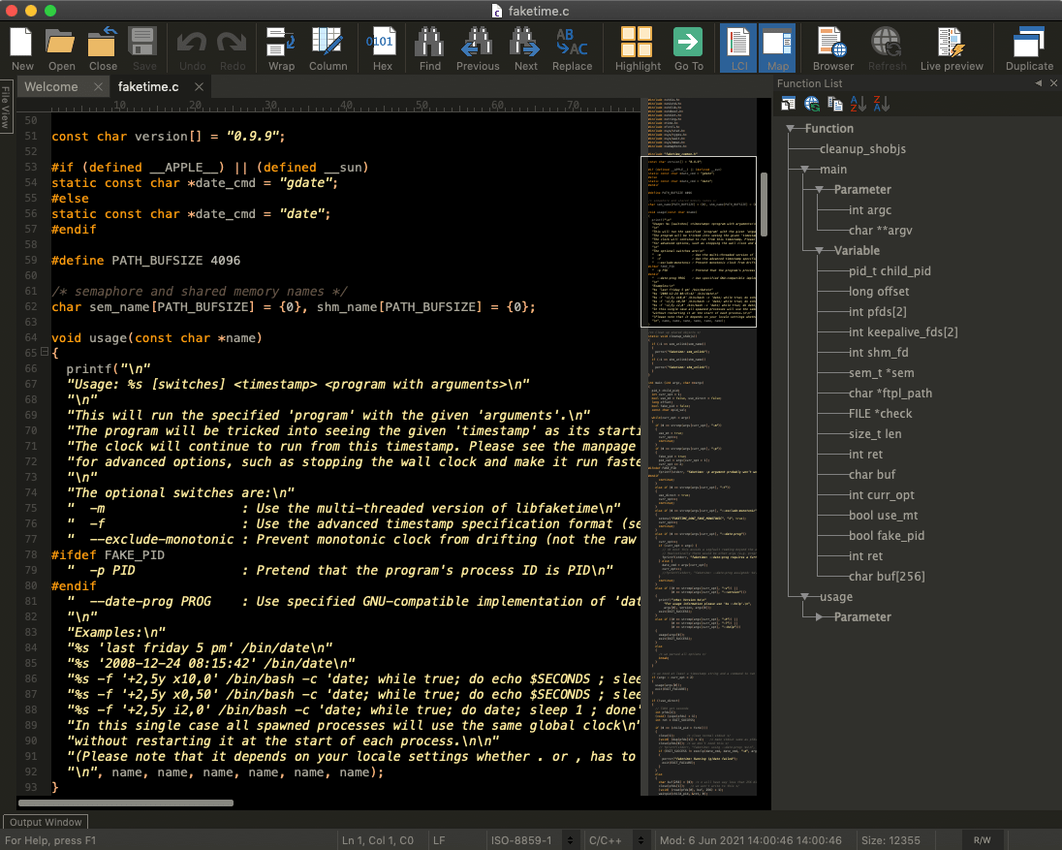
The editor draws on a long Windows heritage but feels native to the Mac, with a layout that puts multiple documents in reach and a toolset that rewards keyboard-first workflows. Each standout feature answers a specific job.
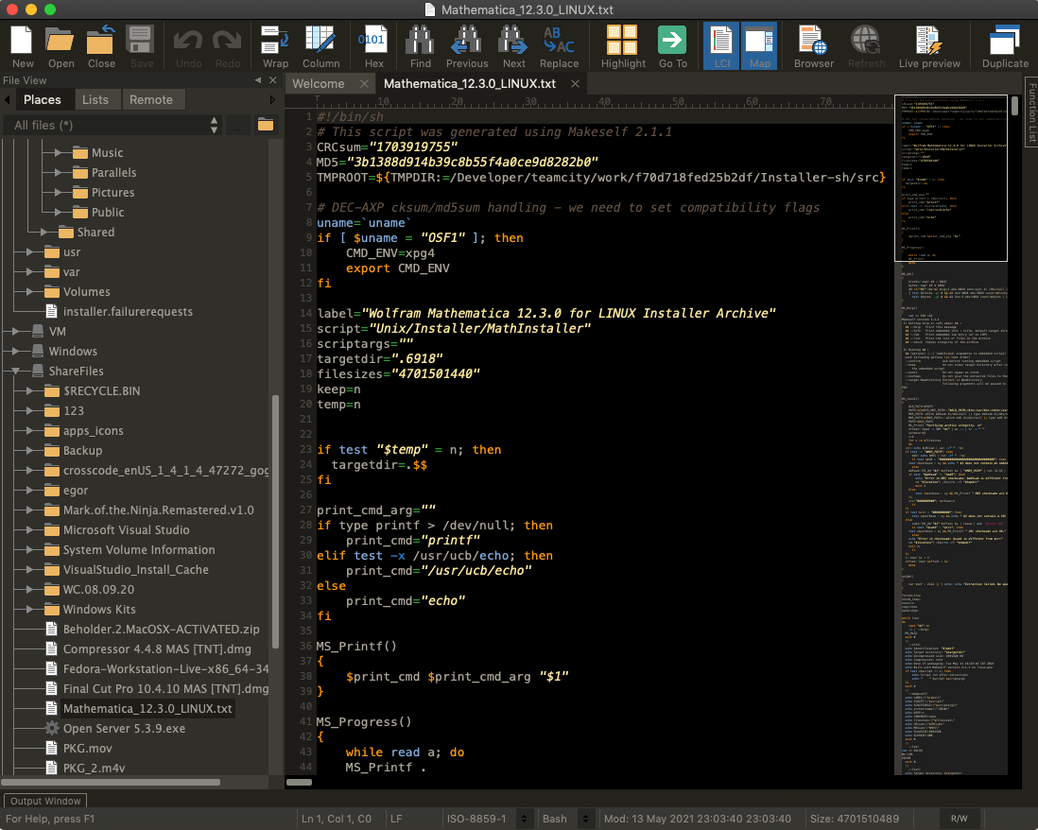
Editing directly on remote servers via built-in FTP
- Working across remote servers without leaving the editor—the built-in FTP client browses and opens files directly, keeping the context of a project together.
- Picking through data with precision—column mode lets you select and edit text in vertical blocks, which turns tedious CSV or fixed-width log fixes into quick drags and keystrokes.
- Languages that range from the old guard to the web stack—syntax highlighting covers C/C++, VB, HTML, Java, Perl, FORTRAN, and LaTeX, so a single tool handles maintenance scripts, scientific formatting, and front-end work.
- A full Git routine without switching apps—branch cloning, checkout, modify, commit, merge, push, and pull are built in, keeping version history close to the text.
- Repetitive edits that deserve a script—macros and scripting let you record and replay sequences, smoothing out refactors that would otherwise mean hundreds of manual changes.
English-only interface on the current Mac build
- The current Mac build (25.0.0.11) arrived on 2026-06-09 and is part of a cross-platform line that also includes Linux.
- It is a single interface language—English only.
A fully formed editor that doesn't rely on extensions
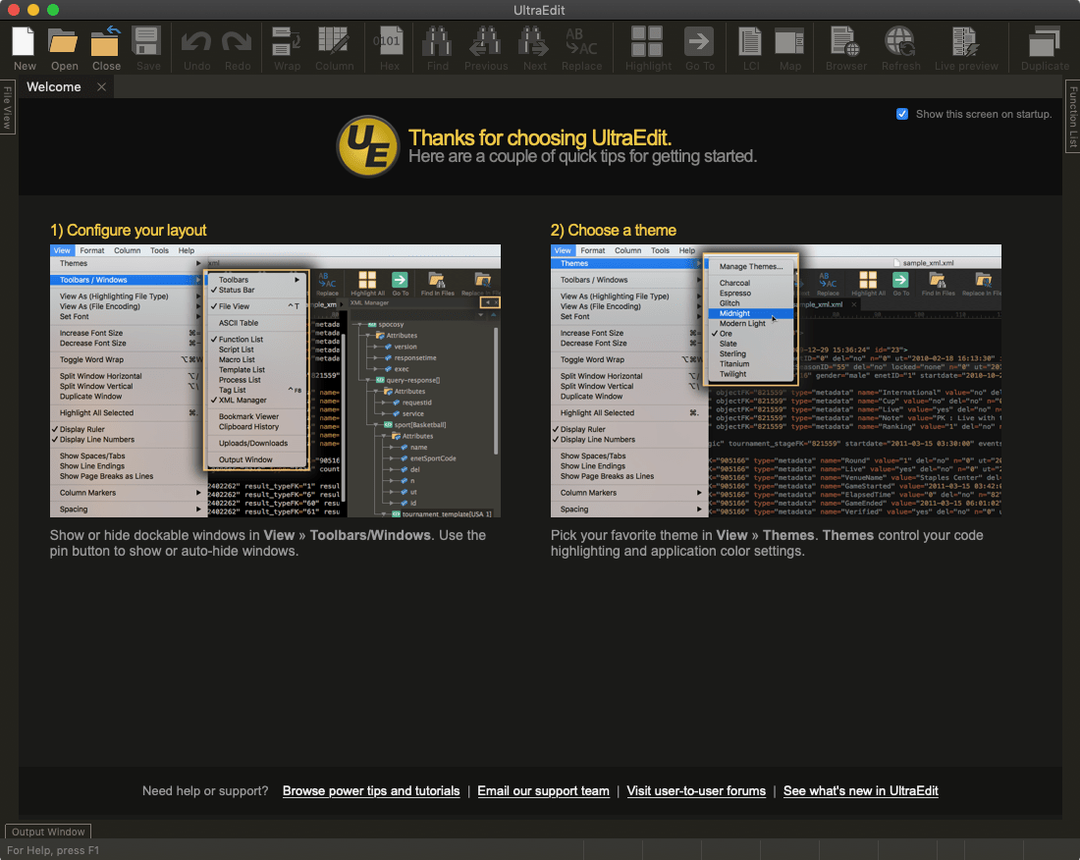
People often wonder whether a tool with this much lineage still feels current. The answer depends on what you value. UltraEdit does not chase minimalism or mimic a code editor built around extensions. It shows up fully formed—syntax highlighting, column mode, FTP, Git, macros, all present from the first launch. The interface is dense but logical, and the multi-window approach makes sense the moment you need to compare two files side by side without toggling tabs. Someone searching for an UltraEdit for Mac cracked build is usually trying to bridge that gap between wanting industrial-grade text handling and being unsure if the macOS version holds up against its Windows sibling. It does, especially in build 25.0.0.11, where the Git integration and native Apple Silicon support make the editor feel at home on a MacBook Pro rather than ported.
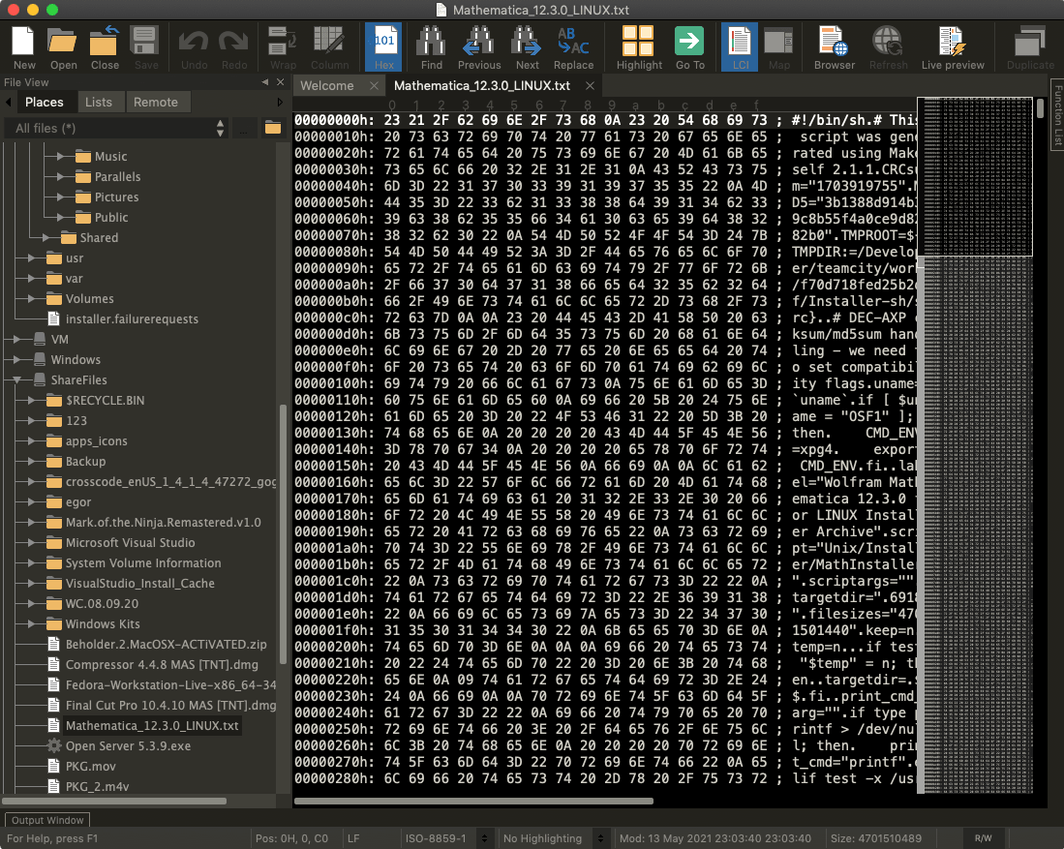
Another hesitation revolves around file size. Hex editing and log browsing are central to the pitch, and UltraEdit handles multi-gigabyte files without loading the entire thing into memory—it maps what it needs. That single detail often decides whether someone keeps an IDM UltraEdit torrent in their back pocket or moves on to a lighter tool that chokes past a few hundred megabytes.
Fixing fixed-width CSV exports with column mode
Imagine a data export from legacy lab equipment: fixed-width columns, stray line breaks, and a header row that repeats every fifty lines. Start by opening the file normally. Switch to column mode and drag a vertical selection across the first column to strip out the repeated header rows—delete them in one motion. Next, use a find-and-replace with a regex pattern to collapse the broken lines, something like joining lines that do not start with a timestamp. The regex engine inside UltraEdit is Perl-compatible, so lookaheads and backreferences work as expected. With the structure restored, record a macro that inserts commas at the correct column positions, then run it across the remaining records. Save the result, upload it via the FTP pane directly to a reporting server, and commit the cleaned file through the built-in Git panel. The entire task stays inside one window, and the undo history lets you backtrack column-mode deletions without restarting.
Recording macros before the repetitive task hurts
A common beginner instinct is to treat UltraEdit like a lightweight note app and ignore the macro recorder until a repetitive task has already become painful. Recording a macro works best when you perform the edit once, slowly, and let the tool capture the sequence—trying to clean up afterwards by editing the macro script is harder than getting the recording right the first time. Another mistake is overlooking the encoding settings before opening a file. UltraEdit defaults to the system encoding, and opening a UTF-16 log without switching the encoding produces a screen of gibberish that looks like a corrupted download. The fix takes seconds in the file-open dialog, but new users often blame the file or the editor instead. Finally, column mode gets confused with multi-cursor editing. UltraEdit does not scatter multiple cursors across a document; it works in vertical blocks. Grasping that distinction early makes CSV and fixed-width work feel natural instead of frustrating.
The 2026-06-09 release carries build label 25.0.0.11.
- macOS 10.13 or later
- Intel and Apple Silicon Macs
Questions from the booth
Yes, it includes branch cloning, checkout, modify, commit, merge, push, and pull, so you can work with repositories directly inside the editor.