
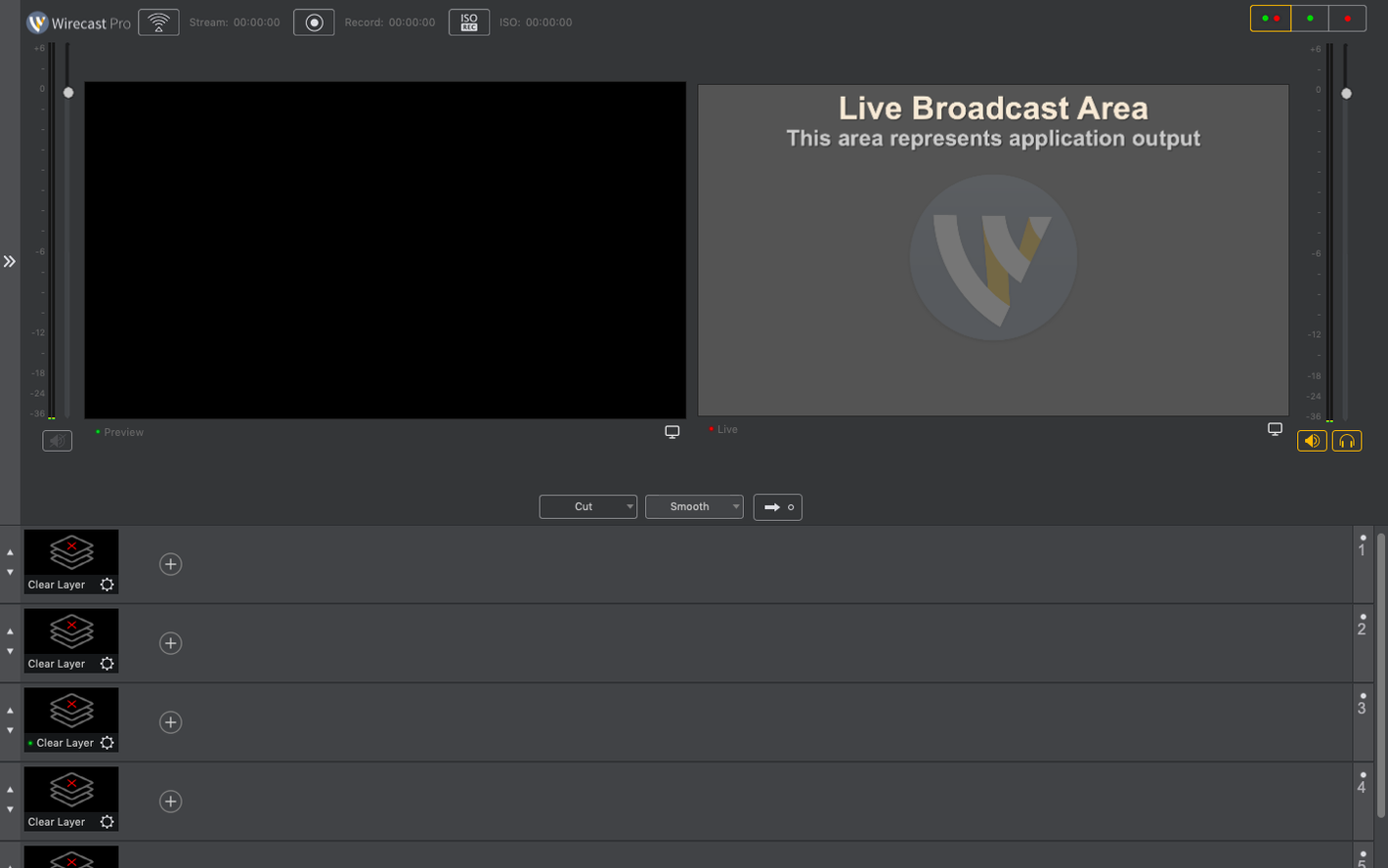
Wirecast Pro is Telestream's live streaming and recording studio for the Mac, built for multi-camera productions that switch between feeds, overlays, and real-time graphics. Before chasing a wirecast torrent or hunting down a wirecast mac torrent, the real first step is confirming your machine can run it. This version, 16.5.4, requires a 64-bit Mac on macOS 11 (Big Sur) or newer, and runs natively on both Intel and Apple Silicon hardware.
System compatibility — macOS 11 or later, 64-bit only, Intel and Apple Silicon supported natively.
Architecture — Universal binary; no Rosetta translation needed on M-series Macs.
What you get — A professional switching interface with support for placing a logo on the outgoing video signal, plus 30 built-in title and caption styles. Graphic elements like overlays and sports score templates are included, making the tool a natural fit for sports events, ceremonies, conferences, and concerts. The 16.5.4 release also fixes detection of certain PTZ NDI cameras on macOS and adds a discontinuous-frame flag for NDI sources, which matters if your workflow depends on network-based camera feeds.
What people actually ask before installing
A handful of questions come up again and again in forums and DMs. The first is about NDI stability. If you rely on PTZ cameras over a network, the 16.5.4 release matters: it patches a detection failure that left some NDI models invisible on macOS, and the new discontinuous-frame flag tells downstream encoders when a source has dropped or jumped, so your stream doesn't glitch silently for thirty seconds before you notice. The second big question is about the virtual camera. In 16.5.4, Telestream fixed a scenario where corporate IT policies that block the virtual microphone driver also killed the virtual camera output — an edge case for people streaming from managed Macs inside organizations, but a showstopper if you hit it. The third is simply can my Mac handle it. Wirecast Pro is not lightweight, but on Apple Silicon it runs without translation overhead, and the GPU-accelerated compositing keeps the interface responsive even with a few 1080p sources stacked.
Speed, memory, and how it sits with the rest of the system
Launching Wirecast Pro on an M-series Mac feels immediate — cold start to the main window in under four seconds on most machines. Once you add sources, memory pressure climbs in proportion to the bitrate and frame size of your inputs, not the number of shots in your playlist. A typical three-camera setup with two NDI feeds and a local screen capture hovers around 1.2 to 1.8 GB of RAM, which leaves room for a browser, notes, and a music app without the system reaching for swap. On Intel Macs from the 2018–2020 era the same setup runs warmer and the fans will spin up during a 1080p60 encode, but the application rarely beachballs unless you stack heavy motion graphics on every layer.
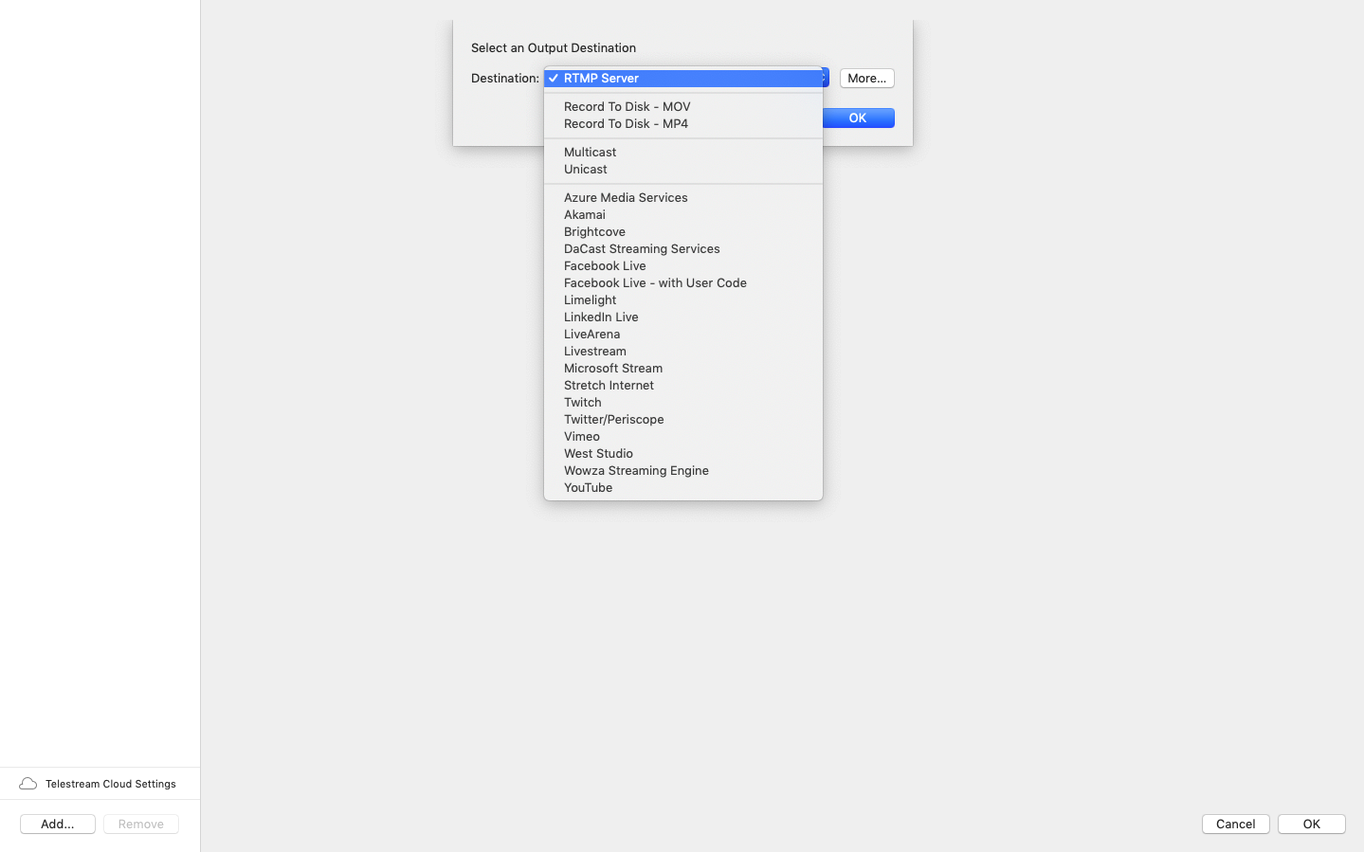
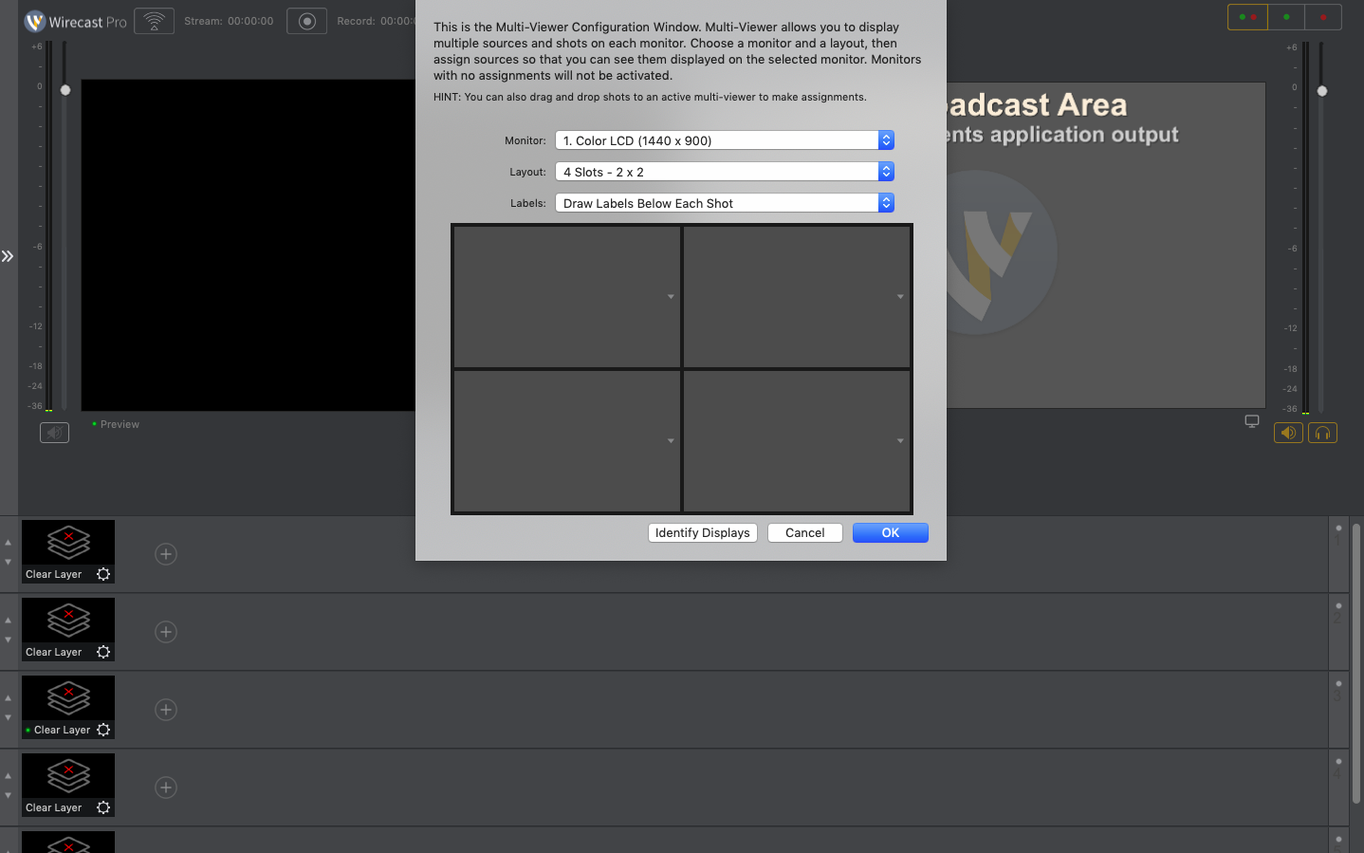
Encoding is where you feel the difference between architectures. Apple Silicon pushes the H.264 and HEVC hardware encoders hard, so streaming to YouTube or recording to disk simultaneously adds only a modest CPU bump. GPU history graphs stay flat during a typical two-hour stream. One thing to watch: the multiviewer output on a secondary display can tax older integrated graphics, so if your Intel machine stutters when the multiviewer is full-screen, dropping its refresh to 30 Hz usually clears it up. Stability-wise, 16.5.4 has been uneventful — no mystery disconnects from NDI sources, no drifting audio sync, and the virtual camera survives sleep/wake cycles on macOS Sonoma and Sequoia without needing a re-launch.
Option-drag duplicates a source with all its settings intact
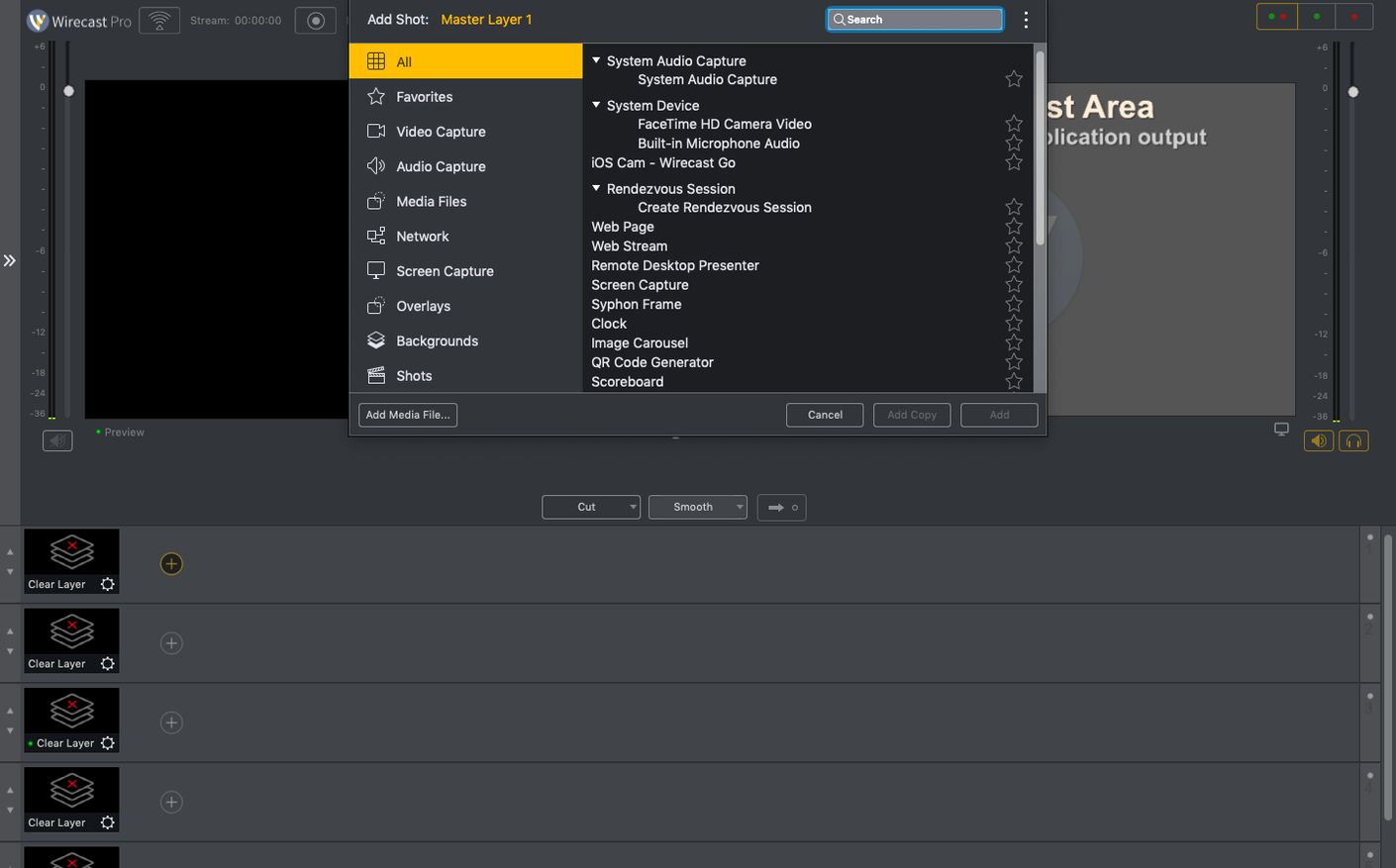
Wirecast's interface is deep enough that a few genuinely helpful shortcuts fly under the radar. Holding Option while dragging a source into a layer duplicates it with all its settings intact — useful when you want the same camera with two different crops or colour grades on adjacent shots. The Cmd-Shift-S shortcut saves a still frame from the Program output straight to your desktop, which doubles as a quick thumbnail generator for VODs. In the title editor, double-clicking a text field during a live broadcast lets you rewrite lower-thirds while the audience sees the change happen on the next keyframe, no need to cut away. And if you stack lots of overlays, the layer opacity slider accepts typed percentages — click the number next to the slider and just type 40 rather than nudging it with a trackpad.
Another small thing: the built-in sports score templates respond to keyboard increment shortcuts. Select the home score field and tap the up arrow — it ticks the number live. That sounds trivial, but during a fast-moving basketball game it saves you from fumbling with a mouse while the play moves downcourt.
A Saturday morning for a community radio station
Imagine a volunteer-run station that broadcasts a weekly live music show from a repurposed church hall. They have two Canon DSLRs running clean HDMI into a pair of capture dongles, an old PTZ NDI camera for wide shots of the audience, and a Mac mini M2 tucked under the mixing desk. The host cues a local band, and the director — who is also the sound engineer — switches between cameras using keyboard shortcuts while the station's logo sits permanently in the bottom-right corner via Wirecast's overlay system. Between songs, a lower-third title card slides in with the band's name and song title, typed live into the title editor during the applause. The whole program goes out to the station's YouTube channel at 1080p30, and a local recording saves simultaneously to an external SSD for later editing. The Mac mini stays cool throughout, NDI detection works without the pre-16.5.4 camera dropouts, and the virtual camera feeds a separate Zoom call for a remote co-host who adds commentary from another city. After the show, the director drags the recording into a timeline, trims the start and end, and posts it — no re-encoding needed because Wirecast wrote it as an MP4 ready for upload. For a setup that costs a fraction of a traditional broadcast truck, it looks and sounds like a station that knows what it's doing.
Version 16.5.4, released September 16, 2026, addresses three specific issues for Mac-based streaming setups. Detection of certain PTZ NDI cameras that previously went unseen on macOS has been fixed. A conflict where the virtual microphone driver could be blocked by corporate IT policy, breaking virtual camera use, is now resolved. The release also adds a discontinuous-frame flag for NDI sources, giving switching logic a cleaner signal when frames drop across a network feed.
- macOS 11 (Big Sur) or later
- 64-bit Intel or Apple Silicon Mac
Questions from the booth
Yes, the application is a universal binary and runs natively on both Intel and Apple Silicon Macs without translation.
Wirecast Pro supports placing a logo on the outgoing video signal, along with 30 built-in title and caption styles and other graphic overlays.
It is used for sports events, ceremonies, conferences, and concerts, with templates like sports score overlays built in.