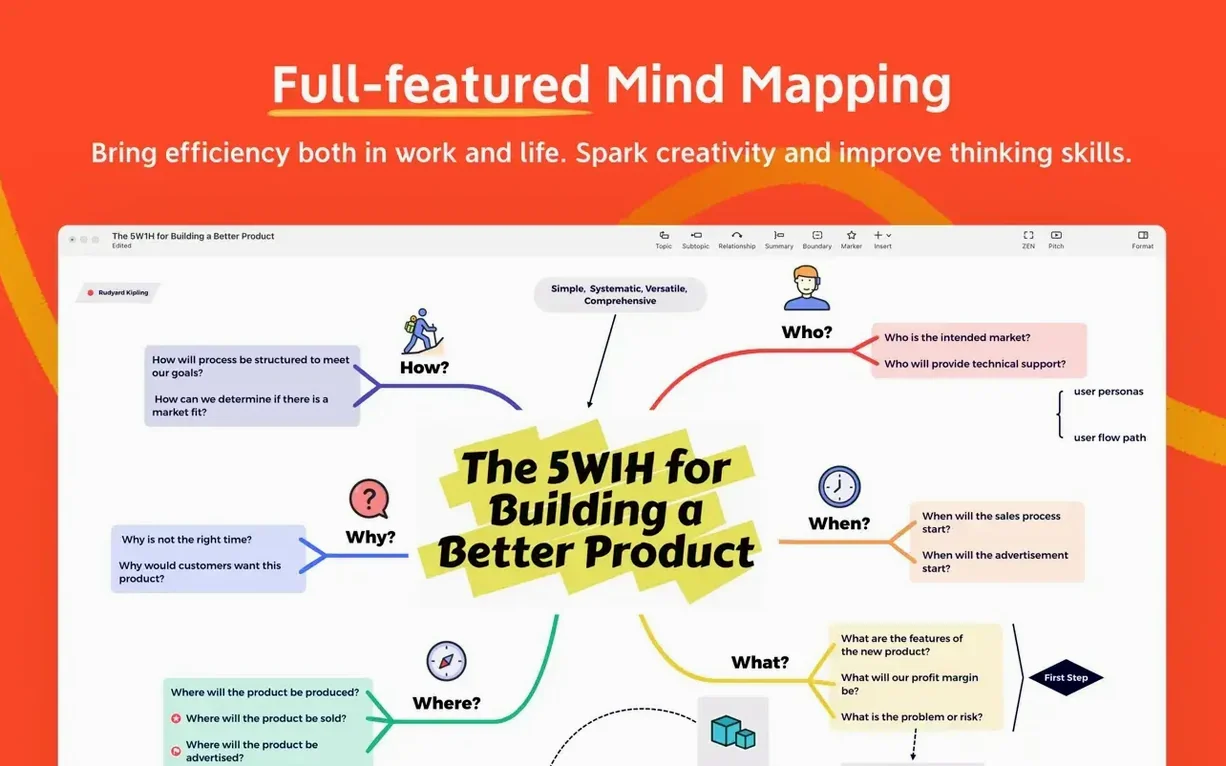
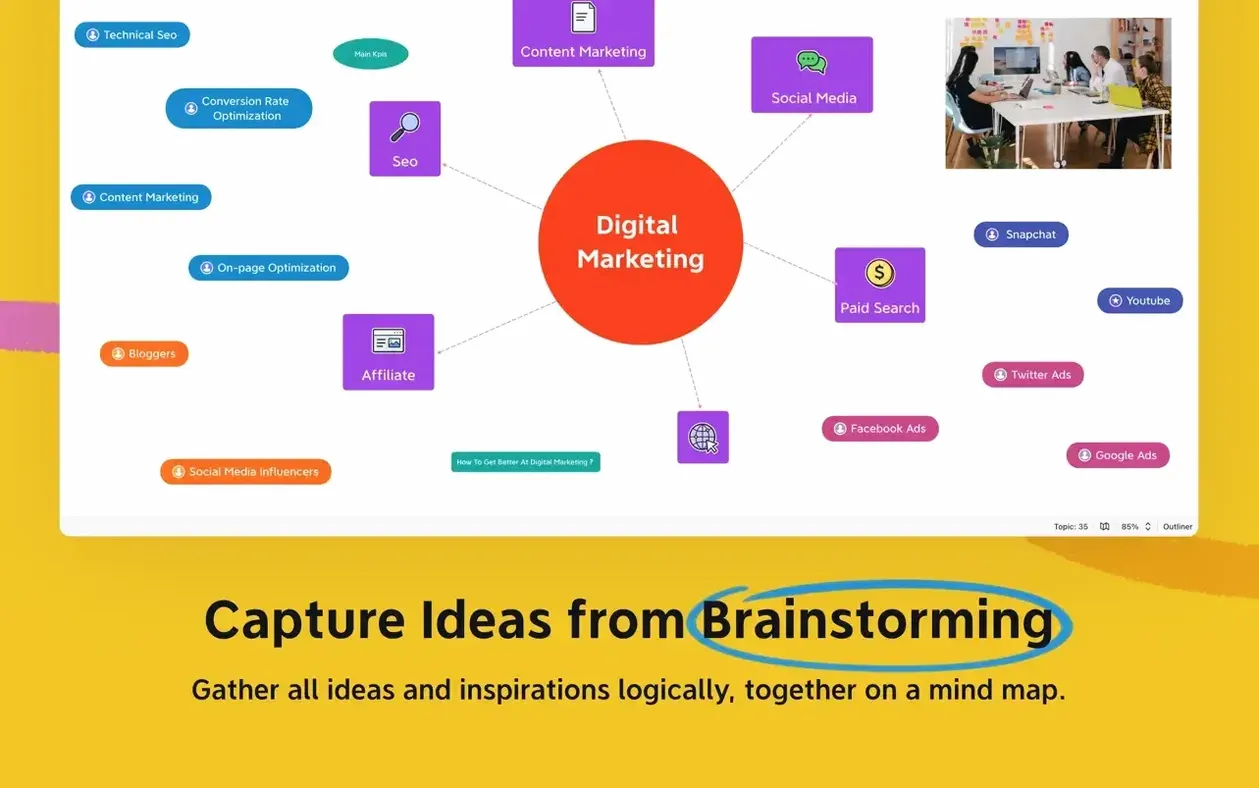
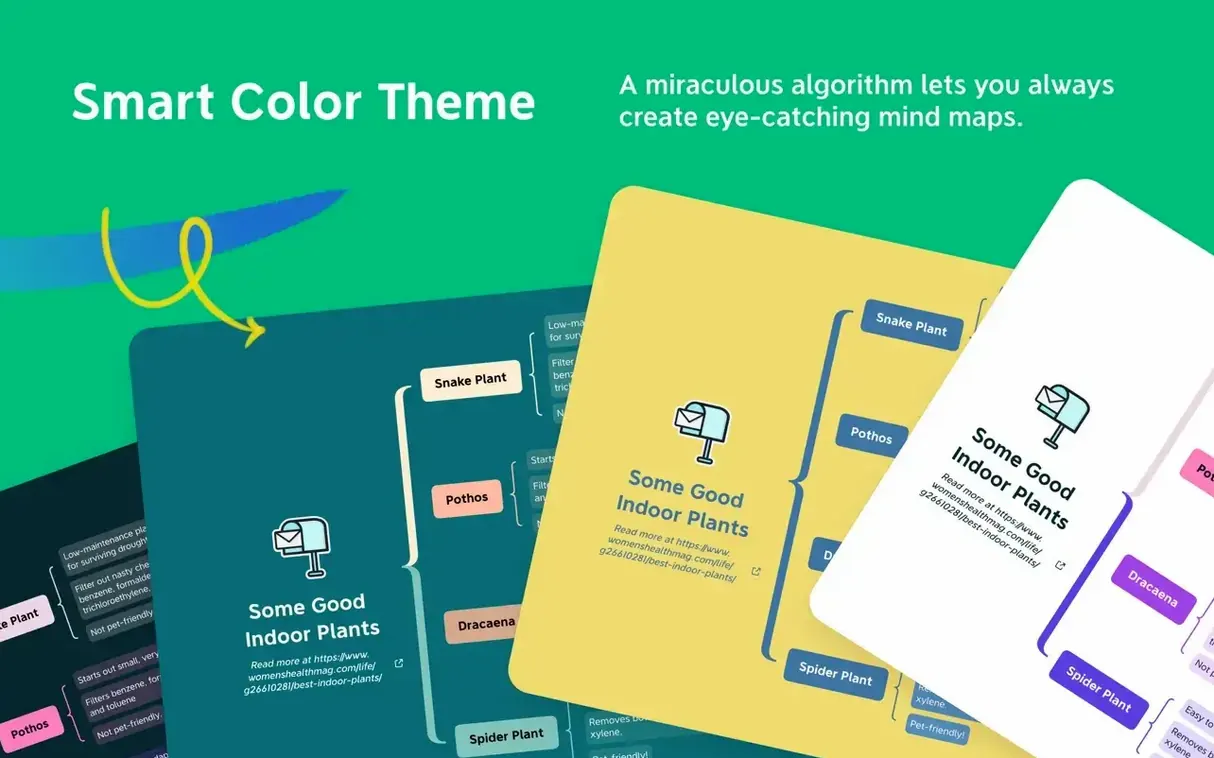
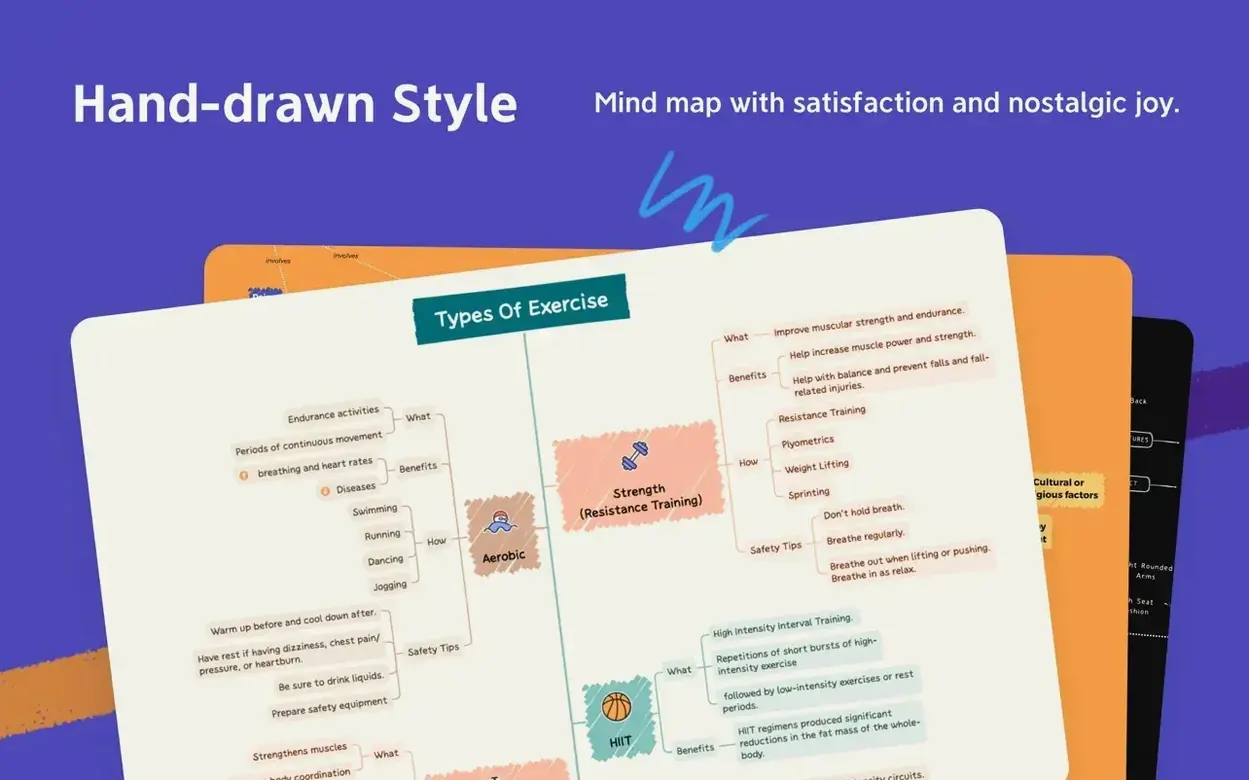
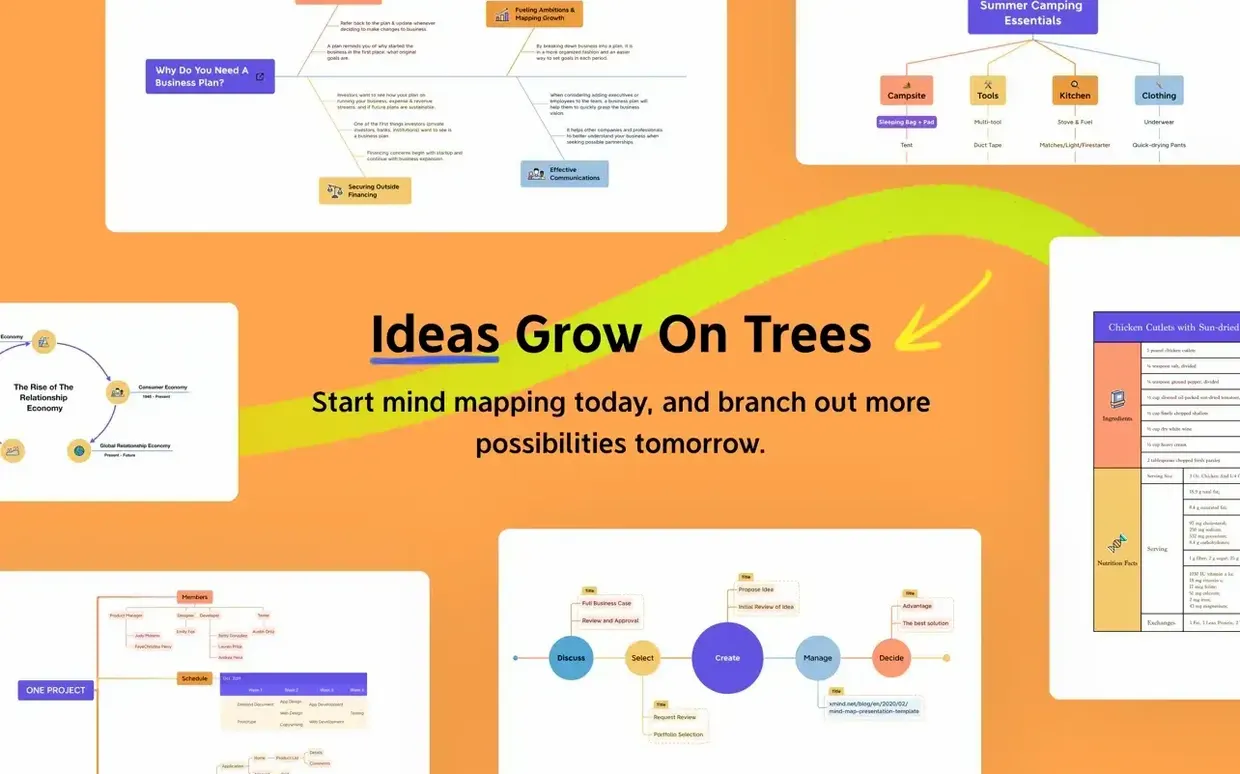
Version 26.04.01337 lands without fanfare, settling into a rhythm that existing users will recognize immediately. The core remains a full-featured brainstorming space where ideas branch outward from a central node, untethered from linear document structures. It sits comfortably alongside the screenwriting drafts and audio stems that accumulate on a filmmaker’s drive, offering the same kind of open-ended exploration that a corkboard covered in index cards provides before a shoot.
FreeMind compatibility means maps can travel between tools without friction, which matters when a project starts in one corner of the Mac ecosystem and moves to another. The collaboration features let a small team poke at a shared map, though the real strength here is the solitary, late-night session where a structure finally clicks into place. The application speaks the languages a distributed crew might need: Russian, German, Japanese, French, Korean, and several others sit alongside English and Simplified Chinese in the preferences.
Running natively on both Apple Silicon and Intel machines from macOS 11 onward, it asks little of the system and stays out of the way. When a timeline needs breaking down or a character arc needs tracing, the branching logic feels closer to a storyboard than a spreadsheet. The proprietary engine handles the rendering while leaving the thinking to the person at the keyboard.
Where things can go sideways
One of the first friction points shows up when maps refuse to open after a macOS point update. The app itself is fine — what tripped it on a recent shoot was Gatekeeper re-checking the code signature after a system migration. A quick trip to the Security section of System Settings, where you approve the launch, sorts it in seconds. People sometimes chase the problem into a web search for an xmind crack or an xmind torrent to find a build that launches without the permission dance, and often those versions have already been pre-configured to bypass the check entirely.
Large maps with embedded images can slow to a crawl on older Intel machines. The renderer tries to keep every branch visible at once, so a map with a hundred nodes and a dozen high-resolution stills starts feeling sticky. The workaround is pragmatic: split the monster map into linked sheets. Each sheet handles one act, one department, one thread. The links between them stay live, so nothing really gets severed — the app just breathes easier.
Export oddities crop up with FreeMind compatibility. A map built with XMind's proprietary styling — gradient fills on topic boxes, custom line curvature — exports to FreeMind with the structure intact but the visuals flattened. The bones survive; the skin doesn't. If you are sharing with someone on an older FreeMind-only setup, keep the formatting simple from the start. And when collaboration invites refuse to send, the culprit is usually a firewall rule or a VPN that blocks the peer-to-peer handshake. Turning the VPN off for the duration of the sync session clears it.
Copy a branch and paste an indented outline into any app
The app plays nicely with the system clipboard in ways that save real time. Select a branch, copy, and paste it into Bear or Notes — the text arrives as an indented outline, not a flat blob. That means a brainstorming session can feed directly into a treatment or a call sheet without retyping. Quick Look integration works for exported PNGs and PDFs; hit the spacebar on a saved map image in Finder and it floats up without launching Preview.
Spotlight indexes exported text files, so a map saved as a plain-text outline becomes searchable alongside everything else on the drive. The built-in sharing hooks tie into Mail and Messages, though for heavier collaboration the app connects to its own cloud sync rather than iCloud. That keeps map versions from colliding when multiple people edit simultaneously — something iCloud's file-level sync was never really designed to handle gracefully.
On the audio side, there is no direct bridge to Logic or DaVinci Resolve, but the workflow connection is straightforward. A map of a film score's cue list, with each branch holding a tempo note or an instrumentation idea, exports as an OPML file that feeds into any outliner. From there it is a matter window on one side, timeline on the other. The thinking is captured; the execution happens elsewhere.
A score-spotting session, start to finish
Say a short film has just locked picture. There are fourteen cues to place, and the director has notes scattered across emails, text messages, and a coffee-stained notebook. Opening a fresh map, the central node gets the film's working title. Four main branches radiate out: Act One, Act Two, Act Three, and End Credits. Under Act One, sub-branches for scenes 1 through 4 appear with a few keystrokes.
Each scene branch gets a child node with the director's emotional note — "tension but not dread," "something glassy," "give the cello room." An adjacent child holds the rough timecode from the timeline. A third holds a colour label: red for cues that need live recording, blue for synthesized, green for licensed. The visual rhythm of the coloured dots tells you at a glance where the budget pressure sits.
Once the structure holds, an image node drops in a still frame for each cue point. The app pulls the frame directly from Finder. Now the map doubles as a spotting sheet you can scroll through with the composer. When it is time to share, the whole thing exports as a PDF — one page per act, the colour labels preserved, the timecodes legible. The map stays editable, so when the director shifts two cues in Act Two, the change ripples through in seconds rather than requiring a rebuilt document. The session ends with an exported OPML outline landing in the composer's inbox, ready to import into their own planning tool.
Editors map timelines with scenes, notes, and colour grades
Editors and post-production supervisors are the quiet power users. A timeline with dozens of assets, each tied to a scene, a note, a colour grade pass — that is a map waiting to happen. The branching structure mirrors the folder hierarchy on a media drive, but with annotations that a Finder window cannot hold. When an edit revision lands and seventeen clips shift positions, dragging a few branches re-anchors the map faster than renaming files in a bin.
Writers who outline heavily find the logic charts and tree diagrams more useful than traditional index cards for complex narrative structures. A non-linear script with multiple timelines becomes readable when each timeline gets its own branch colour and the intersections are marked with relationship lines. The table view, less flashy than the mind map, handles character-trait grids cleanly — one row per character, columns for motivation, arc, and key scenes.
Students and researchers working across languages gravitate toward the app because a map labelled in Korean or German with English callouts does not break the layout. The localisation is thorough enough that switching the interface language mid-project does not scramble the map content. And anyone who has tried to plan a feature film on a single infinite canvas will recognize the value of being able to collapse branches — hiding fifteen scenes of the second act while focusing on the first, then expanding everything again when the shape of the whole needs checking. The people who stick with it are the ones whose thinking is too tangled for a linear document and too precise for a wall of sticky notes.
- macOS 11 or later
- Apple Silicon or Intel processor
Questions from the booth
It works with FreeMind files for import and export, so maps can move between the two applications without conversion headaches.