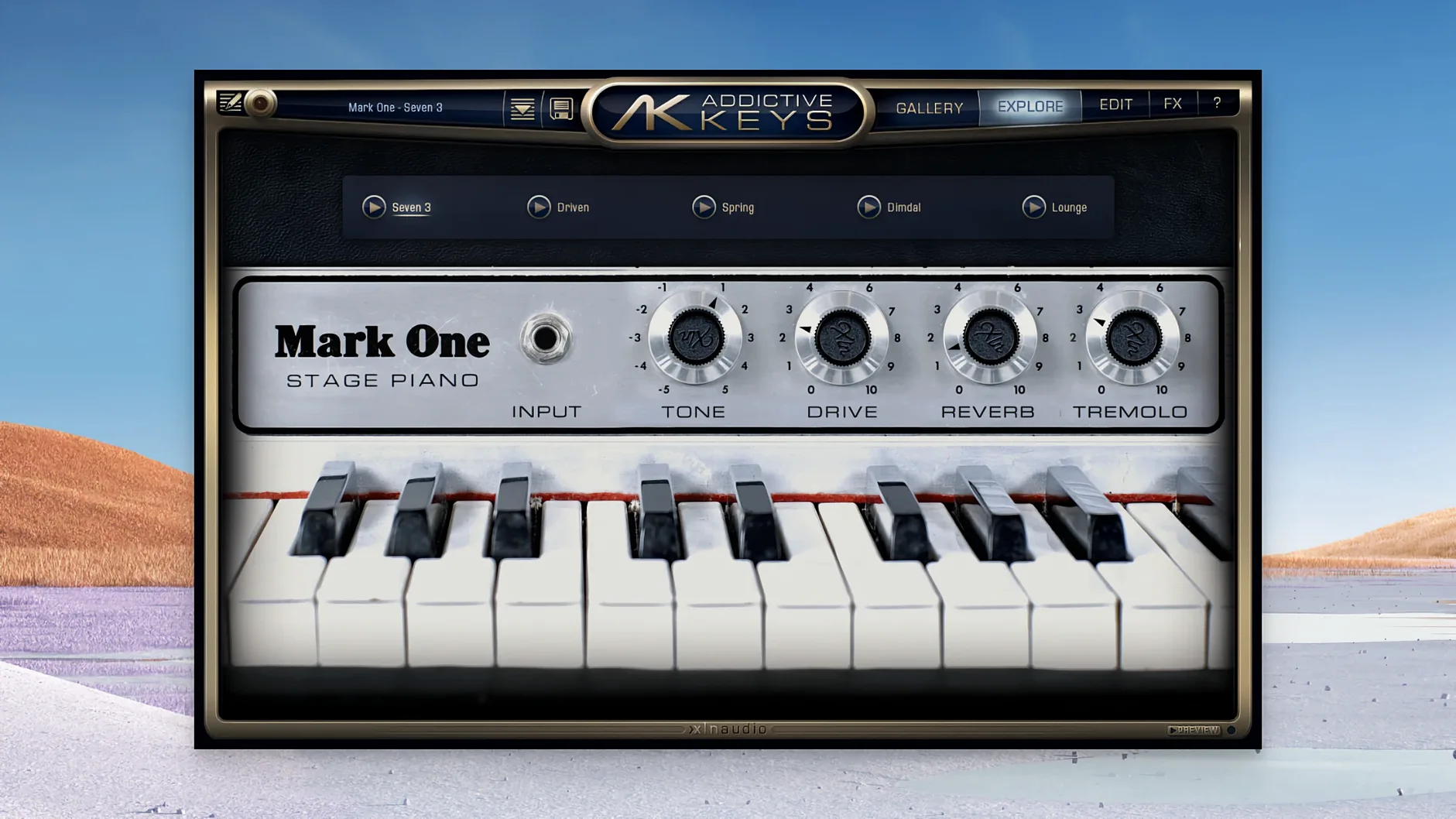
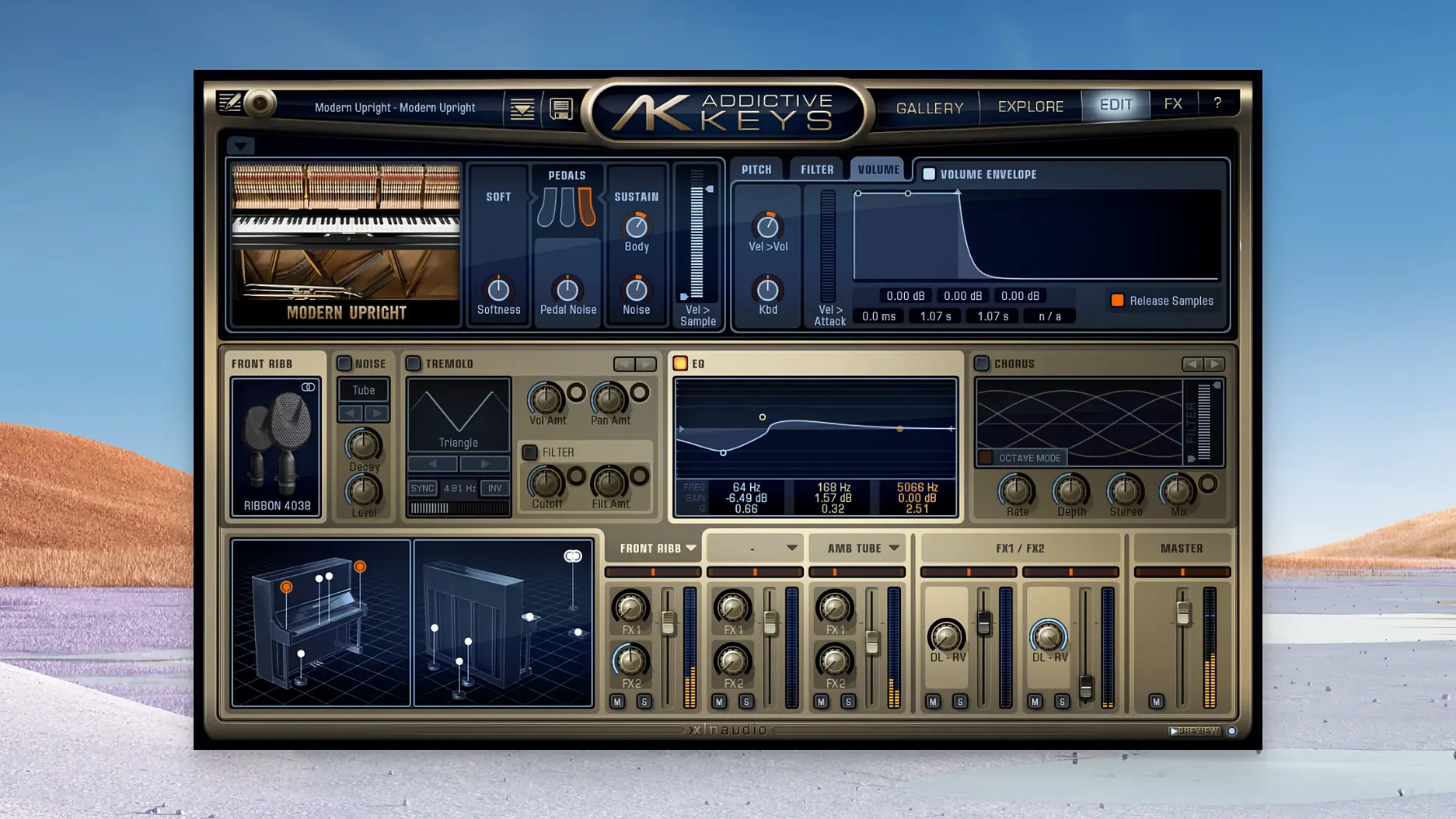
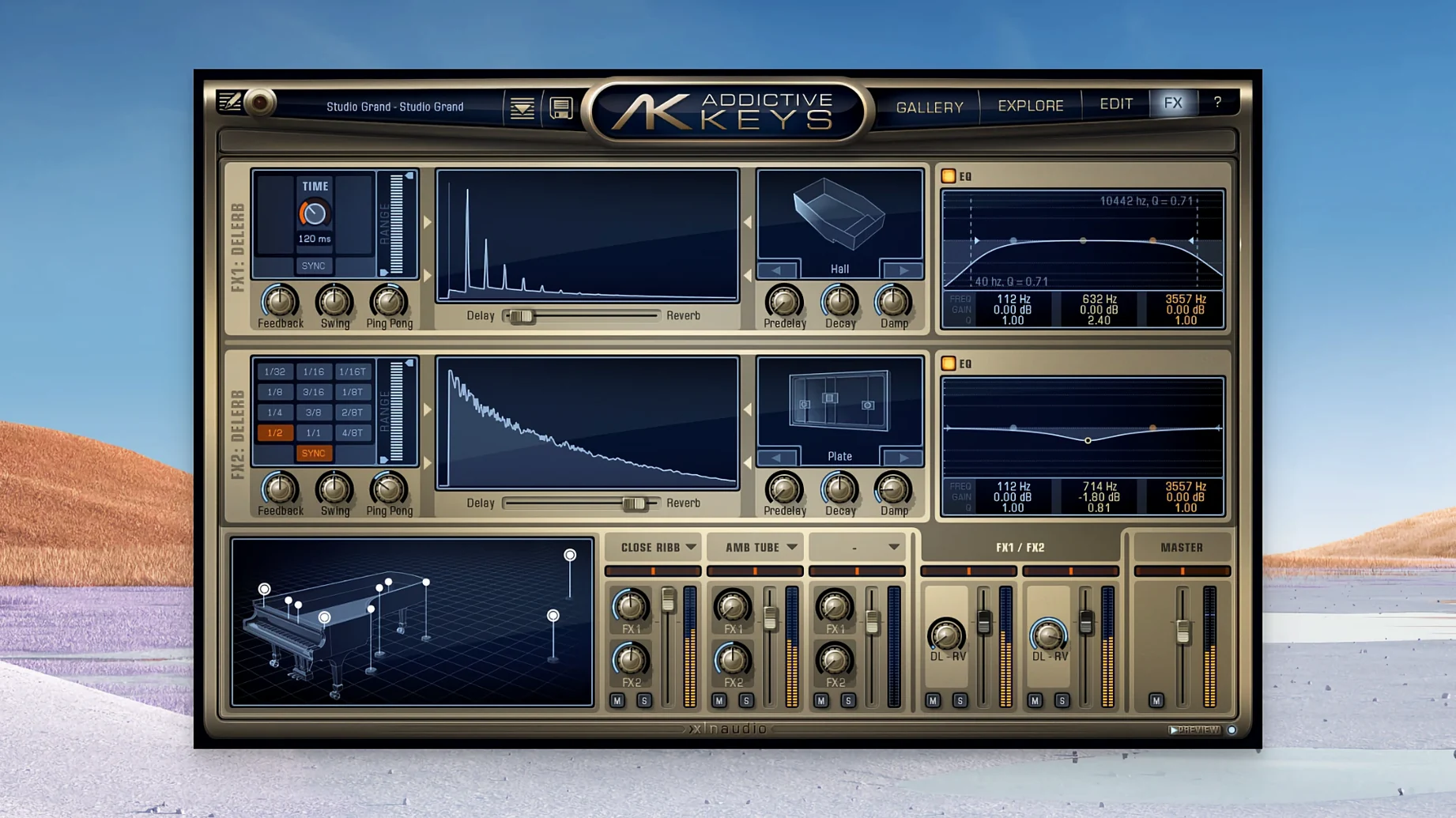
A producer opens a session, drops Addictive Keys onto a new instrument track, and scrolls through the Complete Collection’s four instruments. They’re not looking to build a sound from scratch—they want a piano that already breathes. The Modern Upright, drawn from a Yamaha U3, lands in the track with a tight, woody presence that leaves room for a vocal. A few minutes later, the Mark One, modelled on a Rhodes Mk. 1 stage piano, adds a soft, bell-like warmth to the bridge.
When you need a piano to sit without a fight
- Sessions where a recorded-sounding instrument needs to settle into a mix quickly, without heavy processing.
- Songwriters and composers who want a single plugin covering upright, grand, and electric piano tones.
- Systems running Apple silicon or older Intel Macs, since the plugin carries native ARM and x86 64-bit support.
The bundle locks you into all four pianos
- The Complete Collection bundles all four Addictive Keys instruments; the individual pianos are not sold separately within this package.
- The plugin asks for macOS 10.13 or later, so older production machines stuck on earlier OS versions will not run it.
- While presets are production-ready, deep timbral shaping still happens inside the plugin’s own interface, not through an external editor.
A track from silence to first bounce
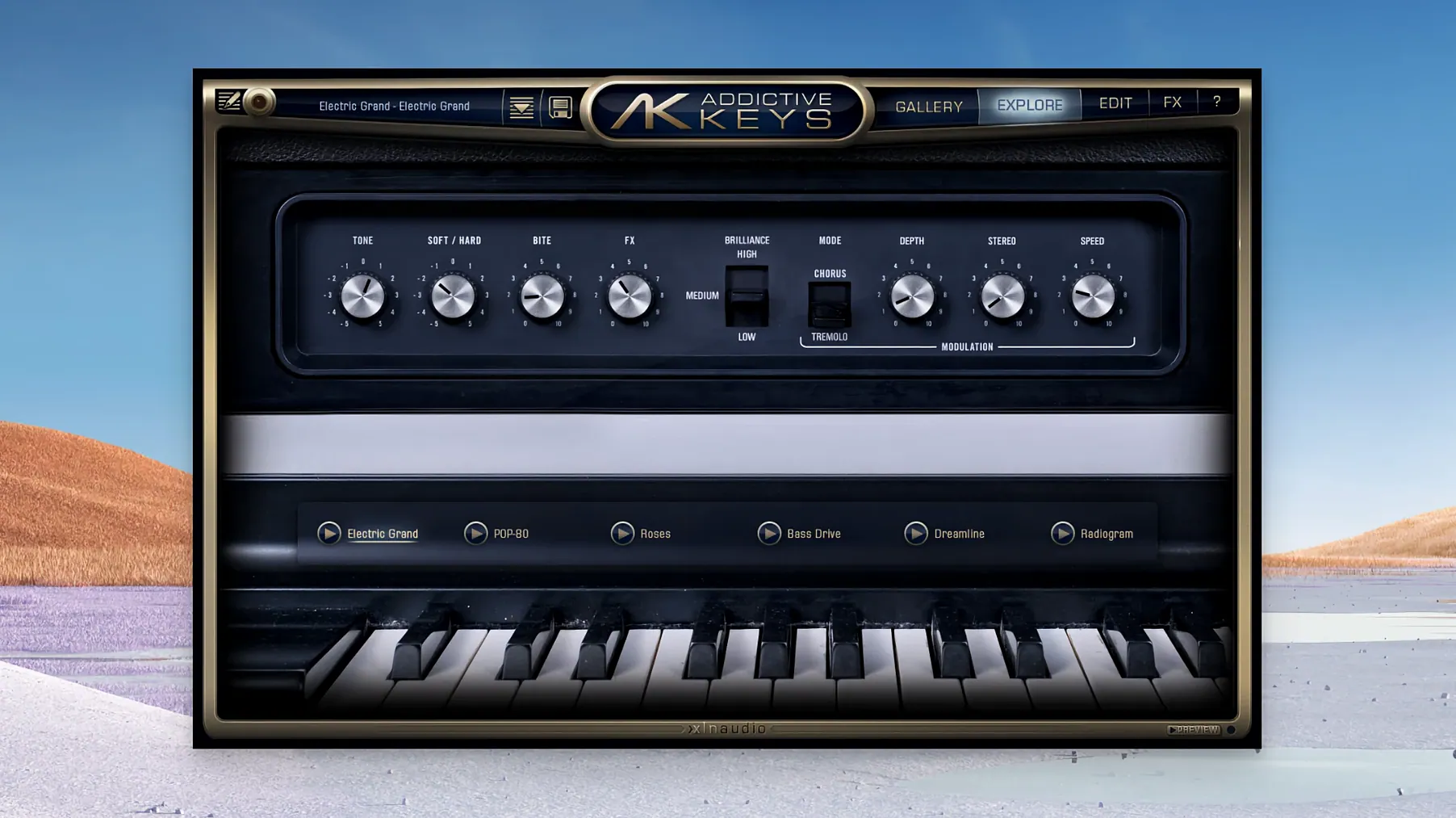
I start in an empty Ableton Live session, tempo locked at 72 bpm, and drop Addictive Keys onto a new MIDI track. The AU version loads in under three seconds—faster than some stock instruments I have used. I scroll past Studio Grand and land on Electric Grand, the CP-80 model, because the piece needs a percussive attack that cuts through a sparse arrangement without washing out the low end.
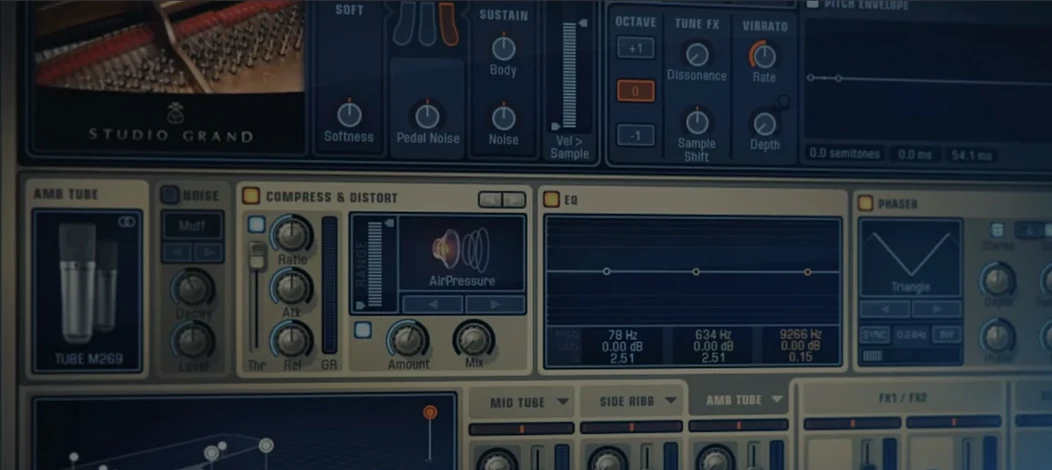
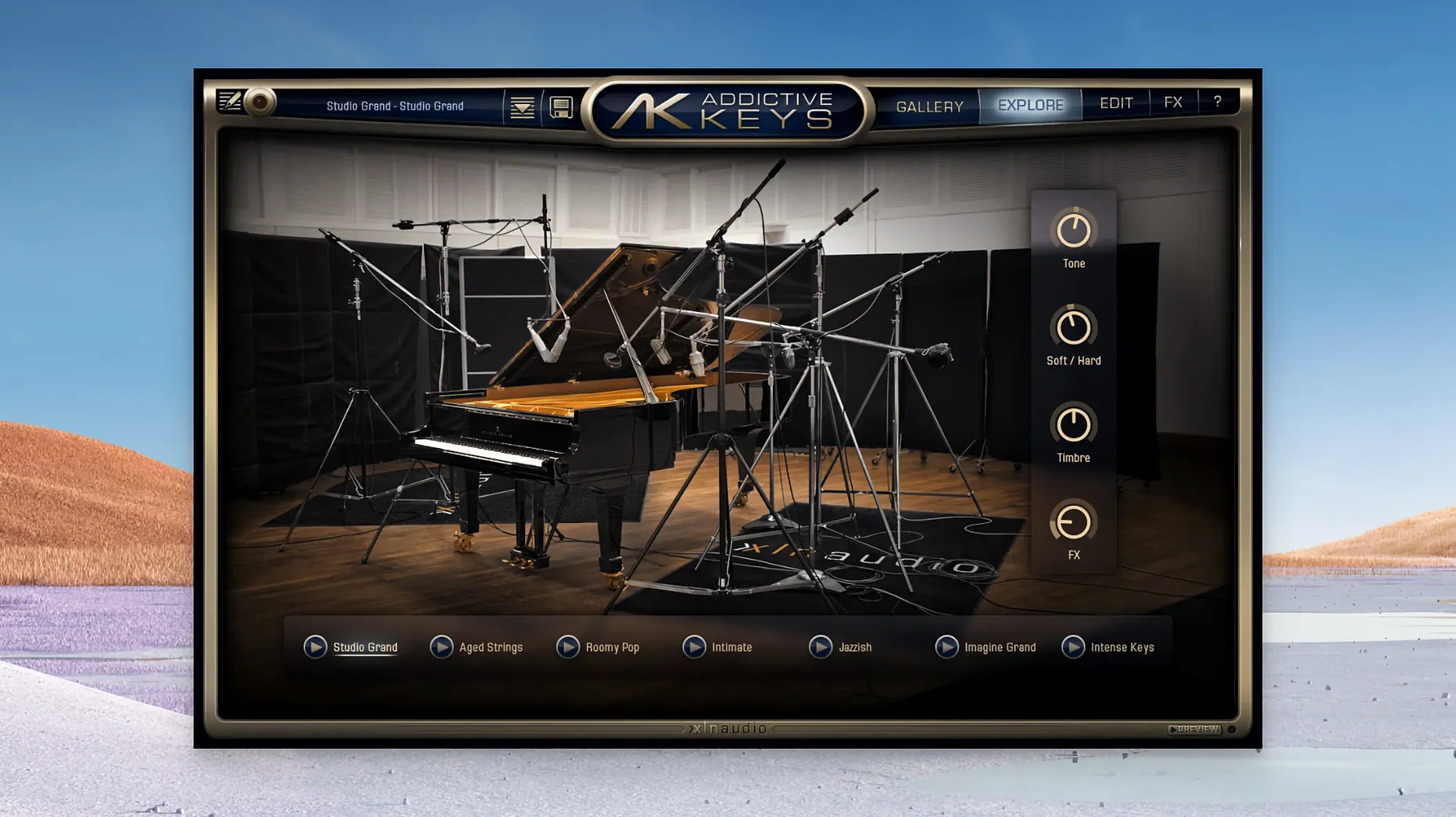
The default preset arrives with too much room for my taste. I open the mic panel and pull the close mics forward while muting the room pair entirely. The sound tightens instantly: hammers hitting strings with no tail. I draw a simple four-chord progression in the piano roll—F minor, D flat major, A flat major, E flat major—and the plugin translates velocity naturally. Quiet notes feel brushed, hard hits bite without clipping the channel.
Next I layer a soft sine-wave sub from another synth, then turn to the plugin's tone section. I roll the treble back two notches and push the bass gently, just enough to anchor the upper harmonics the sub leaves empty. With the onboard compressor set to a slow attack and a 2:1 ratio, the transient stays intact while the body of the note settles into the mix. No third-party processing yet. I bounce the eight-bar loop to audio, drag it onto an arrangement track, and the waveform looks exactly how it sounded: clean leading edges, no flat-topped peaks, a natural decay curve that slopes into silence around bar seven.
That is the workflow Addictive Keys rewards most—quick decisions, light processing inside the plugin, and a clear picture of the instrument at the recording stage rather than fixing it later.
Demo writers get grand, upright, and electric in one plugin
Songwriters who track demos daily and need the Complete Collection's spread of tones in one place benefit first. The four instruments cover the keyboard territory most pop, indie, and electronic productions actually use: a studio grand for ballads, an upright for intimate verses, a Rhodes for warm pads and stabs, and the Electric Grand for rhythmic parts that need to stay articulate under heavy compression.
Mixing engineers working with thin MIDI stems from clients also extract value here. I have dropped the Mark One into sessions where the original keyboard track arrived as a lifeless General MIDI piano. A preset switch and a quick adjustment to the dynamic response curve inside the plugin can turn a flat performance into something with genuine velocity nuance. Producers running older Intel Macs should take note: the plugin runs on macOS 10.13 and up, and the 64-bit x86 binary performs steadily on a 2015 MacBook Pro I keep around for travel sessions. Apple silicon users get the native ARM build, which loads fast and stays responsive even with multiple instances in a large session.
Alongside your other tools
Addictive Keys integrates as a standard AU, VST, VST3, or AAX plug-in, so it slots into Logic Pro, Ableton Live, Cubase, Pro Tools, and Bitwig without friction. I tend to route it into a bus with a tape emulation plug-in for subtle saturation, and the combination works because the piano samples arrive clean—no baked-in console character to clash with the processing chain. The standalone mode, described in the manual, can be useful for quick practice or sound design outside a DAW, though I rarely leave the host environment.
macOS features play nicely with it. I have mapped the instrument's expression controls to a MIDI controller using Audio MIDI Setup, and the system recognized the routing without additional drivers. Spotlight indexes the presets, so typing "felt upright" or "dark rhodes" into the search field brings up matching patches if you store them in a standard location. The plugin also responds to standard automation lanes in every DAW I have tested, which means filter sweeps, volume rides, and parameter changes record and replay predictably during mixdowns.
Flatten the velocity curve for synth-action keys
Open the velocity curve panel before anything else. The default curve works for weighted controllers, but if you play on a semi-weighted keyboard or a synth-action MIDI controller, flattening the curve slightly prevents the upper velocities from topping out too early. The difference is immediate: you hear more gradation between mezzo-forte and fortissimo.
Next, visit the microphone section and mute at least one pair. The presets often load with close, room, and ambient mics blended, which sounds lush in isolation but creates mud in a dense arrangement. A single mic pair—usually the close stereo set—gives you a tighter, more focused image that reacts better to reverb and compression downstream. Finally, assign the modulation wheel to the tone knob or a low-pass filter via the MIDI learn function. Riding the mod wheel during a performance lets you darken the timbre in verses and open it in choruses without touching the mouse, which keeps the tracking momentum alive.
If you want to explore the Complete Collection's full range, searching for addictive keys complete collection will surface the bundle that includes all four pianos in version 1.7.3. Some producers also look for addictive keys torrent or addictive keys crack links, where you can often find community builds that bundle the instrument sample files together with the installer. A full addictive keys download of the current version ensures the Modern Upright, Mark One, Electric Grand, and Studio Grand are present and loading correctly on both Intel and Apple silicon Macs.
- macOS 10.13 or later
- Apple silicon (ARM) and Intel (x86 64-bit) Macs are both supported
Questions from the booth
It works in VST, VST3, AU, and AAX formats, covering most major DAWs on macOS.
Yes, it is sampled from a Yamaha U3 upright, capturing its characteristic mid-range clarity and tight low end.
The Complete Collection contains all four keyboard instruments available in the Addictive Keys line, including the Mark One electric piano and the Modern Upright.