A rhythm track needs double-tracking, but the room is too quiet for an amp. You load the plugin into an arrangement, dial in a bridge-pickup crunch from the onboard amp sim, and lay down a part that sags and bites like a full stack at half volume. It is a Les Paul morning without the noise complaint.
Runs natively on Intel and Apple Silicon as VST and AU
The instrument arrives as a VST and Audio Unit plug-in for macOS 10.13 or later, running natively on both Intel and Apple Silicon machines. It slots into any DAW that supports those formats, from Logic and Live to Reaper and Cubase.
Amp and effects chain
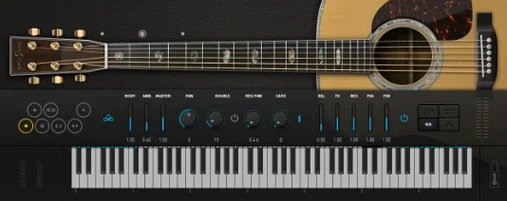
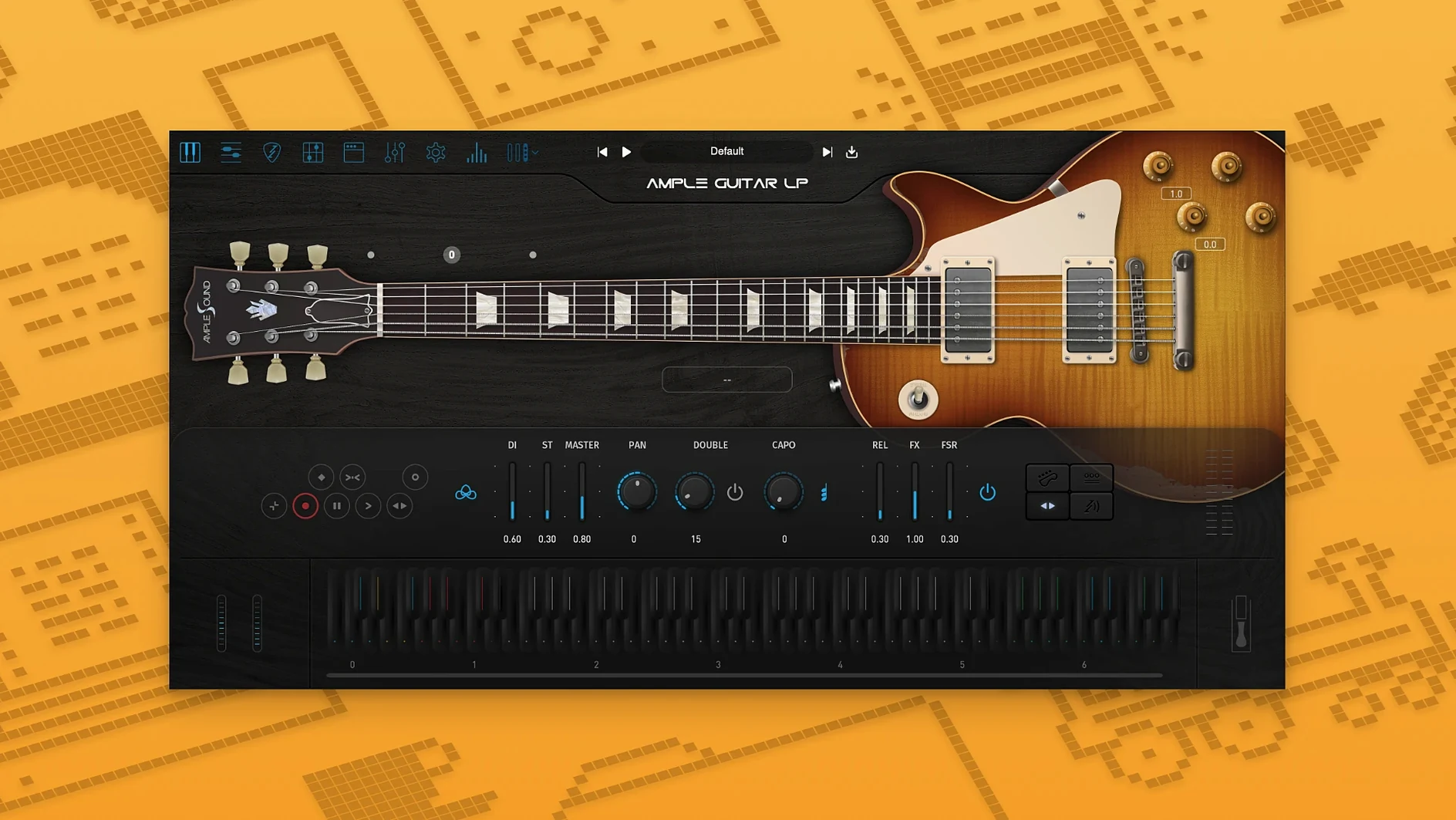
An integrated amplifier section and effects rack sit inside the interface, so you can shape a finished electric-guitar tone without leaving the window or patching in extra processors.
The 1958 voice
Version 4 introduced a fingerstyle library captured with a 1959 Reissue, sitting alongside the picking articulations and string-effect textures. The three sets cover the ground from warm jazz neck-pickup passages and crunchy rock riffs to biting blues leads.
A common session task is building a double-tracked rhythm bed that feels played, not pasted. Start with a chord chart—say, a verse moving through Am7, D9, Gmaj7 in a lazy 6/8. Open your DAW, insert an instance of the plug-in on a stereo instrument track, and set the input to capture MIDI from your controller or a pre-written part. Switch the articulation map to Picker mode, select the bridge pickup, and lean on the velocity-sensitive downstrokes for the main accents. Record a full pass keeping the timing slightly ahead of the grid to preserve a human tug. For the double track, duplicate the MIDI region, nudge it a few ticks late, and swap to the neck pickup with a softer amp profile. Pan the first take thirty percent left and the double thirty percent right, then dial the onboard room reverb to about twenty percent wet. The stereo spread delivers width without phase smear, and the subtle timing and timbre differences between passes sell the illusion of two distinct performances.
What the 4.0 era changed in daily use
The addition of a dedicated fingerstyle library, recorded with a 1959 Reissue, moved the instrument beyond its earlier rock-blues territory into softer, more detailed picking textures. In practice, that means a single track can hold a picked verse, a strummed chorus, and a fingerstyle bridge without loading a second guitar plug-in. The articulation switching became tighter under the hood as well—slides and hammer-ons trigger with fewer unintended overlaps, which tidies up MIDI arrangements that rely on legato transitions. An updated installer package streamlined the first-launch experience for Mac users, and the move to native Apple Silicon support cut the CPU overhead enough that a modest laptop can run two or three instances alongside a drum sampler and a piano without crackling.
Right-click a fret to lock the string for the next note
A few workflow helpers sit just below the surface. Right-click any fret on the virtual fingerboard to lock a string for the next note, which solves the problem of an open G ringing out when the arrangement wants a fretted fifth. The strum engine respects MIDI note overlap—hold a chord shape and drag the strum key up and down the keyboard to vary speed and direction in real time, a trick that turns a static programmed pattern into something far looser. The capo slider is not cosmetic; moving it up a few frets changes the string resonance model, so the same chord voicing can feel completely different just by shifting the simulated playing position. If you are hunting for a particular Les Paul weight without building a signal chain from scratch, the factory presets are organised by pickup selection and gain stage rather than by genre tag, which makes auditioning a neck-pickup jazz tone or a bridge-pickup crunch a single-click affair.
Pattern-based strumming versus deeply multisampled character
Three Mac-compatible Les Paul emulations tend to sit on the same shortlist, and each carves out a distinct corner. Native Instruments’ Session Guitarist Electric Sunburst leans hard into pattern-based strumming and phrase playback, with a polished Kontakt library that favours producers who want a finished part out of a preset. It sounds full but leaves less room for articulation-by-articulation programming. The Les Paul offering in IK Multimedia’s SampleTank ecosystem pulls from a broader rock palette and integrates easily with AmpliTube for amp matching, though the raw sample detail can feel a notch behind when the part is exposed. Ample Guitar LP III splits the difference: the picking, fingerstyle, and string-effect libraries give it the note-level control of a builder’s instrument, while the onboard amp and effects keep the sound immediate. For a songwriter layering an ample guitar mac torrent of ideas at two in the morning, the difference is not theoretical—one plug-in, one window, and a finished tone that does not require a chain of externals to sound like a record. When a jazz lead calls for a neck-pickup whisper or a blues outro needs a slow, bending vibrato, the articulation set here covers the ground without forcing a switch to a different tool. That breadth, coupled with the fingerstyle update, pushes it closer to a desert-island guitar than a single-flavour sample pack.
- macOS 10.13 or later
- Intel or Apple Silicon Mac
- VST or Audio Unit host